WATCH VIDEO: Office of Community Safety Commissioner Toddrick Barnette reflects on the past year of progressive and foundational changes in rebuilding a public safety model that delivers equitable outcomes for all Minneapolis residents.
Office of Community Safety (OCS) Commissioner Toddrick Barnette was sworn into office late last fall, tasked with leading the relatively new office that unifies all safety functions in the city, including Police, Fire, Neighborhood Safety, 911 and Emergency Management.
For Barnette, it’s been a year of foundation-building and change as he makes progress toward the creation of a functioning and collaborative community safety ecosystem.
Implementation of the Safe and Thriving Communities plan

“One of my priorities is creating a community safety ecosystem based on the Safe and Thriving Communities report,” said Commissioner Barnette. “When we look at the future of the community safety ecosystem, it's based on three big pillars: prevention, responsive and restorative services. In any situation, whether it's an emergency situation or a non-emergency, we're responding appropriately.”
Implementation of the Safe and Thriving Communities plan is currently in its first phase, which will lay the groundwork for a sustainable and innovative ecosystem that focuses on a collaboration of public safety services. This includes non-police response, focus on preventative programs that address the root causes of violence, and service coordination to better serve the Minneapolis community. Forming foundational work groups, building key relationships and engaging the community have been key pieces in moving the work forward.
Community engagement is key
Barnette stresses the importance of fully engaging Minneapolis community members, providing space to gather thoughts, input, and direction as OCS works to redesign and rebuild a safety system that works to effectively serve all residents and visitors.
“Minneapolis is a very diverse community, and we want to hear all those voices,” said Barnette. “Through this past year, our team focused on organizing over 40 community engagement sessions that were vitally important to designing our future safety centers.”
Reflecting on the feedback gathered from sessions, Barnette said it is key to create that space and opportunity. “There are so many Minneapolis residents who have been historically underserved and unheard. The future of our city depends on these voices,” said Barnette.
|
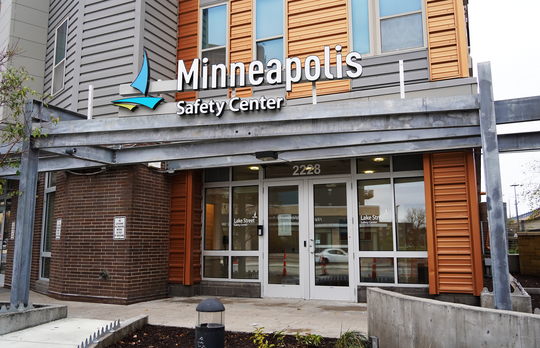 Barnette also discussed the importance of reporting back to the community on progress. A new series of community engagement update sessions will be held late fall and through the winter with the purpose of updating the community on how their feedback is being used to shape the safety center plans.
"Now that we've gathered this feedback, opened the Lake Street Safety Center, and are continuing on our path to open the South Minneapolis Safety Center, we're going back to the community to provide updates. Constant and consistent communication is keeps us accountable," he said.
Path for police reform
When he was sworn into office, Barnette's work with the City’s settlement agreement with the Minnesota Department of Human Rights began, which sets out compliance measures that must be met by the Minneapolis Police Department (MPD) and across the City enterprise. Monitored by an independent evaluator, the settlement agreement requires action steps and changes in policies, training, use of force, data collection, among other compliance measures. To carry out this work, the Implementation Unit, comprised of sworn and professional staff, was formed to coordinate compliance with the settlement agreement.
“I want to emphasize what's been great about the Implementation Unit is that they got started with their work well before the independent evaluator got here,” said Barnette. “We don't want to go back. We want to continue to go forward. Compliance with settlement agreement is setting us up for a sustainable and exemplary police department long-term.”
“We're serious about reform, and we want to get it right,” added Barnette, who further explained that the Implementation Unit has concentrated efforts to engage and gather feedback from the community. “It’s not just about checking off boxes, but actually getting it right for the residents.”
 Recruitment of first responders
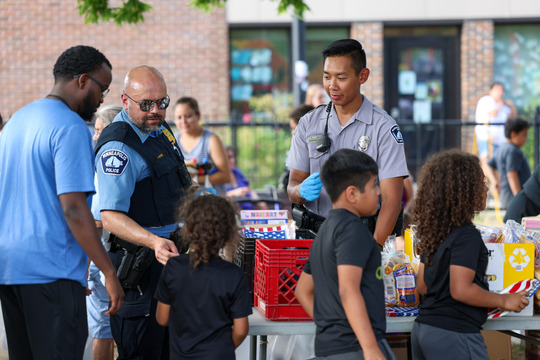
To properly serve the Minneapolis community, a fully staffed Minneapolis Police Department (MPD) is another priority for Commissioner Barnette. Spring 2024 marked the beginning of significant MPD recruitment efforts. With the launch of the ‘Imagine Yourself’ campaign, the multi-year recruitment efforts will continue through the OCS, with a goal of increasing the number of sworn officers who are the right fit.
“It is essential that we hire and employ the right people to serve on our police force, and that can take time," he said. "Not only are we reforming the department, amending policies and rebuilding culture, but this is specialized work that requires the right people with the right character to do the job."
Strengthening Neighborhood Safety partnerships
Focusing efforts on preventative strategies, the City’s former Office of Violence Prevention has been restructured into the Neighborhood Safety department, a key department within OCS that utilizes a public health approach to violence.
“We want Neighborhood Safety to have strong sustainability because a lot of our non-police responses come from the work of this department,” said Barnette, who added that this past year has been about building the right infrastructure for current and new pilot programs focusing on violence prevention strategies and alternative response.
“Establishing procedures for data collection, research and analysis is another part of Neighborhood Safety that we are focusing on,” said Barnette. “Tracking data and coordinating all safety services across the enterprise, including county, state and federal resources, will take time, but will be key to moving this work forward.”
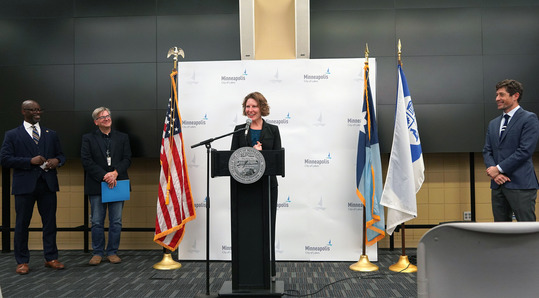 Rachel Sayre, Emergency Management Director, recently joined the OCS executive leadership team and brings a wealth of experience in international crisis and emergency response efforts.
Welcoming new Emergency Management leader
Beyond the Minneapolis Police Department and Neighborhood Safety, Barnette emphasized the importance of alignment and coordination of all the safety departments within OCS, which also includes Fire, Emergency Management, and 911. He recently completed his executive leadership cabinet with the hire of Rachel Sayre, Emergency Management Director, who brings a wealth of experience in international crisis and emergency response efforts.
"I have full confidence in our leadership team to make strides in each department," said Barnette. "Especially as we look toward a comprehensive, effective community safety ecosystem across the enterprise."
A Safe and Thriving Minneapolis
Looking ahead, Barnette is continuing to build a culture of trust in the City, where every resident feels respected and heard. With a focus on improved collaborations and partnerships, implementing strategies that address crime prevention, innovating safety services and creating a new public safety model, Barnette said the next year will add onto ongoing efforts of transformational changes, part of a foundational process for lasting change to occur.
|