|
Homegrown Minneapolis is a citywide initiative
expanding our community's ability to grow, process,
distribute, eat and compost more healthy, sustainable,
locally grown foods.
March 2024
|
|
 |

A focus on: Deep Winter Greenhouses
Spring is around the corner, and that means many people are thinking about planting soon! But for some, the growing never stopped. Minneapolis is home to two deep winter greenhouses - passive-solar greenhouses that are energy efficient, utilizing energy from the sun to grow year-round. Appetite for Change and Tamales y Bicicletas are the two hosts of these structures, utilizing them to both grow produce in the winter and start seedlings for planting outside.
They were built in partnership with the City of Minneapolis and the Center for Sustainable Building Research at the University of Minnesota, building on years of research and several design variations. Homegrown Minneapolis has been a partner throughout the project, including securing grant funding for building supplies and construction expenses.
|
The Homegrown Minneapolis Food Council works to ensure an environmentally sustainable and socially just food system. These meetings are a great way to meet other community members and learn more about the work that is happening within our local food system. Every meeting is also accompanied by a food theme where attendees are welcome to bring food to share with others.
When:
Where: Powderhorn Park Recreation Center- 3400 15th Ave S
What we'll be doing: Renewing the Countryside will be presenting on its work with the USDA. This work aims to improve the coordination and effectiveness of USDA programs and services for urban and innovative producers.
Our action teams will also be convening. The Wasted Food action team will learn about the Minneapolis Health Department’s new resources designed to help restaurants prevent wasted food, and the Equitable Food Access action team will learn about the international Right to Food movement.
Food Theme: Herb-alicious: Dill, mint, basil, tarragon, and sage are just some of many herbs that make our life a little more flavorful. At this meeting, we welcome foods that celebrate the bounty of herbs that we can find in our gardens (or at the grocery store).
View meeting agenda
View past Food Council meeting agenda and minutes
Download an .ics attachment to add this meeting to your calendar
Meet the entrepreneur who's quietly creating a northeast Minneapolis food empire
Kamal Mohamed burst onto the local scene with Nashville Coop, but his bold flavors and ideas can be found across the Twin Cities, from sandwiches to the fine-dining restaurant StepChld. "I try to think of it from the perspective that we only have a little bit of time relative to everything else that's happening in the universe, so I want to try and execute as many ideas as I can, and then let the chips fall where they will," he said. "When you're taking this many shots, I know some of them will fail. So far, it's been working out.”
The Land Back Movement Is Also About Foodways
Native peoples have lost nearly 99 percent of their historical land base in the U.S., according to recent research. With it, they lost access to important hunting and fishing grounds as well as myriad places to gather and prepare food. For Native thought leaders, the contemporary Land Back movement is about championing Indigenous sovereignty, self-determination, and economic opportunity while pushing back against long-standing discriminatory policies that continue to cause tribal communities undue hardships, including disproportionate poverty rates, outsized food insecurity, marked health disparities, and lower life expectancies. But it’s also about a powerful yearning to rebuild relationships to actual places—and the countless living things that inhabit them.

Minneapolis International Festival
The Minneapolis International Festival celebrates the different cultures in the City of Minneapolis and surrounding communities with music, dance, art, cultural learning booths, exhibits demonstrations AND MORE. Learn about all the many amazing cultures that make Minneapolis such a wonderful place to live at this free event.
When: Saturday, March 9th from 1 p.m. to 5 p.m.
Where: Central Park Gym – 3400 4th Ave S
Grow seeds with us!
Join Corcoran Neighborhood Organization, South Community Food Forest and Minneapolis Edible Boulevards for an afternoon of seed sowing. If you need instruction, they'll help you. If you just need seeds and soil, they'll give you space to get some seeds planted along with a few tips for successful summer planting.
When: Thursday, March 14th from 4 p.m. to 6 p.m.
Where: Corcoran Neighborhood Organization – 3451 Cedar Ave S.
Farm Finance Webinar
Is working on your end-of-year financial statements giving you a headache? Are you pushing it off and struggling to get started? Land Stewardship Project will be hosting a webinar in which participants will learn:
- How to create basic financial statements for your farm business using affordable, practical spreadsheets
- How to use financial information to learn about your operation and identify profit
-
Tips for improving recordkeeping to make steps 1 and 2 even more painless next year.
When: April 4th from 6 p.m. to 7:30 p.m.
Where: Online webinar
Regenerative Livestock Systems Symposium
Join community stakeholders to reflect on how livestock management can help mitigate climate change, improve soil health, restore biodiversity, and enhance ecosystems, contributing to human health and animal welfare. The symposium will bring together farmers, educators, researchers, and ag industry professionals to promote networking opportunities and discussion on research projects and management practices aimed at using livestock to regenerate agroecosystems.
When: April 5th from 8 a.m. to 6 p.m.
Where: UMN St. Paul Campus
Food Safety Foundations webinar series
Join food safety and food preservation experts from the University of Minnesota Extension throughout the year to learn how to safely handle and prepare food. Whether you are a grower, operate a food business, or preserve foods for your own use, these webinars are for you.
When: Ongoing, several dates
Where: Online
Minneapolis Tap Water Ambassador Funding Opportunity - March 19th deadline
The Minneapolis Health Department released a Request for Proposals (RFP) to invite community organizations to apply to join the Minneapolis Tap Water Ambassador Program. The Minneapolis Ambassador Program trains adults and youth to educate their community about drinking tap water. The goal of the Tap Water Ambassador Program is to increase awareness of the safety and quality of Minneapolis tap water and encourage people to drink more tap water instead of buying bottled water or sugary drinks. Up to 10 organizations will be selected to receive up to $15,000 each to conduct tailored education and outreach in their communities.
How to locate and apply for this opportunity
Garden in a Box: free garden supplies - March 20th deadline
Garden-in-a-Box (GIAB) distributes more than 800 gardening kits annually. 80+ participating organizations across Minnesota receive free plants, seeds, soil, raised beds and education. With support from generous donors and sponsors, GIAB gives thousands of all ages the opportunity to learn how to garden and grow fresh food.
Produce Growers Mini Grant - March 30th deadline
Minnesota produce farmers who improve their on-farm food safety systems may be eligible to reimburse those expenses through the Minnesota Department of Agriculture’s (MDA) 2024 Produce Safety Mini-Grant, which is now accepting applications. The Produce Safety Mini-Grant will distribute a total of approximately $33,600. Awardees will receive up to $800 per farm. No matching funds are required.
Learn more about this grant opportunity on MDA’s website
Twin Cities Urban Agriculture Micro-grants - March 31st deadline
Renewing The Countryside, in collaboration with USDA’s Farm Service Agency (FSA), Natural Resources Conservation Service (NRCS), and other partners, is seeking to enrich urban agriculture in the Twin Cities through 3 new grant opportunities. Micro-grant applications will be accepted through March 31st, and include grants for the following:
- Individual or community gardens/farms
- Organizations that support urban farmers/gardeners
- People’s Gardens creating or improving educational, community, non-commercial gardens in accordance with the People’s Garden Initiative
Learn more about these grant opportunities on Renewing the Countryside’s website
Urban Agriculture and Innovative Production Grants - April 9th deadline
Urban Agriculture and Innovation Production (UAIP) competitive grants initiate or expand efforts of farmers, gardeners, citizens, government officials, schools, and other stakeholders in urban areas and suburbs. Projects may target areas of food access; education; business and start-up costs for new farmers; and development of policies related to zoning and other needs of urban production.
Micro Grants For Micro Food Manufacturing Program - May 2nd deadline
The Micro Grants For Micro Food Manufacturing Program from The Market Entry Fund (MEF) supports small-scale producers and manufacturers of packaged food and beverage for the Consumer Packaged Goods (CPG) market. The objective of the grant program is to bolster the financial capability of emerging packaged food businesses that are owned by entrepreneurs of color, women, veterans and other individuals demonstrating systemic barriers to equitable participation and opportunities in this sector in Minnesota.
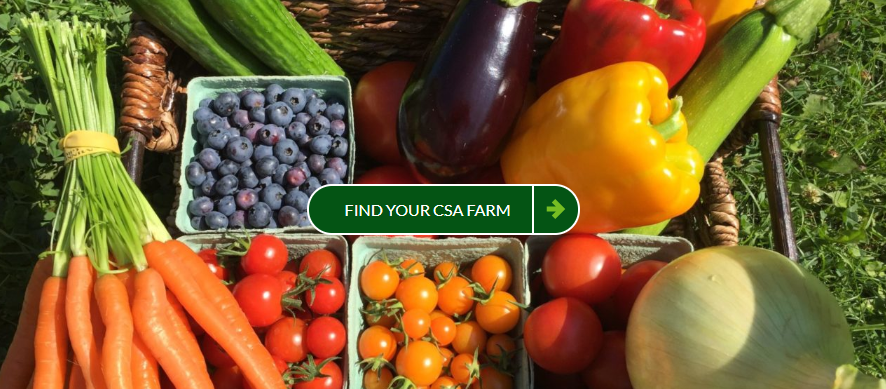
It’s CSA Season – find one near you today!
Community Supported Agriculture (or CSA) is a farm membership system in which you pay a fixed price up-front, typically in winter or early spring, and in return, you receive installments of fresh local food to enjoy throughout the harvest season. CSA shares most commonly offer seasonal fruits and vegetables, but products like meat, cheese, and even flowers can be purchased directly from farms in the same way. It's a great way to support local farmers!
Community Relations Specialist – City of Minneapolis: Office of Immigrant and Refugee Affairs
The Community Relations Specialist will work with the Office of Immigrant and Refugee Affairs (OIRA) Director to support outreach objectives and provide staff support to the Community Engagement needs of the OIRA Office within the Neighborhood and Community Relations Department.
Saturday Market Staff (part time) – Mill City Farmers Market
Mill City Farmers Market (MCFM) has a mission to inspire and nurture a healthy community by building a local, regenerative and organic food economy in a vibrant marketplace. MCFM is home to over a hundred farmers, food makers and artists, and sees thousands of visitors each Saturday. Saturday staff will rotate through various roles which can include set up/ tear down, cashier, programming, and other needs.
Operations Manager (part time) – TC Food Justice
TC Food Justice works with co-ops, grocery stores, farmers and farmers markets to re-distribute their unsalable foods to local hunger relief organizations. The Operations Manager is responsible for the primary administrative functions of TC Food Justice. This includes coordinating bi-weekly staff meetings, vetting potential new partners who request food, managing the summer intern program, and handling all social media posts. The Operations Manager will serve as a primary initial contact for TC Food Justice.
Community Garden Coordinator (temporary, part-time) – Augsburg University
The Augsburg Community Garden is located on the corner of 20th Avenue and 7th Street. Established in 2007, the garden has four main goals that align with the larger mission of the university: to provide a space for the community to come and learn together, beautify the neighborhood and campus, provide growing space for those without it, and to assist gardeners in growing food. The Community Garden Coordinator will oversee programming and staff and maintain the garden space.
Senior Development Officer – CLUES
CLUES is Minnesota’s largest Latino-led nonprofit organization, founded in 1981 by and for Latinos. The Senior Development Officer is an experienced, skilled, and integral member of CLUES’ Development team who is responsible for raising funds from corporations, foundations, and government agencies to support general operations, economic prosperity initiatives, workforce development, youth and adult education programs, and special projects and other areas as needed.
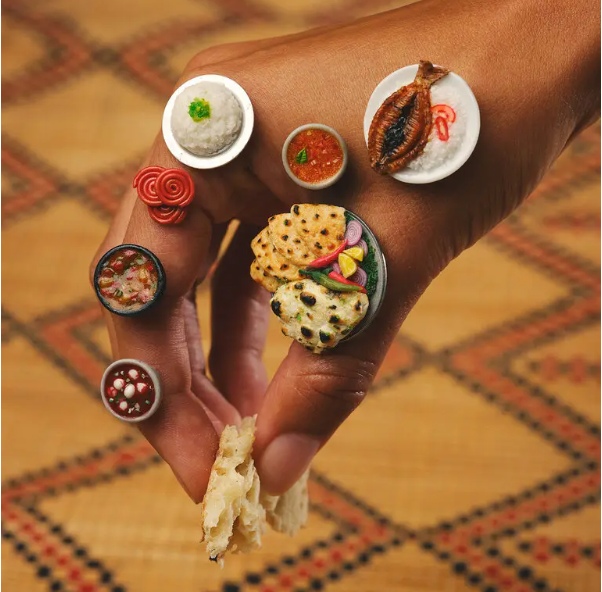
What Do We Gain by Eating With Our Hands?
Think about the last time that you ate with your hands, what was that experience like? Did your food taste different, did you feel more “connected” to your food? In the US, most meals are eaten with some sort of utensil; with exceptions being made for foods like sandwiches, burgers, or pizza. Chances are you were taught to eat with utensils as it's thought to be “good etiquette” and more “hygienic”. But what are we missing out by eating with utensils instead of our hands? And where did the concept of “utensils” come about?
This article, featured in the New York Times Style Magazine, explores the history of utensils, dishes that are meant to be eaten with your hands, and how ditching utensils can enhance your meal.
|