|
A Note from the Coordinator's Desk |
|
Mentoring Matters: Why Supporting New Teachers is Essential
Entering the teaching profession is thrilling—but it also comes with steep learning curves. Through the Missouri Teacher Development System (MTDS), mentoring is embedded as a critical strategy for nurturing new teachers. Here’s why mentoring matters and how MTDS empowers districts to support emerging educators.
Why Mentoring New Teachers Works
-
Structured support is required by Missouri law Missouri Revised Statutes § 161.375 stipulates that districts implement high-quality mentoring—teacher-driven, confidential, culturally aware, and individually tailored—to support a minimum two-year period for beginning teachers.
-
MTDS offers competency-based mentoring training The MTDS “Mastering Foundations of Mentoring” series equips experienced teachers with skills in coaching conversations, observation, feedback, and peer collaboration. These requirements align mentors with DESE’s mentor training standards.
-
Benefits span both mentor and mentee Research shows mentor programs boost novice teacher effectiveness and retention—and even mentors benefit professionally, reinforcing instructional leadership within schools.
MTDS Mentoring in Practice
-
Targeted PD series MTDS offers a “Mastering Foundations of Mentoring” cohort ideal for mentors and those seeking to mentor. The series features observation coaching, feedback practice, consultant guidance, networking, and classroom skill application.
-
Regionally delivered and locally adaptable Delivered via Regional Professional Development Centers (RPDC), this series includes flexible, site-based PD that encourages sharing strategies among peer mentors.
In Summary
Mentoring is more than a compliance duty—it’s a powerful lever for instructional excellence and teacher retention. MTDS provides a structured, competency-based framework and high-quality training that empower mentors and benefit new teachers. By investing time, resources, and trust in mentoring, schools cultivate educators who not only survive—but thrive.
Take care,
|
|
Foundations of Mentoring
Build Confident Mentors. Strengthen Teaching. Support Teacher Retention.
Foundations of Mentoring prepares teachers to become effective mentors through reflective practice, skill development, and collaborative learning. Participants explore the six roles teachers hold throughout their careers using the Missouri Teacher Development System (MTDS) domains, developing a deeper understanding of how these perspectives shape teaching, mentoring, and professional growth.
Program Benefits and Opportunities
This competency-based program fulfills the state mentor training requirement outlined in the Missouri Mentor Guidelines and Standards and aligns with mentoring requirements for BTAP Year 1 and Year 2 participants. Mentors develop practical skills and receive ongoing support to strengthen mentoring relationships and promote professional growth.
Participants will engage in:
- Training in observation, feedback, and effective mentoring practices
- Non-evaluative feedback strategies using Mike Rutherford’s 7 Tools
- Consultant support and regional networking with fellow mentors
- Opportunities to apply newly acquired skills with beginning teachers
- Professional learning that builds mentor confidence, strengthens instructional practice, and supports teacher retention
Strong Mentors. Stronger Support Systems.
Effective mentoring starts with supporting mentors. By investing in mentor development through MTDS Foundations of Mentoring, districts strengthen experienced educators' capacity to guide beginning teachers, foster professional growth, and build a sustainable support system that benefits both teachers and the district as a whole. When mentors grow, new teachers thrive, and strong teachers build stronger schools.
|
|
Together in Teaching and Leading |
|
|
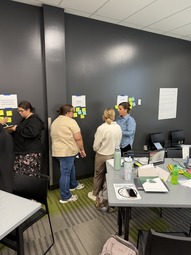
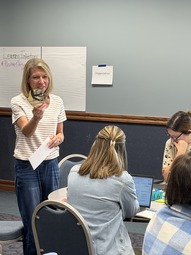
The following reflections highlight mentoring's impact across the Northwest, Northeast, and St. Louis regions. Photos feature mentoring cohorts from the Northwest region in 2026.
|
|
|
"Over the years, I’ve worked with many new teachers, with some straight out of college and others beginning a new career in education. One of the most valuable supports I’ve seen is the Missouri Teacher Development System (MTDS), both for new teachers and for the mentors who support them.
This year, I’ve had the pleasure of pairing a veteran teacher with a new teacher entering education as a second career. Veteran teachers often know “what works,” but putting that experience into practical, useful guidance for someone just starting out can be a challenge. The MTDS Foundations of Mentoring program and ongoing coaching support help mentors put their experience into words, ask thoughtful questions, and offer specific feedback.
The mentor training also gives seasoned educators a fresh perspective on what new teachers face as they enter the classroom. It opens the door to ongoing coaching and conversations throughout the year and gives mentors and new teachers a common language of instruction. That shared foundation helps us have collaborative, solution-focused conversations about what’s working, where support is needed, and what steps we can take together to help new teachers grow."
Dr. Tiffany Otto
JH/HS Principal & Superintendent
Grundy R-5 School District
|
|
"As an educator in Missouri since 2009, I have had the privilege of serving as a mentor to fellow teachers and now see the value of the MTDS Teacher Mentoring and Coaching Program through the lens of a school administrator. Over the years, I have watched this program evolve into an increasingly valuable resource for educators.
The program equips mentors with the knowledge, skills, and understanding necessary to support new teachers effectively. Through training and ongoing support, mentors develop confidence in their roles, strengthen communication skills, and learn how to build meaningful, trusting relationships. The MTDS Foundations of Mentoring program provides outstanding teachers with opportunities to lead fellow teachers with confidence.
The benefits for new teachers are immeasurable. With the many routes available toward teacher certification, teachers are entering the field with various levels of preparation. Entering the teaching profession, no matter the route, can be overwhelming, and having a trained mentor provides guidance, encouragement, and a trusted person to turn to when challenges arise. Effective mentoring helps new teachers navigate classroom management, instructional planning, student needs, and the many decisions they face each day. It provides a safe space to ask questions, reflect on experiences, learn from mistakes, and celebrate successes. Most importantly, it helps new teachers build confidence, develop effective teaching practices, and feel supported rather than isolated as they grow into their roles.
Through strategies such as active listening, reflective questioning, and coaching, mentors help new teachers think critically, solve problems, and become independent decision-makers. This support benefits not only individual teachers but also the students they serve.
Investing in trained mentors strengthens the culture of an entire building by fostering collaboration, professional growth, and shared responsibility for success. As a school administrator, I believe formal mentor training is an investment in our teachers, our schools, and our students. I encourage every administrator to embrace this program. The MTDS Foundations of Mentoring program does more than help new teachers navigate their first years; it empowers them to thrive, find fulfillment in their profession, and build lasting careers in education. Missouri students deserve great teachers, and the MTDS Foundations of Mentoring program is playing a huge part in the development of really great teachers."
Dr. Merideth Ussery
JH/HS Principal
Director of Special Education
Princeton R-5 School District
|
|
|
|
"The MTDS Foundations of Mentoring program explained what I needed to do in the role of mentor in a step by step process. I find that for me, this was best so that I don't leave anything important out. I wanted to do everything I could to make the transition as a first year teacher a less stressful one. I also knew that being an open door where the new teacher knew that they would not be judged for anything they were struggling with was just as important. I felt the program reinforced the best practices I was already implementing in my classroom. When my mentee had questions about a standard or skill, I view these moments as opportunities to model the importance of asking questions, researching, and digging deeper to gain a better understanding. As a mentor, I wanted the first-year teacher to understand that learning does not stop once you become a teacher. Regardless of how many years of experience we have, it is important to continue exploring new strategies, trying new approaches, and growing professionally. I wanted to model the mindset that effective teaching involves continuous learning, reflection, and a willingness to improve. My participation in MTDS has resulted in friendships that have gone past school districts and grade levels."
Erin Dunivan
Kindergarten Teacher
Ellis Elementary School
Clinton County R-3 School District
|
|
"Participating in the MTDS Foundations of Mentoring program has shown me just how crucial it is to support new teachers as they navigate the challenges of their first years. Early-career educators often feel overwhelmed and uncertain, but having a mentor helps relieve that stress. Offering encouragement benefits both of us, as it keeps me focused on the positive aspects of teaching and being an encouragment. Rather than just telling new teachers what to do, we work as a team to solve classroom challenges and look at student progress. This collaborative approach helps them quickly improve their classroom management and plan better lessons, keeping students engaged and moving forward. Most importantly, building this strong bond helps new teachers feel less isolated, boosting their daily confidence and keeping them excited about their future in education."
Cassie Lewis
9-12 Special Education
Polo High School
Polo R-7 School District
|
"After 24 years as an English and journalism teacher, librarian, and yearbook adviser, this program gave me a chance to pause and reconnect with how and why I teach. It validated that my instincts were on the right track while showing me why the coaching strategies I’ve used with yearbook staffs for years actually worked. First-year teaching is overwhelming, and this experience reinforced that my job isn't to give new teachers more to manage or jump in to fix every problem. It’s about listening, being a safe space to vent, and doing whatever I can to simplify their day. Having a clear framework gave my mentees and me a simple structure—we could cover the required check-boxes efficiently without losing sight of what they genuinely needed day-to-day. Mentoring two new teachers through this process helped them build real independence, refreshed my own teaching, and showed me just how much good structured support can do."
Karen Johnson
5-12 Library Media Specialist
Lawson Middle/High School
Lawson R-14 School District
|
|
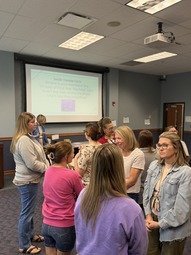
"I was extremely fortunate that my school district, the Hazelwood School District, allowed me to attend the Foundations of Coaching and Mentoring through the Missouri Teacher Development System (MTDS). It was one of the most meaningful, inspiring, and useful professional learning experiences I have participated in. Using the book Mentoring Matters as our foundation, we explored who we are as educators and mentors, while learning practical and impactful ways to support, encourage, and stand alongside our new teachers throughout the school year. The course was filled with engaging and lively discussions, reflection, and collaboration. We explored specific ways to support teachers each month, such as establishing routines and procedures, parent-teacher conferences, and standardized testing. To make our learning explicit, together we practiced intentional questioning, 30-second feedback, exploratory language, goal setting, nonverbal cues, and the balance between attitude and aptitude. This four-day course, which I highly recommend to all mentors, was joyful, practical, enriching, and energizing. The facilitators are enthusiastic, knowledgeable, supportive, and flexible, creating an atmosphere where everyone feels valued, inspired, appreciated, and heard. I left the training feeling invigorated and ready to implement these practices with my mentees and with plans to build these concepts into professional development for new teachers next school year."
Stephanie Kosielski
International Teacher Mentor and Coach
Hazelwood School District
|
"During the 2025-2026 school year, I had the opportunity to take a professional development course on coaching and mentoring. Throughout the course, I learned valuable lessons on being a better communicator and listener. The most valuable takeaway was how to treat my mentee with respect and guide them through listening and prompting, not just solving their problems for them. I also found great value in the support from the [facilitator] of the course. She showed what a fantastic mentor/coach looks like. She listened, supported us, and prompted us throughout the course. When we shared our trials and tribulations, she listened and didn’t just give us answers. It was a fantastic experience, and I would recommend the course to any teacher, as it has helped me communicate differently, not only with colleagues but also with students."
Bethany Hoffman
Third Grade Teacher
Knox County R-I
|
|

Supporting New Teachers As a Classroom Veteran
By Matt Kennedy
2026 Teacher of the Year Finalist
Kirksville R-III
There is nothing that can fully prepare you for your first year in the classroom. Anyone who has ever taught remembers the intensity of that experience. The hurricane of acronyms that everyone but you seems to already know; the exhaustion of being “on” all day, every day; the realization that your loftiest plans for the class will be foiled by a lack of time and resources; the challenge of getting teenagers to do new things. Teaching is a career where the highs are high and the lows are low, and they might all happen in the same class. It is an experience like no other. That first year teaches you a lot about who you are.
I’ve spent the bulk of my career as a mentor for new teachers in my building, working with preservice teachers in the education program at Truman State University, and occasionally helping support new social studies teachers in neighboring rural districts where they are a department of one and just need someone to bounce ideas off of. I find so much joy in collaborating with and supporting new teachers. I find these relationships to be incredibly valuable. Being a mentor elevates my own teaching by forcing me to be more deeply reflective and refine my own philosophies and practices. On a larger level, I believe that supporting my community of teachers is the civically responsible thing to do.
Our public schools represent the best impulse of the nation’s founding principles. A belief that every child, regardless of background, identity, or value system, deserves access to education, and that healthy democracies require a well educated citizenry. We find ourselves at a moment in American history when communities feel fractured through a blend of partisan polarization, declining third spaces, and the atrophy of the muscles of pluralism and civil discourse. Supporting my fellow teachers is doing my part to address some of those problems. In my years of supporting new teachers, I have come to keep two things in mind in my efforts which I believe can be beneficial to all of us trying to support our new colleagues. The first is that in our excitement to help and our desire to be supportive, we can sometimes be overwhelming. Those first few years in the classroom are a lot, and sometimes, a veteran teacher with a lot of resources and expertise, in an effort to be helpful, can become another area of overwhelm to the early teacher. It is important for us to remember that just like with our students, we need to give our new colleagues support and encouragement, but also room to experiment and develop their own classroom style. We should check in, not always with a goal in mind, but just to show our support. Offer to help staple as a chance to open some dialogue. We should normalize talking through challenges so that they can see beyond the polished facade. All of these approaches will help create a supportive environment, but one that new teachers can engage with on their terms.
Secondly, new teachers (and really all teachers) need a strong community of teachers. There is nothing more reassuring to a first year teacher than for them to hear that their more veteran colleagues still struggle with some of the same things that they are finding difficult and that at the end of the day, even decades of experience and effective strategies don’t yield a 100% success rate. They need a sounding board as they troubleshoot their challenges, brainstorm creative ideas for their classroom, and grapple with finding the right words to respond to the first email from an upset parent. So often, when things are challenging we hear the rugged individualist suggestions of remembering your “why” or to not forget self care, but those are hollow substitutes for a meaningful community of support from people who have been there and are in the trenches alongside us. This community can come from within the school district itself, from the regional consortiums of fellow teachers run by the RPDC, or involvement in professional organizations (in my own content area of social studies, this would be the Missouri Council of the Social Studies and The Missouri Council of History Education).
I encourage all of you, regardless of whether you are an official mentor of an early career teacher or not, to take the time to help be part of that supportive community for your colleagues. It is rewarding, a chance to grow in your own practice, and, in my mind, part of your civic duty.
|
|
|
Specialist Spotlight and the Educator Bookshelf |
|
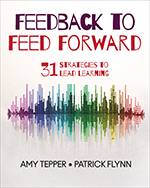
Are you looking to strengthen your approach to instructional feedback? For mentors, instructional coaches, and administrators, effective feedback is one of the most powerful tools for supporting professional growth and improving student learning. Amy Tepper and Patrick Flynn’s complementary books, Feedback to Feed Forward: 31 Strategies to Lead Learning and Learner-Focused Feedback: 19 Strategies to Observe for Impact, offer practical, research-informed strategies to improve teaching and student learning.
These complementary resources help educators move beyond simply observing instruction to gathering meaningful evidence, asking reflective questions, and identifying actionable next steps. Whether you're supporting a beginning teacher or coaching an experienced educator, these books offer tools to build trusting relationships, strengthen instructional practice, and keep student learning at the center of every feedback conversation.
|

These books offer valuable tools that turn feedback into opportunities for reflection and growth, ultimately enhancing student outcomes and experiences.
Which book should you read first?
Feedback to Feed Forward establishes the foundation for effective feedback. Its 31 strategies help educators conduct meaningful observations, collect and analyze evidence, identify high-leverage instructional moves, and develop actionable next steps that support teacher growth.
Learner-Focused Feedback builds on that foundation with 19 strategies for observing instruction's impact on learners. It helps mentors, coaches, and administrators identify intended learning outcomes, recognize learning in action, gather meaningful evidence, and provide feedback that promotes reflection and instructional improvement.
|
|
|
State of Missouri
573-751-7986
eqdev@dese.mo.gov
Newsletter published by
the Office of Educator Quality
|
|
|
|
|