
February 7, 2022
DSS Team,
Today marks the second week of Black History Month, and we want to keep the momentum going. I thoroughly enjoyed learning more about last week's historical figures, and I hope you did, as well.
This week, we are sharing the stories of Hiram Rhodes Revels, Marian Anderson, Oscar Devereaux Micheaux, Matthew Henson, and Benjamin Singleton. These exceptional people influenced politics, government, music & entertainment, religion, and more in ways that are still felt today. I hope you enjoy their stories.
On another note, I want to invite all team members to join the Office of Administration's Black History Month Virtual Celebration on February 24 at 10:30 a.m. The keynote speaker for the event will be Bob Kendrick, the President of the Negro Leagues Baseball Museum.
Yours in Service,
Robert Knodell
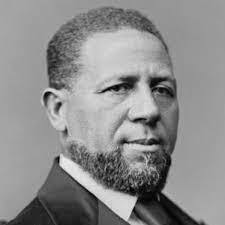
Hiram Rhodes Revels was an American politician and minister who is credited as the first African-American to serve in U.S. Congress. He was born a free man in Fayetteville, North Carolina in 1827. He lived, preached, and taught in many states including Maryland, Missouri, Illinois, and Mississippi and would be elected to Congress in 1870, shortly following the end of the Civil War.
Before getting involved in politics, Revels was a minister in the African Methodist Episcopal (AME) Church, who preached to free and enslaved people in the Eastern and Midwestern U.S. According to History, Art & Archives: United States House of Representatives, Revels took a pastor position in St. Louis in 1853, even though Missouri “forbade free blacks to live in the state for fear they would instigate uprisings.” Despite his cautiousness, Revels was imprisoned for a short time in 1854 for preaching to the Black community there.
He served as an Army chaplain during the Civil War, forming regiments of African-American soldiers. It was during this time that he also established a freedmen’s school in St. Louis despite having faced imprisonment there a decade prior.
After the war ended and Reconstruction was taking root, Revels became more involved in politics. Although he feared racial friction and interference with his religious work, his moderate and compassionate political opinions won over Black and white Americans alike. In 1869, Revels won a seat in the Mississippi state senate and filled a vacant seat in the U.S. Senate in 1870. As a man of mixed heritage ‑- his father Black and his mother of Scottish decent -- Revels firmly believed in the value and beauty of social integration between Black and white people:
“If the nation should take a step for the encouragement of this prejudice against the colored race, can they have any grounds upon which to predicate a hope that Heaven will smile upon them and prosper them?”
|
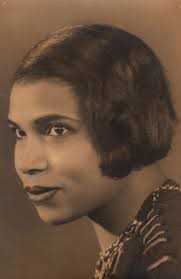
Considered one of the greatest Contralto singers of all time, Marian Anderson was the first African-American to perform at the New York Metropolitan Opera. Marian began singing with the Union Baptist Church Choir in Philadelphia at age 6. Upon the death of her father when she was 12, the choir raised $500 for her to receive formal training from Giuseppe Boghetti, effectively launching her career.
Over her two years of studying with Boghetti, Anderson won a chance to sing at the Lewisohn Stadium in New York after entering a contest organized by the New York Philharmonic Society. Other opportunities soon followed. In 1928, she performed at Carnegie Hall for the first time and eventually embarked on a tour through Europe thanks to a Julius Rosenwald scholarship.
Despite her international acclaim, Anderson was denied performing at Washington D.C.’s Constitution Hall because it only allowed white performers. In response, Eleanor Roosevelt invited Anderson to perform instead at the Lincoln Memorial on Easter Sunday for a crowd of more than 75,000 people. The performance was also broadcast live for millions of radio listeners. Anderson continued to lead a successful career until she retired to her Connecticut farm in 1965. She received a Lifetime Achievement Grammy in 1991 and died of natural causes in Portland, Oregon on April 8, 1993.
The PBS special exploring her life, career, art, and legacy premieres nationwide tomorrow, February 8, at 9 p.m. EST.
|
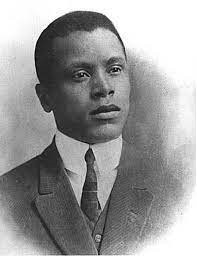
Oscar Devereaux Micheaux is an American author, director, and producer considered to be the first Black filmmaker in the U.S. He was born to former slaves in Illinois two decades after slavery was officially abolished in the U.S.
FarOut Magazine says Oscar Micheaux moved to Chicago at the age of 17 where he started a shoeshine business and then became a Pullman porter on the railroads. Due to the state-hopping nature of his job and his excellent social skills and charisma, Micheaux was able to travel across the United States from a young age, save up a considerable amount of money, and rub elbows with people who would bolster his career in entertainment.
Micheaux wrote, produced, and directed more than 40 films and wrote seven books over the course of his career during a time when art and filmmaking was exclusive to a white, wealthy class. In 1913, he published his first novel, The Conquest: The Story of a Negro Pioneer, based largely on his time as a homesteader. Five years later, he published his second novel, The Homesteader, and developed it into his first feature film. The film grapples with the realities and challenges of being Black in America, and largely responds to the negative portrayal of African Americans in the widely popular film, The Birth of a Nation. Visit IMBD for a full list of films by Oscar Micheaux.
His film Within Our Gates (1919) is available to watch for free on The Library of Congress’ YouTube channel.
Micheaux’s novels:
-
The Conquest: The Story of a Negro Pioneer (1913)
-
The Forged Note (1915)
-
The Homesteader (1917)
-
The Wind from Nowhere (1943)
-
The Case of Mrs. Wingate (1944)
-
The Story of Dorothy Stanfield (1946)
-
The Masquerade (1947)
|
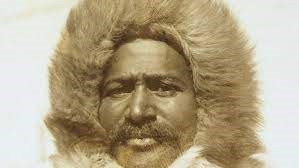
Matthew Henson was an American explorer and author credited with co-discovering the North Pole. He was born in Charles County, Maryland to share-croppers. Henson was orphaned by the time he was 12 years old. Upon the death of his parents, Henson became a cabin boy on the ship Katie Hines, enabling him to travel the world into his young-adult years.
In 1887, Henson met explorer Robert E. Peary while working a retail position. Peary was impressed with his exploration and travel experience and invited him on dozens of expeditions, including to the North Pole in 1909. By 1912, Henson had written his memoir on the experience, A Negro at the North Pole.
After this expedition, Henson led a quiet, comfortable life. He was appointed as a clerk in the U.S. Customs House in New York City, a post he held until retiring in 1936. He received a Congressional Medal in 1944 for the North Pole discovery. In 1947, Henson helped author Bradley Robinson create his biography, Dark Companion, from which most information about Henson is known.
Although Dark Companion is not currently being printed or readily available online, Henson’s memoir is available for free through Project Gutenburg.
|
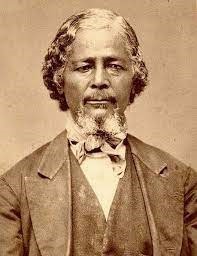
Benjamin Singleton, affectionately called “Pap,” is known as the “Father of the African American Exodus” for his efforts in helping fugitive slaves escape to the North and for establishing African-American settlements in Kansas.
He was born a slave in Tennessee in 1809 to his enslaved mother and a white plantation owner. Singleton lived in captivity until his escape at age 37. Upon escape, he made his way to Detroit and operated a secret boardinghouse for other escaped slaves.
Following the Civil War, Singleton returned to his native Tennessee as a free man. However, the freedom he experienced there was short lived because the sharecropping system that developed more or less re-enslaved Black tenant farmers.
During this time of Reconstruction and quasi-slavery, Kansas was a safe-haven for Black settlers. Singleton considered the state a “new Canaan” and himself the "Black Moses" who would lead his people to the “Promised Land.” Singleton traveled throughout the South to recruit Black settlers to Kansas. He distributed promotional posters and handbills, and his efforts, in part, helped lead nearly 200,000 migrants to Kansas between 1877 and 1880.
|
|