|
Partners,
As measles activity increases nationally, Missouri continues to prepare and respond with vigilance, collaboration and a deep commitment shared across our public health and healthcare partners. National trends and recent exposures remind us how quickly measles can reenter and heavily impact communities. Nearly all the states have reported cases this year, many linked to outbreaks in undervaccinated populations and travel‑related exposures. While we have yet to experience significant outbreaks in Missouri, we have already reported more cases this year than in all of 2025. It is important that all of us—providers, public health professionals, health systems, schools and community partners—stay ready.
Measles is one of the most contagious viruses in circulation today. A single case can infect up to 9 out of 10 unvaccinated individuals, and the virus can linger in the air for up to two hours after an infected person has left. Over the past year, Missouri has observed multiple exposure events requiring rapid investigation and wide coordination. These responses demonstrate the strength of our statewide public health network and highlight the critical role each partner plays in controlling the spread of vaccine‑preventable diseases.
At DHSS, provider education remains a priority. Because measles was eliminated in the United States for years, many clinicians today have limited firsthand experience recognizing early symptoms. We are working closely with providers to reinforce clinical suspicion, highlight exposure risk factors and ensure they know when and how to consult with the State Public Health Laboratory. Updated testing guidance, provider presentations, communication toolkits and rapid consultation support are helping bridge the knowledge gap and promote timely identification of suspected cases.
Our collaborative response extends far beyond clinical guidance. Addressing measles requires coordinated public health action at every level—from local health agencies to hospitals, schools, childcare programs and statewide partners. Together, we conduct contact investigations, support isolation and quarantine when needed, provide testing and laboratory coordination, and issue public notifications when exposures occur in public settings. Each step requires close communication and trust between agencies, providers and community organizations.
Vaccination remains the foundation of our prevention strategy. Missouri’s MMR vaccination rates, while improving, remain below the 95% threshold needed for herd immunity. Communities with lower vaccination rates are more vulnerable to outbreaks, which increases the urgency of ongoing local outreach. DHSS continues to work with partners to communicate the effectiveness of the MMR vaccine, encourage routine childhood immunization and ensure vaccine availability, especially through programs that support uninsured or under‑insured families.
Public communication is another essential part of the response. When potential exposures occur, our coordinated approach with local agencies allows us to quickly inform the public, guide symptom monitoring, reinforce isolation recommendations, and encourage vaccination. Clear, consistent communication helps ensure that families understand what actions to take and where to turn for reliable information.
This work is demanding, but it is also meaningful. Each investigation, laboratory test, provider consultation, vaccination clinic and public message contributes to protecting our communities, especially infants, immunocompromised individuals and others who rely on us for their safety.
To our public health and healthcare partners: thank you for your leadership, your responsiveness and your dedication. Missouri’s preparedness and response efforts are only as strong as the people who carry them out, and your commitment continues to safeguard the health of Missourians.

Division Spotlight: Division of Cannabis Regulation
Amy Moore, DCR Director
Many of you know Missouri voters approved medical cannabis in 2018 and adult use in 2023. But unless you work in the Division of Cannabis Regulation (DCR) or in the cannabis industry, you might not realize what that actually involves. When we talk with partners outside the division, people are often surprised by just how regulated and how intricate the cannabis industry really is. Article XIV made cannabis legal, but there’s a lot happening behind the scenes to make that legal framework work safely and responsibly. As the youngest division in the department, DCR is still a mystery to many, so let’s change that.
DCR ensures qualifying patients and adults 21+ can access cannabis safely and legally. We set and enforce rules, educate the public, license businesses, oversee product quality, inspect facilities, and issue patient, caregiver, and cultivation cards. With about 150 dedicated team members, DCR protects public health and keeps Missouri’s cannabis market running smoothly and compliantly. Licensed facilities operate under strict oversight, including seed‑to‑sale tracking, facility inspections, 24/7 video surveillance, detailed packaging and labeling requirements, background checks, and mandatory testing for potency and contaminants (like mold or pesticides, heavy metals, residual solvents) and more.
DCR also partners with the Missouri State Public Health Laboratory, the state’s official reference lab for cannabis. This past summer marked one year since Missouri launched statewide marijuana reference sampling and testing, which is a major factor in ensuring product safety, accurate labeling and consistent standards across the legal market. We’re proud of this partnership, especially as other states begin adopting similar approaches. Missouri’s reference lab provides independent verification of test results, builds consumer trust and strengthens the overall integrity of Missouri’s regulated cannabis market.
Finally, cannabis legalization is still relatively new and constantly evolving, and that’s where DCR education efforts come in. We love helping others understand how cannabis regulation works and why it matters. If your organization wants to learn more about DCR and what we do, we’re always happy to share. Please reach out to us at cannabisinfo@health.mo.gov.
|
Workforce Transformation in Motion
Pat Simmons, Director of Health Care Workforce Transformation
Sometimes the best way to understand change in motion is to go where it’s happening. So, on September 11, Aleesha Jones, Chief of the Office of Rural Health and Primary Care, and I headed to Joplin, where collaboration is pushing health care workforce progress forward every day. We met with the Joplin Area Regional Alliance for Health (JRAH) and toured Crowder College’s Advanced Training and Workforce Center and Kansas City University’s Joplin campus to learn more about how their programs are shaping tomorrow’s rural health workforce.
The Alliance, a strategic partnership led by Lori Worthington, brings together stakeholders from local school districts, health systems, the United Way, regional academic institutions, the Joplin Area Chamber of Commerce, and many others. One of their major achievements is keeping health career education aligned across systems, starting in high school. By coordinating curricula and eliminating duplicative coursework, they help students maintain momentum as they progress toward high need health careers. Additionally, to help students identify and navigate the education needed to begin a health career, the Alliance published a comprehensive guide outlining regional certifications and degree pathways, providing a clear roadmap through the region’s training pipeline. Their shared commitment to building streamlined career pathways and removing barriers that slow students down shows what real momentum looks like on the ground.
Partners also shared the challenges that can disrupt that momentum: K–12 students needing stronger science and math foundations, limited availability of clinical training sites, and a persistent need for qualified faculty and preceptors willing to teach. Hearing these hurdles helps us see where targeted solutions can keep the region’s workforce pathways moving forward.
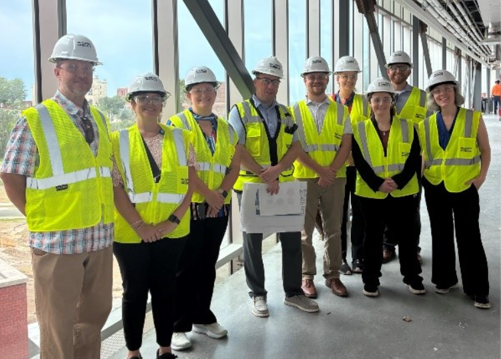
Our visit continued with a tour of Crowder College’s health sciences training spaces, including a new surgical technician training lab—another clear sign of transformation in motion. At KCU we visited with leaders from the Colleges of Osteopathic Medicine and Dentistry and the Center for Population Health and Equity, saw the virtual reality equipment used to train students and learned how they engage students in learning experiences to build their understanding of rural social needs and encourage them to pursue practice in local communities.
Two themes stood out during our Joplin visit: this work is constantly evolving, and meaningful progress happens when partners set aside individual agendas to focus on shared goals. Each time one challenge is resolved, a new one appears, a reminder that supporting the rural workforce requires continual learning, flexibility, and collaboration. Every relationship we strengthen and every barrier we lift helps move the rural health workforce forward. We’re excited to deepen these partnerships in Joplin and continue building strong, connected pathways across other regions of the state.
|
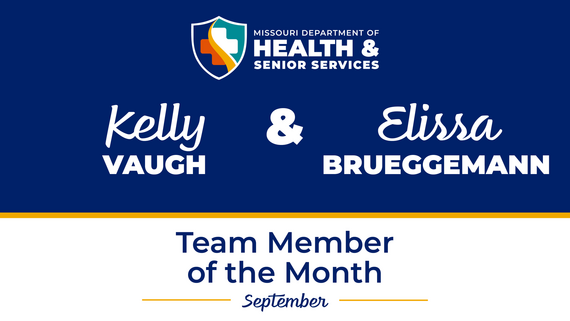 September Team Members of the Month
Congratulations to Elissa Brueggemann and Kelly Vaugh from our Adolescent and School Health Program for being named September's Team Members of the Month!
Over the past several months, Eli and Kelly have played a pivotal role in advancing emergency preparedness in Missouri’s public and charter school districts. Their main accomplishment was delivering "Stop the Bleed" training sessions, which teach school staff and community partners how to recognize and respond to life-threatening bleeding before emergency services arrive. This hands-on training included tourniquet application, wound packing, and direct pressure techniques, and allowed participants to become certified trainers themselves, expanding the program’s reach. Since March 2026, they have trained over 850 individuals across more than 75 public school districts, including school nurses, administrators, teachers, and community partners.
Their efforts have not only improved emergency response skills but also fostered a culture of readiness and safety in schools statewide. Their dedication and expertise have elevated safety standards and increased training capacity for local public health agencies, making them exceptionally deserving of recognition.

See Something, Say Something
Eric Hueste, Office of Emergency Coordination
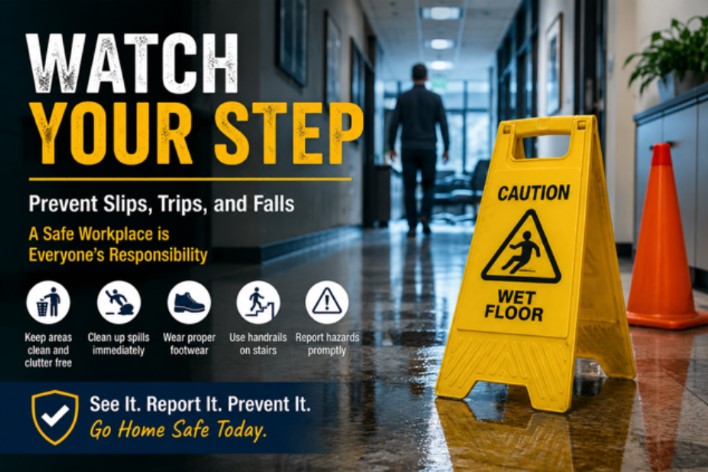
September is a great time to remind everyone that workplace safety and security are everyone’s responsibility.
If you notice something unusual, unsafe, suspicious or out of place, don’t assume someone else will report it. Speak up and notify the appropriate colleague or security personnel.
Whether it’s a safety hazard, an unsecured area, unusual activity or something that simply doesn’t look right, reporting concerns early can help prevent an incident before it happens. Together, we can help keep our team members, facilities and communities safe.
A “Real-life See-Say Success Story,” the 2010 Times Square Attempted Bombing
On May 1, 2010, a man parked an SUV containing a bomb in the middle of Times Square in New York City. A street vendor noticed that the unattended vehicle was smoking and behaving strangely. He alerted a police officer, who investigated and quickly evacuated the area. The bomb squad discovered that the vehicle contained an explosive device along with gasoline, propane tanks and other materials.
The bomb failed to detonate properly, but authorities said the situation could have been extremely dangerous. The suspect was later arrested and convicted.
Congress and law enforcement specifically cited the street vendors as having prevented the attempted bombing.
Stay alert. Stay aware. Look out for one another.
|

Cybersecurity Tip: Keeping "Digital Employees" Safe and Secure
Ryan Marsch, Director of Information Technology and Data Strategy
Artificial intelligence systems that can act like independent "digital employees" to help automate workflows are categorized as Agentic AI. As we start exploring these applications, we must make sure we are protecting our data and our systems. Because these AI systems can make decisions, access databases, and perform tasks on their own, we have to set up strict guardrails. Think of it as onboarding a new colleague: you wouldn't give a brand-new worker the keys to the entire building on their first day, and we shouldn't do that with AI either! When we deploy an autonomous AI agent, we are no longer just installing software; we are onboarding a digital worker with access to our network, meaning we must manage their access, monitor their work, and protect our data just like we would with any human employee.
Simple Rules for Securing AI in Our Work
To keep our data safe, we must apply these essential security guardrails when building or using any AI tools:
-
Take Roll Call: Keep a complete list of every AI agent we use, what model powers it, and what files or systems it has access to, so we always know exactly what is handling public data.
-
Limit Their Access: Give the AI the absolute minimum permissions it needs to do its job (known as "Zero Trust"). For example, if a tool only needs to read wait times, do not grant it permission to access private participant medical records.
-
Scramble the Data: Ensure that all data traveling to and from the AI is encrypted so that sensitive health information and employee files are shielded from cyber threats. This is something that should be addressed in every vendor contract we hold. Double check!
-
Test in a "Sandbox": Build and test new AI tools in a safe, isolated testing environment with fake data first to safely catch and fix mistakes before letting them handle real-world tasks.
-
Keep a Paper Trail: Monitor the AI’s workflows and log every single action it takes to create a complete history of its work.
-
Require a Human Signature: Set up "human checkpoints" for high-risk actions so that no AI can delete databases, send out public communications, or change policies without a real staff member double-checking it first.
By setting these clear boundaries and keeping our staff at the center of every decision, we can safely explore new tools like Agentic AI while keeping the private information of Missourians secure.
|
Thank you for your continued partnership!
|