|
Partners,
Governor Kehoe recently shared information with me and my fellow Cabinet members about the impact of suicide deaths on our state workforce. At the Department of Health and Senior Services (DHSS), we are committed to fostering workplaces where mental health is safe to talk about and where every team member feels valued and supported.
To help strengthen mental well‑being across our workforce, Missouri is advancing a three‑phase initiative that includes:
- Promoting awareness and meaningful connections
- Creating a comprehensive resource toolkit
- Implementing the Missouri Workforce Suicide Prevention Plan
We appreciate the partners, organizations and stakeholders who are contributing to this effort. Your collaboration is essential, and we fully support the work you are doing to help protect and uplift Missouri’s workforce.
There are several ways you can encourage a No‑Stigma Environment in your own organizations and communities:
- Foster strong connections among colleagues and teams.
- Promote available support services, such as employee assistance programs, for individuals or families who need counseling.
- Encourage well‑being activities, including the Missouri Department of Mental Health’s Digital Detox Challenge, which supports healthy boundaries and connection.
- Share trusted suicide prevention resources to help raise awareness and expand access to support.
By watching out for one another, checking in, and offering support when it’s needed, we can make a meaningful difference—together.
Thank you for reading the great updates and highlights some of our department leaders have for you below.

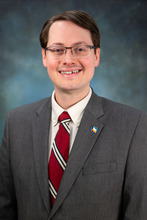
Daniel Bogle Named Division Director for Community and Public Health
DHSS is pleased to announce Daniel Bogle as the Division Director for the Division of Community and Public Health (DCPH).
Daniel comes to this role with extensive experience in public health policy, strategic planning and statewide public health system transformation. As the DHSS Health Policy Director, he led efforts to advance evidence-based and innovative policy solutions, strengthen public health infrastructure and improve coordination across partners statewide.
Since joining DHSS in 2017, Daniel has served as the department’s legislative liaison, a special projects coordinator in DCPH, and the Chair of the DHSS Institutional Review Board (IRB)—guiding oversight and protection of human subjects in research. His background also includes work with the Missouri Grocers Association and numerous local and statewide campaign initiatives, giving him a strong understanding of Missouri’s communities, stakeholders and policy landscape.
Daniel holds both a Master of Public Administration and a Bachelor of Science in Political Science from Missouri State University. He and his wife, Clare, a licensed clinical social worker and mental health therapist, share two young children, Berlin and Azariah.
We look forward to Daniel’s leadership as DCPH continues its mission of strengthening community health, advancing prevention and supporting partners across the state.
Please join us in welcoming Daniel to this role and in congratulating him on this appointment.
|

Division Spotlight: Division of Regulation & Licensure (DRL)
Mindy Laughlin, DRL Director
The Division of Regulation and Licensure (DRL) plays an essential role in protecting the health, safety and well-being of Missourians through the oversight of healthcare facilities, services and other regulated programs across the state. DRL staff and surveyors conduct a wide range of regulatory activities including state licensure inspections, federal Medicare and Medicaid certification surveys, complaint investigations, revisit and follow-up surveys along with other specialized surveys and inspections as needed. This work spans numerous healthcare settings, including long-term care facilities, hospitals, ambulatory surgical centers, home health and hospice providers, clinical laboratories and other regulated healthcare services. Surveyors evaluate everything from quality of care and services to resident and patient rights, infection prevention, environmental safety, staffing, documentation and compliance with state and federal requirements. Through observations, record reviews, interviews, investigations and technical expertise, DRL surveyors and the staff who support them help ensure Missourians receive safe, appropriate and quality care.
During the week of August 9-15, 2026, National Health Facility Surveyor Week was celebrated. This week provided an opportunity to celebrate the dedicated colleagues who take on the responsibility of surveying and regulating healthcare facilities throughout Missouri. Their work often takes place behind the scenes, but its impact can be seen every day in the safety and quality of care provided all who seek care within these facilities. I would like to make a special shout out to all the DRL surveyors and the many team members who support the survey process for the professionalism, expertise, dedication and commitment to those they serve. Thank you for all you do!
|

Federal Executive Order Regarding Childhood Vaccines
DHSS is aware of President Trump’s August 10 executive order regarding childhood vaccine schedules. At this time:
- There is no change in Missouri vaccination law. The Executive Order does not directly alter our school immunization requirements, and Missouri has made no changes to state vaccination requirements. There is no new scientific evidence that changes current guidance.
- Missouri’s vaccination recommendations remain unchanged. Childcare facility and school vaccination requirements will not change at this time, and policies allowing medical and religious exemptions remain unchanged.
- Vaccine availability remains the same. All routinely recommended childhood vaccines—including MMR—remain fully available. No monovalent (single-strain) vaccines for measles, mumps, or rubella are currently licensed in the United States.
- There are no changes to vaccine insurance coverage in Missouri. Families should expect coverage to remain consistent. There have been no changes to Missouri's VFC program.
- Families are encouraged to speak with their pediatrician or healthcare provider. Medical professionals are best positioned to guide parents and caregivers based on each child’s needs.
- DHSS will continue to monitor evolving research findings, evidence-based scientific assessments and all federal actions and scientific assessments. We will evaluate any new information we receive and communicate promptly should changes become necessary.
|
Mid-America Regional Council Recognized by ACL
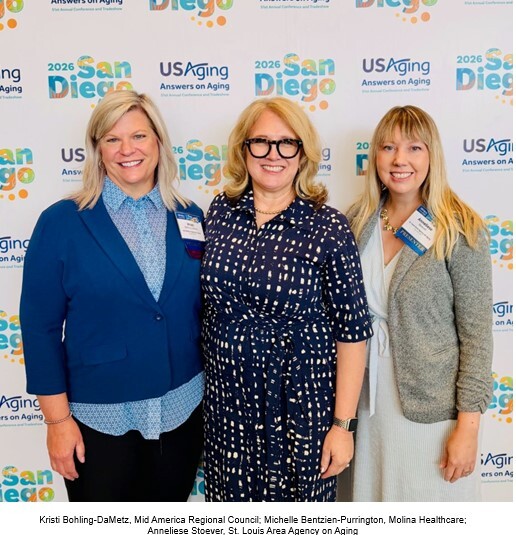
Congratulations to the Mid-America Regional Council (MARC) Community Support Network which has been selected as a Phase 1 winner in the national Health at Home Challenge, led by the Administration for Community Living (ACL).
This recognition highlights the strength of Missouri’s aging services infrastructure and the innovative collaborative model now in place. MARC—one of ma4’s ten Area Agencies on Aging (AAAs)—is serving as an Advanced Community Care Hub (aCCH) within a statewide system that features two anchor Community Care Hubs: the Community Service Network (CSN) in Kansas City and the Integrated Health Network (IHN) in St. Louis. Working together, these hubs and ma4 coordinate all ten AAAs and more than 500 community-based partners across Missouri.
Health care organizations statewide are actively engaged in this effort to better reach dual and near-dual eligible individuals. For ma4 and its member AAAs, this national award affirms the value of a coordinated, statewide approach that integrates community-based services with health care partners—helping Missourians remain independent in their homes.
The Health at Home Challenge aims to improve outcomes, support independence, and reduce the total cost of care for up to one million dually or near-dually eligible Medicare and Medicaid beneficiaries nationwide. As a Phase 1 awardee, Missouri’s network now advances to Phase 2 implementation.
DHSS celebrates this accomplishment and looks forward to continued collaboration to strengthen supports for older Missourians. Read ACL’s full announcement.
|

What is the 2nd Most Deadly and Harmful Substance in Missouri?
Heidi Miller, Chief Medical Officer
After tobacco, alcohol is the second-leading substance-related cause of death and disease in MO and the USA, followed by opioids. While the opioid epidemic has rightly commanded our primary attention, the damaging effects of alcohol have been overshadowed. Alcohol kills in two ways: (1) slowly through chronic diseases including cirrhosis, cancer, heart disease, pancreatitis, and neurological damage, and (2) quickly through acute harm such as motor vehicle crashes, injuries, overdose, suicide and violence. About two-thirds of deaths are from long-term use, and one-third of alcohol deaths come from these sudden events. And tragically, etiologies of our maternal mortality and morbidity include alcohol addiction and alcohol-fueled violence against women.
- 1 in 10 Americans over the age of 12 has alcohol use disorder.
-
Missouri alcohol-related emergency department visit rates increased 33% (from 2020 to provisional data in 2024, 2.87 per 1,000 residents to 3.83 per 1,000 residents).
Unhealthy alcohol use is underrecognized and undertreated. Most people who drink at unhealthy levels are never asked about it, and a staggering 90% never receive the appropriate care, despite having advanced alcohol liver disease.
There is so much we can do as public health professionals, for our own health, and for our family and friends.
Less is safer. Risk rises with the amount we drink and cutting back at any level lowers that risk. There is no safe alcohol consumption level considered safe (sorry but the 1980s notion that one glass of red wine was healthy has been debunked). Although abstinence is healthiest, reduction can help substantially. For example, reducing an evening routine of 3-5 drinks down to 1-2 can result in a lower risk of chronic disease, domestic violence, and economic peril. Each drink avoided is a win.
Screening and new treatments help and can be amplified. We at DHSS can continue to educate and inspire our public and healthcare providers accordingly. We need to put this back on the radar of our citizens and their caretakers. Currently our DHSS Graduate Medical Education funding requires eight weeks of addiction.
Multiple effective options are available. Once aware that it is a problem and that help is available, each individual can pick the path just right for them. Options include:
-
Therapy and counseling: cognitive behavioral therapy, other types of therapy, motivational interviewing, and even brief therapeutic conversations all help.
-
Peer support: Alcoholics Anonymous and the 12 steps help many people who are interested in complete abstinence. SMART Recovery offers another proven approach.
-
Medications can be safe, effective, and are vastly underused. There are 3 FDA approved treatments. Naltrexone (oral and monthly injectable) reduces cravings and heavy drinking and is a strong first choice. Acamprosate helps maintain abstinence. An older drug disulfiram supports motivated people committed to abstinence. Topiramate and gabapentin are effective off-label options.
Policy changes with the most evidence for impact to reduce alcohol consumption and subsequent morbidity and mortality include: increased price of alcohol through taxation (MO has the 2nd lowest beer tax and 3rd lowest liquor tax in the country), alcohol availability limitations (24/7 and gas station/grocery store availability associated with increased alcohol disease/death), stringent DUI/DWI blood alcohol legal limits, and limiting alcohol marketing.
Abstinence is the healthiest option, but it is not the only path to improved health and longevity. Drinking less can dramatically help. The right goal is the one a person can actually reach and sustain to thrive. That choice is personal, and we can work together to inform, respect and connect Missourians to care.
Sources:
- https://drugabusestatistics.org/alcohol-abuse-statistics/
- Missouri Patient Abstract System Hospital Discharge Data; all 2024 data is provisional and subject to change
- Knox J, Hasin DS, Larson FRR, Kranzler HR. Prevention, screening, and treatment for heavy drinking and alcohol use disorder. Lancet Psychiatry. 2019 Dec;6(12):1054-1067. doi: 10.1016/S2215-0366(19)30213-5. Epub 2019 Oct 17. PMID: 31630982; PMCID: PMC6883141.1. Management of Substance Use Disorder (SUD) (2021).Department of Veterans Affairs. 2021. Timothy Atkinson PharmD, Charolotte Baldridge FNP, Jennifer Burden PhD MS, et al
- Identification and Treatment of Alcohol Use Disorder.The New England Journal of Medicine. 2025. Haber PS
- Addressing Alcohol Use.The New England Journal of Medicine. 2025. Krist AH, Bradley KA
- A Cascade of Care for Alcohol Use Disorder: Using 2015-2019 National Survey on Drug Use and Health Data to Identify Gaps in Past 12-Month Care.Alcoholism, Clinical and Experimental Research. 2021. Mintz CM, Hartz SM, Fisher SL, et al.
- Alcohol Use Disorders. 2019. Carvalho AF, Heilig M, Perez A, Probst C, Rehm J.
- Alcohol Use.Annals of Internal Medicine. 2022. Donroe JH, Edelman EJ.
- Combined Pharmacological and Psychosocial Interventions for Alcohol Use Disorder.
- The Cochrane Database of Systematic Reviews. 2025. Minozzi S, La Rosa GRM, Salis F, et al.SR
- Pharmacotherapy for Alcohol Use Disorder.The Journal of the American Medical Association. 2023. McPheeters M, O'Connor EA, Riley S, et al.SR
- Medications for Alcohol Use Disorder.American Family Physician. 2024. Poorman E, McQuade BM, Messmer S.
- Global Statistics on Alcohol, Tobacco and Illicit Drug Use: 2017 Status Report. 2018. Peacock A, Leung J, Larney S, et al.
- Screening and Behavioral Counseling Interventions to Reduce Unhealthy Alcohol Use in Adolescents and Adults.
- The Journal of the American Medical Association. 2018. US Preventive Services Task Force, Curry SJ, Krist AH, et al.
|
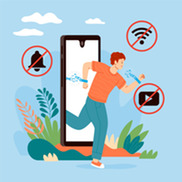
Digital Detox
Abbigail Petet, Director of Talent
The Department of Mental Health is inviting all Missourians to participate in a Digital Detox Challenge this August in honor of National Wellness Month!
We live in a hyper-connected world. Yet, anxiety, depression, loneliness and burnout are at an all-time high. Many people find themselves tethered to devices. Sometimes out of necessity, preference or habit. Device use can change our eyesight, hearing, sleep, posture and relationships. It can also change our brains. Attention span shortens, perpetual distraction feels like the norm, and our relationships can suffer with fewer quality human connections.
This August, join the Digital Detox Challenge! It's not anti-tech; it's healthy tech. Download the Digital Detox Challenge Calendar for daily activities, and weekly level up challenges and reflections. Share the Digital Detox Flyer to help spread the word.
|
Workforce Transformation in Motion
Rural Health Workforce Strategies Building Momentum Across Missouri
Pat Simmons, Director of Health Care Workforce Transformation
In rural Missouri, access to health care often comes down to whether there are enough workers in place to provide care. Through the Rural Health Transformation Program (RHTP), Missouri is working across every part of the health workforce pipeline, putting new energy and resources in motion. Rural residents are finding new opportunities to learn, practice, and grow in the places they call home. With support from DSS, DHSS, DMH, and a dedicated network of partners, these efforts are opening doors for rural Missourians and strengthening the system of care that communities rely on.
Read about the highlights from the first few months of the grant.
|
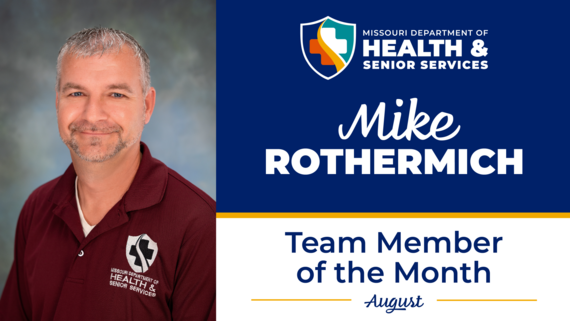 August Team Member of the Month
Congratulations to Mike Rothermich, administrative manager in the Office of General Services, for being named our August Team Member of the Month.
Mike is being recognized for his exceptional leadership, consistent work ethic, and ability to navigate change with calmness and adaptability. He continually advocates for the growth and development of his team, pushing them to expand their skillsets and try new tasks. Mike has significantly improved workflows by modernizing processes, enhancing efficiency, and creating tools such as updated metric tracking and Smartsheets that streamline daily operations.
Throughout multiple departmental changes in personnel and processes, Mike remained steady, patient, and improvement‑focused—never shying away from the extra work required to reach better outcomes. His willingness to take on large, high‑impact projects while maintaining regular workloads highlights both his dedication and strong organizational skills.
Above and beyond his standard duties, Mike shows up every day with a positive attitude and an ability to view challenges from fresh angles. He often serves as the “glue” that keeps things moving, tackling both behind‑the‑scenes tasks and visible projects with thoughtful planning and effective execution. His reliability, perspective, and leadership are key reasons the department continues to run smoothly.

Safety by Design
Eric Hueste, Office of Emergency Coordination
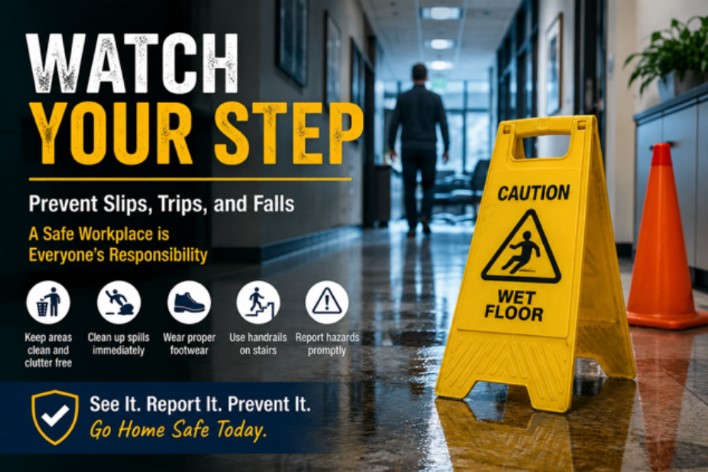
Safety isn’t just about being careful, it’s about making the safe choice the easy choice.
A growing focus in workplace safety is Safety by Design: identifying hazards before an incident happens and changing the workplace, equipment, process or procedure to reduce the risk.
“How do we keep team members from making mistakes?”
“How can we design the task, so the mistake is less likely to happen?”
This month, look for opportunities to:
- Eliminate hazards instead of simply warning team members about them.
- Keep work areas organized and free of trip hazards.
- Make emergency exits and equipment easy to access.
- Simplify procedures that are unnecessarily complicated.
- Report near misses, not just injuries, so hazards can be corrected before someone gets hurt.
Even when you’re accustomed to working in warm conditions, heat can affect concentration, judgment, and physical performance. Headache, dizziness, weakness, nausea, heavy sweating, or unusual fatigue can be warning signs.
If you or a team member begins feeling unwell in the heat, stop, move to a cooler area, and act before symptoms become more serious.
Find one hazard or unnecessary risk in your work area and ask: “Can we change the way we do this to make it safer?”
Small changes made before an incident can prevent much bigger problems later. Safety isn’t something we add after the fact. We build it into the way we work.
|
Thank you for your continued partnership!
|