Program Highlights
Comment Corner: State Adolescent Health Leader
June was National Oral Health Month, providing an opportunity to highlight the important role oral health plays in adolescent health and well-being. As youth and their health needs evolve, oral health education and engagement can help build lifelong habits while addressing key oral health considerations. These conversations encourage informed decision-making, promote prevention, and support the connection between oral health and overall health. They also provide the opportunity to strengthen the knowledge and skills needed to support youth in their transition to adult health care.
Supporting adolescent oral health may include conversations on:
- Preventive oral health care: Establishing a dental care provider, attending routine dental visits, and practicing daily oral hygiene can help identify concerns early, prevent oral health issues, and support healthy habits.
- Orthodontic care: Braces, aligners, retainers, and other orthodontic appliances require extra attention to prevent plaque buildup, cavities, and gum irritation. Daily oral hygiene and routine oral health appointments can help keep orthodontic treatment on track while protecting oral health.
- Transition to adult health care: Building the skills to manage appointments, navigate preventive dental services, and communicate with providers promotes continuity of care and equips youth with confidence in taking an active role in their care.
- Nutrition: Oral health and nutrition are closely connected. Learning how food and beverage choices support or impact healthy teeth and gums can help support overall oral health.
- Sports and recreation: Staying active supports physical and social wellness. Wearing a properly fitted mouthguard during contact or high-impact activities can help reduce the risk of dental injuries and protect the teeth, mouth, and jaw.
- Tobacco and nicotine prevention: Education on tobacco and nicotine use, including e-cigarettes and vaping, supports adolescents in recognizing the potential effects on oral health, such as an increased risk in gum disease, dry mouth, and delayed healing.
Resources to support adolescents in their oral health include:
The Adolescent and School Health Program (ASHP) Launches School Health Academy to Support Missouri School Nurses

ASHP, in partnership with the University of Missouri, launched the newly designed School Health Academy this summer. The Academy offers a comprehensive professional development experience that supports school nurses at every stage, from foundational education and current school health topics for new and returning nurses to leadership development for those serving or transitioning into a leadership role. Through interactive learning, meaningful collaboration, and networking opportunities, participants will strengthen their knowledge and skills while building connections that support school health services across Missouri!
|
Missouri’s Annual Maternal Mortality Report Published
DHSS has published A Multi Year Look at Maternal Mortality in Missouri: 2019-2023 Annual Report on behalf of the state’s Pregnancy-Associated Mortality Review (PAMR) Board, a multidisciplinary board of experts from across the state tasked with examining the causes and contributing factors associated with maternal mortality and ultimately forming recommendations that could prevent these deaths from occurring in the future. The report is an aggregate of five years’ worth of the PAMR Board’s work and is based upon the most recent data available.
The 2019-2023 report contains data, including the timing and leading causes of pregnancy-related deaths, and factors that contributed to these deaths, such as mental health conditions and substance use disorders. The report also discusses causes of death by race/ethnicity and timing of pregnancy-related deaths.
Analysis of data and related patient records indicates cardiovascular diseases and mental health conditions (including substance use disorders) were the leading underlying causes of pregnancy-related deaths, followed closely by infections (pneumonia, COVID-19, etc.). An average of 68 Missouri women died while pregnant or within one year of pregnancy each year over 5 years (2019-2023), with the highest number recorded in 2020 (85 deaths).
Other key findings include the following:
From 2019-2023 (340 deaths total):
- The pregnancy-related mortality ratio (PRMR) was 31.2 deaths per 100,000 live births.
- The PRMR for Black women was 2.5 times the ratio of white women, similar to rates in the previous two reports.
- The PAMR Board determined that 79% of pregnancy-related deaths were preventable.
- The PAMR Board determined that all pregnancy-related deaths due to mental health conditions, including substance use disorder (SUD), were preventable.
Finally, the report includes recommendations by the Board for a variety of stakeholders as well as the Board’s major accomplishments to date, some of which are listed below.
- Built Missouri’s maternal health infrastructure, including the state’s first maternal mortality report, the nation’s first maternal mortality dashboard and published Maternal & Neonatal Levels of Care.
- Expanded statewide quality initiatives by establishing the Missouri Perinatal Quality Collaborative (MO PQC), engaging nearly all birthing hospitals, launching clinical safety bundles and publishing progress reports.
- Implemented major maternal health programs, supporting thousands of families through training, care access and targeted interventions.
- Advanced maternal health policy and investment, including $4.3M in state funding, extension of Medicaid postpartum coverage and creation of behavioral health and substance use disorder support centers.
- Strengthened statewide outreach and awareness through largescale PAMR campaigns, provider trainings, public educational efforts and distribution of wellness kits to at-risk pregnant and postpartum women.
Previous years of maternal mortality data are available online through a statewide, interactive dashboard.
Partner Resources:
-
Ask Me 5: Ask Me 5 equips both providers and patients to have meaningful conversations that can save lives.
-
Healthy Moms, Healthy Babies: Its mission is to end preventable maternal and infant health risks by connecting women to quality health care and supportive resources that will provide healthy, successful pregnancy and post-partum experiences for both mom and baby

Partnership Spotlight
Missouri Maternal Health Action Network (MHAN) Selected as a Recipient of Missouri Appleseed’s 2026 Good Apple Award

MHAN was selected as a recipient of the 2026 Good Apple Award from Missouri Appleseed. Missouri Appleseed believes all Missouri families deserve the opportunity to thrive. Through research, advocacy, and education, Missouri Appleseed works to improve the systems and policies at the intersection of public health, criminal justice, and child welfare. The Good Apple Award recognizes outstanding partners whose leadership, collaboration, and advocacy have helped advance these efforts. Learn more about MHAN and explore their latest updates.
|
Collaboration in Action at the Missouri Perinatal Quality Collaborative’s (MO PQC) SUD and NAS (Neonatal Abstinence Syndrome) Summit

DHSS representation from MCH Leadership, Office on Women’s Health, Healthy Births and Babies Unit (ParentLink, TEL-LINK, Safe Cribs for Missouri, Newborn Health, Prenatal Substance Use Prevention), and the SUD Grant Program joined partners from across the state at the MO PQC’s Maternal SUD and NAS Summit to strengthen collaboration and advance efforts supporting pregnant and postpartum individuals, infants, and families affected by SUD and NAS. The summit brought together health care providers, community organizations, public health professionals, and community members to share promising practices, explore emerging challenges, and identify opportunities for cross-sector collaboration.
Through presentations, panel discussions, and networking opportunities, DHSS and partners engaged in conversations focused on enhancing care coordination, strengthening systems of support, and promoting evidence-based, family-centered approaches. Participation in the summit emphasized the value of collaboration across programs and partners working to improve maternal and infant health outcomes throughout Missouri.
|

News of Note
Missouri’s 2026 Maternal Mental Health State Report Card
The Policy Center for Maternal Mental Health recently released its 2026 Maternal Mental Health State Report Cards, which provide a snapshot of how states are supporting maternal mental health through policies, programs, and access to care. The report cards recognize areas of strength while highlighting opportunities for continued improvements to help inform state and national efforts.
Missouri’s 2026 report card demonstrates encouraging progress and momentum, with the state improving from a D+ in 2025 to a C. The report spotlights several strengths, including expanded postpartum Medicaid coverage, access to perinatal psychiatry consultation services, strong depression screening efforts, an active Perinatal Quality Collaborative, and a growing network of community-based supports. While opportunities remain to further strengthen access to care and supports, Missouri’s improvement reflects the ongoing collaboration and commitment of partners across the state to advance maternal mental health and improve outcomes for mothers, infants, and families
Office of the U.S. Surgeon General Issues Advisory on Excessive Screen Use

On May 20th, the Office of the U.S. Surgeon General issued an advisory warning that excessive screen use can negatively affect children’s mental health, sleep, and other health outcomes. The advisory highlights growing evidence that early exposure to and prolonged screen time and social media use may contribute to developmental, mental, and physical health challenges and poor educational outcomes, and encourages schools, families, and policymakers to take steps to reduce harmful screen use.
|
American Academy of Pediatrics (AAP) Releases Updated Drowning Prevention Guidance
Drowning remains a leading cause of unintentional injury-related death in children. No single method is effective in preventing drowning, and multiple layers of prevention are necessary, including fencing of all residential pools, close supervision of young children whenever they are in or near water, and swim lessons once children are ready to learn to swim. The AAP updated its drowning prevention guidance, and the Prevention of Drowning: Policy Statement guides clinicians, families, community partners, injury-prevention professionals, and policymakers regarding evidence-based best practices for reducing pediatric drowning. Additional information and resources are available here.
DHSS Organ and Tissue Donor Program: Talking About Organ and Tissue Donation

Talking about organ, eye, and tissue donation can be uncomfortable, especially when families are at different stages in life. But if something unexpected happens, you or your loved ones might have to make hard choices. If you are a registered donor or have talked about your wishes, it can make things easier for everyone. Most family members want to respect their loved ones’ wishes, so it’s important to share your decision and discuss it as a family. Whatever choice you or other members of the family make, whether to be a registered donor or not, it’s important to be clear about your decision. Being open and caring when you talk about it can help everyone feel less stressed and scared. Being a donor is a personal choice.
How do you have that heartfelt conversation? Consider using the ABC method.
-
A - Anticipate Questions. Think about the questions you or your family might have. By thinking ahead, you can find some answers before you really need them. Being ready can make things less stressful for everyone. It’s a good idea to keep your computer or phone nearby, just in case you get a question you don’t know the answer to. You can look up and learn more information together at org. If you can’t find what you need, you can email OrganDonor@health.mo.gov or call toll-free 888-497-4564, and someone from the Missouri Organ and Tissue Donor Program will help you.
-
B - Be Honest. Start the conversation. Discuss your choice at a time and place where you and your loved ones are already comfortable talking about tough issues. Inform others who may need to know. Include in your conversation:
- Your decision and why their support is important to you.
- Why this choice is important to you and how it can help so many others.
- Explain how your decision can help people waiting for a life-saving transplant and help heal up to 75 or more people.
- Listen to loved ones’ concerns with an open mind and talk about those concerns. You may need to give them time to think about what you shared. Each family member may have a different view and make a different decision. Acknowledge personal choices.
-
C - Consider others' feelings. When talking about tough health topics with your family, be encouraging. These conversations can be surprising and uncomfortable for some. Pay attention to your tone and body language, as your loved ones may need time to think about what you share. Remember, everyone has different feelings and beliefs, and that’s okay. It’s important that, by the end, everyone knows about your choice and plans, even if they don’t agree. If family members want to learn more about organ and tissue donation, encourage them to do so. Your brave choice to help others might inspire them to register as donors one day.
Always think about the outcome you want before you talk about organ, eye, and tissue donation. It’s important that you and your family know what you want, even if you don’t all agree. Be kind and respectful when talking about tough topics. The DHSS Organ and Tissue Donor Program thanks you for talking about organ, eye, and tissue donation!
|
Missouri Department of Elementary and Secondary Education (DESE) Releases July Notice of Consumer Product Safety Commission (CPSC) Recalls
DESE released their July notice of CPSC recall notices to help child care providers, those working with young children, and families stay informed about potentially hazardous products. Staying up to date on product recalls can help ensure safe environments for children in homes, schools, and early childhood settings. Find the listing of products identified here and here.

Save the Date
Infant and Early Childhood Mental Health (IECMH) Lunch & Learn Series: MO IECMH Resources
August 31st, 2026 | Virtual
Join Missouri Child Psychiatry Access Project, the Center for Child Well-Being, and the IECMH Initiative to learn about the resources available to Missouri providers. Learn more and register here.
Missouri Developmental Disabilities Council’s (MODDC) Coffee for Change
September 10th, 2026 | In-person | Springfield, MO
October 17th, 2026 | In-person | Moberly, MO
MODDC is hosting Coffee for Change, a community series designed to bring people with intellectual and developmental disabilities (I/DD), family members, and advocates together for meaningful conversation and action. Participants will have the chance to network, learn about current policy issues impacting Missourians with I/DD, and explore ways to drive change. To learn more and register, click here.
2026 Joint Public Health Conference
September 15th-17th, 2026 | In-person | Lake of the Ozarks, MO
Join the Missouri Children’s Trauma Network and professionals from across the state for an inspiring and impactful two days of learning, networking, and collaboration focused on trauma-informed practices and effective strategies for supporting youth. This event is packed with engaging sessions, practical tools, and opportunities to connect with peers and experts in the field. Click here to learn more and register.
2026 Optimizing Benefits for Maternal and Infant Health Meetings
September 29th, 2026 | In-person | Kansas City, MO
October 8th, 2026 | In-person | St. Louis, MO
All MO HealthNet providers and community partners are invited to join the MO HealthNet Division, our Managed Care health plans, Show-Me ECHO and the Office of Oral Health for a unique in-person networking opportunity. Attendees will learn about valuable benefits, incentives and resources available to pregnant women and their families, including individualized case management, Doula coverage, Non-Emergency Medical Transportation, and more. Click here to learn more and register.
Missouri Association for Infant and Early Childhood Mental Health (MOAIMH-EC) Annual Conference
October 1st-2nd, 2026 | In-person | Osage Beach, MO
MOAIMH-EC invites professionals from across Missouri to their 2026 Fall Conference, Held In Mind: The Power of Being Seen This two-day conference explores the relational foundations of infant and early childhood mental health and highlights the importance of reflective practice in supporting the professionals who walk alongside infants, young children, and families every day. Through keynote conversations, breakout sessions, and opportunities for reflection and connection, this conference will explore how we strengthen Missouri’s workforce to support the relational health of mothers, babies, young children, and those who care for them. Learn more and register here.
2026 MO PQC Maternal and Infant Symposium
October 13th-15th, 2026 | In-person | Branson, MO
The MO PQC Maternal and Infant Symposium seeks to engage clinical and community care providers and leaders, quality professionals and executive leaders invested in maternal-infant health, patients and families, provider association staff and policy and reimbursement leaders to present their patient quality and workforce improvement work, engage in networking activities to support rapid spread and scale of effective interventions and care models and support skill building for clinical providers and teams. Learn more and register here.
2026 Missouri School Age Conference
November 20th-22nd, 2026 | In-person | Lake of the Ozarks, MO
The Missouri School Age Conference brings together nationally recognized keynote speakers, peer-to-peer learning, and engaging social events to support afterschool professionals in gaining fresh knowledge, building meaningful connections, and celebrating their impact. This year’s theme is Built to Last. To learn more and register, click here.

MCH Resources and Tools
New and Updated Resources from the Policy Center for Maternal Mental Health

The Policy Center for Maternal Mental Health has recently released several new fact sheets and issue briefs exploring key topics affecting maternal well-being, including preterm birth and maternal mental health, maternity care costs, and the emerging role of artificial intelligence in maternal mental health. These resources highlight current research, policy considerations, and opportunities to improve maternal mental health. The Policy Center also released an updated maternal mental health fact sheet.
|
The U.S. Breastfeeding Committee: National Breastfeeding Month Social Media Campaign and Resources
In recognition of National Breastfeeding Month in August, including national, global, and social breastfeeding observances, the U.S. Breastfeeding Committee hosts a social media advocacy and outreach campaign inviting member organizations, breastfeeding coalitions, partner organizations, and individuals to participate in online action and conversation about the policy and practice changes needed to build a landscape of support for babies and families. This year’s theme is RISE: Resilience, Interdependence, Self-Determination, Empowerment. Click here to access the materials and learn more.
Nourishing Thriving Communities: A National Plan for First Foods, Breastfeeding, and Lactation Support Through Policy, Systems, and Environmental Change

The U.S. Breastfeeding Committee released a field-driven national plan that advances infant nutrition security through policy, systems, and environmental change. Grounded in community leadership and informed by evidence, the resource provides a practical roadmap for aligning health care, public health, policy, workplace, and community efforts so that all families have a fair and meaningful opportunity to meet their infant feeding goals.
|
American College of Obstetricians & Gynecologists (ACOG) Releases Committee Statement on Partnering with Doulas in Clinical Settings
ACOG released a Committee Statement outlining recommendations to foster positive and strong collaboration among hospital systems, clinicians, and doulas and to increase knowledge regarding a doula's role and scope of practice. Access the statement here.
First Five Years Fund (FFYF) State Fact Sheets: Child Care and Early Learning

FFYF released their 2026 State Fact Sheets on child care and early learning, providing state-by-state data for all 50 states and Washington, D.C. to show how federal and state investments support families, young children, and local economies and highlight where significant gaps remain.
|
National Youth Leadership Council: The Power of Young People Podcast
National Youth Leadership Council CEO, Amy Meuers, explores how young people are using their ideas, creativity, and passion to shape a better world and how educators can utilize the power of service-learning to redesign education. This podcast is perfect for young people who want to change the world and adults who want to foster youth innovation and imagination through real-world education. Listen to podcast episodes here.
AIM: For Safer Birth Podcast
Join Alliance for Innovation on Maternal Health (AIM) as they dive deeper into the rising severe maternal morbidity and maternal mortality rates in the United States through a data-driven, quality improvement lens. Each episode will foster discussion with those committed to improving maternal health outcomes and saving lives. You can catch up on previous podcast episodes here.
AMCHP: MCH Bridges Podcast
MCH Bridges is designed to help listeners create new connections to MCH leaders and organizations to inspire and guide listeners toward actions that will improve the systems that impact MCH populations. You can catch up on previous episodes of the Podcast here.
Need help finding state and local resources? ParentLink and TEL-LINK can make those connections!
ParentLink and TEL-LINK simplify access to essential parenting and family resources by bringing several statewide programs together in one place. Missourians can be connected to caring professionals to provide answers, guidance, and navigation to state and local resources for food, housing, health services, behavioral health, parenting advice, and more.
Mental Health Hotlines
 |
|
National Maternal Mental Health Hotline: 1-833-TLC-MAMA (1-833-852-6262)
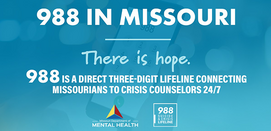
988 Suicide & Crisis Lifeline: 988
|
|