|
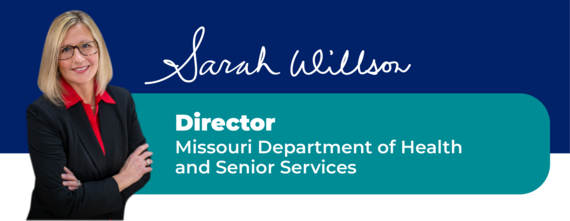
Partners,
As we reach the midpoint of 2026, I'm reminding our team it is important to pause and reflect on the meaningful impact of our work. In the midst of busy schedules and numerous commitments, it can be easy to measure progress by completed tasks rather than by the lasting contributions we make to the communities we serve.
June marks Employee Appreciation Month across Missouri state offices, and this year’s theme, “We See You!”, provides a valuable opportunity to recognize the dedication and contributions of our team members. The success of our programs and the fulfillment of our mission are driven by the commitment, resilience and professionalism of our workforce.
Fostering a positive and supportive work environment remains essential. Opportunities for recognition and meaningful connection strengthen engagement, collaboration and overall workplace satisfaction. Taking time to build relationships and celebrate shared successes contributes to both individual well-being and organizational resilience.
At the same time, we must recognize that change is a constant in public health and healthcare. While change can present challenges, it is also critical to maintaining relevance and delivering value. Our department continues to adapt in response to evolving federal and state priorities, while also proactively shaping how we approach health—moving from a disease-centered model toward a broader focus on health improvement and prevention.
A key principle guiding this work is radical incrementalism—the practice of making small, strategic, and intentional improvements over time. Rather than relying on large-scale transformations alone, these incremental changes in processes, policies, and daily practices can collectively lead to meaningful and sustainable outcomes. This approach strengthens our ability to continuously improve and better serve Missourians.
While not all changes will be universally embraced, it is our responsibility to pursue those that create the greatest benefit for the populations we serve. This includes ensuring that decisions are thoughtful, collaborative and clearly communicated. Embracing change with purpose and clarity enables us to remain effective and forward-looking as an organization.
This perspective is reinforced by Sandro Galea, Dean of the Washington University Bursky School of Public Health who notes, “The pursuit of health is (as) a catalyst for necessary transformations, for the creation of a world that is resilient to future pandemics, and one that apportions assets in such a way that the disproportionate burden of poor health does not accrue to a few groups, and that all have the opportunity to aspire to, and fairly achieve, a richly realized life, free of unnecessary and preventable illness.”
This vision underscores the importance of our work and the role that continuous, incremental progress plays in achieving long-term impact. By embracing radical incrementalism and maintaining a shared commitment to improvement, we strengthen our public health system and advance our mission of ensuring optimal health and safety for all communities across Missouri.

Security Alert: Recent Phishing and Gift Card Scams Targeting Staff
Ryan Marsch, Director of Information Technology and Data Strategy Missouri
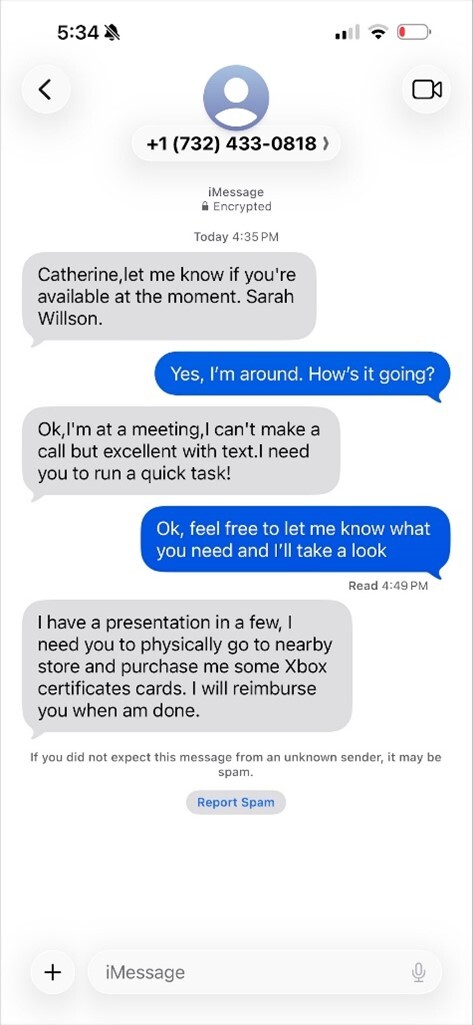
DHSS has recently been targeted by two distinct social engineering attempts aimed at stealing credentials and defrauding staff members and third-party contacts. In the first incident, a phishing email was sent to a third-party contact impersonating DHSS using a spoofed sender address. The email urgently requested a signature on a license and contained a malicious link designed to redirect users to a credential-harvesting website.
In a separate incident, an employee received an urgent text message from an unknown number pretending to be a supervisor. The attacker claimed to be stuck in a meeting and requested that the employee immediately go to a nearby store to purchase Xbox gift cards with a promise of later reimbursement.
This isn’t the first time we’ve seen these attacks, but the frequency does appear to be increasing. Please remain highly vigilant against these types of urgent, unexpected requests. Be on the lookout for emails from external, non-government domains claiming to represent official agencies, especially those demanding immediate signatures or actions. Additionally, look out for "boss scams" via text or email where someone claims to be a supervisor who cannot speak on the phone and asks you to purchase gift cards, cryptocurrency, or wire transfers. If you receive a suspicious email, do not click any links or provide credentials. Instead, report the communication immediately to ITSD Cyber Security via a ticket or using the “Phish Alert” button in Outlook. If you receive a suspicious text, do not reply or purchase anything. Instead, report the communication immediately or verify the request through a known, trusted communication channel—such as calling the person directly or speaking to them in person.
|
  June Team Member of the Month
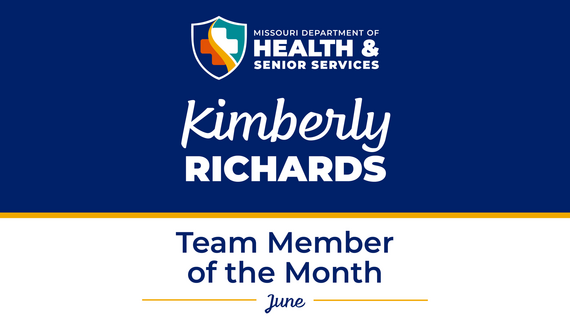
Congratulations to Kimberly Richards! Kimberly is an Adult Protective Services Specialist Team Lead with the Division of Senior and Disability Services.
Kimberly is recognized for her remarkable dedication to protecting vulnerable individuals and supporting her team. In a recent case involving serious concerns of mistreatment, Kimberly immediately stepped in—without being on rotation—and took swift action to ensure the individual’s safety. She coordinated across Regional Offices, communicated compassionately with the individual, and exemplified the principles highlighted in the Trust Equation training taking place at the time. Kimberly is known for her empathy, professionalism, and unwavering focus on the needs of others. She consistently advocates for vulnerable adults, tackles difficult situations with positivity, and supports both new and seasoned team members. Her leadership, reliability, and commitment make her an invaluable part of the team. Team 8108 is stronger because of her dedication. Congratulations, Kimberly!
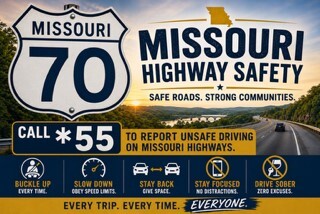
Defensive Driving and Roadway Safety
Eric Hueste, Office of Emergency Coordination
Many of us spend time on the road traveling between worksites, attending meetings or commuting to and from work. This month, we are focusing on Defensive Driving and Roadway Safety to help prevent crashes, injuries, and fatalities.
With the FIFA World Cup 2026 drawing additional visitors to our state and summer tourism occurring, Missouri highways will be very busy this summer. Defensive driving means staying alert, anticipating potential hazards, and making safe decisions behind the wheel. Whether driving a state vehicle or a personal vehicle for work-related travel, every employee plays a role in keeping our roads safe.
Key Roadway Safety Reminders:
- Eliminate distractions and keep your focus on driving.
- Obey speed limits and adjust your speed for weather, traffic and road conditions.
- Maintain a safe following distance to allow adequate reaction time.
- Always wear your seat belt and ensure passengers do the same.
- Be aware of pedestrians, bicyclists, motorcyclists and work zones.
- Never drive while impaired, fatigued, or under the influence of drugs or alcohol.
- Plan ahead and allow extra travel time to reduce stress and avoid rushing.
- If you are involved in an accident, and your vehicle is drivable, move over to the right shoulder and dial *55.
A few extra seconds of caution can prevent a lifetime of consequences. By practicing defensive driving every day, we protect ourselves, our coworkers and the communities we serve.
|
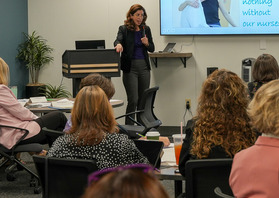
Workforce Transformation in Motion
Launching the DHSS Health Workforce Transformation Agenda: Why it Matters Now
Pat Simmons, Director of Health Care Workforce Transformation
Missouri’s health workforce is at a pivotal moment, and the impact is being felt everywhere. Across the state, access to essential health services is increasingly shaped by one factor: whether there are enough providers to meet community needs. Workforce is one of the top concerns I hear in conversations about access to care, and for good reason. When the workforce slows down, everything else does too — wait times stretch longer, systems feel more strained, and everyday care becomes harder to reach for the people who depend on it.
To help keep Missouri’s health system moving in the right direction, DHSS is rolling forward with a coordinated Health Workforce Transformation Agenda. The idea is to bring key efforts into better alignment and focus our resources where they create the biggest lift. Workforce transformation in motion means supporting health professionals at every point in their journey — from sparking early interest and building strong training experiences to helping seasoned workers stay, grow and thrive. And a recent department-wide assessment showed something encouraging; we already have strong efforts underway. A more intentional approach to tying this work together will boost the impact even further.
A big part of this forward motion is happening through the Rural Health Transformation Grant. Staff from our divisions of Community & Public Health and Regulation & Licensure are engaged in implementation of the grant’s workforce-focused activities. The State’s plan includes expanding early health‑career pathways in rural schools, creating more clinical training opportunities through partnerships with rural hospitals, strengthening the EMS workforce and training infrastructure, and supporting rural retention with practical, real‑life supports like childcare and transitional housing. Each of these efforts helps rural communities by making it easier for providers to train, practice, and stay local.
There’s a lot in motion, and a lot to be excited about. Together, we’re building a stronger, more resilient health workforce — one that can keep pace with the needs of Missouri’s communities now and well into the future.
|

Exercise Snacking: Small Moves, Big Benefits
Lacey Vermette, Wellness & Recognition Coordinator
For many of us, the workday means long hours at a desk, back‑to‑back meetings, and very little movement. But there’s good news. Improving your health doesn’t have to mean spending hours at the gym. This is where the idea of “exercise snacking” comes in.
“Exercise snacking” is the idea of taking short movement breaks throughout the day — even just 1–5 minutes every hour. These quick bursts of activity can improve your health, energy and focus.
Research has shown that small amounts of movement throughout the day can provide meaningful health benefits and help break up the effects of prolonged sitting.
According to Stanford Lifestyle Medicine, adding movement into your workday can help:
- Improve cardiovascular health
- Increase muscular strength and endurance
- Boost energy and focus
- Reduce muscle tension
- Support mental clarity and mood
- Help you reach recommended weekly activity goals
Easy Exercise Snacks You Can Do at Work:
- 15 air squats or sit‑to‑stands
- A quick walk down the hallway
- Marching in place at your desk
- Chair stretches or seated twists
- Lunges
- Jumping jacks
- Walking a flight of stairs
- Wall or desk push‑ups
Let’s normalize taking small movement breaks. This week, challenge yourself to add just one “exercise snack” each hour (or every couple of hours). Those small actions, repeated over time, can make a big difference in how you feel.
|
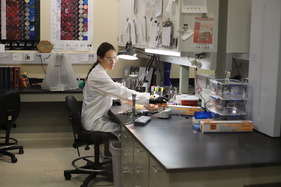
Beyond the Scope
Adam Perkins, Director of the Missouri State Public Health Laboratory
As Kansas City prepares to welcome hundreds of thousands of visitors for the 2026 World Cup, the Missouri State Public Health Laboratory (MSPHL) is stepping into a pivotal behind‑the‑scenes role. While the excitement builds in stadiums and fan zones, an equally important effort is unfolding in our laboratories, where teams are working around the clock to ensure Missouri is ready for the world’s spotlight.
At the heart of this work is our mission: The Missouri State Public Health Laboratory is dedicated to promoting, protecting, and partnering for health by delivering quality public health laboratory services. This guiding purpose shapes every decision, every preparation, and every test we perform as we support statewide readiness for this global event.
In the months leading up to the World Cup, MSPHL has added additional courier stops during World Cup to keep specimen transport moving quickly and efficiently — a vital step as testing demands rise. Staff across the laboratory have taken seats at multiple planning tables, working hand‑in‑hand with state and local partners to strengthen coordination and ensure that public health systems operate seamlessly during the event. These partnerships are complemented by a series of preparedness exercises designed to sharpen our ability to respond to a wide range of scenarios, from routine surges to unexpected public health threats.
A critical component of our readiness has been expanding laboratory testing to include emerging pathogens such as MERS‑CoV (Middle Eastern Respiratory Syndrome) and agents covered by the Global Fever Pathogens Panel, including Ebola. Working closely with federal partners, MSPHL is enhancing event‑related surveillance to ensure that any unusual signals or concerning results are identified quickly and acted upon. This enhanced vigilance reflects both our scientific expertise and our commitment to safeguarding the health of Missourians and visitors alike.
When match days arrive, our work doesn’t stop. MSPHL will operate overnight to maintain continuous laboratory readiness, ensuring rapid testing and timely reporting no matter when samples arrive. This around‑the‑clock effort underscores the laboratory’s dedication to preparedness and public service during one of the largest events Missouri has ever hosted.
From improved logistics to advanced testing, from strengthened partnerships to sustained readiness, MSPHL is proud to play a crucial role behind the scenes. As the world comes to Kansas City, our teams stand ready to protect the health of our communities — a responsibility we carry with pride, precision, and purpose.
|
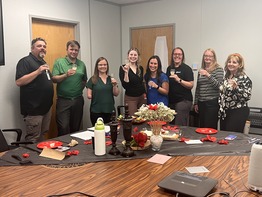
Spotlight on the Office of Public Information
Lisa Cox, Communications Director
Keeping Missourians informed is the heart of everything we do. The Office of Public Information (OPI) plays a vital role in connecting Missourians with accurate, timely and accessible information about state programs, services and initiatives through publications, social media, traditional media relations, photography/videography and digital means. This team helps ensure that every resident—no matter where they live or how they access information—has a clear understanding of the resources available to them and the work their state health department is doing on their behalf.
The team includes Brad Bashore, Andy Schepers, Sami Jo Freeman, Spenser Bartholomew, Lisa Cox, Joyce Bexten, Lori Buchanan and Laura Bennett-Smith.
OPI’s communications support transparency, build trust and empower Missourians to make informed decisions about their lives, families and communities. Whether we are crafting public messages, supporting media engagement, simplifying complex information or coordinating communication during emergencies, our team's work helps people stay informed, safe and connected.
By keeping information clear, consistent and easy to find, OPI strengthens the relationship between DHSS and the people it serves—and helps ensure that essential services truly reach Missourians who depend on us.
|
Thank you for your continued partnership!
|