|
Partners,
The conclusion of the 2026 Session of the General Assembly saw a wide range of public health and healthcare issues voted out of the legislature that are now awaiting action by Governor Kehoe.
Though there are funding reductions throughout the DHSS budget to important programs, the department recognizes fiscal realities and is dedicated to those core public health functions and services that protect and promote health for Missourians. The headline for the DHSS budget is the restoration of $2 million for Aid to Local Public Health.
Infectious Disease & Public Health Surveillance
Includes bills or provisions focused on disease tracking, reporting, and response.
- Passing to Lyme Disease Eradication Act, which also appears with a modified version in SB 1019, creating a framework for monitoring and reporting of Lyme disease cases in Missouri. Additionally, the creation of a Lyme Disease Task Forse and the “Lyme Research and Eradication Fund” for the funding of grants to Lyme disease research. HB 2372
- Creating a Pediatric Disease Task Force. HB 2372
- Adding alpha-gal syndrome to the list of reportable diseases to DHSS, a requirement to submit an annual report to the CDC, and authority for DHSS to follow up on reported cases by applying a random sampling method. HB 2372
Maternal, Reproductive, and Women’s Health
Covers maternal mortality, pregnancy-related coverage, and postpartum care.
- Modifying the Pregnancy-Associated Mortality Review Board’s membership requirements, requiring reported data to be disaggregated, and adding the responsibilities to identify maternity care deserts and recommend methods to reduce or eliminate racial inequities in maternal deaths. HB 2372
- Born-Alive Abortion Survivors Protection Act SB 999
- Requiring health benefit plans to cover home blood pressure monitoring device services for women who are pregnant or within 12 months postpartum. HB 2372
Emergency Medical Services & Paramedicine
Relates to EMS structure, regulation, and scope of practice.
- Defining “community paramedic service” and authorizing DHSS to establish regulations that recognize community paramedic service entities. HB 2372
- Requiring all hospital ERs and Labor and Delivery Departments regarding the criminality of assaulting health care professionals. HB 2372
- Modifications to the law regarding ambulance districts, including:
- Allowing an ambulance district’s directors to be elected at large from the entire district rather than be divided into six election districts.
- Modifying how ambulance districts may be consolidated, placing requirements what must be included in a petition or resolution for consolidation, how the public shall be notified of the proposal, and how ambulance districts consolidate. SB 975
- Creating a Sickle Cell Standing Committee as a subcommittee of the Missouri genetic advisory committee. HB 2372
Healthcare Workforce, Scope of Practice & Facility Oversight
Addressing training, licensing, responsibilities, and oversight.
- Allowing nurses’ aides, technicians, and equivalent trained hospital employees to administer injections to treat diabetes and to utilize an epinephrine delivery system. HB 2372
- Permitting pharmacists to dispense ivermectin and hydroxychloroquine without a prescription. HB 2372
- Allowing DHSS to accept surveys by state, federal, or accreditation agencies of residential care facilities and assisted living facilities in lieu of standard DHSS inspection. HB 2372
- Setting standards for using a phone or internet questionnaire to establish a physician-patient relationship via telehealth. HB 2372
- Authorizing the chief medical officer or chief medical director of DHSS or MO HealthNet (or a licensed physician with consent of a respective director) to issue recommendations for doula services, a standing order for prenatal vitamins, or a standing order for other purposes (not including pregnancy termination of controlled substances) if promulgated by rule. HB 2372
Adult Protective Services
Provisions supporting elder services and interdisciplinary response.
- Establishing a dementia services coordinator within DHSS. HB 2372
- Defining and empowering Multidisciplinary Adult Protection Teams to address complex cases of abuse, exploitation, and abuse eligible adults with collaborative, multisector teams. HB 2372
Food, Nutrition, and Environmental Health
Includes nutrition access programs and laws impacting food/environmental regulation.
- Passing the Food is Medicine Act that allows MO HealthNet to pursue a Section 1115 waiver with CMS for nutrition counseling and case management, as well as medically tailored groceries and meals. HB 2372
- Requiring childcare providers to have an allergy prevention and response policy. HB 2372
- Relating to onsite wastewater was passed in April and was signed by the governor. SB 914
- Regulating chemically converted cannabinoids was also passed in April and signed by Governor Kehoe. HB 2641
Health Insurance & Financial Protections for Patients
Concerns cost, billing, and insurance coverage requirements.
- Requiring that the Missouri Consolidated Health Care Plan (MCHCP) include coverage for testing, treatment, and management of Lyme disease. HB 2372
- Prohibiting hospitals out of compliance with US federal price transparency laws from initiating or pursuing debt collection actions against patients. HB 2372
- Establishing statutory standards for doula reimbursement through MO HealthNet. HB 2372
Government Administration, Contracting & Environmental Governance
(Not Passed)
Multiple bills related to the regulation of food trucks did not pass during legislative session. One version of proposed legislation would have allowed a mobile food unit license or permit issued by a county to also allow for operation within a municipality within that county. Another proposed bill would have created a statewide mobile food inspection, licensure, and fee process administered by DHSS. The proposed legislation would have allowed local public health agencies to act on behalf of the statewide program, but local agencies would be reimbursed only for their costs and would not retain any additional revenue.
Additionally, legislation that would have authorized DHSS to directly contract with a Missouri affiliate of a national public health association or public health institute did not pass. Legislation that would have eliminated solid waste management districts did not pass this legislative session.
For more on the final budget for DHSS for FY2027, visit the OA Budget & Planning webpage.
  May Team Member of the Month
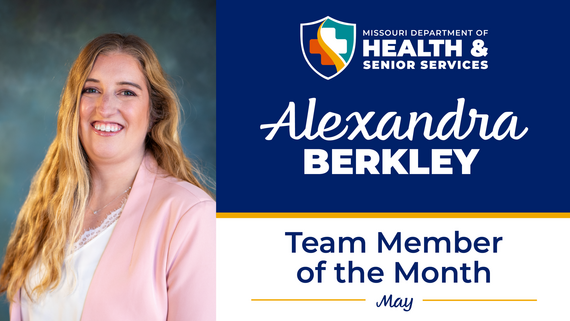
Congratulations Alexandra Berkley! Alex has been selected as the Team Member of the Month for May! She serves as a Regional Communicable Disease Coordinator within the Division of Community and Public Health.
Alex's exceptional initiative, reliability and leadership in support of both her team and the department’s mission makes her a model employee. Along with fulfilling her core responsibilities as a Regional Communicable Disease Coordinator, Alex recently took on significant additional duties by coordinating the major office transition from the Jefferson Building to the South County Service Center in St. Louis. She managed logistics such as scheduling, surplus, and equipment tagging, and worked closely and effectively with the Bureau of General Services and division leadership. This all occurred while maintaining her regular workload. She is still proactively managing some of these new responsibilities as different operational and janitorial concerns come up. Alex’s dedication, problem‑solving skills, and commitment to a safe, functional work environment go well beyond expectations and exemplify true leadership within DHSS.
View her full nomination. Please join us in celebrating Alex as our Team Member of the Month!
Importance of Mental Well-Being
by Eric Hueste, Office of Emergency Coordination
This past month, we have recognized Mental Health Awareness Month, a time to recognize the importance of mental well-being across all workplaces—especially within state government, where the mission is rooted in public service, safety and operational excellence.
For DHSS employees, mental well-being plays a direct role in maintaining safe environments and secure systems. Whether working in community health, protective inspection, senior assistance program, laboratory, or administrative roles, the ability to stay focused, aware and responsive is essential to carrying out responsibilities effectively.
A workforce that prioritizes mental well-being is better positioned to:
- Maintain strong situational awareness.
- Follow safety procedures with consistency.
- Communicate clearly and effectively.
- Respond to unexpected situations with sound judgment.
Safety depends on attention to detail and the ability to recognize and respond to risks. When employees are mentally prepared and supported, they are more likely to make decisions that prevent incidents and protect both colleagues and the public. Security is equally strengthened by a mentally engaged workforce. From safeguarding sensitive information to maintaining secure facilities, employees who are alert and focused contribute to reducing vulnerabilities and ensuring compliance with critical protocols.
Supervisors can reinforce this connection by:
- Promoting access to employee assistance and wellness resources.
- Encouraging regular team check-ins and supportive leadership.
- Integrating mental well-being into safety and security discussions.
- Building a culture where seeking support is encouraged and respected.
At the individual level, maintaining consistent routines, staying connected with colleagues, and taking time to recharge all contribute to sustained performance and readiness.
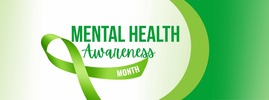
The green ribbon featured in the Mental Health Awareness Month logo symbolizes a shared commitment—to awareness, to support, and to building environments where employees can perform at their best.
A strong state workforce depends on more than skill and experience. It depends on people who are mentally prepared, aware, and supported—because when mental well-being is prioritized, safety and security naturally follow.
|

Inform vs. Educate vs. Advocate
As part of our work at DHSS, we often communicate important information to the public. It’s helpful to understand the distinction between informing, educating and advocating—three approaches that may sound similar but serve very different purposes.
Informing is the most neutral. It involves sharing facts so people know what is happening.
- Example: “Smoking increases cancer risk.”
Educating goes a step further by providing context, background and explanation to help people understand an issue.
- Example: Explaining how smoking impacts local hospital costs and prevention efforts.
Advocacy is different. It involves taking a position and trying to influence a decision or action.
- Example: “Support this smoke‑free policy.”
In simple terms:
- Informing = sharing facts
- Educating = helping others understand
- Advocacy = encouraging change based on a position
DHSS team members inform and educate—we do not advocate—to ensure that communications do not create a conflict of interest or misrepresentation of the department.
|
Thank you for your continued partnership!
|