|
Director's Message | Nov. 7, 2025
|
|
|
Gratitude
November is a time in our culture when we set aside time to be thankful. Being “thankful” or “grateful” is not something that always comes naturally and must be practiced. I once heard a sermon that has stuck with me since my teens. The pastor said the sweetest sound to someone is the sound of their own name being said and that gratitude is the greatest character trait that a human could possess. This is why it has been a practice of mine when leading leaders to start weekly touch base meetings with a gratitude, personal or professional.
The understanding of the words from the pastor of my youth was later reinforced by the learnings from Bryan Sexton, PhD, from Duke University. Dr. Sexton teaches on three gratitudes. As I reflect on life and the last nine months at DHSS, gratitude is the one thing I can call upon when things seem really hard. I stop the negative with purposefully thinking of the good and giving thanks for the good times, people, events, and other that has occurred. I encourage each of you to take the time to routinely reflect on the people, events, and higher power (for me, the Trinity) that guides your life, and be thankful.
I will ask, as many Missourians have fewer resources this season, let part of your gratefulness guide your giving to others.

Government Affairs Update
-
Federal Shutdown: The federal shutdown that began October 1 is having meaningful impacts on the Department of Health and Senior Services and our partners and stakeholders both directly (via interruptions in federal-state collaboration and funding flows) and indirectly (via diminished federal agency capacity, uncertainty, and the need for states to fill gaps).
-
WIC: The department is currently performing a day-by-day assessment of available funds to continue the program. We have funds to extend the program into December. The program is dependent on the availability of federal funds. If those funds would cease or be reduced, the program could be abruptly stopped. However, we continue working with our federal partners to try to find a path forward.
-
Centers for Disease Prevention and Control: In the last couple weeks, a significant number of CDC workers were sent notices that they were being laid off. In total, approximately a quarter of the CDC’s workforce has been dismissed since the beginning of the calendar year. The result is that DHSS and its partners should expect a continued slowing of federal public health capacity, which can affect intergovernmental communications, grant processing, information requests and coordination between agencies.
-
The U.S. Department of Health and Human Services has also experienced significant furloughs impacting federal regulatory, oversight and contracting functions. Health care facilities regulated under federal standards will see temporary decreases in the numbers and types of inspections performed by the state agency. This will likely contribute to a backlog of inspections when normal federal operations resume. Facilities with concerns are encouraged to reach out to the department.
The department is actively taking steps to try to minimize the negative impact of the shutdown.
-
Working with available federal contacts to clarify the status of awards, outstanding awards, technical assistance, and reporting requirements. This information is being transparently shared with stakeholders through calls, conversations and written communications.
-
Tracking and updating the Governor’s Office and other departments on actions being taken, shortfalls and impacts.
-
Identifying which federal funds support basic preparedness, surveillance, and outbreak response and re-prioritizing what programming could be suspended to ensure the state’s basic public health activities continue.
-
Reassigning and retraining staff to meet critical areas of need within the department. Conversations of potential furloughs have occurred with some programs.
|

Rural Health Transformation
Recently, the Association of State and Territorial Health Officials team shared a few links and resources related to the Rural Health Transformation grant program.
-
Pharmacist Role in Supporting Rural Health & Chronic Disease Prevention: Pharmacies are positioned to address rural health access gaps due to primary care physician shortages, especially in rural areas.
- 86% of adults report easy access to pharmacies. Most Americans live within 5 miles of a pharmacy, and patients visit pharmacies over 10 times more than other healthcare providers.
-
Pharmacies can support chronic disease prevention via screening (blood pressure, A1C, cholesterol), health education, care coordination, medication review, and ongoing monitoring.
-
Pharmacy-led wellness programs are being proposed as part of Rural Health Transformation Program (RHTP) strategies. States are encouraged to expand pharmacist scope of practice and direct funds for pharmacist services under the RHTP and will receive a technical score credit in the application for full pharmacist scope of practice authority.
-
Pharmacists can conduct and interpret point-of-care tests and initiate and/or adjust medication therapy under expanded scope.
-
Payment for pharmacist services is an approved use of Rural Health Transformation funds as stated by CMS, “payments to health care providers for the provision of health care items or services,” and “promoting evidence-based, measurable interventions to improve prevention and chronic disease management.” The impact:
-
Meta-analysis of 35 studies shows that pharmacist intervention significantly improves blood pressure, cholesterol, BMI, and medication adherence.
-
40% of diabetes patients in pharmacist intervention group improved A1C, blood pressure, and statin goals vs. 12% in usual care group.
-
50% uptake of pharmacist prescribing for blood pressure is estimated to save $1.137 trillion over 30 years.
|
State of Obesity: 2025 Report
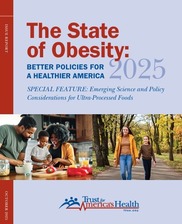
Trust for America’s Health released the State of Obesity: 2025 Report on October 16. The report found that 4 in 10 Americans have obesity. The report calls attention to the fact that while obesity rates depend on many factors, economic and community context shape Americans’ daily life and available choices around healthy food, physical activity, education, jobs, stress, and financial security, which affect people’s weight and health. This year’s report also includes a special feature on the emerging science and policy considerations concerning ultra-processed foods and their role in the obesity crisis.
The report found that that the number of states with an adult obesity rate over 35% went from 23 states in 2023 to 19 states in 2024. Missouri is one of those states that was reported as having over a 35% adult obesity rate in the 2023 BRFSS data and now is below that threshold in the 2024 BRFSS data. Missouri is now at 34.6% compared to 35.3% in 2024.
Other major notes in the report:
-
While the number of states over 35% did decline, Colorado was the last state below the 25% adult obesity rate threshold, and they saw an increase that now puts them above that mark. So, there are now no U.S. states where fewer than a quarter of adults are obese.
-
The overall adult obesity rate declined in the U.S. from 41.9% to 40.3% from the 2017-2020 period to the 2021-2023 period, though 40.3% is still higher than every other point in U.S. history prior to 2017 (note: this measure uses a different data source than the state rates listed previously).
-
The youth obesity rate is at the highest point in American history, now reaching 21.1% from the period of 2021-2023.
-
Missouri is below 15% if you look at all youth ages 2-19 but if you isolate to children ages 6-17 then 15.2% of Missouri children/youth experience obesity, and the rate rises to 15.9% when only looking at High School students.
The report includes recommendations for policy action by the administration, Congress, and states to address the nation’s obesity crisis, including:
-
Retain and strengthen the National Center for Chronic Disease Prevention and Health Promotion at CDC.
-
Reverse cuts or proposed cuts to nutrition support programs while improving the nutritional quality of available foods, including the Supplemental Nutrition Assistance Program (SNAP) and the Special Supplemental Nutrition Program for Women, Infants, and Children (WIC).
-
The Food and Drug Administration should implement a front-of-package nutrition label requirement to help consumers make informed choices.
-
Ensure access to healthcare, including obesity prevention and treatment programs, by reversing cuts to Medicaid and marketplace subsidies.
-
Address upstream drivers and root causes of health disparities and target obesity prevention programs to communities with the highest needs.
-
Make physical activity more accessible by increasing evidence-based initiatives that support active transportation and physical activity in communities.
-
Address industry marketing and pricing strategies to reduce advertising of unhealthy foods to children.
|

Community Health Workers
Community Health Workers (CHWs) help reduce gaps in the patient continuum of care, which is the delivery of coordinated health services over time. The continuum of care outlines why consistent and comprehensive health care matters—if a patient experiences gaps in care, like a lack of communication between different health professionals or several missed appointments without a follow-up, care worsens, outcomes decline, the strain of an individual on the system is higher and cost skyrockets.
Many states have emphasized the importance of rate setting for CHWs, pointing out that inadequate reimbursement for these services may lead to burnout and undermines the sustainability of the workforce. Recently, the Maternal & Child Health Center for Policy and Practice in Arkansas focused on expanding team-based care offered by county health departments to CHWs, doulas and midwives as part of a broader maternal and child health strategy. The center is developing policies that define the scope of practice for these workers and working with hospitals to change bylaws to transition to team-based care models.
Missouri Medicaid does not currently reimburse for CHW services, have a 1115 plan waiver approving CHW, or require Managed Care Organizations to include CHW as part of the care team. However, Missouri has been taking steps to develop the role and elevate the CHW’s importance in reducing gaps in the continuum of care. To support this workforce, DHSS developed the CHW curriculum and certifies training programs for CHWs. Completing a DHSS-certified training allows Missourians to be a State Credentialed CHW through the Missouri Credentialling Board. Additional trainings to create more CHW specialties are planned, including for maternal health. Missouri does reimburse for doula services when certain requirements are met. Doula services are covered by Medicaid as preventive services when recommended by a physician or other licensed practitioner of the healing arts. This includes prenatal, during delivery, and throughout the 12-month postpartum period.
We have more to do to develop and increase utilization of this workforce including finding opportunities to strengthen relationships and collaboration among public health and health care to support CHW utilization and improve population health.
|
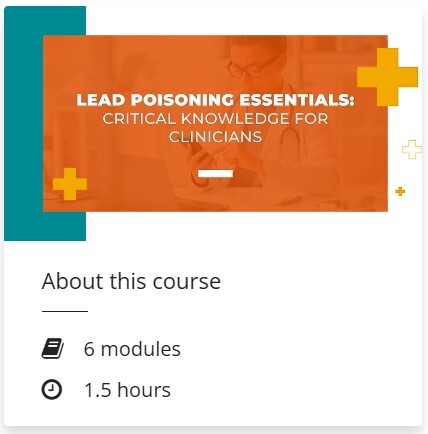
🩺 New Free Online Course: Lead Poisoning Essentials – Critical Knowledge for Clinicians
DHSS is excited to offer a free, self-paced online course designed to equip clinicians and public health professionals with essential knowledge on lead poisoning prevention and treatment.
-
6 modules (1.5 hours total)
-
Topics include Missouri lead history, testing requirements, symptoms, case management, and chelation therapy
- Continuing education credits available
- Includes microlearning lessons under 5 minutes to reinforce key takeaways
📍 Ideal for clinicians, nurses, case managers, and anyone working with at-risk populations.
👉 Enroll now!
Congratulations to our team from the Bureau of Environmental Epidemiology (special shout-out to Teresa Wortmann and Maggie Burns!) who worked with vendor, Learfield, to bring this project to life! Watch the masterclass trailer by clicking the image below.
|
 Click to watch trailer
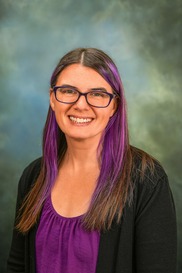
Congratulations, Jordanna McLeod!
Jordanna is the co-chair of the Missouri Council for Activity and Nutrition’s (MOCAN) Healthy Aging and Falls Prevention Workgroup. The workgroup received an award at the MOCAN conference as the Workgroup of the Year!
The Show Me Falls Free Missouri State Plan was drafted in 2007, establishing the Show Me Falls Free Missouri Coalition. This coalition has been led by various organizations and has experienced both periods of increased activity and inactivity. In 2022, Jordanna McLeod worked with MU Extension to revitalize the coalition. In 2024, the coalition joined the Missouri Council for Activity and Nutrition (MOCAN) as the Healthy Aging and Fall Prevention Workgroup. Joining MOCAN has provided a stable home for fall prevention work in Missouri.
This group aims to reduce falls and fall-related injuries among Missourians, maximizing their independence and quality of life while decreasing health care costs and deaths. In 2025, the workgroup received the National Council on Aging’s (NCOA) Strengthening State Falls Prevention Coalitions grant to help support its work. The workgroup is currently drafting the first three chapters of a healthy aging and fall prevention toolkit, which is scheduled for release in 2026. Learn more about the workgroup's goals in the strategic plan. You can also join the effort by filling out this survey. Great work, Jordanna!
|
Thank you for your continued partnership with DHSS.
|
|
|
|
|