|
DHSS Team,
As we settle into October, I hope each of you has had a chance to enjoy the (somewhat) crisper air and vibrant colors that fall brings to our beautiful Missouri surroundings. Whether it’s a walk during your lunch break or a view from your window, I hope you’re finding small ways to soak in the season.

Special Recognition
Tiffany Bayer in DHSS’s Center for Local Public Health Services received statewide recognition for her work leading the Center. Tiffany received the Excellence in Collaboration Award at the Missouri Public Health Association’s Annual Conference. Tiffany plays a crucial role within our team by serving as the primary point of contact for Missouri’s 115 independent local public health agencies. Her nomination letter thanked her and recognized her ability to navigate uncertain times with a calm, graceful, honest and empathetic approach, unmatched skill as a liaison, and commitment to the role. Congratulations, Tiffany!
|

Missouri WIC
The federal shutdown is having an impact on tens of thousands of people, either directly or indirectly. One of the critical programs the department administers, which is fully funded by federal appropriations, is the US Department of Agriculture’s Supplemental Nutrition Program for Women, Infants, and Children (WIC). The program is specifically targeted for expectant and breastfeeding women and children up to five years of age. Those of you reading this message understand the importance of nutrition for a developing fetus and child during those first years of life. On average, the WIC program serves about 96,000 participants each month, costing well over $360,000 per month to administer.
WIC is not an entitlement program. This means when there is a federal shutdown there is no guarantee the funds will continue to flow to states to support the program. We understand the impact for recipients of the free, healthy foods and personalized nutrition education, breastfeeding support and referrals to other services. There is also impact to many organizations – including non-profit organizations, technology companies, farmers, food manufacturers and vendors – who support WIC services in local communities.
Food shouldn’t be a political issue. The Governor’s Office and DHSS have been communicating with members of our congressional delegation on the potential impact to Missourians if the funds for the program were to cease. While Missouri WIC communicated on Oct. 8 with local WIC agencies throughout the state of the potential need to cease WIC services if additional funding is not received before the available funding is depleted, we recently received word the program would be funded through the end of October. Meanwhile, we are working within the department, with other departments, and community members to try to identify other options.
|
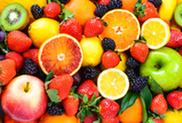
Back to Basics: The Importance of Food and Nutrition
In the great country and state in which we live, it is easy to forget the impact that a lack of food access has on kids and adults downstream. As a nurse, I must stop and remind myself of the basic hierarchy of needs and how threats to those basic needs can impact one for a lifetime. This statement is not about whether one subscribes to a structured framework around human needs or conversely maintains that needs are more fluid and cannot be structured. It's about the fact that without nutrition, we die. Most people eat food to sustain life and the amount, availability, and type of food we have access to impacts our psychological and physical health. Food is one of our most basic upstream interventions to lifelong health.
I recently questioned the ability to use funds directed to substance and opioid use disorders for food and nutrition programs as a preventative mechanism. The language around the use of the funds seems to prevent this; however, that doesn’t mean it would be an inappropriate use. This reinforced for me the importance of using intentional language, or perhaps not-so-intentional language in certain circumstances, when trying to address critical issues like drug addiction, and additionally, the need for more education on the impact of food insecurity. There is strong evidence that those with addiction suffer from food insecurity. But what about the impact of food insecurity as a factor in the future development of addiction? And, what about addictions that develop from food insecurity? Can we accept that addictions to highly processed food and sugar exist and may be a root cause of our overall negative health outcomes, skyrocketing health care costs, and high mortality and morbidity rates?
It is difficult to change the downstream impact if we do not understand, accept, advocate for, and implement basic upstream interventions.
|
Making a Difference
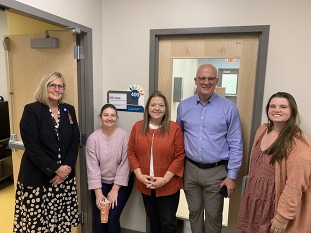
We recently had the opportunity to tour Jefferson City’s Special Learning Center. While the Center has been in existence for 39 years, we learned how they have continued to evolve taking steps toward addressing health and learning needs of children with developmental disabilities and delays. The Center plans to apply to be among the state’s first Prescribed Pediatric Extended Care facilities. One of the things we learned about the Center was the decision to only serve non-processed, no added sugar, no-dye foods. The kids, toddlers and beyond, accept and eagerly consume freshly prepared, whole foods. I say "eagerly" because we happened to be there at snack time while they munched on colorful healthy snacks. There are other facilities and school districts who are following suit. We look forward to learning more about these initiatives and how they can be supported.
|
Study: School Provision of Free Meals and Blood Pressure
A study was published in September showing that a universal free school meals policy was associated with an 11% reduction in the proportion of youth with high blood pressure measurements. The study evaluated 1,052 schools and over 155,000 patients from schools that offer free breakfast and lunch to all students due to a high proportion of students from low-income households, a USDA waiver during the COVID-19 pandemic, or state funds paying for universal free meals. Across five school years, the effect was strongest in elementary schools and schools where the policy had been in place the longest.
|
Coverage of Missouri’s USDA SNAP Waiver
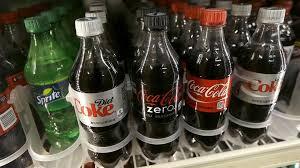
Most media coverage of Governor Kehoe’s Executive Order and the Department of Social Services submission for a USDA Supplemental Nutrition Assistance Program waiver neutrally reports the facts related to the EO and waiver. The public health perspective is mostly absent although extremely important.
A few key points:
- USDA data indicates that sweetened beverages constitute a higher percentage of expenditures for households that utilize SNAP than non-SNAP households (though they are similar for candy).
- SNAP participants tend to consume a greater prevalence of calories from added sugars and experience a higher prevalence of obesity and high blood pressure not only compared to higher income, ineligible households, but also compared to income-eligible nonparticipants.
- Evidence indicates that SNAP restrictions on sugar sweetened beverages does reduce consumption of sugar sweetened beverages among SNAP enrollees.
- A modeling study from 2020 indicated that restricting SNAP use on sugar sweetened beverages would be likely to reduce obesity and type 2 diabetes among SNAP enrollees.
|
|