Times are Changing
This Director's Message begins with a hard truth, but one that will come as no surprise: we are being asked to do more with fewer resources. That’s the reality of public health, and state and local government, today.
The easy thing would be to keep managing the way we always have—staying in our lanes, guarding what little we have, and hoping things get better. But that approach won’t get us where we need to go. Times like these require a shift in mindset and in practice. So, how will we successfully accomplish our important work tomorrow and into the future?
Invest in relationships. We can’t lose sight of relationships. Make it a priority to pick up the phone, to check in, to share what’s working and what isn’t. Trust and communication are the foundation for everything else. If we invest in trust, communication, and shared purpose, we will find ways to adapt and innovate, even when resources are tight.
Look for efficiencies across boundaries. Ask, “What can we do jointly that we can’t do alone? Where are we duplicating efforts? Where can we share staff, training, data or tools?” Pooling resources isn’t a loss—it’s leverage.
Engage your community with one voice. Residents don’t care if a service is technically “state” or “local” – or even “federal” for that matter. They care that it’s reliable. Let’s commit to presenting consistent, coordinated messages and services, no matter who delivers them.
Be willing to change how you manage and lead. We cannot cling to “the way we’ve always done it.” That may mean restructuring programs, rethinking job roles or outreach methods, or testing new models. Flexibility is no longer optional.
Hold one another accountable. Collaboration only works if we treat it as non-negotiable. That means asking for help when you need it—and offering help when you can. Our communities are counting on us. If we stand together, we will find solutions that neither of us could reach alone. We must see each other as partners—interdependent and stronger because of it. The health of Missourians depends on it.

What Does a Federal Shutdown Mean for Health?
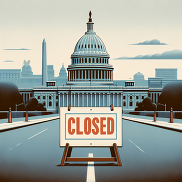
The federal government shutdown has an impact for everyone in some way or another. At the Department of Health and Senior Services, we have been evaluating each federally funded program and service to assess impact. DHSS has almost one hundred programs and hundreds of colleagues that are fully or partially federally funded which could be impacted depending on the length of the shutdown.
We are committed to working with our state and federal partners to identify and notify on impacts as quickly as possible. DHSS appreciates the partnership of stakeholders and team members in providing reassurance to Missourians as the department works with the administration to obtain verified and credible information to share. Please know that your work remains critical and we value your continued dedication to the people we serve.
Below are public health provisions included in recently published contingency plans:
HHS
HHS “will cease all non-exempt and non-excepted activities.” This includes, but is not limited to, oversight of extramural research contracts and grants, processing FOIA requests and public inquiries, data collection, validation, and analysis.
HHS’s Program Support Center, Financial Management Portfolio, Payment Management Services, and Division of Payment Management will be operational and retain the necessary staffing in an excepted status to ensure delivery of grant payments for excepted programs. The Payment Management Services and Division of Payment Management will follow specific processes to ensure payment of permissible disbursements. In addition, HHS will maintain the Grants.gov system in an operational status, but with reduced federal support staff presence. The Grants.gov Contact Center will remain available and assist callers. HHS will provide the federal grantor community with guidance and updates.
CDC
CDC will continue to respond to urgent disease outbreaks and continue efforts to support the President's Emergency Plan for AIDS Relief (PEPFAR), World Trade Center Health Program, the Energy Employees Occupational Illness Compensation Program Act, and the Vaccines for Children program.
CDC and the Agency for Toxic Substances and Disease Registry (ATSDR) will not be available to provide guidance to state and local health departments implementing programs to protect the public’s health, nor will they provide communication to the American public about important health-related information. In addition, there will no longer be ongoing applied public health research by CDC and ATSDR scientists to improve prevention modalities, and responses to public inquiries about public health matters would be suspended. Analysis of surveillance reports would be delayed. Grant funding announcements will not be prepared, resulting in compressed timelines for applicants, such as state and local health departments and universities, to apply for funding.
CMS
CMS Medicare program will continue during a lapse in funding for the federal government. CMS will also have sufficient funding for Medicaid to fund the first quarter of FY26, based on advanced appropriation provided for in the Full-Year Continuing Appropriations and Extensions Act, 2025. CMS will maintain the staff necessary to make payments to eligible states for the Children's Health Insurance Program. CMS will continue Federal Marketplace activities, such as eligibility verification, using Federal Marketplace user fee carryover.
FDA
FDA activities funded through carryover user fee funding and other un-lapsed funding will continue. This includes certain activities related to the regulation of human and animal drugs, biosimilar biological products, and medical devices, and all FDA activities related to the regulation of tobacco products. All FDA activities related to imminent threats to the safety of human life or protection of property would continue. This includes detecting and responding to public health emergencies and continuing to address existing critical public health challenges by managing recalls, mitigating drug shortages, and responding to outbreaks related to foodborne illness and infectious diseases.
The FDA will also reduce food safety efforts within the FDA’s Human Foods Program. Longer-term food safety initiatives, including policy work aimed at preventing foodborne illnesses and diet-related diseases, will be halted, jeopardizing public health.
HRSA
HRSA will continue to oversee activities funded through mandatory funding, advance appropriations, prior year carry-over funds, and user fees. For a limited amount of time, HRSA will continue to oversee certain direct health services and other activities with carryover balances, such as:
- Health Centers
- Ryan White HIV/AIDS program — Parts A and B
- Ending the HIV Epidemic
- Teaching Health Center Graduate Medical Education
- Family to Family Health Information Systems
- National Health Service Corps
SAMHSA
SAMHSA will continue substance use and mental health programs vital to the safety and protection of Americans. This includes programs that provide critical behavioral health resources in the event of a natural or human-caused disaster, such as Disaster Behavioral Health response teams, the 24/7 365-day-a-year Disaster Distress Helpline that provides crisis counseling to people experiencing emotional distress after a disaster, and the 988/Suicide Lifeline to connect people in crisis with life-saving resources.
SAMHSA will continue previously funded operations and utilize available balances to provide essential resources to those seeking help for behavioral health concerns through the Treatment Services Locator program, the Treatment Referral Line, and the Suicide and Crisis Line.
Most SAMHSA grants awarded in the prior year will have funds that remain available to be spent by the grantee, including, for example, the 988 and Behavioral Health Crisis Services program, the State Opioid Response Grant program, and the Mental Health and Substance Use Block Grants.
USDA
USDA just released an updated FY26 contingency plan. Click the link above to view the plan entirely. In Missouri, the WIC program will remain fully operational. Participants can continue to purchase WIC foods.
|

ACIP Update
The Advisory Committee on Immunization Practices (ACIP) recently met and made changes to immunization recommendations. The first change is that ACIP no longer recommends the combined MMRV (measles, mumps, rubella, and varicella) vaccine prior to the age of four, instead recommending that children under four receive the MMR vaccine and varicella vaccine as separately administered vaccines (MMR+V).
In practice, the recommendation would mean that children receiving their first immunizations against measles, mumps, rubella and varicella would receive two separate shots between at age 12-15 months, and then still receive the MMRV combined shot when they receive their second dose at age 4-6 years. Previously, the ACIP recommendation allowed for the MMRV immunization at both ages. The impetus for the change is that there is evidence that the combined MMRV vaccine does have an increased risk of causing febrile seizures in children under the age of four, though the absolute level of risk is still small. The MMR+V will still be covered by VFC.
ACIP also delayed a vote on changing the recommendation for hepatitis B immunization for newborns.
ACIP updated the COVID-19 immunization recommendation by voting that individuals should talk with a clinician before receiving a COVID-19 vaccine, but the vote to recommend states require patients obtain a prescription prior to receiving a COVID-19 vaccine was narrowly defeated. ACIP does not determine whether immunizations require a prescription, but their recommendations are important to informing state policy. In practice, the changed COVID-19 recommendations may not necessarily create new obstacles for people who wish to be immunized against COVID-19, though the recommendations create a shift from a universal recommendation that adults 65 and older become immunized – instead recommending “shared clinical decision making.”
|

KFF/Washington Post
Vaccine Survey
Relatedly, KFF and the Washington Post released the results of a survey interviewing parents of children under the age of six, finding that a strong majority of parents are confident in MMR and polio vaccines and believe that they are safe for children, and that they support the requirements for immunization to attend public schools. These views are consistent across partisan lines.
However, confidence in influenza and COVID-19 vaccines are lower, with a disparity across parents’ partisan identification. Younger parents (under the age of 35) also are more concerned about vaccine safety than parents older than 35. Approximately 16% of parents reported skipping or delaying at least one childhood vaccine other than COVID-19 or flu.
|

Missouri Agriculture and Food Systems
The US Secretary of Agriculture Brooke Rollins attended an agriculture conference in Missouri last week. Secretary Rollins spoke to how farmers’ revenues are struggling and the US beef cattle shortage with the loss of approximately 150,000 US cattle operations over the last decade. President Trump also spoke to an intention to pass revenue from tariffs onto American farmers to offset associated economic difficulties.
The connection between Missouri agriculture and Missouri health is paramount. Missouri crops and livestock are essential to not only the economic health of rural Missourians, but also in maintaining the food systems that feed the state. Although large volume and large, anonymous aggregation of food means that most Missourians purchase their food from elsewhere in the world or nation, in a time where the connection between nutrition, ultra-processed foods, and food systems to chronic disease is being emphasized, Missouri’s agricultural production will be essential to improving the health of Missourians.
This 2022 MU Extension document provides information on levels of food systems and how farmers and consumers interact.
|
Breast Cancer Awareness Month
Watch for our State Capitol's dome to be lit pink this evening to raise awareness about the importance of prevention and routine screening for the early diagnosis of breast cancer.
About 1 in 8 women in the United States will get breast cancer during her lifetime. The good news is that mammograms can help find breast cancer early before it spreads to other parts of the body. Health is a lifelong journey. Individuals can call 866-726-9926 for more information about free breast cancer screening tests through the Show Me Healthy Women program.
Photos of the Capitol in pink this morning are available on Governor Kehoe's Flickr page.
 DHSS Team Members of the Month
We'd like to share with you our October Team Members of the Month at DHSS, Nola Dodge and Wendy Spaller, who work within the Division of Senior and Disability Services.
The nominator wrote, “Wendy received a report on a 79-year-old woman living alone in her home that was hoarded with trash and the client could not leave her room. Wendy and Nola went to the home with the sheriff’s department. The home had trash and clutter throughout to the point that doors could not be opened, and the ceiling was caving in. The sheriff’s deputy was unclear what he could do to assist the client to get her to safety. Nola and Wendy realized that if the client was left in this condition, she could die. They advocated to get the sergeant to come to the scene, which quickly got a 96-hour-hold process started. After 5 ½ hours, working with the client, sheriff’s department, ambulance and fire department, they were able to get the client transferred to safety and admitted to the hospital. The client’s daughter has been trying for years to get her mother the help that she needed but did not know how. The daughter was crying, thanking Wendy and Nola for their assistance. She was sure that her mother would die in that home. This was the worst situation that I have seen in my 27 years of social work. Nola and Wendy’s insistence and advocacy to rescue the client from this situation allowed her to get to safety. I am sure without their diligence this client would have died. They never worried of their own safety and when they left the home, were covered with seed ticks. The sheriff’s department, ambulance and fire department staff were all in HazMat suits, which our staff did not have. They stayed at the home, standing in these conditions only worried about getting the client to safety not at all thinking of their own health."
We are grateful for Nola, Wendy and all of our team members at DHSS who assist some of our state's most vulnerable in such a huge way.
Changes to CDC Notice of Award Termination Provision
I previously mentioned that we had heard other states seeing this provision. In Missouri, we are now seeing this new termination language on CDC Notices of Awards.
Starting on October 1, 2025, this award is subject to the termination provisions at 2 CFR 200.340. Pursuant to 2 CFR 200.340, the recipient agrees by accepting this award that continued funding for the award is contingent upon the availability of appropriated funds, recipient satisfactory performance, compliance with the terms and conditions of the award, and a decision by the agency that the award continues to effectuate program goals or agency priorities.

Did You Know…?
October is Residents’ Rights Month, a time dedicated to honoring the dignity, respect and autonomy of individuals living in long-term care facilities. In Missouri, this observance is championed by the Missouri Ombudsman Program, which is housed within DHSS.
- DHSS licenses more than 1,100 long-term care facilities in the state.
- The Missouri Ombudsman Program empowers trained volunteers and staff to investigate complaints, resolve concerns and ensure that residents’ voices are heard. The program also educates residents, families and facility staff about rights and responsibilities under state and federal law.
- The program is currently recruiting for volunteer ombudsmen statewide.
|
Thank you for your continued partnership.
|