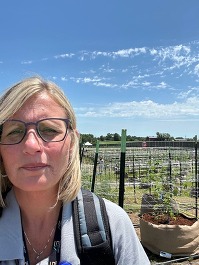
Exactly five months into my tenure as DHSS Director, and I continue to learn so much each day about what our various teams do to protect health and safety of Missourians. Last week, I had the opportunity to work with our Division of Cannabis Regulation and visit some of the licensed facilities they regulate, which was an impressive and eye-opening experience. DHSS has a variety of additional regulatory responsibilities, licensing entities that provide services including long-term care, hospitals and ambulatory care, emergency medical services, home care, diagnostics and more.
One Big Beautiful Bill Act
Our Health Policy Director, Daniel Bogle, has provided the following summary of the provisions in OBBBA of utmost impact to the department and potentially our stakeholders. This is not a comprehensive list of health-related changes. If you would like a more comprehensive list the National Academy of State Health Policy has provided the following summary.
On July 4th President Trump signed the One Big Beautiful Bill Act, a federal reconciliation bill that implements many of the federal administration’s tax and mandatory spending priorities. As a reconciliation bill, the new law includes wide ranging provisions affecting the health and wellbeing of Americans, including tax policies, Medicaid and healthcare spending, and SNAP. However, discretionary spending cannot be included in the reconciliation process, meaning that many of the proposed budgetary changes to the US Department of Health and Human Services still await passage through Congress.
Changes to Medicaid:
- Taxes on medical providers – called the Federal Reimbursement Allowance (FRA) in Missouri – are used to draw down additional federal Medicaid funds to increase payments to medical providers. Federal law only allows the FRA to “hold harmless” providers (meaning the provider can’t be worse off financially because of the tax) if the tax doesn’t exceed six (6) percent of a provider’s net revenue from treating patients. The new law will reduce the provider tax limit (called a “safe harbor”) in Medicaid expansion states by half a percent (.5%) each year starting in 2028 until it reaches 3.5 percent in FY 2032, except that nursing and intermediate care facilities are exempted from the reduced safe harbor limit.
- States must implement work reporting requirements (80-hr a month including community service or school) for individuals both aged 19-64 and in the adult expansion group by the end of 2026. Individuals who are medically frail or who are parents of children 13 and under are exempt from the work reporting requirements. If someone is denied or disenrolled due to work requirements they are also ineligible for subsidized covered in the ACA Marketplace.
- Enrollees in the Medicaid adult expansion group will be required to pay $35 per service in cost sharing, excluding primary care, mental health, and substance use disorder services, as well as services provided by FQHCs, behavioral health clinics, and rural health clinics. This requirement will become effective October 1, 2028.
- Medicaid enrollees in the adult expansion group will have their eligibility redetermined at least every six months rather than at least every 12 months.
- Beginning January 1, 2027, Medicaid payments for retroactive coverage will be reduced from medical expenses incurred up to 90 days prior to date of application to one month prior for expansion enrollees and two months for traditional enrollees.
- Repeals a Biden administration federal rule that simplified Medicaid eligibility and renewal processes.
- There are new limits to State Directed Payments for Managed Care Organizations, but those changes are not expected to affect Missouri.
- Creates a new Rural Health Funding program that will provide $50 billion in new grants to states between 2026 and 2030 to assist rural health care providers. The exact distribution by state and how it will offset reductions from other Medicaid changes is unknown. A KFF estimate of Medicaid spending in rural areas calculates that Missouri could lose $5.4 billion in rural Medicaid spending over the next decade, which ranks the tenth most of all states. Overall, Missouri is projected to lose between $13 to $21 billion in Medicaid funding over the next ten years.
Supplemental Nutrition Assistance Program (SNAP):
- Current law already required SNAP recipients ages 18-54 who can work to meet work reporting requirements to qualify for SNAP, though with certain exemptions.
- The One, Big, Beautiful Bill expands the age for work requirements to 18-64.
- Currently, individuals are exempt if there is someone under the age of 18 in their SNAP household. The new law lowers the age in that exemption to “a parent or other member of a household with responsibility for a dependent child under 14 years of age” so that a parent of children aged 14 or older would now be required to meet work reporting requirements.
- States will be responsible for paying 75 percent of SNAP administration costs (instead of 50%) and some states may have to pay for a share of SNAP benefits for the first time depending on the state’s SNAP payment error rate.
Tax Changes:
- Changes to tax revenues due to federal tax reductions cuts do not have a direct impact on health, though allowing more Missourians to retain more of their own income could improve individual and family economic wellbeing.
- Overall, the One Big Beautiful Bill is expected to reduce federal tax revenues by $4.5 trillion over a decade, which could increase the national debt and result in the reduction of essential public health and healthcare services for Missourians if budget cuts are used to offset reduced revenues.
- Paid Family Leave is an evidence-based means of improving the health of wellbeing of families – especially infants and their mothers. The act expands eligibility for the Paid Family and Medical Leave (PFML) tax credit and makes it permanent, which incentivizes employers to offer paid family leave by providing them a nonrefundable tax credit for a portion of the wages paid to employees on leave.
- The bill permanently increases the Child Tax Credit to $2,000 per child and temporarily increases it to $2,200.
- Incentivizes employers to provide childcare benefits to employees by increasing the tax credit for employer-provided childcare to 40 percent of qualified childcare expenses (up to $500,000). Small businesses are allowed 50 percent of qualified childcare expenses (up to $600,000) and small businesses may also pool resources to operate a joint childcare facility or use a third-party intermediary to provide childcare to employees.
- The adoption tax credit is made partially refundable up to $5,000 and will be indexed to inflation in tax years after 2024.
Additional Changes:
- Eligibility for Health Savings Accounts (HSAs) is expanded to more people and HSAs may be used to pay for Direct Primary Care (DPC) fees. The law also allows a High Deductible Health Plan (HDHP) to cover telehealth before the deductible and still qualify an HAS-eligible HDHP.
- Prohibits HHS from implementing or enforcing the 2024 CMS final rule requiring long-term care facilities (LTCs) to meet certain minimum stagging levels (until October 1, 2034).
The department will work with our federal and state partners to identify and implement policy to support access to care, chronic disease prevention and health promoting programs.
Project Reimagine
As reiterated in previous messages, the department is proactively leaning in to changing health and safety policy at the federal and state level. This means we are simultaneously assessing and improving on the work we currently perform, how we interact with external stakeholders, and how we engage our colleagues. Additionally, we are taking this opportunity to look at all the programs and services offered by the department.
Our external stakeholder work has focused largely on improving communication by creating opportunities for increased feedback (i.e. pre-review of regulations, newsletters, improved constituent feedback process) and beginning to look at contractual language to decrease administrative barriers. We are looking forward to our new website next spring as well as expanding our platform where stakeholders can self-subscribe to notifications on topics they care about. We are always looking for opportunities to improve and we welcome suggestions.
We have also been evaluating current internal processes to improve efficiency, compliance and the overall environment. Decreasing layers and barriers improves the work environment. Identifying opportunities and making improvements takes a lot of upfront work, but the benefit will be worth it.
Probably one of the most challenging endeavors has been to embark on overall program and service evaluation. As we anticipate decreases in certain areas of federal funding (noting there may be increases in other areas) as well as a leaner state fiscal forecast, senior leaders are assessing all programs. Some of the areas where we anticipate federal cuts are in areas considered indispensable for public health and safety. It would be irresponsible if our plan was to simply stop the program without further evaluation. That is why we are taking a broad and responsible approach of not only looking at divisions where there are anticipated cuts, but all divisions. All divisions are working collaboratively on this. We have already seen divisions communicate the desire to help one another so that if faced with critical challenges they will have already reimagined a future by identifying opportunities now. This collaborative work will also expose new opportunities for how certain initiatives, like nutrition, can be positively impacted across all divisions.
There are so many factors that must be considered when evaluating a program. An evaluation may include whether the funding is program specific, if there is a constitutional or regulatory requirement, if another entity performs the same service, if another division’s work is related and could collaborate, and if the program or service went away what the impact to health and safety would be. There are many other considerations; these are just a few.
Pre-Rulemaking Comments
The department has established a webpage where we will post rules that are being considered for development and/or review. We will send notice to stakeholders and regulated entities that they can provide feedback on those rules prior to the department sending proposed language/changes to the Governor’s Office and Secretary of State’s Office for public comment. This is one more way we are trying to collaborate with regulated entities to make reasonable, timely and appropriate changes. Of course, we have the responsibility to ensure suggested language is consistent with all applicable rules and policies. We would love to hear from you if you have feedback at Health.Mo.Gov/Comment.
Thank you for your continued partnership.
|