|
A blue jay may have been one of the first birds we learned to identify. They are easy to recognize due to their large size and striking color. White patches and black bars highlight the bird’s blue wings and tail, and it has white underparts and a black necklace on its front. A blue jay also sports a distinct crest which can be raised or lowered depending on the bird’s mood.
The blue jay’s voice varies from soft murmurs to loud screams to clear, chime-like whistles. Blue jays act as the danger alarms of the forest; they greet intruders with a piercing “jay, jay, jay” or “thief, thief, thief.” People, owls, hawks, snakes and other potential predators prompt this reception. The blue jay’s “Jay! Jay!” call is only one of a wide variety of sounds the bird employs—including excellent imitations of several hawk calls.
Blue jays’ diet is composed of acorns, nuts, and seeds—though they also eat small creatures such as caterpillars, grasshoppers, and beetles. The bird’s powerful, all-purpose bill efficiently handles a wide range of food, but they prefer acorns. Blue jays will bury (cache) several to eat later during the winter when food supplies are limited. Some acorns are never recovered, giving them a good start on becoming oak trees. Blue jays are natural forest dwellers, but they are also highly adaptable and intelligent birds. They are a familiar and noisy presence around many North American bird feeders.
To watch blue jays around your house, they prefer tray feeders or hopper feeders on a post rather than hanging feeders, and they prefer peanuts, sunflower seeds, and suet. Planting oak trees will make acorns available for blue jays of the future. Blue jays often take drinks from birdbaths.
Interesting facts about blue jays:
- Young blue jays may be more likely to migrate than adults. Some individual blue jays migrate south one year, stay north the next winter, and then migrate south again the next year. No one has figured out why they migrate when they do.
- The Blue jay frequently mimics the calls of hawks, especially the Red-shouldered Hawk. These calls may provide information to other blue jays that a hawk is around or may be used to deceive other species into believing a hawk is present.
- Tool use has never been reported for wild blue jays, but captive Blue jays used strips of newspaper to rake in food pellets from outside their cages.
For more information on blue jays visit https://nature.mdc.mo.gov/discover-nature/field-guide/blue-jay.
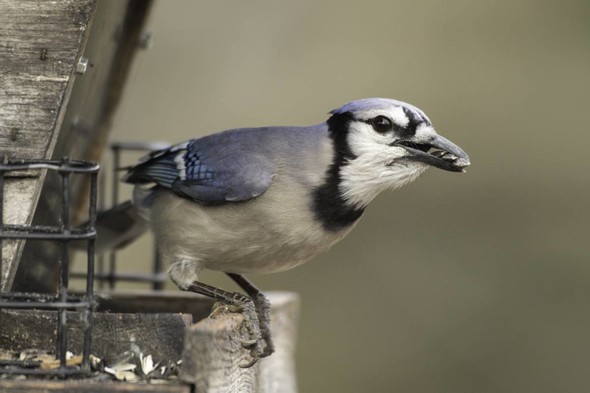 Blue Jay
|