|
December 2014
The Basin Alliance for the Lower Mississippi in Minnesota (BALMM) will meet Wednesday, Dec. 17, from 9 a.m. to noon at the Minnesota Pollution Control Agency (MPCA) office, 18 Wood Lake Drive S.E., Rochester.
Agenda as follows:
-
9 a.m. – “Southeast Minnesota Wastewater Initiative: Current Communities,” Aaron Wills, Wastewater Facilitator, SEMWI and Cannon River Watershed Partnership
-
10 a.m. – Break
-
10:30 a.m. – “Watershed-level Nitrogen Reduction Planning Tool and Final Nutrient Reduction Strategy Update,” Dave Wall, Research Scientist, MPCA
-
11:30 a.m. – Announcements and updates
-
Noon - Adjourn
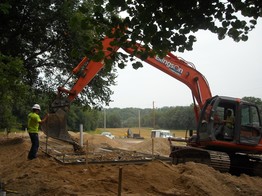 The Southeast Minnesota Wastewater Initiative (SEMWI) has successfully employed the Wastewater Facilitator concept since 2001. During this time, 21 communities have completed the process for achieving adequate sewage treatment. In a survey conducted by the University of Minnesota Extension Service in 2006, community task force members identified the services of the Wastewater Facilitator as the most critical aspect in helping their community progress toward a wastewater solution.
Education of the community was also identified as an integral component of the successful strategy developed by the SEMWI. When an unsewered community is first approached, members often lack an understanding of proper wastewater treatment. Without this understanding, they are unlikely to accept responsibility for the environmental impacts of their current systems and therefore unlikely to take steps to correct the situation. Once a community has taken steps to address the condition of their systems, they require education in the types of treatment options available before an appropriate community decision can be made. Finally, once a new system has been installed, the long-term viability of the system depends upon the homeowner’s knowledge of how to operate and maintain the system.
At the Dec. 17 BALMM meeting, Facilitator Aaron Wills will talk about current communities he is leading through the many steps needed to achieve wastewater solutions.
See the related story, “Sewer squad flush with awards,” below.
|
The MPCA is developing a new set of standards for nitrate nitrogen in surface waters based on aquatic life toxicity. This new standard will likely mean reducing nitrogen loads from cropland, especially in southeast Minnesota where trout streams are an important part of the environment and economy. The MPCA has developed a tool to assist its staff and local resource managers in better understanding the feasibility and cost of various Best Management Practices (BMPs) to reduce nitrogen loading from Minnesota cropland.
This watershed-level nitrogen reduction planning tool – in the form of an Excel spreadsheet – compares the effectiveness and cost of nine BMPs, alone and in combination, for reducing nitrogen loads leaving a Minnesota watershed.
Using the nitrogen reduction planning model involves three steps:
- Select a watershed, enter hypothetical adoption rates for each BMP, and compare the effectiveness and cost of the individual BMPs.
- Compare suites of the BMPs that would attain any given reduction in the nitrogen load at minimum cost.
- “Drill down” to the details and assumptions behind the models of effectiveness and costs of any particular BMP, and make any adjustments to reflect your particular situation.
Dave Wall, MPCA research scientist and chief author of “Nitrogen in Minnesota Surface Waters,” will showcase the planning tool and final changes made to the Nutrient Reduction Strategy at the Dec. 17 BALMM meeting.
More than 1,300 municipal entities in Minnesota are eligible for state funding to improve their wastewater, stormwater or drinking water systems. The MPCA and partners will be sending notices to eligible entities this month so check your mail for the good news.
Managing wastewater and stormwater is important for the health and safety of any community. It can also make a difference to a community’s growth potential and environmental value, in terms of attracting new businesses, new residents, and additional visitors.
Communities should check to see if they’re on the Project Priority List for 2015.
If so, their applications, scoring worksheets, supporting documentation, and plans for wastewater and stormwater projects are due to the MPCA by March 6.
For more information, visit the MPCA Wastewater and Stormwater Financial assistance webpage.
The Minnesota Dept. of Agriculture (MDA) is accepting applications for Sustainable Ag Demonstration grants through Jan. 23, 2015. The program objectives are to research and demonstrate the profitability, energy efficiency, and benefits of sustainable agriculture practices and systems from production through marketing.
Eligible recipients include Minnesota farmers, educational institutions, individuals at Minnesota educational institutions, and non-profit organizations. Priority is given to farmer-initiated projects. All non-farmer initiated projects must show significant collaboration with farmers.
Grants may only be made to applicants in Minnesota for demonstrations on farms in the state. An applicant is eligible to receive only one MDA sustainable agriculture grant at a time. Grantees who complete projects are eligible to receive additional grants to either continue the project or for a new idea.
Grants up to $25,000 are available to fund on-farm research and demonstrations and may include, but are not limited to:
- Enterprise diversification and organic production using traditional and non-traditional crops and livestock;
- Cover crops and crop rotations to increase nitrogen uptake, reduce erosion, or control pests;
- Conservation tillage and weed management;
- Cropping systems to implement integrated pest management systems for insects, weeds, and diseases;
- Nutrient and pesticide management including prevention of entry into water bodies; and
- Energy production such as wind, methane, or biomass.
For more information, see the grant application online or call Jean Ciborowski at 651-201-6217.
 21 small communities. 13 counties. 106 million gallons a year of raw sewage. Those three terms provide a broad picture of the Southeast Minnesota Wastewater Initiative, nicknamed the “Sewer Squad.”
Since 2002, the Sewer Squad has worked with small communities in 13 counties to address the need for sewage treatment. With help from the squad, 21 small communities have upgraded their sewer systems, preventing about 106 million gallons per year of raw sewage from entering the rivers and streams of southeast Minnesota, with more projects in the works.
|
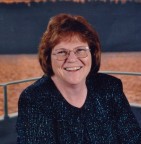 The MPCA is proud to be part of the Sewer Squad, a partnership with the Southeast Minnesota Water Resources Board and Cannon River Watershed Partnership. MPCA staff work closely with Aaron Wills and Sheila Craig, wastewater initiative facilitators who have a knack for pulling together local partners and using an effective strategy for engaging citizens. They actively involve local residents in making choices about how to resolve their wastewater issues. (Photo above is Aaron and photo at right is Sheila.)
For this work, the Cannon River Watershed Partnership is receiving an $88,213 grant from the Bush Foundation:
“This collaborative strategy builds widespread trust, effective treatment approaches and local competency around wastewater issues. It also has paid off in user rates that are, on average, much lower than in similar size communities in other parts of the state.”
In addition to the Bush grant, one of the wastewater projects is receiving an award for innovation. The Humphrey Institute has selected Oronoco Township in Olmsted County for a Local Government Innovation Award for its efforts to bring wastewater treatment to the Kings Park community on the Zumbro River. Some of the homes discharged sewage directly to the river while others had outdated systems. Financed by a Clean Water Legacy grant, this project will serve 14 homes near the confluence of the river’s middle and south forks north of Rochester.
Currently in its eighth year, the Local Government Innovation Awards recognize outstanding cities, townships, counties, and schools in Minnesota that demonstrate results in improving local services. This program is led by Humphrey School of Public Affairs at the University of Minnesota. Each year, up to 18 local government entities are recognized for their innovative work. Oronoco Township is scheduled to receive the award Dec. 11.
The Sewer Squad also won an Environmental Initiative Award in 2013.
The wastewater initiative started from the Basin Alliance for the Lower Mississippi in Minnesota (BALMM), which the MPCA continues to coordinate with local partners. The catalyst was the Lower Mississippi Regional TMDL for Fecal Coliform, which identified strategies to address point sources through wastewater treatment and nonpoint sources through feedlot fixes and manure management. Those efforts are working to reduce bacteria levels in regional rivers, as told in the Minnesota Water Story, “BALMM a remedy for rivers.”
|
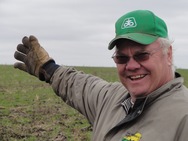 The first of its kind in Minnesota, a Farmer Led Council is working to keep troubles such as nitrates, sediment and bacteria out of the anglers’ paradise of the Whitewater River.
This river and its tributaries are known for its trout fishing and other outstanding recreation. The area’s karst topography makes it beautiful and unique with bluffs, caves and sinkholes. But it also makes the water here vulnerable to pollution. With streams disappearing underground and reappearing a few feet or miles downstream, pollutants from the land easily find their way to waters above and below the surface. Protecting the waters means making changes on cropland in this largely agricultural area.
The Farmer Led Council started as a pilot project with Clean Water Legacy funding. Today it studies water quality, discusses potential solutions, and decides on ways to entice more farmers to take more steps to protect water resources. And the members keep it simple with minimal fuss and paperwork. This council is a model for southern Minnesota where years of intensive farming are taking their toll on lakes and rivers.
For more information, see the 4-part video series on the MPCA YouTube channel:
|
|




