 The Lessard-Sams Outdoor Heritage Council issued its Request for Proposals April 1, with an estimated $100 million in funding available for fiscal year 2016 (July 1, 2015-June 30, 2016). The council may revise this estimate after November 2014. The grants are for projects that protect, restore and enhance wetlands, prairies, forests, and habitat. Proposals are due at 4 p.m. Thursday, June 12, 2014, and must be submitted electronically.
Council Staff are available to assist applicants. Anyone wanting proposal writing assistance can contact staff at 651-297-7141 to set up an appointment.
The council makes annual recommendations to the Minnesota Legislature on appropriations from the Outdoor Heritage Council, which is funded by the Clean Water, Land and Legacy Amendment.
|
 In response to its 2015 Request for Proposal, the Legislative-Citizen Commission on Minnesota Resources received 153 proposals totaling $121.8 million. The commission estimates $44 million will be available in grants this round from the Environmental Trust Fund, which is funded by Minnesota Lottery proceeds and investment income. Through this RFP the commission will make recommendations to the 2015 Legislature for funding, with the money available to successful applicants on July 1, 2015. The commission expects to post the proposals soon on its website.
|
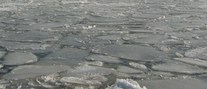 Though it seems this harsh winter will never end, the big spring thaw has arrived across much of Minnesota. The Minnesota Pollution Control Agency (MPCA) is asking citizens to document one of the most important indicators of spring for our state – the date on which ice disappears from a lake, or lake ice-off.
Lake ice-off is an important milestone for the state each year, particularly for anglers and water enthusiasts who’ve been waiting all winter to launch their crafts—and themselves--into the water again. But lake ice data — the dates of both its appearance and disappearance — could also be an indicator of changing climate trends. The MPCA collects ice-on and ice-off data and makes it available to researchers and the Department of Natural Resources’ State Climatology Office. The more data available to researchers, the better they can track climate trends and their effects on lake health, local wildlife, and citizen lake use. Citizen observers make it possible to maintain records of ice data across the state on a huge numbers of lakes.
The MPCA defines ice-off as the date when ice is essentially gone from the lake. If there is some ice pushed up on shore, but the water is ice-free, the ice is considered to be out. Normally, lakes do not refreeze in the spring once the ice has gone, but if ice does form again after the majority of it has melted, record both dates of ice-on and ice-off for the spring. The most important thing is for the observer to document their own perception of ice-off for the lake in question. For one observer, that might mean the ability to navigate a boat from one point to another; for another, it might mean that a lake is ice-free as far as they can see from their house. It is, however, critical for each observer to use consistent criteria from year to year.
All ice-off dates, any clarifying definitions, and questions can be emailed directly to the MCPA’s ice data collection program at ice.pca@state.mn.us.
|
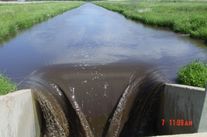 Reducing the sediment that is choking the Minnesota and Mississippi rivers, and filling in Lake Pepin, will require major changes on the landscape, according to a draft strategy recently released by the MPCA. The long-term strategy, open for public comment through April 17, calls for significant reductions in sediment that is degrading habitat for fish and other aquatic life in the Minnesota and Mississippi rivers. The excess clay and silt in the water also hurts the aesthetic quality of the rivers for recreation and tourism.
The strategy addresses the Minnesota River and Mississippi south of the metro Twin Cities, including Lake Pepin. Both the Minnesota River and this part of the Mississippi have sediment levels that fail to meet water quality standards. The standards are designed to protect aquatic life and recreation such as fishing and swimming. According to extensive water monitoring over several years, more than 1 million tons of sediment flow with the river past Jordan every year. Downstream, much of that sediment settles out in Lake Pepin, a natural impoundment of the Mississippi.
For the Minnesota River, the strategy proposes interim targets of a 25-percent reduction in sediment by 2020 and a 50-percent reduction by 2030. An 80-90 percent reduction from current sediment loading is needed to meet the goal for the Minnesota River in a study called a Total Maximum Daily Load (TMDL). A TMDL determines the amount – or load – of a pollutant that a river can accept and still meet water quality standards. The South Metro Mississippi sediment TMDL also requires a significant reduction from current loading.
Major changes in policy, technology and the science behind these issues are expected during the next two decades. Because these changes may influence planning efforts in unforeseen ways, a focus on meeting shorter-term goals will help ensure that each step of the implementation process is based on current data and information.
Because the majority of the suspended sediment load in the South Metro Mississippi River comes from the Minnesota River, efforts in the Minnesota River basin directly affect downstream areas.
Questions and comments can be submitted to Larry Gunderson, Minnesota Pollution Control Agency, 520 Lafayette Rd. N., St. Paul, MN, 55105, email: larry.gunderson@state.mn.us, phone: 651-757-2400 or 800-657-3864.
|
The (MPCA invites the public to review and comment on the agency’s draft industrial stormwater permit through April 30, 2014.
The agency proposes to reissue a Multi-Sector Industrial Stormwater general permit. The draft permit establishes requirements for 10 types of public and private facilities with industrial activities that could potentially pollute stormwater runoff. It is intended to protect water quality by preventing or reducing contact of stormwater with products, by-products and wastes from industrial facilities. Many industrial materials contain hazardous metals, fuel, oil, grease and salts that could contaminate stormwater, and ultimately enter local lakes, streams, and groundwater.
The draft permit would affect public and private facilities that conduct industrial activities such as manufacturing, petroleum refining, transportation, used motor vehicle parts, scrap and waste materials, mining, landfills, steam electric power generation, domestic wastewater treatment, and hazardous waste treatment, storage or disposal.
The draft permit contains general and sector-specific requirements, including a Stormwater Pollution Prevention Plan and best management practices. It also requires permit holders to reduce, minimize or eliminate stormwater contact with potentially polluting materials, and to conduct benchmark and effluent monitoring. Industrial owner/operators may qualify for a five-year exclusion from the permit, if they provide a storm-resistant shelter that protects 100% of their industrial materials and activities from contact with stormwater.
Questions and written comments on the MPCA’s draft Multi-Sector Industrial Stormwater permit should be submitted by 4:30 p.m. on April 30 to Melissa Wenzel, MPCA, 520 Lafayette Road N., Saint Paul, MN 55155-4194, or be faxed to Wenzel at 651-296-8717.
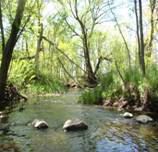 A new report by the MPCA and local groups in the Snake River watershed in the St. Croix River Basin recommends restoring several water bodies in the southern part of the watershed and protecting others in the north. The Snake River Watershed Restoration and Protection Strategy (WRAPS) Report is available for public review and comment through April 23, 2014.
In-depth monitoring and analysis show water quality is good in the northern half of the watershed, where lakes and streams need protective measures to keep them healthy. These measures include managing timber harvests and other forest activities to prevent erosion and other impacts that can eventually pollute the waters.
Water quality becomes progressively worse in the southern half of the watershed as the landscape changes from primarily forests and wetlands to pasturelands with some croplands. To restore these waters to state standards, the report recommends, among other things, managing cattle access to streams and lakes. This is expected to reduce levels of phosphorus (a nutrient that can produce excessive algae growth), E. coli (a potentially harmful bacterium) and sediment, which reduces clarity and can harm aquatic animals.
“These strategies in this report will improve vegetative buffer zones along streams and lakes to reduce the amount of sediment entering the stream from erosion and runoff,” says Christopher Klucas with the MPCA. “Because many of these strategies rely on voluntary action by area residents and landowners, keeping them closely involved throughout this process is very important.”
Many groups are participating in restoration and protection efforts, including the Snake River Watershed Management Board, soil and water conservation districts, counties, townships, the Cross Lake and Pokegama Lake associations, and the Ann River Watershed Alliance. Individuals, too, are encouraged to get involved.
Klucas said the report is a tool local water resource managers can use to identify and prioritize water quality improvement projects throughout the watershed. Implementing the strategies in the report will require cooperation among citizen groups, regulated sources of pollution such as wastewater treatment facilities, and state and federal government.
Comments on the report should be sent by April 23 to Christopher Klucas, 520 Lafayette Road N., St. Paul, MN 55155-4194. Klucas is available to answer questions by phone at 651-757-2498.
Written comments must include a statement of your interest in the report; a statement of the action you wish the MPCA to take, including specific references to sections of the draft report you believe should be changed; and specific reasons for your position.
|
The MPCA invites comments on a draft report aimed at reducing bacteria levels in Upper Mississippi River tributaries. The majority of the project focuses on the Mississippi River corridor from Royalton to Hastings and includes portions of three major watersheds: Mississippi River-Sartell, Mississippi River-St. Cloud, and Mississippi River-Twin Cities.
The MPCA and Minnesota Department of Health are partnering to lead this project in close coordination with area land and watershed management organizations, cities and counties, and agencies.
The study report, called a Total Maximum Daily Load, focuses on reducing the level of bacteria, or load, to a level that streams can accept and still meet state water quality standards for aquatic recreation. The TMDL is a part of a nationwide effort under the federal Clean Water Act to identify and clean up pollution in streams, rivers and lakes.
The Upper Mississippi River Bacteria TMDL Study and Protection Plan describes bacteria reductions needed for 22 stream sections to meet state water quality standards. Land uses in the watersheds of the impaired stream sections range from agricultural in the northern project areas to urban in the southern project area. To meet the water quality standard, bacteria will need to be reduced by up to 97 percent for stream sections depending on the streamflow. E. coli bacteria are used to indicate the potential presence of waterborne pathogens that can be harmful to human health. Sources of E. coli include human, livestock, pet, and wildlife waste.
The deadline for comments is 4:30 p.m. on May 6. Submit comments, which must be in writing, to Barb Peichel, 520 Lafayette Road North, St. Paul, MN 55155-4194. Peichel can also be contacted by phone at 651-757-2646 or 800-657-3864.
After receiving public comments, the MPCA may revise the draft report before submitting it to the U.S. Environmental Protection Agency for approval.
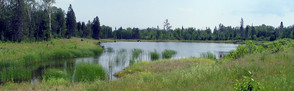 Resource managers now have an online tool for identifying potential areas for wetland restoration. The MPCA contracted with the Natural Resource Research Institute (NRRI) to develop this wetland restoration prioritization tool. Wetlands retain water and provide a critical reduction in several pollutants. The goal of the new tool is to help watershed professionals target wetland areas for effective watershed restoration and protection.
Training workshops have been scheduled to help watershed managers and wetland restoration practitioners get the most from this exciting new online tool. Space is limited so reserve your spot soon.
- May 13, St Cloud: MnDOT Training Center, 3725 12th St. N., St. Cloud
- May 20, St. Paul area: MnDOT Training and Conference Facility, 1900 County Road I West, Shoreview
- May 21, Fergus Falls: Ottertail Power Community Room, 216 S. Cascade St., Fergus Falls
Each workshop will run 9:30 a.m. - 3:30 p.m. There is no fee to attend the workshops, but lunch is on your own. To reserve a spot please contact Laura Dickison at the MPCA at 651-757-2689.
The Wetland Prioritization tool is available at https://beaver.nrri.umn.edu/MPCAWLPri/ . Note that full tool functionality is available using Firefox or Google Chrome internet browsers. Internet Explorer does not support all functions.
This tool has statewide data layer coverage and approaches wetland restoration prioritization using three primary decision layers:
- An anthropogenic STRESS layer;
- An estimated derived BENEFITS layer; and
- A restoration success or VIABILITY layer.
Users control the importance of each of these three layers to scale down and select best regional restoration locations to best meet watershed challenges. The three decision layers can be applied to address Phosphorus, Nitrogen or Habitat interests.
|
The Minnesota Dept. of Health is marking the 40th anniversary of the federal Safe Drinking Water Act with a video program available online. In the program, former Vice President Walter Mondale talks about the fundamental change the law made in protecting the nation’s drinking water. “Safe drinking water is almost the first requirement of a prosperous community,” he says.
The Safe Drinking Water Act is the main federal law that ensures the quality of Americans' drinking water. Under this law, the U.S. Environmental Protection Agency sets standards for drinking water quality and oversees the states, localities, and water suppliers who implement those standards.
This law was originally passed by Congress in 1974 to protect public health by regulating the nation's public drinking water supply. The law was amended in 1986 and 1996 and requires many actions to protect drinking water and its sources: rivers, lakes, reservoirs, springs, and groundwater wells.
When Congressed first took steps to ensure all U.S. residents had access to safe drinking water, Minnesota was already a leader in providing this necessity. The Legacy Amendment helps ensure that Minnesota will continue to protect its water resources, including drinking water.
The U.S. Environmental Protection Agency and U.S. Army Corps of Engineers recently announced a proposed rule to clarify protection under the Clean Water Act for streams and wetlands that form the foundation of the nation's water resources. The proposed rule will benefit businesses by increasing efficiency in determining coverage of the Clean Water Act. The agencies are launching a robust outreach effort over the next 90 days, holding discussions around the country and gathering input needed to shape a final rule.
The Minnesota Erosion Control Assoc. (MECA) will hold a one-day workshop April 17, from 9 a.m.-4:30 p.m., at the Stearns County History Museum in St. Cloud on “Protecting Farmland and Improving Water Quality with Structural Practices,” The Minnesota Board of Water Resources and Stearns County Soil and Water Conservation District are co-sponsors. The fee is $50 for MECA members and $75 for non-members. Registration is available on the MECA website.
The Mississippi River Forum topic this month will be “River Protection Standards for the Mississippi River in the Twin Cities.” The forum will be held Friday, April 18, 8-9:30 a.m., at the McKnight Foundation (710-2nd Street South, Minneapolis).
In the Twin Cities, the Mississippi River is protected by standards. The Minnesota Dept. of Natural Resources will discuss the process that has developed these standards for the section of river known as the Mississippi River Corridor Critical Area (MRCCA), which shares the same boundary as the Mississippi National River and Recreation Area. The rules are currently under redevelopment again, after new direction was set by the Legislature in 2013.
There is no charge for the forum but an RSVP to Lark Weller of the National Park Service is requested.
|




