 We have been diligently entering 2013 lake and stream clarity data to our water quality database so that we can compile summary reports and put the data to use in water quality assessments and transparency trend analyses.
For Citizen Stream Monitoring, 337 volunteers submitted data collected at 450 stream locations. For lakes, we have tallied data from 962 volunteers and 1259 lake sites. Approximately 37% of lake data sets and 40% of stream data sets were submitted in electronic format.
Thank you to all who invested your time to record your results electronically, and to those who tried, but ran into barriers. The electronic files avoid transcription errors and save program staff time, so we encourage it, but recognize improvements could be made to make the process more user-friendly (something to tackle in the coming years!). We plan to continue receiving data from volunteers in both paper and electronic formats for the foreseeable future to ensure all program participants working hard to collect data on their lakes and streams can easily share it with both the CLMP and CSMP.
Once the data are finalized, we will update and post 2013 summary reports to the Citizen monitoring individual site report tool. Look for an announcement in your email inbox in April letting you know the data reports are available. Back to top
|
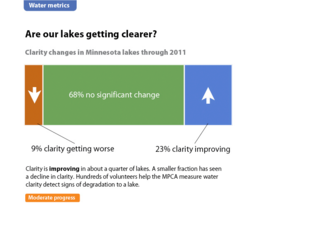 Citizen monitoring programs often struggle to convince
environmental regulatory agencies that their results are robust enough
to use for decision-making. This is NOT a problem for the MPCA Citizen
Lake and Stream Monitoring Programs. The programs are built around
measurements that are already part of the water health assessments for
Clean Water Act reporting to Congress and the EPA. These measurements
can be performed with simple, inexpensive instruments that are readily
understood by participating citizens. Thanks to this design and your
commitment, our programs have a good track record of collecting credible
data.
In Minnesota, stream and lake transparency observations
made by citizens are analyzed along with professionally collected data
for stream and lake health assessments. The regularity and simplicity of
the stream transparency measurements recorded by citizens provide
particular value for the biologists looking for stressors where fish or
aquatic insects are doing poorly. Your familiarity with your stream is
an immediate check on the quality of the result you record, so an
unusual lab result can be checked for consistency against what you’ve
seen. Citizen observations also cover the season, while professional
visits for sampling and field observations are typically more limited in
frequency.
In addition, citizen data also provides the backbone of the datasets we need to detect trends in transparency over time.
Due to the longer history of the lake program, for many lakes there are
data sets covering a sufficient number of years to perform a trends
analysis. In fact, these have been selected to display on the MPCA’s Dashboard of Environment and performance measures
on the Web. It will take a few more years to accumulate enough stream
transparency data required to run the trend test on a significant number
of stream sites. The switch from the Transparency tube to the Secchi tube
will strengthen the overall stream transparency data set by decreasing
the number of “>60 cm” readings in the overall data that make it
difficult to detect real changes, or trends, that might be occurring. Back to top
|
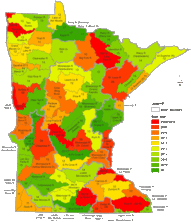 The Clean Water Act of 1972 requires the state of Minnesota to assign water quality standards to water bodies, determine which water bodies do not meet assigned standards, identify sources of pollution and reductions required to meet standards, and develop plans to protect and restore waters.
Since the passage of Minnesota’s Clean Water Legacy Act in 2006, the Minnesota Pollution Control Agency has carried out these water quality management duties by focusing work on individual watersheds across the state. This watershed approach provides a framework to prioritize and integrate monitoring & assessment and restoration & protection activities, while engaging partners and stakeholders at the local level. The idea behind the watershed approach is to intensively monitor streams and lakes within a major watershed to determine the overall health of the water resources, identify impaired waters, and identify those waters in need of protection efforts to prevent impairments. Follow up monitoring in sub-watersheds where standards are not met helps identify the causes of impairments (the “stressors”) impacting the biological community and water quality. Once the major water quality problems and pollution sources are identified, a watershed restoration and protection strategy (WRAPs) is developed with input from interested parties, so that water quality improvement activities can be implemented in partnership with local units of government.
Here's a rundown on how the data that YOU collect fits into the watershed approach:
1). Watershed Monitoring & Assessment: Citizen data is combined with MPCA-collected data in each watershed to determine impairment levels.
2). Stressor Identification: If a lake or stream is identified as impaired, it will move through the stressor identification process to pinpoint, if possible, specific stressors (particularly in relation to fish and invertebrates) that could have led the water body toward the “impaired” status listing. Agency scientists working on stressor identification often use CLMP and CSMP data, both recent and historic, to determine trends and highlight normal seasonal changes.
3). Total Maximum Daily Load (TMDL): TMDLs are developed for impaired waters to define the maximum amount of a substance that a water body can receive and still meet standards. During the TMDL development process, MPCA scientists may access citizen data to identify trends that can help inform long-term TMDL requirements.
4). Restoration and Protection Strategies: The process for restoration of impaired lakes and streams and the protection of healthy ones can include the utilization of citizen-gathered transparency data, often for trends development, to help inform how to create lasting protection strategies in our state’s water bodies.
Each year during a 10-year cycle of the watershed approach, a new set of watersheds is intensively monitored by MPCA staff. The Intensive Watershed Monitoring schedule, including a map with the watersheds where monitoring will begin during 2014, can be found here. If you have questions about any of these activities, don’t hesitate to contact us! Back to top
|
 Email us your favorite photo of the 2013 monitoring season and we will choose the best among them to highlight in the next few issues of Transparency Times. The photo categories are open and not limited to a “monitoring-in-action” shot. We welcome photos of people, places, wildlife and nature – anything that best depicts your favorite lakes and streams. If you are willing to let the CMP use your photo in other issues of our newsletter, in our publications or marketing materials, please let us know – we are always looking for new photos to use! Please email us your photos and be sure to include any limitations on their use and the photographer’s name for credit in the body of the email to either CMP program email address: csmp.pca@state.mn.us or clmp.pca@state.mn.us. Back to top
|
 The haunting call of a loon can be music to a CLMP volunteer’s ears, and from the detailed comments we receive each year on Secchi datasheets, we know many of you are observing and tracking loons on your lake. The DNR offers a route to report these observations through the Volunteer LoonWatcher Survey. LoonWatcher has been gathering loon data since 1979. This program recently refined its data collection process to include tracking adult loon sightings, number of nests, nesting success rates and environmental conditions that may affect loon populations. The LoonWatcher Survey has volunteers on hundreds of lakes across the state, but is always interested in increasing its presence. If you are interested in participating in the Volunteer LoonWatcher Survey, please contact Kevin Woizeschke at Kevin.Woizeschke@state.mn.us or (218) 828-2228. Back to top
|
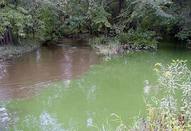 Nutrient enrichment, or eutrophication, and sediment levels are two of the biggest water quality issues of concern in Minnesota rivers and streams. Excess nutrients can lead to algae blooms. When algae decomposes, oxygen becomes depleted and fish and other organisms can be negatively impacted. Sediment reduces light penetration, interfering with the entire food chain by limiting beneficial plant growth. Sediment also reduces the ability of aquatic organisms to see and find food. For these reasons, and to protect and restore water for recreation, the Minnesota Pollution Control Agency (MPCA) is currently proposing new water quality standards for nutrient and sediment measures in rivers. Read more...
Back to top
|
|
State Water Trails are
recreational routes managed for canoeing, kayaking, boating and camping.
The Minnesota Department of Natural Resources provides free maps, camping, river level reporting and trip
planning resources – all of which can be found on the State
Water Trails website.
Back to top
|
|
 |
 We thought you might like to hear what we’ve been busy working on recently! We put together the following quick updates on our recent projects:
Laurie, coordinator for the Citizen Stream Monitoring Program (CSMP), continues to put all the pieces in place to finalize the transition from the Transparency tube to the Secchi tube. The first phase of the transition included swapping out all old Transparency tubes (T-tubes) for the new Secchi tube (S-tube), and updating program materials to reflect the switch. The second phase includes updating the way that we use stream transparency data. A conversion factor was calculated to translate historical T-tube values to corresponding S-tube values. This conversion allows us to incorporate both types of transparency data (T-tube and S-tube) into statistical trend tests that determine if significant changes in transparency at a given site have occurred over time. I am now starting to figure out how we will use S-tube data to assess whether streams meet state water quality standards for sediment. In addition to switching to the Secchi tube, we are currently undergoing a rule change to use ‘Total Suspended Solids’ in place of turbidity as the water quality standard assigned to assess the condition of sediment in streams, so there is plenty of work to be done!
As coordinator for our citizen lake program (CLMP), Louise has been working with our database programmer to make our data staging software work better for managing the advanced citizen monitoring results from CLMP+. As always with computers and software, the extra time invested in building and testing will pay off in efficiency and effectiveness for some years to come. We will soon be finalizing the last of the 2013 Secchi disk data from volunteers, running the calculations for trends over time, and moving on to set up the annual individual site Citizen Monitoring Reports to share on the Web. In my personal time, I’m enjoying the snow, planning the garden, and looking forward to moving from the bike at the Y to my bike on the trails!
Shannon, volunteer program assistant for both the CLMP and CSMP, spent much of the fall working through the wonderfully large mounds of citizen data submitted by dedicated volunteers. In reading comments and notes submitted along with datasheets, she has learned so much about the conditions of our lakes and streams as well as the lives of the programs’ volunteers. It’s been particularly exciting for her to see a host of new volunteers contributing lake ice data. Many of you heeded the call to action in our last newsletter and shared your data with us. We are only about half way through ice data entry for 2013 and we already have 23 new volunteers! Throughout the remaining winter Shannon will continue the year-round activity of signing up new volunteers for both programs. This spring she will help Louise and Laurie send out datasheets and awards and this coming summer she will assist with lake and river monitoring throughout the monitoring field season. Back to top
|
Questions? Contact csmp.pca@state.mn.us & clmp.pca@state.mn.us or call 651-296-6300 (Twin Cities) and 800-657-3864 (Greater Minnesota).
|




