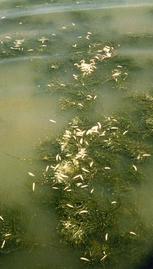
 Members of the Basin Alliance for the Mississippi in Minnesota (BALMM) have long worked to reduce the level of nutrients in Lake Pepin (photo at right) and other southeast waters. Several agencies have stepped up Minnesota’s efforts to reduce nutrients in water resources with a statewide strategy that is open for public comment through Dec. 18.
BALMM members will have several chances to learn about the draft strategy, including two locations in the southeast region:
The statewide plan aims to get various agencies and groups working together to increase current efforts to reduce nutrients in Minnesota waters and those downstream.
In addition to the southeast events, the following open houses are scheduled:
- Nov. 26 – 3-5 p.m., Kandiyohi County Government Center, Willmar.
- Dec. 4 – 3-5 p.m., Otter Tail County Services Building, Fergus Falls.
- Dec. 10 – 11 a.m.-12:15 p.m., MPCA office, Duluth.
MPCA staff will also be providing information at a variety of association and trade show events in coming months:
Phosphorus and nitrogen are the primary nutrients that in excessive amounts can pollute lakes, streams, wetlands and groundwater. Excess nutrients make up 18 percent of Minnesota’s water impairments, and the number is expected to grow in the coming decade.
Surface water leaving Minnesota flows north to Lake Winnipeg, east to Lake Superior, and south to the Gulf of Mexico. The initial targets are a 35-percent reduction in phosphorus and 20-percent reduction in nitrogen by 2025 in the Mississippi River basin, as well as reductions for the Red River/Lake Winnipeg and Lake Superior basins. The ultimate goal is a 45-percent reduction for the Mississippi River.
Agencies and organizations can use the strategy to focus and adjust state-level and regional programs. Watershed managers and local water planners can also translate strategy ideas and priorities into the best practices on the ground to meet the goals.
Agencies involved in developing the strategy include:
- Minnesota Board of Water and Soil Resources;
- Minnesota Department of Agriculture;
- Minnesota Department of Natural Resources;
- Metropolitan Council;
- Minnesota Pollution Control Agency;
- Public Facilities Authority;
- Minnesota Department of Health;
- University of Minnesota-Extension;
- Natural Resources Conservation Service; and
- U.S. Geological Survey.
Minnesota's state-level strategy will be completed by the end of 2013. Involvement of interested citizens and organizations is vital. Success depends on actions from many people around the state. For more information on the strategy development process and opportunities to provide feedback, visit the website: www.pca.state.mn.us/nutrientreduction, or email nutrientreduction.pca@state.mn.us.
| 



