 The Legislative-Citizen Commission on Minnesota Resources has issued its 2014 request for proposals (RFP) with $29.6 million expected to be granted for environmental projects.
Funding priorities for this round include:
- Foundational natural resource data and information;
- Water resources;
- Environmental education;
- Aquatic and terrestrial invasive species;
- Air quality, climate change, and renewable energy;
- Methods to protect, restore, and enhance land, water, and habitat; and
- Land acquisition for habitat and recreation.
Through this RFP the commission intends to make funding recommendations to the 2014 Minnesota Legislature for special environment and natural resource projects, primarily from the Environment and Natural Resources Trust Fund, which is funded through lottery proceeds and investment income. This RFP is part of an annual cycle and the next RFP is expected to be issued in January 2014 for funds available July 1, 2015.
|
The Minnesota Board of Water and Soil Resources (BWSR) is accepting applications for wetland restoration projects through a conservation easement sign-up and a request for proposal process. BWSR has about $5 million to restore wetlands and their adjacent uplands in targeted areas of the state. Wetland restorations will generate wetland credits for wetland mitigation banking, and those credits will be used to offset wetland impacts resulting from qualifying road improvement/rehabilitation projects in Minnesota. The application period begins March 12 and continues through May 13, 2013.
More information can be found on BWSR’s website, by contacting your local SWCD, or BWSR Wetland Bank Coordinator Ken Powell at ken.powell@state.mn.us or 651-215-1703.
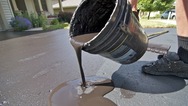 In spite of recent wintry weather, summer maintenance season is fast approaching for driveways and other paved surfaces. As it does, Minnesota is leading a growing movement away from the use of coal tar-based sealcoats on asphalt pavement because of concerns over polycyclic aromatic hydrocarbons or PAHs.
The cancer hazards of PAHs are well-known, and researchers are studying other possible health hazards. Scientists around the United States, including those at the MPCA, have established that coal tar sealcoats are a major active source of urban PAH contamination. As the sealcoat breaks down, PAH-laden dust is tracked or blown into houses where it is easily breathed or ingested, or it washes into streams and ponds where it contaminates sediments and harms aquatic life.
Concerns over health impacts, along with the public and private cost of cleaning out highly-contaminated sediments in stormwater ponds, have been growing for several years. One result has been bans on coal tar sealcoat use in 28 Minnesota cities, several local governments and watershed districts in other states, and the state of Washington.
Another result was a grant to MPCA from U.S. EPA’s Great Lakes Restoration Initiative to promote the phase-out of coal tar sealcoat use in Minnesota and other Great Lakes jurisdictions. With that grant, MPCA has consulted technical experts to confirm that sealcoats do indeed play a role in preserving pavement, and is reaching out to many Minnesota audiences (residents, parking lot owners, suppliers or contractors) to end use of coal tar. Successful outreach tools are passed on to other Great Lakes states, cities and community groups.
Safer alternatives are available:
- Low-PAH products that are asphalt-based, equally protective and similar in cost; and
- No-PAH products that are acrylic or soy oil-based.
Visit the MPCA’s Coal Tar/PAH Reduction Project webpage for more information, or contact MPCA’s Al Innes for more information at 651-757-2457.
|
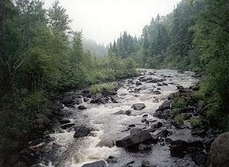 Recent news stories trumpeted the significant 35-percent decline in sediment levels in the Poplar River near Lutsen, Minn., during the past seven years.
“This success was due to the exceptional value of the private and public relationships and the private and public money working in concert toward a specific environmental improvement,” according to Karen Evens, the MPCA’s Poplar River project manager and long-time Cook County resident.
She added that their shared motivation was equally significant: “People who love the Poplar were shocked to learn it was listed as impaired. They were spurred into immediate action.”
Representatives from Poplar-area organizations and businesses formed the Poplar River Management Board. Since 2005, board members, in concert with their multiple governmental partners, began by identifying the most significant sediment sources and then implementing best management practices and conservation projects.
Early activities included the local Soil and Water Conservation District engaging and encouraging landowners to install Best Management Practices (BMPs) to control sediment from eroding off their properties.
Read more about this successful effort on the Poplar River Management Board website.
|
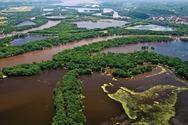 “One watershed – one plan” is the preferred option for local watershed management in greater Minnesota according to a report on water governance by several state agencies. The report outlines several ways to streamline, strengthen and improve the ways that Minnesota manages its water resources.
The agencies presented their report to the Minnesota Legislature earlier this year, completing the Water Governance Evaluation Project authorized by the Legislature in 2011. The purpose of the project was to evaluate water-related statutes, rules, and governing structures.
The report was developed through a collaborative process among the five state agencies with primary responsibility for water management, including the MPCA, along with the Metropolitan Council, and in consultation with the University of Minnesota Water Resources Center. Participants reviewed some 40 years of previous studies, surveyed knowledgeable staff, and discussed strategies with local government organizations.
“This report represents a significant compendium of water law history and governance proposals for Minnesota that should serve us for years to come,” said MPCA Commissioner John Linc Stine.
The report presents a suite of recommendations to streamline, strengthen, and improve sustainable water management, including many opportunities that state agencies themselves are ready to pursue. One set of recommendations focuses on how water management services are organized and delivered at the watershed, state, and regional levels. For example, the report recommends establishing the 2012 “one watershed–one plan” legislation as the preferred option for local watershed management in Greater Minnesota and defining essential watershed management services for defined watershed outcomes.
A second set of recommendations is organized around specific water resource topics: public waters/wetlands, groundwater, land use, and landowner/land occupier efforts to stem nonpoint source pollution and soil loss.
“We think there are a lot of great ideas in this report for improvements that can be acted on. We welcome opportunities to work with our partners to advance the recommendations in this report,” Stine said.
|
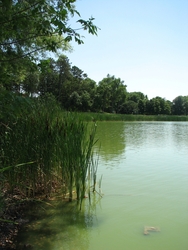 The Minnesota Pollution Control Agency (MPCA) has released a draft water quality improvement report for Benton Lake, and is inviting the public to review and comment on the report.
Benton Lake, located in Carver County, west of the Twin Cities metropolitan area, is polluted with excess phosphorus. While phosphorus is an essential nutrient for algae and plants, too much phosphorus can produce frequent summer algal blooms, which interfere with fishing, boating and being able to enjoy the aesthetics of Benton Lake.
The MPCA report, which is known as a Total Maximum Daily Load (TMDL), outlines a “pollution diet” for Benton Lake. Specifically, the report indicates that phosphorus levels in the lake will need to be reduced by 74 to 79 percent for the lake to meet state water-quality standards.
For more information or to submit comments, contact Chris Zadak (email chris.zadak@state.mn.us; phone 651-757-2837), MPCA, 520 Lafayette Rd N, Saint Paul, MN 55155-4194. Comments must be received in writing at the MPCA office by March 27, 2013.
The report is part of a nationwide effort under the federal Clean Water Act to identify and clean up pollution in streams, rivers and lakes. The purpose of a TMDL study is to quantify the pollution reductions necessary to bring an impaired water body into compliance with water quality standards. After receiving feedback from the public and from the U.S. EPA, a detailed plan will be developed to reduce phosphorus pollution in Benton Lake.
|
The Minnesota Board of Water and Soil Resources (BWSR) is seeking comments on possible amendments to the 20-year old Minnesota Rule, Chapter 8410, which governs local water management in the seven-county metropolitan area. The draft amendments, the current rule, and a summary of proposed changes can be found on the agency’s website.
 All state agencies will eliminate purchasing of hand soaps and dish and laundry cleaning products that contain triclosan by June of this year. Through an Executive Order by Minnesota Governor Mark Dayton, state agencies are required to implement sustainability action plans to reduce pollution and toxics, increase energy efficiency, and conserve resources.
Triclosan, an endocrine-disrupting compound, is antibiotic resistant and causes other health and environmental problems. It is an antimicrobial ingredient in products like hand soap, toothpaste, cleaning products, fabric, toys, kitchenware and industrial pesticides. Recent University of Minnesota studies have found triclosan in lake sediment.
Read more about this issue on the MPCA website.
Other news from the MPCA:
|
Are you passionate about conservation? Do you have a background in coordinating water quality projects? The Minnesota Board of Water and Soil Resources (BWSR) may be the place for you! BWSR is hiring two Board Conservationists – one in Fergus Falls and one in Rochester.
Board Conservationists are responsible for providing technical and leadership assistance and implementation guidance to local units of government – soil and water conservation districts, watershed districts, cities, etc. – on water quality and quantity restoration and protection projects. Board Conservationists provide:
- Fiscal oversight;
- Technical training;
- Administrative guidance; and
- Planning assistance in implementing local comprehensive water and land management programs.
Qualified candidates possess a bachelor’s degree or higher in hydrology, soil science, land use planning, natural resources management, civil or agricultural engineering or closely related technical field, have three years of experience in soil and water conservation and has knowledge or experience in working with local units of government.
Find job announcements and responsibilities at http://www.careers.state.mn.us/; search under department: “Water & Soil Resources Board.” The positions are open through March 14, 2013. Job Posting information can also be found at the bottom of the BWSR homepage. For more information on applying contact Bill Eisele, 651-282-2929 or bill.eisele@state.mn.us.
The Mississippi River Cities and Town Initiative will be the topic at the regular river forum Friday, March 15, from 9-10 a.m. at the St. Cloud City Council Chambers (400-2nd Street South, St. Cloud, 56301).
Last year, mayors from more than 20 cities along the mainstem of the Mississippi River launched a new effort to bring national attention back to America’s Great Waterway. The Mississippi River Cities and Towns Initiative seeks to create a new and influential voice for the Mississippi River and to demand effective river protection, restoration, and management in Washington, D.C. St. Cloud’s Mayor Kleis is the co-chair of this national coalition, and will speak on this effort to address clean water and habitat, sustainable river city economies, and recreational opportunities—just days before he heads to D.C. to unveil the initiative’s policy platform.
A light breakfast will be provided at no charge. RSVP to lark_weller@nps.gov.
The Prairie Enthusiasts’ 25th Annual Prairie Conference will be March 16 at Minnesota State University-Mankato (MSU). The theme of this year’s event is “Pollinators: Future of our Food and Native Plant Communities.”
The conference will open with Commissioner Tom Landwehr, Minnesota Department of Natural Resources, speaking on “The State of the State of Minnesota Prairies and Grasslands.”
Keynote speaker Eric Mader, University of Minnesota professor, will address how native pollinators play a critical role in both prairie ecology and agriculture.
During the luncheon, writer and canoeist Tim Krohn of the Mankato Free Press will share his experiences paddling the entire 335-mile length of the Minnesota River in 1998 and again 10 years later with John Cross, Mankato Free Press photographer and reporter.
For the first time at the conference, children of family members enrolled at the event will have a chance to take part in environmental-related programs and activities at a “Prairie Celebration.” They will have fun learning about the tall-grass prairie, dragonflies, snakes, wildlife, bumble bees, owls, the bison, the Dakota people and much more.
To register, visit The Prairie Enthusiasts website.
The Watershed Professionals Network spring meeting is scheduled for April 18 at the Redwood Falls Pizza Ranch. This network of watershed professionals in the Minnesota River Basin is designed to help watershed professional staff share their experiences and learn how to make their outreach efforts more effective. The network provides a monthly e-newsletter and hosts meetings in the spring and fall. Contact MPCA public information officer Forrest Peterson for details.
The MPCA is saddened by the recent deaths of two long-time employees who worked in water quality.
Dave Johnson worked at the agency for 35 years, helping to shape water quality program efforts in their early years. Today, many of these same programs have received national recognition.
Over the years, Dave worked in a variety of different roles, such as: Environmental Assessment and Review for the Federal and State Construction Grant and Loan Program, which helped to significantly improve wastewater treatment plant infrastructure around the state. Dave spent most of the last two decades working to improve Non point Water Quality Management and Basin Planning. He assisted with development of Nonpoint Source Best Management Practices, Wetland protection and review of Local Water Plans. He served as the primary contact with U.S. EPA on TMDL approvals and coordinated development of the state’s Non-Point Source Management Program Plan.
Gary Rott worked at the MPCA for 38 years. In his early years at the agency, he wrote NPDES (National Pollutant Discharge Elimination System) permits for wastewater treatment facilities. He later joined the Water Quality Standards unit and up through the early 1990s conducted intensive surveys on rivers and streams downstream from wastewater treatment plants throughout the state. After the field season he did computer modeling to assign limits to wastewater facilities based on the field survey data he’d collected.
To keep track of all the automatic water samplers collected around the state you can use the serial number, but Gary gave his samplers personality by naming them, such as Charlie Chaplin or the Marx Brothers; Chico, Harpo, Groucho and Zeppo.
Gary compiled and analysed all the data collected from years of intensive field surveys to propose a more efficient method of assigning effluent limits to wastewater facilities, which effluent limit staff still use, and published his work as a technical note in the Journal of Environmental Engineering in 1996: “Alternative to CBOD5 Based Load Allocation Studies on Low Dilution Ratio Streams.”
|




