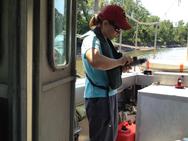
 The Minnesota River is breathing easier with dissolved oxygen at levels high enough to support fish and other aquatic life, according to rare testing done this summer during low flows.
For three weeks in August, Minnesota Pollution Control Agency (MPCA) staff monitored a 20-mile stretch of the Minnesota River for dissolved oxygen levels, which have been low during hot and dry summers in the past. The results pleased MPCA scientists because the testing shows that dissolved oxygen levels are good and supportive of aquatic life even during stressful environmental conditions, such as low flow and high temperatures.
These results point to the effectiveness of a 2004 MPCA plan and a phosphorus reduction permit that affected wastewater treatment plants along the Minnesota River and its tributaries.
According to Glenn Skuta, MPCA water monitoring manager, “Over the past several years, wastewater treatment plants along the affected stretch of the river implemented several phosphorus-reduction strategies that are working based on the good dissolved oxygen levels we found in this survey. There were no violations of the dissolved oxygen water quality standard.”
|
 The MPCA and local partners celebrated the results Nov. 15 at a gathering in Mankato.
“Thank you for investing in the Minnesota River, the environment and our quality of life,” MPCA Deputy Commissioner Michelle Beeman (in photo at right) said to the crowd of wastewater plant operators, public works directors and elected officials.
She noted, “We can make a difference if we work collectively.”
Skuta is also pleased with their efforts: “The wastewater treatment plants covered by the permit collectively achieved the 2015 goal well in advance of the deadline. This is an excellent example of local government collaborating with industrial dischargers to realize an environmental outcome – improved water quality. The cities, businesses and Metropolitan Council Environmental Services, which have all improved their wastewater treatment, deserve credit for their good work in protecting the river.”
The following statistics help tell the story of this success in the Minnesota River basin.
- Number of point sources in the basin: 247.
- Number of un- or under-sewered communities when work started: 13.
- Number of un- or under-sewered communities that addressed this problem: All 13.
- Public Finance Authority investment in the basin: More than $550 million in low-interest loans, saving communities more than $110 million in interest. Also $50 million in grants.
- Level of phosphorus in Minnesota River during 1980 testing: 25-46 micrograms per liter.
- Level of phosphorus in Minnesota River during 2012 testing: 8.5-11 micrograms per liter.
While celebrating the success of reducing phosphorus in the Minnesota River, the MPCA and local partners note that work needs to continue on cleaning up other pollutants, such as sediment and bacteria in the river at higher flows. This work includes agricultural soil and water conservation practices along with urban stormwater management.
Read more in these media stories:
Victory celebrated in MN River phosphorus battle in the Mankato Free Press
The muddy Minnesota River comes back to life in the StarTribune
Oxygen levels improving in Minnesota River in the Mankato Free Press
Our View: Program improves river quality in the Mankato Free Press
MPCA finds reduced pollutants in Minn. River on Minnesota Public Radio
Minnesota River on the road to recovery in the Jordan Independent
John Linc Stine: Minnesota River breathing easier in the Pioneer Press
|
The Minnesota Pollution Control Agency (MPCA) recently posted the comments it received on the Minnesota River Total Maximum Daily Load (TMDL) for turbidity during the report’s public notice period from Feb. 27-May 29 this year.
The comments are available on the Minnesota River TMDL project webpage. Once on the webpage, type Control-F to bring up a search function for the page, and search for "comments" to go directly to the list of files. The PDF files are organized by the category of commenting parties:
- Agricultural groups;
- Municipalities;
- Nonprofit groups;
- Governmental units;
- Individuals; and
- Minnesota Soybean Growers (separated from the other ag groups to minimize file sizes).
The MPCA continues to develop its responses to the comments received on the Greater Blue Earth, Minnesota and South Metro Mississippi River TMDLs.
The Discovery Farms Minnesota program recently launched a new website (www.discoveryfarmsmn.org) where it reports on its farmer-led effort to gather field scale water quality information under real-world conditions. The goal is to provide practical, credible, site-specific information to enable better farm management.
For example, Discovery Farms research has shown that several factors are important for reducing risk of nutrient and sediment loss, including these listed in the Core Farm Year in Review - 2011 report:
-
Harvesting precipitation water: Any management in and around agricultural fields that encourages infiltration of precipitation water very close to where it falls is beneficial from a sediment and nutrient loss standpoint. Often this includes a network of conservation practices coupled with highly efficient crop and soil management. Usually, a lower volume of surface water runoff equals lower sediment and nutrient loss.
-
Avoiding nutrient application prior to anticipated runoff: Whether manure or commercial fertilizer, applying nutrients shortly before a runoff event has the greatest risk for increased nutrient losses. Every runoff event can’t be predicted, but using the forecast to understand when snow may be melting, rain on snow or frozen ground could occur, or a large rain event is looming helps to make the best management decisions and reduces the risk for nutrient losses throughout the year.
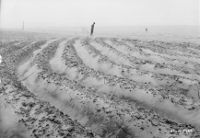 “National action may be led and aided by government, but the soil must be conserved ultimately by those who till the land and live by its products,” said Hugh Hammond Bennett, the first chief of the Soil Conservation Service. While he said those words more than 50 years ago, his advice is still relevant today, as shown in the new Ken Burns documentary, “The Dust Bowl,” which premiered Nov. 18 and continues Nov. 19 on PBS. This two-part, four-hour documentary chronicles the worst man-made ecological disaster in American history. It is narrated by Timothy Egan, who will be the keynote speaker at the 2013 National Association of Conservation Districts Annual Meeting Jan. 27-30 in San Antonio. The association encourages producers and conservationists to tune in and help spread the word in their local communities. (Photo courtesy of the National Resource Conservation Service)
|
The Environmental Quality Board will be convening an Environmental Congress in March 2013 to engage Minnesotans in constructive public dialogue about our state's environmental and economic health. Nine state agencies, environmental policy experts, business leaders, local governments, and a diverse group of citizen leaders will evaluate the state's performance and progress on protecting our air, water, and land resources. A series of Citizen Forums will be held leading up to the Congress. More info is available on the Environmental Congress website.
Citizen forums:
Nov. 27: Wood Lake Meeting Center, Rochester, 9:30 a.m.-12 noon
Nov. 27: Normandale Community College, Bloomington, 6:30-9 p.m.
Nov. 28: Lake Superior College, Duluth, 5:30-8 p.m.
Dec. 10: Worthington High School, 3:30-6 p.m.
Dec. 12: Stearns County Service Center, Saint Cloud, 5:30-8 p.m.
Dec. 14: Minnesota State University, Moorhead, 3-5:30 p.m.
The Minnesota Association of Watershed Districts Annual Meeting and Trade Show will be Nov. 29 - Dec. 1 at the Arrowwood Conference Center, Alexandria, Minn. Online registration is now available. David Legvold, a farmer and water restoration leader from the Northfield area, will present “A View from the Tractor Seat” at the Friday luncheon. Following will be the award presentations for the DNR Watershed District of the Year and BWSR Outstanding Watershed District Employee of the Year.
In a breakout session Friday afternoon, Shannon Lotthammer and Mark Tomasek from the MPCA will present on “Water Quality Standards: What They Are, How They Work, and Why They Matter.” The presentation will provide an overview of water quality standards and their use in water quality assessments, permitting, and TMDLs. The process of reviewing and revising water quality standards as well as work currently underway to enhance the standards review process will also be discussed.
The Minnesota Association of Soil and Water Conservation Districts’ Annual Convention and Trade Show will be Dec. 2-4 at the DoubleTree Hotel in Bloomington.
The keynote speaker this year will be best-selling author and motivational speaker Chad Pregracke. He will speak on social responsibility, environmental stewardship, leadership and the power of one. He's given more than 300 presentations to conservation organizations, civic groups and Fortune-500 companies.
Speaking on public involvement at a break-out session will be Lynn Kolze of the MPCA and Barb Radke of the University of Minnesota Extension. Because watershed protection and restoration depend largely on changing the every-day practices of people who live on the land, citizen involvement should play a key role in developing effective solution strategies for addressing current or potential water quality problems in lakes and streams. An important first step is understanding your organization's values around citizen engagement. This session will explore the values and beliefs that support citizen involvement efforts and how those can help in developing a strategic vision for engaging citizens in water issues.
The MPCA publishes River Connections to keep stakeholders and science advisers informed of the status of the TMDL studies for the South Metro Mississippi, Minnesota and Greater Blue Earth rivers. The agency also highlights relevant research and related events in the newsletter. To subscribe to River Connections, visit one of the project webpages below:
South Metro Mississippi
Minnesota River
Greater Blue Earth River
TMDL project contacts
South Metro Mississippi
Robert Finley
Regional Manager, Watersheds MPCA
12 Civic Center Drive, Suite 2165
Mankato, MN 56001
robert.finley@state.mn.us
507-344-5247
Minnesota River
Larry Gunderson
Minnesota River Basin Coordinator MPCA
520 Lafayette Road N
St. Paul, MN 55155-4194
larry.gunderson@state.mn.us
651-757-2400
Greater Blue Earth River
Paul Davis
Project Manager MPCA
12 Civic Center Plaza, Suite 2165
Mankato, MN 56001
paul.a.davis@state.mn.us
507-344-5246
Newsletter contacts
Cathy Rofshus
Public Information Officer
MPCA-Rochester-Mankato
507-206-2608
catherine.rofshus@state.mn.us
Forrest Peterson
Public Information Officer
MPCA-Willmar-Marshall
320-441-6972
forrest.peterson@state.mn.us
| 



