 |
|
The Minnesota Pollution Control Agency (MPCA) plans to award up to $650,000 in grant money for lake and stream monitoring projects in 2013. The Request for Proposal (RFP) for Surface Water Assessment Grants (SWAG) that support lake and stream water chemistry monitoring is now open with applications due by Dec. 14. Only those lakes or stream sites included in the RFP appendices will be eligible for grant funding this coming round. To request a copy of the 2013 RFP and SWAG application, send an e-mail to Contracts.pca@state.mn.us (Subject line: Surface Water_CR6168).
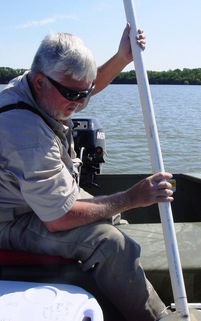
Through this program, which started in 2007, hundreds of volunteers have provided water quality data for more than 1,000 lakes and 900 stream sites. Water monitoring is often the first step toward protecting or improving water resources. Volunteers across Minnesota, including the volunteer in the Hawk Creek watershed in western Minnesota in the photo at left, have been measuring the health of lakes and streams to see if the waters meet standards set for fishing and other uses. If not, then the MPCA works with local partners to determine sources of pollutants and ways to restore the waters. For waters that do meet standards, the work focuses on protection strategies to keep them healthy.
|
Through the Clean Water, Land and Legacy Amendment to the Minnesota constitution, funding was provided to the Minnesota Department of Health (MDH) to establish cost-share assistance to owners of unused (not-in-use) private and public water supply wells. MDH received $500,000 from the Clean Water Fund for fiscal years 2012-2013 ($250,000 for each year) to seal unused wells. This funding requires a 50-percent match from non-state sources and pays well owners up to half the cost of sealing unused wells.
The first $250,000 was passed through to the Minnesota Board of Water and Soil Resources (BWSR) as part of its 2012 Clean Water Fund Competitive Grants. BWSR awarded nine grants to local governmental units to provide funding to well owners to seal unused private wells.
The second $250,000 will be awarded by MDH to seal unused public water supply wells. The Request for Proposal (RFP) is available to review on the MDH website. Grant proposals will be accepted at MDH until 4 p.m. on Dec. 5, 2012. If you own an unused public water supply well, please review the RFP requirements and consider submitting a grant proposal to MDH for funding consideration.
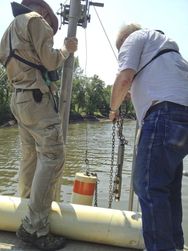 MPCA testing on the Minnesota River shows significant improvements in pollution levels in the river.
For three weeks in August, MPCA staff monitored a 20-mile stretch of the Minnesota River to see if this hot, dry summer caused low dissolved oxygen, which has been a problem under similar conditions in the past. The results pleased MPCA scientists because it shows that dissolved oxygen levels are good and supportive of aquatic life even during stressful environmental conditions, such as low flow and high temperatures.
These results point to the effectiveness of a 2004 MPCA plan and a phosphorus reduction permit that affected wastewater treatment plants along the Minnesota River and its tributaries.
According to Glenn Skuta, MPCA water monitoring manager, “Over the past several years, wastewater treatment plants along the affected stretch of the river implemented several phosphorus-reduction strategies that are working based on the good dissolved oxygen levels we found in this survey. There were no violations of the dissolved oxygen water quality standard.”
Some of these strategies include:
- Stabilization ponds avoiding discharge from June through September,
- Upgraded wastewater treatment for 12 communities with inadequate sewage treatment, and
- Improved phosphorus removal in wastewater treatment that surpassed permitted goals for wastewater phosphorus loading to the basin ahead of schedule.
The permit also established a phosphorus trading program to allow new and existing permitted facilities flexibility in how they comply with wastewater effluent limits.
Skuta is pleased with their efforts: “The wastewater treatment plants covered by the permit collectively achieved the 2015 goal well in advance of the deadline. This is an excellent example of local government collaborating with industrial dischargers to realize an environmental outcome – improved water quality. The cities, businesses and Metropolitan Council Environmental Services, which have all improved their wastewater treatment, deserve credit for their good work in protecting the river.”
Additionally, work needs to continue on cleaning up things, such as sediment and bacteria in the river at higher flows. This includes agricultural soil and water conservation practices and urban stormwater management.
Read more in these media stories:
|
The MPCA) recently posted the comments it received on the Minnesota River Total Maximum Daily Load (TMDL) for turbidity during the report’s public notice period from April 23-May 29 this year.
The comments are available on the Minnesota River TMDL project webpage. Once on the webpage, type Control-F to bring up a search function for the page, and search for "comments" to go directly to the list of file. The PDF files are organized by the category of commenting parties:
- Agricultural groups;
- Municipalities;
- Nonprofit groups;
- Governmental units;
- Individuals; and
- Minnesota Soybean Growers (separated from the other ag groups to minimize file sizes).
The MPCA continues to develop its responses to the comments received on the Greater Blue Earth, Minnesota and South Metro Mississippi River TMDLs.
The MPCA is seeking comments on water quality improvement reports for several water bodies. The reports, known as a Total Maximum Daily Loads (TMDL), focus on pollution caused by excess nutrients, mainly phosphorus, and sediment. Currently on public notice are TMDL reports for:
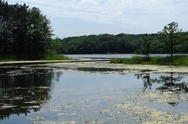
- Chisago Lakes Chain of Lakes Watershed, located north of the metro area, all impaired by excess phosphorus. The public comment period continues through Nov. 21. To restore aquatic recreation uses in these nine lakes, the study indicates the following reductions in phosphorus load reductions are needed: North Center Lake, 18 percent; South Center Lake, 21 percent; Wallmark Lake, 95 percent; Little Lake, 90 percent; Ogren Lake, 45 percent; Linn Lake, 88 percent; Pioneer Lake, 96 percent; School Lake, 88 percent; and Emily Lake, 93 percent. The report indicates one or more of these sources ─ watershed runoff, internal loading, atmospheric deposition (airborne pollution), feedlots and septic systems ─ contribute to the phosphorus issues in the lakes. Written comments should be submitted to Christopher Klucas, MPCA, 520 Lafayette Rd. N., Saint Paul, MN 55155. For more information, call Klucas at 651-757-2498.
|
- Lake Osakis, Faille Lake, and Smith Lake, located in Douglas and Todd counties, all impaired by excess nutrients. The public comment period continues through Dec. 5. These three lakes are in the headwaters of the Sauk River watershed in central Minnesota. To meet state water quality standard, this study indicates that a 38-percent reduction in phosphorus is need for Lake Osakis, a 70-percent reduction for Faille Lake, and a 35-percent reduction for Smith Lake. The study also indicates that agriculture-related runoff is the primary source of phosphorus in these lakes. Comments should be submitted to Greg VanEeckhout, MPCA, 7678 College Road, Ste. 105, Baxter, MN 56425. For more information, call VanEeckhout at 218-316-3896 or 800-657-3864.
-
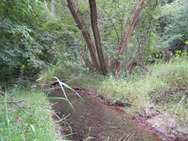
Bluff Creek, located in Chanhassen, Minn., impaired by excess sediment and low fish biota. The public comment period continues through Dec. 5. The study indicates that reduction in total suspended solids is required to meet water quality standards. Comments should be submitted to Barb Peichel, MPCA, 520 Lafayette Road N., Saint Paul, Minn. 55155. For more information, call Peichel at 651-757-2646 or 800-657-3864.
|
The TMDL reports are part of a nationwide effort under the federal Clean Water Act to identify and clean up pollution in streams, rivers and lakes. A TMDL report is a scientific study that calculates the maximum amount of a pollutant a water body can receive (known as its "loading capacity") without violating water quality standards.
After receiving public comments, the MPCA will revise the draft TMDL reports and submit them to the EPA for approval. Following EPA approval of the study, a plan will be developed to reduce pollution throughout the watersheds.
The Environmental Quality Board will be convening an Environmental Congress in March 2012 to engage Minnesotans in constructive public dialogue about our state's environmental and economic health. Nine state agencies, environmental policy experts, business leaders, local governments, and a diverse group of citizen leaders will evaluate the state's performance and progress on protecting our air, water, and land resources. A series of Citizen Forums will be held leading up to the Congress. More info is available on the Environmental Congress website.
Citizen forums:
Nov. 27: Wood Lake Meeting Center, Rochester, 9:30 a.m.-12 noon
Nov. 27: Normandale Community College, Bloomington, 6:30-9 p.m.
Nov. 28: Lake Superior College, Duluth, 5:30-8 p.m.
Dec. 10: Worthington High School, 3:30-6 p.m.
Dec. 12: Stearns County Service Center, Saint Cloud, 5:30-8 p.m.
Dec. 14: Minnesota State University, Mankato, 3-5:30 p.m.
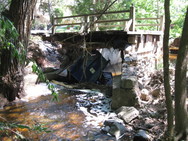 The MPCA-Duluth office’s watershed unit recently collaborated with local agencies to produce the “Living with uncertainty: Duluth streams in the aftermath of the 2012 floods” workshop and meeting. The event attracted about 100 representatives from a variety of environmental, governmental and educational organizations interested in learning more about the flood’s effects on area streams and their eventual recovery and restoration efforts.
Presenters included:
- Duluth Mayor Don Ness offering his perspective about how the city responded and is planning for the future;
- Minnesota Public Radio chief meteorologist Paul Huttner sharing Minnesota’s current and past climate data; and
- University of Minnesota-Duluth’s Molly Wick and Karen Gran helping educate attendees about the region’s geology and how it contributed to areas hard-hit, or minimally impacted by, the flood.
Attendees split into four groups to brainstorm managing small streams with an unpredictable climate, the possibility of institutionalizing watershed management, how we co-exist with streams in an urban environment, and the roles of citizens, businesses and government in managing streams. The event was broadcast via WebEx to our National Oceanographic and Atmospheric Administration partners in Maryland. Meeting planners expect to continue the conversation and proactively collaborate to help the region prepare for, and survive more successfully, similar future flooding events.
(Photo of bridge washout courtesy of Rich Axler, University of Minnesota-Duluth, Natural Resources Research Institute )
|
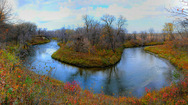 The MPCA recently released a water quality monitoring and assessment report for the Buffalo River watershed. The Buffalo River runs from Tamarac Lake in eastern Becker County, and flows nearly 90 miles into Clay County, where it enters the Red River of the North near Georgetown.
Comprehensive surface water monitoring in the Buffalo River watershed began in 2009. The focus of the monitoring was to characterize the fish, macroinvertebrates, habitat and water chemistry of the river and streams in the watershed and water chemistry in lakes. More than 70 river and stream sites and 41 lakes were sampled. Overall, the results of the monitoring-and-assessment process reveal that the Buffalo River watershed is in poor condition. Land use and development in the region appear to be adding sediment and pollutants to the watershed’s rivers, streams and lakes.
To view the monitoring and assessment report, visit the MPCA’s Buffalo River watershed webpage. This report is one of about 80 being developed by the MPCA for all of Minnesota’s major watersheds over the next decade.
With dollars provided by the Clean Water Fund (from the Clean Water, Land and Legacy Amendment), the MPCA conducts and oversees a variety of surface-water-monitoring activities that support its mission of helping Minnesotans protect the environment. To be successful in preventing and addressing problems, good information is needed about the status of Minnesota’s waters, potential and actual threats, options for addressing the threats, and data on how effective management actions have been. The MPCA’s monitoring efforts are focused on providing that critical information.
|
One of the issues presented in the “State of the Mississippi River Report,” released recently by the National Park Service and Friends of the Mississippi River, is the presence and increase of triclosan-derived dioxins in sediment in the Lake Pepin portion of the Mississippi River. Triclosan is an anti-bacterial and anti-fungal agent found in many consumer products such as toothpaste and soap.
Dr. Bill Arnold of the University of Minnesota has identified a 200-percent increase in triclosan-derived dioxins in Lake Pepin’s sediment. He will present his research results at the Mississippi River Forum Dec. 14, from 8-9:30 a.m., at the McKnight Foundation in Minneapolis. If attending please RSVP to Lark Weller of the National Park Service.
The Mississippi River Forum is made possible by the generous support of the park's charitable partner, the Mississippi River Fund.
The Minnesota Association of Watershed Districts Annual Meeting and Trade Show will be Nov. 29 - Dec. 1 at the Arrowwood Conference Center, Alexandria, Minn. Online registration is now available. David Legvold, a farmer and water restoration leader from the Northfield area, will present “A View from the Tractor Seat” at the Friday luncheon. Following will be the award presentations for the DNR Watershed District of the Year and BWSR Outstanding Watershed District Employee of the Year.
In a breakout session Friday afternoon, Shannon Lotthammer and Mark Tomasek from the MPCA will present on “Water Quality Standards: What They Are, How They Work, and Why They Matter.” The presentation will provide an overview of water quality standards and their use in water quality assessments, permitting, and TMDLs. The process of reviewing and revising water quality standards as well as work currently underway to enhance the standards review process will also be discussed.
The Minnesota Association of Soil and Water Conservation Districts’ Annual Convention and Trade Show will be Dec. 2-4 at the DoubleTree Hotel in Bloomington.
The keynote speaker this year will be best-selling author and motivational speaker Chad Pregracke. He will speak on social responsibility, environmental stewardship, leadership and the power of one. He's given more than 300 presentations to conservation organizations, civic groups and Fortune-500 companies.
Speaking on public involvement at a break-out session will be Lynn Kolze of the MPCA and Barb Radke of the University of Minnesota Extension. Because watershed protection and restoration depend largely on changing the every-day practices of people who live on the land, citizen involvement should play a key role in developing effective solution strategies for addressing current or potential water quality problems in lakes and streams. An important first step is understanding your organization's values around citizen engagement. This session will explore the values and beliefs that support citizen involvement efforts and how those can help in developing a strategic vision for engaging citizens in water issues.
|




