|
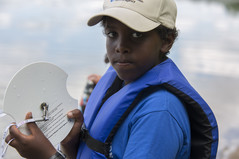
Oh, 2021. Your summer was relentlessly hot, you were stingy with the rain and you failed to banish Covid to the annals of history. It wasn't quite the year we hoped for, but it was the year we got all the same. And even through 2021 was filled with uncertainty, the work of the Citizen Water Monitoring Program, and its dedicated cadre of volunteers, was wonderfully reassuring. Your consistency in data gathering is paramount to understanding what's happening on lakes and streams across the state and we are so grateful you do it year after year. The time you spend collecting data truly makes a difference - and if you need specific examples of exactly how, just keep reading the stories in this very newsletter!
We fully admit that programmatically, we had a bumpy start to the 2021 monitoring season - with many of you not receiving a datasheet from us. Even after a second mailing in mid-summer, many of you still hadn't received one. We apologize for the confusion this caused and we hope to have the issued resolved for the 2022 monitoring season. Also, even though we know many of you have successfully used our new online data entry system (thank you new adopters!), we heard from others who struggled to gain access to the system or successfully submit their data. Please know that we are compiling all the feedback you have provided and are always interested in receiving more. We hope to make improvements to the system over time and as program staff become more acquainted with the system, we will be better able to answer questions and shepherd new users through it.
Thank you for your patience with us in 2021 as we moved to this new program management platform and rolled out the online data entry system. We are finally getting our feet underneath us again (see exciting story below about our new team member!) and we are looking forward to a smooth 2022 monitoring season!
Back to top
|
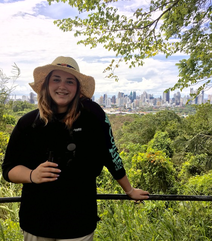
Waverly joined the Citizen Monitoring Program in November 2021. As a new Volunteer Monitoring Program Coordinator, she’ll be coordinating data management, recruiting new volunteers, and leading social media efforts along with co-coordinator Shannon Martin.
In May 2020, Waverly received her Master of Coastal Environmental Management degree from Duke University’s Nicholas School of the Environment. For her Master’s project, she utilized photo-identification field work and geospatial analysis to analyze distribution, occurrence, and life history information of female bottlenose dolphins in Roanoke Sound, NC.
Waverly adds, “During my two years at Duke, I photographed over 3,000 dolphins, developed a marine ecology lesson plan that won first place at an education conference, and even learned how to measure precise chemical solutions into test tubes on 10-foot seas!”
Waverly traded saltwater for freshwater and moved to Minneapolis, MN in November 2020, where she has worked in lakes and river advocacy for the past year. As the Community Engagement Coordinator for the nonprofit WaterLegacy, she coordinated citizen experts and volunteers, created advocacy and communications campaigns, and planned outreach events to promote the protection of Minnesota’s water resources from pollution.
“Due to growing up on an island on the Outer Banks of North Carolina, I’ve always had a deep connection to water, and I’ve learned many Minnesotans do as well. I’m very excited for this new role and to enhance the power of citizen science by engaging with such passionate volunteers,” Waverly says.
If you’d like to contact Waverly with questions or to say hello, send her an email at Waverly.Reibel@state.mn.us.
Back to top
|
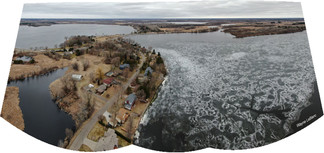
Thanks to the dedication of CLMP volunteers, MPCA Ice Reporters and residents across the state, we now have a clearer picture of how climate change is affecting lakes freeze ups and thaws. By analyzing over 29,000 dates submitted by volunteers since the program began in 2003, the MPCA was able to determine that the state has lost 10 to 14 days of lake ice over the past 50 years, with some popular, iconic lakes losing almost three weeks of ice.
Since 1967, ice-in dates have been about nine days later on average, while ice-out dates have been about four to five days earlier. That means two weeks of lost ice coverage, which impacts outdoor recreation, the survival of cold water fish species and the prevalence of algal blooms in our waters.
This discovery has finally assigned a number to what residents of Minnesota have been witnessing for years - gradually declining ice coverage on our favorite lakes.
The MPCA was only able to conduct this formal assessment of lake ice coverage because generations of Minnesotans have taken an interest in observing and recording ice conditions on their lakes. The oldest ice date reported to the MPCA is the 1867 ice off for Lake Osakis in Todd County. The importance of historical data like this cannot be overstated. We must know where we've been and where we currently are to fully grasp where our lakes are headed.
A huge thank you to the volunteers that have submitted ice data to either the MPCA or the State Climatology Office and made this analysis happen. Keep up the good work!
Photo credit: Wayne LeBlanc, CLMP Volunteer & Ice Reporter
Back to top
|

The MPCA recently unveiled a new data dashboard focused on all things water and climate change related. The dashboard puts a treasure trove of data at your fingertips. Are you curious on how lake temperatures have changed over the years? Wondering if river flows are increasing or how fish and bug communities are tolerating changes in stream temperature? Check out the dashboard to learn more- and when you're there be sure to check out the "Lake Ice Duration" tab to see the amazing work of CLMP volunteers & Ice Reporters in graph form! https://www.pca.state.mn.us/air/view-data-climate-impacts-our-waters
Back to top
|
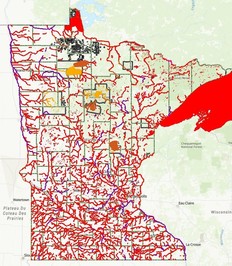
Every two years the MPCA creates a list of impaired waters, which are those that fail to meet our state’s water quality standards.
The listings are based on intensive water monitoring conducted by MPCA staff, counties and other partners. The main impairments found in Minnesota’s lakes and streams are:
For the 2022 list, the MPCA added 305 water bodies, bringing the total to 2,904 across the state. Data collected by Citizen Water Monitors was used in several of these impairment determinations for both lakes and streams. Volunteer-collected data is so important during these formal assessments because they serve as a window to what that lake or stream is like when the MPCA is not there actively monitoring. The more data available, the better picture we have of what's happening. This is another example of how citizen data plays an important role in the MPCA's work and in understanding water health across the state.
Check out the MPCA’s interactive impaired waters to learn more: https://www.pca.state.mn.us/water/impaired-waters-viewer-iwav
Back to top
|
What’s in a name? It turns out, quite a lot. Since it was coined in the mid 1990’s, the term “citizen science” has done wonders for promoting the value of volunteer engagement and highlighting the monumental contributions they can make to scientific research across the globe. Unfortunately, by labeling volunteers “citizen scientists” it has also pushed one potential group of participants to the sidelines - non-US citizens.
The MPCA recognizes that by using the word “citizen” in our program name we have established a barrier to participation for those who are not citizens or who have loved ones who are not citizens of this county. As a state agency, it is our duty to serve all residents of Minnesota equally, and as a volunteer-based program we want to be as inclusive as possible to reach all members of our communities.
To this end, the MPCA’s Citizen Lake & Stream Monitoring Programs will soon become the MPCA’s Volunteer Water Monitoring Program. We have decided to take this opportunity to no longer delineate between a volunteer’s participation in either the stream or lake monitoring program with a unique program name, but instead both volunteer opportunities will be housed under the same name - the Volunteer Water Monitoring Program.
This transition will begin rolling out over the coming months, starting with our website and promotional materials. It will eventually trickle down to all program materials, equipment and swag. All 2022 datasheets will have the new program name, and our program email inboxes will be changed to watervolunteers.mpca@state.mn.us.
The name of the program may be changing, but the work of our amazing volunteers and the impact you have on water quality throughout the state remains the same. Thank you for making the Volunteer Water Monitoring Program an initiative to be proud of for all residents of Minnesota!
Back to top
|
Did you miss this month's Water Exchange webinar on harmful algal blooms? Perhaps you couldn't make it to November's webinar on climate change. Well you're in luck, all past Water Exchange webinars are available on the Citizen Lake and Stream Monitoring Playlist on the MPCA's Youtube Page: https://www.youtube.com/playlist?list=PL33B0CD28ABD13A60. Check them out at your convenience and feel free to share links with friends and neighbors!
Back to top
|

By Barbara Rein, Citizen Stream Monitor on the Rum River
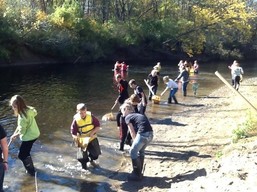
It is October and I head to the Princeton Middle School to join Mr. Eric Torkelson’s seventh grade Life Science Class. They will collect and count bugs retrieved from the Rum River to determine the river’s health. Mr. Torkelson gives an overview of what they have learned so far and explains how to use the equipment including tweezers, buckets, thermometers, nets and a Secchi tube to collect the specimens. Students are divided into groups of 3-4 and are lead to the patio where they will don life jackets, waders, and water proof boots. They help each other find boots that fit, buckle the life jackets and figure out how to adjust the waders. When everyone is set, the students follow their life science teacher down a path into the woods.
In hushed whispers, the students talk to each other. Some are not sure they want to touch the bugs, others have never been in the woods before and hang close to their friends. As they get closer to the Rum River, their voices rise in anticipation of their river experience. They spread out along the river bank to collect and record air and water temperatures, and a Secchi tube reading. Unable to wait any longer, some of the students have waded into the river to dip their nets. Other students are more cautious, slowly wading into the water. Excited yells echo as students pull up their nets and examine the contents. Those afraid of bugs cannot help but peer into the nets and buckets. When it comes time to leave, the seventh graders are reluctant. They want to collect more bugs.
|
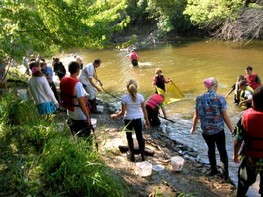
Gear and samples in tow, the students hike back to the outdoor classroom where they regroup to identify and tally the different bugs they collected. They are focused and proud of their samples. But it is time to go to the next class. They remove their jackets, boots and waders and to head to their next class.
It is January 2022. The seventh graders completed their data analysis for The Rum River Ecosystem Assessment. Mr. Torkelson’s passion is water monitoring and for the past 20 years he has developed a course to pass on his enthusiasm and stewardship of nature to his students. This year, the students made posters showing the data that supports their hypothesis of the health of the Rum River. As Mr. Torkelson and I review the posters, we discuss the findings and the importance of water monitoring.
|
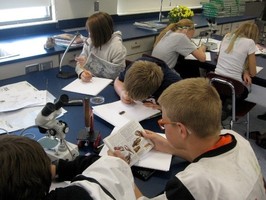
In October, we asked students why monitoring the river is important and they responded as most would – swimming and other recreational sports. We pose the question again. The answers are complex – Clean drinking water, biodiversity, abiotic contents, importance to the community.
But why teach students to monitor water at all? New experience, hands on learning, understanding connection between the river and the community it runs through, application of math and stats, critical reasoning, communication, teamwork, stewardship, life lessons. Then there is the possibility that some of these students may grow up to be future biologists, ecologists, naturalists, or Citizen Water Monitoring Volunteers.
Back to top
|
|
|



