BALMM to meet September 16 on Skype

Having trouble viewing this message? View it as a webpage
BALMM Currents Header

September 2020

BALMM to meet September 16 on Skype

The Basin Alliance for the Lower Mississippi in Minnesota (BALMM) will meet virtually Wednesday, September 16, from 9:00 a.m. to 11:30 a.m. over Skype. Contact Emily Zanon or Caitlin Brady for Skype meeting link.

Agenda as follows:

  • 9:00 – 9:30 a.m.: Launch of karst educational tools – Kevin Kuehner, MDA
  • 9:30 – 10:00 a.m.: Minnesota DNR’s Evaluation of Hydrologic Change – Jason Carlson, DNR
  • 10:00 – 10:30 a.m.: Where to Begin? WHAF Tools for Stream Geomorphology Triage - Nick Proulx and Beth Knudsen, DNR
  • 10:30 – 11:30 a.m.: Regional updates

Launch of karst educational tools

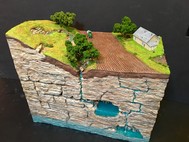
At the June BALMM meeting, Kevin Kuehner (MDA) and Britt Gangeness (MPCA) introduced draft educational videos, animations and infographics that bring to life the geology and groundwater movement unique to southeast Minnesota. These tools are now ready and available to be used. At the Sept. 16 BALMM meeting, Kuehner will provide an overview of how these tools can be accessed and future plans for training and application. See the MDA Southeast Minnesota Groundwater video series on YouTube, and the MPCA’s karst educational materials on the agency’s website.

Karst traveling exhibit

Minnesota DNR’s evaluation of hydrologic change

The Minnesota Department of Natural Resources has developed a standardized watershed assessment which characterizes changes in hydrology and identifies impacts to flooding, channel forming flows, and biologic community health. Determination of breakpoints in long-term records of both precipitation and discharge enables a series of metrics to be assessed before and after hydrologic change to quantify the degree of alteration within watersheds with the appropriate data sets. At the Sept. 16 BALMM meeting, Jason Carlson of the DNR will provide an overview of this new tool.


Where to begin? WHAF tools for stream geomorphology triage

The Watershed Health Assessment Framework (WHAF) provides an organized approach for understanding natural resource conditions and challenges, and for identifying opportunities to improve the health and resilience of Minnesota’s watersheds. Recent framework enhancements have been added to aid in the identification of catchments within the 8 HUC watershed which would benefit from detailed channel stability and sediment supply assessments. The presentation at the Sept. 16 BALMM meeting by Nick Proulx and Beth Knudsen, DNR will provide an overview of the WHAF tool as well as the Geomorphic Triage approach and how this will aid in clean water efforts in southeast Minnesota.

dnr whaf logo

In the news and online: Shell Rock reports, toxic algae, and PFAS challenges