|
The Clean Water Partnership program is now offering loans at 0% interest to those who applied after July 1, 2017. Loans can be up to $2 million. These loans offer great flexibility as any
government entity with taxing authority can apply. There is no annual
call for applications; they can be submitted to the Minnesota Pollution Control
Agency (MPCA) at any time.
Other groups such as Soil and Water
Conservation Districts can administer the loans. Funds can be loaned again as a
second-tier loan to farmers, businesses, and homeowners at a maximum interest
rate of 1.5%. They also can match for federal and state grants.
Funds can be used for subsurface sewer system
upgrades or repairs, green infrastructure, upgrades to feedlots, equipment, and
best management practices. A fact sheet with more information is available on
the MPCA's Clean Water Partnership webpage.
The MPCA is holding a triennial
standards review to gather comments on the rules that govern state water
quality standards. The federal Clean Water Act requires
that states review their water quality standards every three years and solicit
public input on the need for revising or adding to state standards. This review
helps set priorities and a work plan for water quality standards development
and rulemaking.
What is open for comment?
-
All subject matter in Minnesota Rules chapters 7050 that address waters of the state and 7052 that address Lake Superior basin water standards.
-
Variances from water quality standards granted
by the MPCA.
This review period is also an opportunity to provide new
information on limited
resource value waters that may have potential to attain higher uses.
How to comment?
-
Submit written comments by 4:30 p.m. Friday, Feb. 9, by email to minnrule7050.pca@state.mn.us or by mail to Minnesota Pollution Control Agency, ATTN: Catherine O’Dell, 520 Lafayette Road North, St. Paul, MN 55155-4194.
-
Participate in a public meeting on
the triennial review on Wednesday, Jan. 10, starting at 3:30 p.m., at the MPCA
office, 520 Lafayette Road North, St. Paul. This meeting will also be webcast;
details on how to connect will be posted closer to the date on the Participate in the 2017 triennial
standards review webpage.
Need more information?
If you need more information, please
attend the Jan. 10 public meeting referenced above, or contact one of these
MPCA staff members:

Finding the balance between environmental protection
and economic impact is the work of two economists, David Bael and Baishali Bakshi, on the MPCA
staff.
The two combine an aptitude for mathematics,
a head for trends and analysis, and a personal connection with the environment.
“Where I grew up in India, there was high
population density and lots of environmental pollution. This was compounded by
the fact that there were also deep social inequities,” Bakshi said. Her journey
to environmental economics was the natural result of combining her number-crunching
prowess with her care for the environment and people living on the outskirts of
decision-making.
Bael, who hails from the East Coast, also
answered the call to do right by the environment. “I see myself as living in
the intersection between the natural and social sciences,” he said.
He believes that charting a sustainable path
requires the realization that economic, social and environmental systems are
all interdependent and cannot be seen as separate from one another.
For the MPCA, Bael and Bakshi analyze the
economics of regulations and policies to
protect water, air, land and renewable resources. They evaluate and quantify benefits, costs,
incentives and impacts of alternative options using economic principles and
statistical techniques. Their work informs agency rule-making, federal and
state regulations, permit development, legislative initiatives and regulations,
and agency fee changes.
“When it comes down to it, environmental
economics is about two things: efficiency and equity. We want to know how we
can use environmental resources for the overall good. But we’re also asking,
‘Are decisions fair? Are policies just?’ ” Bael said.
Bael and Bakshi’s focus on equity is a key
component in their work. Minnesota has been at the forefront of progressive
environmental policy for years; however, both economists sense a deepening
divide between policy and science that should not exist.
They strive to find that balance between environmental quality and
economic growth. While Bael has focused on air quality issues (see his work in
the “Life and Breath” report), Bakshi is reviewing the benefits of clean
water and regulating it in Minnesota. She recently analyzed data on wastewater
funding and infrastructure needs as part of an effort to make funding more
equitable across the state, especially for small towns that face a higher cost
of wastewater treatment due to lack of economies of scale.
“As humans, we can see the benefits of protecting the resources we
need to survive and thrive, and translate it to regulations that benefit us ...
the harder question is how to help people understand that taking care of other
forms of life is beneficial to humans since we’re all connected through
ecosystems,” she said.
In the long run, Bakshi says smarter regulation is helpful,
controlling pollutants in a way that has the most impact.
“The environment provides
us with a lot of benefits, and there are costs to harming it,” Bakshi said. She
and Bael are on a mission to find out just how high those costs will be for
Minnesotans.
Photo above: Baishali Bakshi, on the left, and David Bael
|
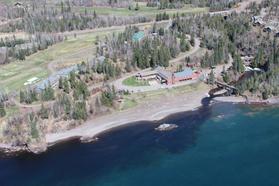
For more than a
decade, the Poplar River Management Board, community groups, and local and
state partners tackled stormwater runoff, streambank erosion, and slumping
bluffs and won. The Poplar River, a tributary to Lake Superior in northeast
Minnesota, is now meeting water quality standards for sediment and will be
taken off the state’s impaired waters list.
Not only that, the
river also shows healthy habitat conditions that can support — and sustain — a
wide diversity of fish and bug populations.
The partners
conducted intensive and focused diagnostic studies between 2007 and 2012. And
in 2008, they added large-scale, targeted restoration projects that continue
today.
Eroding hillsides on the Poplar River
made the water cloudy, which also made it hard for water creatures to live.
The partners
focused on the lower watershed’s highly erodible soils and land uses through
traditional practices and untested methods, including restoring a stream to its
natural meandering away from a slumping hillside. The impressive and dramatic
result? A 300-ton reduction in the average sediment load to the river
every year from 2000 to 2010. Today, concentrations of total suspended solids
are within the state standard 92% of the time.
When the MPCA
listed the river as impaired in 2004, a required study
determined the maximum daily amount of sediment the river could accept and
still meet water quality standards. In 2009, the MPCA added the Poplar to its
Watershed Pollutant Load Monitoring Network which created a continuous stream
flow and water quality sampling program. This proved to be invaluable for
comparing pre- and post-project records of the river’s condition and
improvements.
This long-term
monitoring program is a partnership between the Minnesota Department of Natural
Resources and MPCA with citizen support from the Clean Water, Land and Legacy
Amendment fund.
The Poplar River
is a water quality success story that demonstrates the cumulative power of
stewards working together and ultimately making a difference.
|
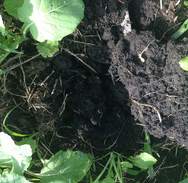
Clean water depends
on healthy soil – soil that supports plant growth and can absorb, hold, and
filter water. Healthy soil, in turn, depends on how people manage the land. The
Minnesota Board of Water and Soil Resources (BWSR) and the University of Minnesota’s
Water Resources Center (WRC) have committed to expand the science of soil
health and share practical information with farmers, conservationists and
others who manage Minnesota’s soils.
The two entities
recently announced a new collaborative program, the Minnesota Office for Soil
Health. The program will help build local expertise to promote soil health and
soil and water conservation. The focus will be on research and outreach to
expand the tools and skills of Minnesota’s local conservation delivery community,
as well as understanding the economic impacts of land applied soil and water
management practices.
The goal is to
protect and improve soil resources and water quality by developing the
knowledge, skills, and abilities of local conservationists, farmers and their
advisers.
Key components of
the healthy soil initiative include:
- Building knowledge of the importance of soil health in achieving Minnesota’s goals for clean water
- Strengthening networks for sharing information
- Conducting tillage, cover crop, and erosion surveys to measure progress
- Building workforce technical capacity through training and professional development
- Developing conservation tools and analyzing watershed health impacts and cost
effectiveness of soil health practices
Program activities
will be guided and advised by a leadership group consisting of university and state
staff along with key stakeholders including the U.S. Department of Agriculture
Natural Resources Conservation Service.
|
The public comment period for Minnesota’s draft 2018 Impaired
Waters List is now open. The MPCA will accept comments on the list, which
was released last month, through 4:30 p.m. Jan. 26. All written comments
received by that deadline, and MPCA responses, will go to the U.S.
Environmental Protection Agency (EPA), along with the draft list and
accompanying documentation, for its review and approval. Please submit written
comments to Miranda Nichols, MPCA research scientist, by one of these methods:
- Email: miranda.nichols@state.mn.us
- Mail: Miranda Nichols, Minnesota Pollution Control Agency,
520 Lafayette Rd N, St Paul, MN 55155 (A return postal address must be
included.)
The U.S. EPA recently approved Total Maximum Daily Load study
reports for the following watersheds. These studies determine the total amount
of a pollutant that a water body can receive on a daily basis and still meet
water quality standards.
Hawk Creek: Practices needed to curb
runoff, erosion
The Hawk
Creek watershed is located in southwestern Minnesota in major portions of
Kandiyohi, Renville and Chippewa counties. Hawk Creek is a major tributary of
the Minnesota River, entering about 8 miles southeast of Granite Falls.
Generally, most streams and lakes in the
watershed fail to support swimming or fishing. Stream bank erosion and
stormwater runoff create a negative effect on water quality. Runoff from
agricultural activities carries excess phosphorus, sediment and bacteria into
water bodies. These pollutants degrade water quality and are harmful to fish
and other aquatic life.
Strategies to improve water quality include
planting buffers along shoreland, stabilizing streambanks, and implementing stormwater
control projects. Agricultural practices called for include greater use of
cover crops, minimum or no tillage, temporary storage of water, and greater crop
diversity.
The MPCA approved the associated Watershed Restoration and
Protection Strategies (WRAPS) in September 2017.
Pine River: Protection
strategies important
The Pine River
begins at Pine Mountain Lake in Cass County, and flows southeast into Crow Wing
County, where it drains into the Mississippi River, about 10 miles north of
Brainerd.
Overall, the Pine River watershed’s lakes and streams are
considered very healthy. The TMDL report identifies phosphorus runoff as a
major contributor to water quality impairments in Jail and Kego lakes. Monitoring
and assessment, followed by stressor identification, also identified a few
isolated water quality issues in three tributaries.
Some of the recommended strategies for this watershed
include protecting existing forestland, creating buffers in existing
agricultural and developed areas, restoring wetlands that have been altered,
promoting agricultural practices to reduce livestock waste in lakes and
streams, and ensuring septic systems are compliant throughout the watershed.
The MPCA approved the associated WRAPS in October 2017.
The Minnesota Watershed Specialist Training is designed to help staff from SWCDs, watershed districts, tribes, counties, and cities strengthen their ability to protect water resources. It is entirely online to save travel costs and interact with professionals from around the state. Topics include:
- Assessing the community and stakeholders to more effectively engage them in problem-solving,
- Identifying social and physical data needs so you can design a monitoring or evaluation program,
- Writing a communication strategy and effectively getting your message across to diverse audiences,
- Justifying implementation activities that will best address the local water resource issues, and
- Pulling it all together into a work plan that could be used for a grant proposal.
For more information contact Ann Lewandowski or Karen Terry, University of Minnesota Water Resources Center, St. Paul, 612-624-6765.
The Science of Healthy Waters: The Ditching Dilemma workshop will be March 19-21, in Blue Earth. It will review the history, extent of ditching across the landscape, ditch law/policy, effects of ditches on stream hydrology, geomorphology, water quality, aquatic habitat, and biodiversity. Alternative design concepts and approaches that work towards accomplishing sustainable agricultural goals while improving water quality and restoring channel stability and ecological health will be presented. Group activities will give attendees the chance to discuss the societal and ecological implications of these practices while working towards alternative approaches and strategies that reduce the impacts of ditching on stream health.
|



