
The Lessard-Sams
Outdoor Heritage Council is considering 52 requests for Legacy Amendment funding for fiscal year 2018-19. The requests total
more than $338 million, far exceeding the $100 million available for projects that protect, restore and enhance wetlands, prairies,
forests, and habitat.
The requests range from
$787,800 for a Minnesota Dept. of Natural Resources (DNR) forest management project
to $20 million for Reinvest in Minnesota wetland restorations through the
Minnesota Board of Water and Soil Resources.
The council makes annual recommendations to the
Minnesota Legislature on appropriations from the Outdoor Heritage Council,
which is funded by the Clean Water, Land and Legacy Amendment. The council will
pare down the 52 requests over the next several months for final
recommendations to the 2018 Legislature.
|

During its 2017 session, the Minnesota Legislature made
changes to the funding recommendations from the Legislative-Citizen Commission on Minnesota Resources, causing some controversy. This commission makes recommendations for
grants from the Environmental Trust Fund, funded by the state lottery and
investment proceeds. The Legislature adopted 59 recommendations with no
changes, four at a decreased dollar amount, deleted seven, and added two new
appropriations. Gov. Mark Dayton then signed 65 appropriations totaling $64.25 million into law.
Related media coverage:
|
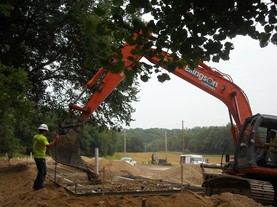
The final bonding bill from the Minnesota Legislature this
year will bring much-needed relief to many communities for their drinking and
wastewater treatment needs. While much less than Gov. Mark Dayton recommended,
the Legislature passed funding at historic levels for Public Facilities Authority (PFA) programs.
A total of $121.7 million is line for programs to help communities with water
infrastructure needs.
Many communities had to delay important infrastructure
projects after the 2016 legislative session ended without a bonding bill and
without policy changes aimed to help communities meet water and wastewater
treatment needs.
While the 2017 session came down the wire, the final result
was a dramatic increase in state assistance, thanks to local and state governments
working together to demonstrate the need.
In addition to the bonding bill funding, policy changes
include:
- Expanding a program to include drinking water as well as wastewater projects
- Increasing the percentage of projects that grants can cover and increasing the maximum grant amount, in order to meet higher infrastructure costs
The PFA provides financing and technical assistance to
help communities build public infrastructure that protects public health and
the environment while promoting economic growth. The authority makes
low-interest loans and grants available to finance infrastructure that might
otherwise be unaffordable to communities if they had to borrow money for the
projects at market rates. Since inception in 1987, the PFA has financed $4.5
billion in public infrastructure projects in communities throughout Minnesota.
The PFA has many partners, including the MPCA. The MPCA’s
role is to ranks proposed wastewater and stormwater projects on its Clean Water
Project Priority List, conduct technical and environmental reviews, and certify
approved projects to PFA for funding.
When announcing his water infrastructure initiative in early
2016, Gov. Dayton noted that the estimated water infrastructure needs in
Minnesota exceed $11 billion over the next 20 years, requiring higher state
funding over the long-term. State agencies are already working on bonding
proposals for the 2018 legislative session.
For more information about these programs, contact Bill Dunn,
wastewater and stormwater financial assistance programs coordinator for the
MPCA, at 651-757-2324 or bill.dunn@state.mn.us.
|
The Minnesota Pollution Control Agency (MPCA) recently
approved a $200,000 loan to Chippewa County for septic system upgrades. This
loan is part of the Clean Water Partnership program funded by the Minnesota
Legislature and administered by the MPCA.
Chippewa County will use the funding for low-interest loans
to residents for upgrading sub-surface sewage treatment systems. These upgrades
will help reduce phosphorus, nitrogen, bacteria and other pollutants flowing to
lakes and streams.
The MPCA opened this loan funding in August 2015 with $11
million available. Local government units may apply to the MPCA for loans at
any time for projects that implement best management practices to reduce
nonpoint source pollution. See the Clean
Water Partnership webpage page for more information.
The MPCA is requesting comment on
possible amendments to chapter 7002 and 7083 rules governing water quality
fees. This includes fees for municipal and industrial wastewater permits,
noncontact cooling water permits, stormwater permits, feedlot permits, septic
systems, environmental review, variances, and more. The MPCA may make rule
changes to some or all of these fees.
The notice is available by visiting
the MPCA public notice webpage.
Additional information about this rulemaking, including two fact sheets,
“Funding Minnesota’s water protection work” and “Public input needed on
adjusting fees for water programs” are available on the Water Quality Fee Rule webpage.
The MPCA published notice in today’s State
Register. The public comment period for this notice closes at 4:30 p.m.
on Monday, Aug.14. A stakeholder
video conference on this rulemaking will be held on Monday, July 24 from 2-4
p.m. and again from 6-8 p.m., at the MPCA St. Paul
office and regional offices. The purpose of the meeting is to share
information about this rulemaking so that stakeholders are able to provide
verbal input at the meeting and written comments by Aug. 14.
The MPCA and local partners have two studies on public notice, the first for the Big Fork watershed in northern Minnesota and the second for Miller Creek in Duluth. Written comments must include a statement of your interest in the report, and the action you wish the MPCA to take, including specific references to sections of the draft report you believe should be changed, and the reasons for making those changes.
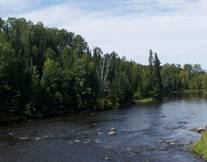
Big Fork: Need to restore one lake and protect good
quality resources
The MPCA and local partners in the Big Fork
River watershed recommend restoring one lake and protecting “good quality”
water resources, according to a draft report open comment through June 29.
Located in the Rainy River-Lake of the
Woods Basin, results from monitoring and analysis showed water quality is
generally good to excellent in the watershed’s entire stream network and many
of its lakes. In particular, lake water quality is very good in many headwater
lakes in northern Itasca County.
Island Lake, in the watershed’s
west-central portion, was determined to need restoration due to excess nutrient
levels. Reducing phosphorus from the surrounding watershed by adopting local
best management practices (BMPs), and in-lake alum treatments, could slow down
or stop the lake’s “eutrophication,” or accelerated aging and increased levels
of algae due to excess nutrients.
MPCA scientists and local partners believe
wetlands may be contributing to problem areas in the Bowstring River and Popple
River systems with dissolved oxygen issues. Oxygen is necessary to maintain a
waterbody’s healthy ecosystem for fish and other aquatic life. The MPCA staff
and partners will focus on these stream systems during the next monitoring
cycle starting in 2020.
Protecting water quality in this watershed
is also dependent upon the continued use of BMPs when managing timber harvests
and other forest activities to prevent erosion and other detrimental impacts.
Comments on the draft Watershed
Restoration and Protection Strategies (WRAPS) should be sent to Mike
Kennedy, 525 South Lake Ave., Suite 400 Duluth, Minn., 55802, or by email at mike.kennedy@state.mn.us. He is available to answer questions
by phone at 218-302-6629 or 800-657-3864.
|
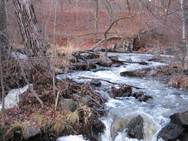 In Miller Creek, trout suffer from urban pollution woes
It’s no secret that Miller Creek, one of the area’s best known urban trout streams flowing through Duluth and Hermantown, has suffered from urban influences for many decades. As a result, the creek’s ailing trout population is the subject of a draft water quality report open for comment through July 5.
After winding its way through Duluth and Hermantown, the creek enters the St. Louis River below Lincoln Park. Along the way, fewer shade trees and plenty of stormwater runoff from roads and parking lots create warmer water that trout, other cold-water fish and bugs don’t appreciate. Shading the creek, restoring more natural flow paths, and preventing warm stormwater from entering it are possible strategies to address the temperature problem.
The draft report is a Total Maximum Daily Load (TMDL) study, part of a nationwide effort to identify and clean up pollution in streams, rivers and lakes. Scientists calculate the maximum amount of a pollutant, in this case heat, a waterbody can receive without exceeding water quality standards.
Comments should be submitted in writing by July 5, 2017, to Tom Estabrooks, MPCA, 525 Lake Avenue South, Suite 400, Duluth, Minn., 55802, or by tom.estabrooks@state.mn.us. He is available to answer questions by phone at 218-302-6608.
|

The Minnesota Dept. of Agriculture (MDA) is seeking public
review and comment of a draft proposal
for regulating the use of nitrogen fertilizer in Minnesota. The purpose of
the proposed rule is to minimize the potential for nitrate-nitrogen
contamination from fertilizer in the state's groundwater and drinking
water.
The MDA will hold
listening sessions throughout the state to discuss the rule and receive written
comments:
- June 28, 6 p.m., Chatfield Center for the Arts
- June 29, 2 p.m., U of M Extension, Farmington
-
July 6, 3 p.m., Great River Regional Library, St. Cloud
- July 11, 6
p.m., Robertson Theatre, Wadena-Deer Creek High School
All comments must be
submitted in writing. The MDA will review comments and expects to publish the
final draft of the rule in the fall of 2017 and adopt in fall of 2018.
Written comments on the draft Nitrogen
Fertilizer Rule should be submitted by Friday. Aug.11 via mail or email
to: Larry Gunderson, fertilizer technical unit supervisor, Minnesota
Department of Agriculture, 625 Robert St. N., St. Paul, MN,
55155-2538, larry.gunderson@state.mn.us. All comments
should, but are not required to, include a contact name, phone number and/or email
address to provide for follow-up discussion on specific comments.
|
Monitoring crews from the MPCA and its
local partners are beginning the final phase of a 10-year effort to assess the
condition of rivers, streams, and lakes in Minnesota. In addition, crews will
begin tracking progress in a few watersheds that were among the first to be
studied intensely. This work is funded by the constitutional Legacy Amendment
passed by voters in 2008.
The most intensive monitoring activities
will focus on six of Minnesota’s 80 major watersheds. Each watershed is
comprised of a network of interconnected streams, lakes, ditches, and wetlands.
The intent is to develop a complete picture of conditions of various water
bodies within each watershed.
This effort includes studying the biology
in the watershed. Biological monitoring is designed to measure and evaluate the
condition of rivers and streams by studying the fish and aquatic invertebrates,
as well as habitat, flow, and water chemistry. Examples of aquatic
invertebrates include insect larvae, crayfish, snails, small clams, worms, and
leeches.
Two teams will do the biological
monitoring, one out of Brainerd and one out of St. Paul. This summer, the north
team will work in Lower Rainy River, Rapid, and Rainy Lake watersheds in far
northern Minnesota. The south team will work in the Blue Earth, Cottonwood, and
Redwood River watersheds. The south team will also monitor the St. Croix River
along the border of Minnesota and Wisconsin. Monitoring to track progress from
the first 10- year period will occur in the North Fork Crow, Pomme de Terre,
and Snake River watersheds.
To see biological monitoring teams in
action, you can watch short videos on fish sampling and invertebrate
sampling on the MPCA’s biological
monitoring webpage.
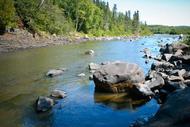
The MPCA’s recently-released report
on the Lake
Superior-North watershed confirms it contains some of the least-polluted
water bodies in the state. However, land use practices, increasing development,
and a changing climate may pose threats to these high quality resources.
In the near future, MPCA, partner agencies, and stakeholders will work together
to develop protection and restoration strategies for these important aquatic
resources.
The watershed’s streams and rivers flow
slowly through forested upland areas before plunging over steep rapids and
waterfalls near Lake Superior. These high-quality water bodies support
sensitive aquatic species and provide clean water for recreation and other
uses. The watershed’s lakes also exhibit excellent water quality, and are
enjoyed by many for fishing, boating, and other forms of aquatic
recreation.
Geography and ownership shape the
watershed’s development potential. More than 80 percent of its U.S. portion is
under federal, state, county or municipal administration. In general,
development levels are low and mostly concentrated along the Lake Superior
shoreline. However, development has increased in some areas, particularly
along certain lakeshores, and may be negatively affecting water quality.
Land managers, community leaders and other
stakeholders should consider the best available information regarding potential
stressors when developing protection and restoration strategies. Protection
strategies would help support the watershed’s exceptional fish and bug
communities, swimming beaches, boating and other water-contact activities.
These strategies may also help prevent future impairments.
The report’s highlights include:
- High water clarity and low levels of algae indicate 94 lakes support aquatic recreation and none of the assessed lakes were impaired for this use.
- Ninety-nine lakes have fish with high levels of mercury, which is the watershed’s dominant fish tissue contaminant. Fish consumption advisories are recommended for lakes across the watershed.
- Water chemistry and the amounts and types of fish and bugs found in 63 streams indicate full support of aquatic life.
- Three streams were impaired for aquatic life due to high levels of suspended sediment. Restoration efforts are underway to address these impairments.
- Low levels of bacteria in 18 streams and 27 Lake Superior beaches indicate that these beaches support aquatic recreation.
Beginning in 2013, MPCA scientists and
local partners began monitoring 135 lakes, 67 streams and 27 Lake Superior
beaches. Resulting water chemistry and biological data were used to determine
whether these water bodies support aquatic life and recreational uses.
|
The U.S. Environmental Protection Agency (EPA) recently approved
restoration studies for the Chippewa River watershed in southwest Minnesota and
Sauk Lake’s southwest bay in central Minnesota. These studies, known as Total
Maximum Daily Loads (TMDLs), establish the total amount of pollutants that
water bodies can accept and still meet water quality standards. The studies
also identify the sources of pollutants and ways to reduce their levels.
Chippewa: Land changes needed to reduce pollutants, improve
habitat
The Chippewa River
watershed stands out as a prime
example of surface water pollution issues in greater Minnesota, and how to
address them.
The Chippewa River watershed drains a 2,080
square-mile area entering into the Minnesota River near Montevideo. It includes
portions of Otter Tail, Grant, Douglas, Stevens, Pope, Swift, Kandiyohi,
Chippewa counties, and a very small portion of Stearns.
According to the TMDL report, lakes and streams in the Chippewa River Watershed are polluted
with excess nutrients (nitrogen and phosphorus), algae and sediment, and have
low levels of dissolved oxygen, and altered habitat conditions. In some areas,
the pollution is severe enough to harm aquatic insects and fish. Of 64 lakes
assessed for aquatic recreation, 30 fully support that use and 34 are impaired.
The watershed landscape is dominated by
cultivated crops with small portions of perennially vegetated landscapes and
developed areas. Because of poor natural drainage in many parts of the southern
area, large portions have been altered by artificial drainage for settlement
and farming.
To meet the water quality improvement goals in
the watershed, the Watershed Restoration and Protection Strategies (WRAPS)
report (approved by the MPCA
in March 2017) states that citizens and landowners must work to fully implement
the buffer rule, convert marginal cropland to perennial cover, expand
application of cover crops, and improve management of nitrogen fertilizer.
Sauk Lake’s southwest
bay: Runoff reduction needed to decrease pollutant levels
Decreasing levels of
phosphorus – that cause algal blooms – in the southwest bay of Sauk Lake in
Stearns County, will depend on reducing runoff from upstream, according to the lake’s TMDL report.
Sauk Lake is part of the Sauk River watershed
in the Upper Mississippi River basin. Land use upstream of the lake is
predominantly agriculture. According to the report, total phosphorus entering
Sauk Lake’s southwest bay will need to be reduced by 41 percent to achieve lake
water quality standards. A similar but separate report was developed for Sauk
Lake’s north bay in 2013.
Environmentalists rejoice: court says land
regulation doesn't go 'too far' on
Minnesota Public Radio
Officials:
Diversion Authority close to agreement with DNR before contact was cut
in the West Fargo Pioneer
Fillmore
SWCD celebrates 75 years with watershed tour, demos in Agri News
Buffer
strip law should present no problems locally in the Wadena Pioneer Journal
Agriculture
Stewardship newsletter on the MPCA website
|



