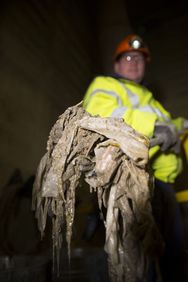
Protecting
rivers from algae is the goal of water quality standards now being implemented
by the Minnesota Pollution Control Agency (MPCA).
These
standards – approved by the federal government – are designed to protect
fishing and swimming from excess nutrients, particularly phosphorus that causes
nuisance algae.
The
new standards will allow the MPCA to identify waters where excess phosphorus is
causing problems, and to develop strategies for reducing that phosphorus. One
strategy involves requiring reductions in phosphorus in wastewater discharges.
Minnesota
began addressing the problem of excess phosphorus in wastewater discharges the
1970s, with requirements to reduce phosphorus discharges to lakes. Since then
significant progress has been made, but additional action is needed to protect
Minnesota’s rivers and downstream waters, particularly in areas where no phosphorus reduction is currently required.
The
agency will use a new custom approach to implementing the river standards. For
each facility discharging to a river, the agency will examine the river’s
health when that facility’s permit expires. Based on water monitoring data and
other information, agency staff will determine if:
- Downstream
rivers meet standards and no stricter limits are needed in order for the
river’s health to be maintained
- Downstream
rivers meet standards but the facility discharge has potential to trigger algal
blooms and thus needs stricter limits
- Downstream
rivers fail to meet standards and already grow nuisance algae, meaning the
facility needs to further reduce phosphorus to help restore the water’s quality
For some communities, these standards will not change
anything. For other communities, the standards may result in to the need to
upgrade their wastewater treatment.
Of
the 714 municipal wastewater treatment facilities in Minnesota, 462
discharge to a river, 115 to a lake, and the rest to land.
These
standards are part of Minnesota’s efforts to reduce phosphorus pollution.
Statewide, municipal wastewater phosphorus discharges have decreased by 70%
over the past 15 years.
See
the full
story on the MPCA website. Photo above: Brenda DeZiel of the MPCA shows a trout to a young boy and his dad during intensive water monitoring of the Cannon River watershed. Data from intensive water monitoring across the state is being used in identifying rivers that need phosphorus reduction.
|
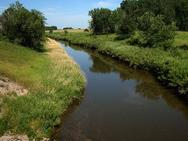
The MPCA invites comments on a watershed restoration and
protection report for the Mustinka
River watershed. The report, known as Watershed
Restoration and Protection Strategies (WRAPS), summarizes monitoring and
water quality improvement projects completed during the past several
years, and identifies strategies to restore and protect the water quality of
streams and lakes in the watershed. Comments on the report are being accepted March
28 through April 27.
The
Mustinka River Watershed lies within the headwaters region of the Red River
Basin. Encompassing an area of 909 square miles, the watershed lies within a
flat area of west central Minnesota used predominately for crop production. Required by Minnesota’s Clean Water Legacy Act, a WRAPS
report is a document that summarizes scientific studies of a major watershed.
These studies:
- Assess the physical, chemical, and biological aspects of
water quality in the watershed;
- Identify impaired water bodies and those in need of
protection;
- Identify conditions that stress fish, aquatic insects and
other organisms;
- Identify sources of pollution; and
- Propose strategies and actions designed to achieve and
maintain water quality standards and goals.
The WRAPS report includes a Total
Maximum Daily Load (TMDL) study. A TMDL study establishes the maximum
amount of a pollutant a water body can receive on a daily basis and still meet
water-quality standards. More information about WRAPS reports and TMDL studies
can be found on the MPCA website.
The Mustinka River TMDL Study identified pollution resulting
from excess nutrients, bacteria, turbidity (reduced light penetration of water
due to suspended solids), and low dissolved oxygen. In addition to these
impairments, the study identified locations where conditions make it difficult
to support aquatic insects (macroinvertebrates) and fish. The TMDL study is
also available for public review and comment.
Written comments should be sent to Cary Hernandez, MPCA, 714 Lake
Ave., Ste., 220, Detroit Lakes, MN 56501.
If you wish to comment, please indicate clearly whether your
comment(s) pertain to the WRAPS report or the TMDL study.
Written comments on the WRAPS report or TMDL study must
include: a statement of your interest in the WRAPS report or TMDL study; a
statement of the action you wish the MPCA to take, including specific
references to sections of the WRAPS report or TMDL study that you believe
should be changed; and specific reasons supporting your position.
|
The MPCA and local partners have completed intensive water
monitoring in 69 of Minnesota’s 80 watersheds (86%), according to the agency’s
dashboard. The
MPCA dashboard tracks environmental and performance measures related to the
agency’s work. Metrics include measures of air pollutants, water restoration,
polluted land cleanup, and how quickly permits are issued.
As far as lakes and
streams, assessment is complete in 49 or 61% of watersheds with projects to
restore and protect waters underway in all 80 watersheds. However, progress
continues to be slow for restoring lakes and streams, with cleanup projects
expensive and taking years to see results. In general, 60% of lakes and streams
meet water quality standards designed to protect public health, recreational
use, and aquatic life.
For more statistics on how the MPCA is doing, see the
agency’s 2016
dashboard on its website.
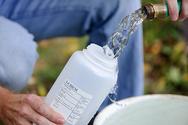
Groundwater
contamination is a growing concern that should be on everyone’s radar,
according to MPCA scientists. Three out of 4 Minnesotans get their drinking
water from groundwater sources. Up to 60% of groundwater monitoring wells
sampled in central Minnesota are contaminated with nitrate well beyond the safe
drinking water standard. Drinking water contaminated with nitrate can lead to
illnesses such as Blue Baby Syndrome, a fatal blood disorder in infants.
Nitrate
enters groundwater from sources like animal manure and agricultural
fertilizers. Some of the affected cities include Becker, Clear Lake, Cold
Spring, Hastings, Goodhue, Adrian and Park Rapids. City officials in those
areas have explored treatment options, including distributing bottled water to
residents, drilling new wells, and building new reverse-osmosis water treatment
plants. Many small cities are spending millions to address the problem.
The
Groundwater Protection Recommendations report highlights the current state of
Minnesota’s groundwater and provides recommendations for ways to reduce and
prevent groundwater contamination. Minnesota lawmakers requested the report
during the 2013 legislative session.
Some
Minnesota cities have already experienced the cost burden of treating
contaminated groundwater. A 2014 Drinking Water report from the Minnesota Department of Health (MDH) put cost estimates for treating contaminated
drinking water in Minnesota in the billions of dollars. The estimated cost for
cleaning up contaminated water in Hastings was a staggering $9 million while
estimated costs for Park Rapids were upwards of $11 million.
Many
harmful groundwater contaminants are caused by human activity. Those
contaminants come from sources like urban runoff, road de-icing salt,
antibiotics, pharmaceuticals, viruses, and agricultural practices.
|
A bill proposing to create a Minnesota River Commission
reportedly has been withdrawn. Speaking at the Minnesota River Congress meeting
March 10, Ron Harnack, representing the Lower Minnesota River Watershed
District, said the bill has been shelved due to opposition among some
counties and water management organizations in the basin. The bill (SF2204)
calls for a commission to "coordinate with each of the 13 major watersheds...
to complete... a plan of action" to achieve water quality and management
goals.
Harnack said another bill may be introduced to develop and
implement a Minnesota River basin plan for flow, sediment, and nutrient
reduction. According to the bill, if a comprehensive plan is not completed by
Dec. 31, 2020, or the “one watershed one plan” is not developed in any of the
13 major watersheds, the counties in such watersheds "shall petition for
the establishment of a watershed district.” A bill number or sponsor has yet to
be announced.
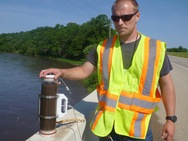
With
several different partners and 200 sites across Minnesota, the Watershed
Pollutant Load Monitoring Network strives to ensure consistency and
accuracy in its water monitoring. Staffing often changes on the local level,
meaning monitors may have not been trained on equipment or many months have
passed since they conducted monitoring. To help partners learn and stay current
on techniques, including the basics, the MPCA has produced the following training
videos, available on YouTube:
|
The Minnesota Erosion Control
Association (MECA) and MPCA will hold a training workshop on inspections
required by Municipal Separate Stormwater System (MS4) permits on March 24,
from 8:30 a.m.-4:30 p.m. at the Arrowhead Lodge at Brainerd Lakes in Baxter,
Minn. The workshop fee is $60 for MECA members and $85 for non-members. For
more information, contact Ruth Kramer at 320-685-5444 or visit the MECA
website.
The Moos Family lecture series at
the University of Minnesota will continue with George Hawkins, CEO and general
manager of the Washington D.C. Water and Sewer Authority speaking April 13 at the
St. Paul Student Center Theater. He will speak on “Evolution to Cleaner Water
and Green Water Companies.” DC Water operates one of the largest wastewater
treatment plants in the world. The water authority has launched an ambitious
and innovative program to improve aging infrastructure in the Washington D.C.
region while complying with strict environmental requirements. The lecture
series will hold a reception for him at 5:30 p.m. April 13 with his lecture
following at 7 p.m.
The
Environmental
Initiative has announced the finalists for its 2016 awards. The MPCA is
proud to be a partner in the Minneapolis
Energy Benchmarking Program and Safer
Products that Work project nominated for these annual awards. The winners will
be announced Thursday, May 26 at a dinner and program at the Nicollet Island
Pavilion in Minneapolis, starting with a 5:30 p.m. reception.
The
Minnesota Dept. of Natural Resources (DNR) will hold a workshop July 25-29 in
Fergus Fall on the Fundamentals of Stream Restoration: Applied Geomorphology
and Ecology. Rivers and streams are
formed by physical processes that define their geometry and quality and
quantity of habitat. Hydrology, geomorphology, biology, water quality, and
connectivity interact to determine the overall health of the stream. This
course will discuss the interactions between geomorphology and ecology in the
context of ecosystem health. Attendees develop the skills for field
determination of bankfull stage, geometry and stream type, which are essential
to stream assessment and restoration. This workshop is the first in the DNR’s
Stream Restoration Series and is a prerequisite to the three advanced courses.
Cost is $1,000 per participant. See the DNR workshops webpage for details.
The Minnesota Board of Water and Soil Resources is seeking
to fill a Board
Conservationist position
in the New Ulm location. Current
state employees can locate the position announcement by searching the Job ID 3946 on Employee
Self Service. All other
applicants should apply through the MMB
Careers website .The
requisition is open for all applicants through April 6. For more information, contact BWSR regional manager
Jeff Nielsen.
|