MPRB pilots turtle crossings on parkways to alert drivers, cyclists
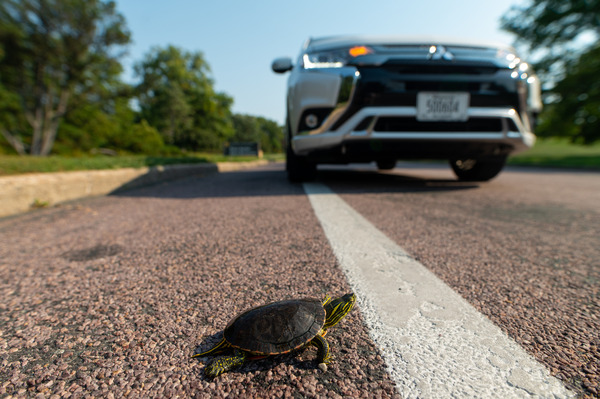 Crossing locations based on information collected in recent years
MPRB is piloting ways to alert drivers and cyclists to areas where turtles cross parkways and bike paths in the Minneapolis park system.
Staff have installed signs, painted stencils and implemented other changes to parkway stretches that border Minneapolis lakes and ponds. The multiple elements are designed to work together to capture people's attention.
“If more people are watching out for turtles in the road, fewer turtles will die from vehicle collisions,” said Environmental Education Manager MaryLynn Pulscher. In 2021, for example, 10 percent of the turtle sightings submitted to MPRB via Bit.ly/ReportATurtle were dead turtles. Of those dead turtles, more than 90 percent were spotted in roadways.
Why crossings? Turtles are on the move in spring and fall
Turtles are most vulnerable in springtime and when moving about on land. In spring, adults leave the water to find summer habitat or suitable spots for nests to lay eggs. Snapping and painted turtles, the most common species in Minneapolis, may migrate up to a mile to nest.
Meanwhile, hatchlings emerge from their nests on land and make their way to water. Hatchlings who migrate in spring have waited all winter in their nests (!) to make this journey; come fall, another wave of tiny turtles heads to water after hatching from eggs laid in spring.
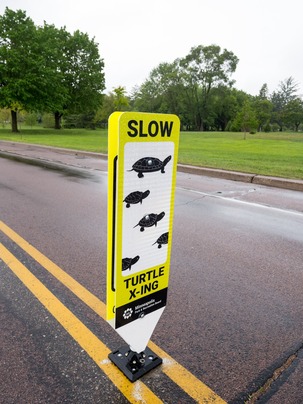
Crossing locations
After reviewing hundreds of turtle sightings submitted to Bit.ly/ReportATurtle, along with other information, MPRB staff focused on several hotspots for turtle crossings on parkways in regional parks:
Cedar Lake Parkway between the lake and Cedar Meadows Wetland
East Lake of the Isles Parkway - between James Ave. S. and Euclid Pl.
West Lake Nokomis Parkway along Amelia Pond, southeast of Lake Nokomis
Turtle sighting reports have also provided a host of valuable data on turtle species in the park system, nesting and basking sites and more.
|
Curb cuts, signage and other roadway elements
Many adult turtles can climb up or down roadside curbs, but for smaller turtles and hatchlings, surmounting a curb can be difficult or even impossible.
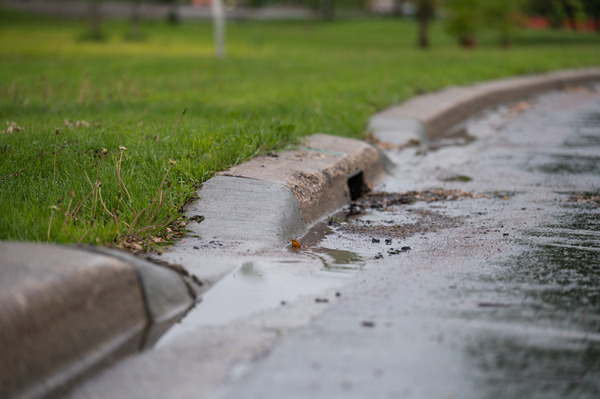
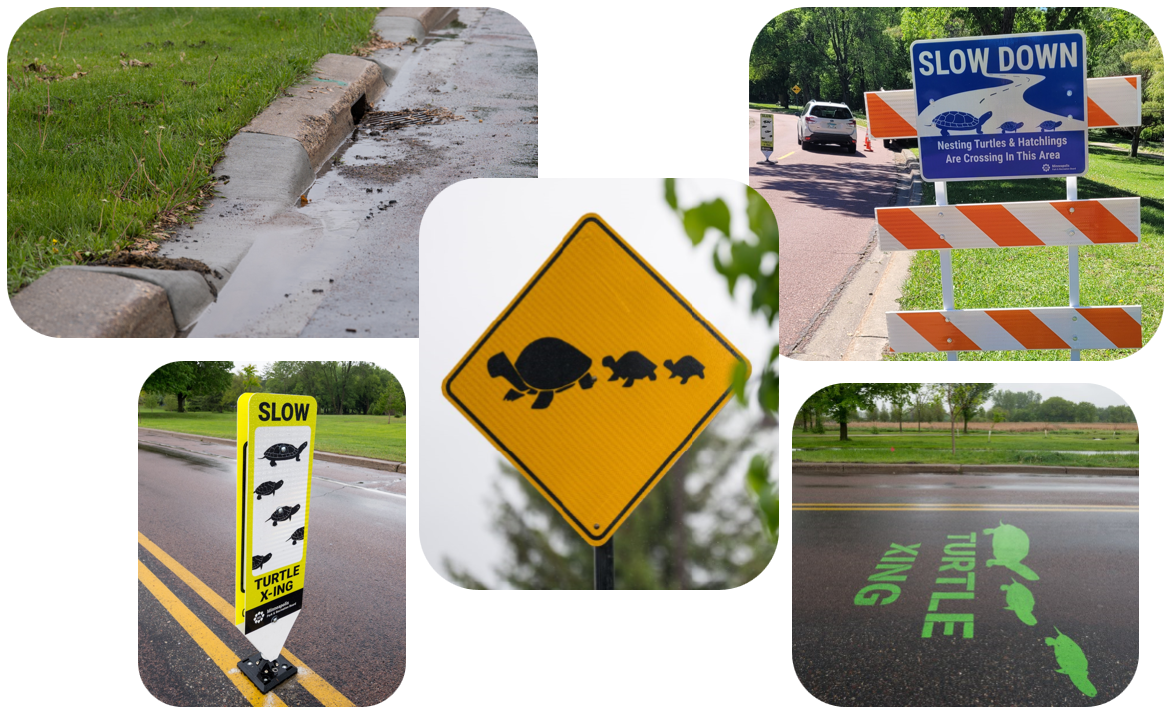
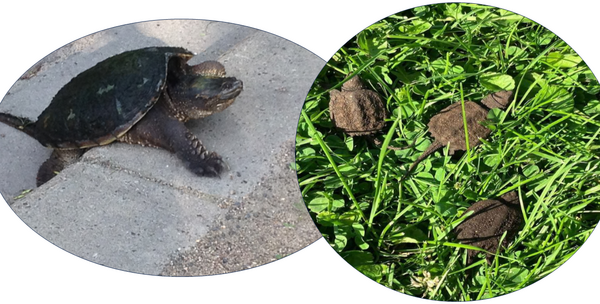 After all, recently hatched turtles like those pictured above aren’t much bigger than a US quarter! To address this issue, sections of curbs on both sides of West Nokomis Parkway were removed, as shown below.
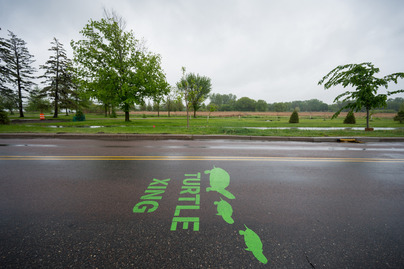
Other modifications in use at all three sites include center-line bollards, shown above, green stenciling on the roadway, shown below, and temporary “slow down” signs.
10 ways you can help turtles
-
Keep an eye out on parkways and paths near lakes and ponds – especially if you're driving or biking.
-
Drive at or under the 20 mph speed limit on Minneapolis parkways.
-
Report sightings of Minneapolis turtles at bit.ly/ReportATurtle.
(See a turtle outside Minneapolis? Report it at HerpMapper - Global Herp Atlas.)
-
Avoid handling healthy turtles, unless they need help crossing a road. Adult turtles are moving to or from their preferred habitat: They know where they're going!
- If you move a turtle across a road:
- Put it down facing same direction.
- Minimize handling to prevent damage, especially to hatchlings.
- Check out this cartoon for details!
-
See an injured turtle? Report details at bit.ly/ReportATurtle and take the turtle directly to the Wildlife Rehabilitation Center of Minnesota.
- Keep pets away from turtles and other wildlife. Don't allow dogs to sniff, investigate, "play with" or harass wildlife. Even a friendly dog's behavior is stressful to turtles. All dogs in Minneapolis parks, including beaches, must be leashed and kept under control (Ordinance PB2-18).
-
Admire turtles – don't "adopt" them. Turtles are wild animals (even in Minneapolis!) and are protected by state law. Taking home a hatchling or adult turtle is not adopting a pet. Turtles removed from their habitat suffer irreparable nutritional deficiencies.
-
Don’t release pet turtles (or any pet!) into the wild. Pet turtles can be poorly adapted to survive in the wild and also can be invasive. They may out-compete native turtles for resources (like red sliders, a popular species sold in pet stores) or carry diseases. The MN Herpetological Society's Adoption Program accepts turtles for adoption at special intake events each year. A humane way to protect both pet turtles and wild turtles.
- Help spread the word! Talk with friends, family and neighbors about local turtles and share this update.
|
|