|
NEWSLETTER / DECEMBER 2025
MWMO 2025 Year at a Glance
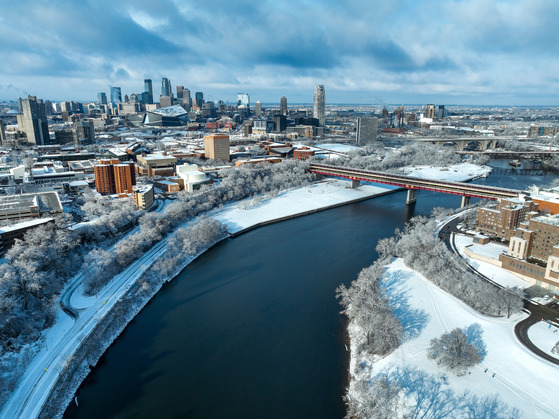 Your Watershed. Our Work. This Year in Numbers and Stories.
A Year of Connection, Intention, and Strategic Direction
In 2025, MWMO leaned into a simple idea: the best outcomes come from connection, intention, and paying attention.
This year, our work focused on helping people build relationships with the Mississippi River, investing in studies that guide smarter projects, expanding how we monitor the watershed as a living system, and bringing that work together in large-scale, long-term investments like Upper Harbor Terminal. Across all of it, the goal was the same: to do impactful work in ways that last.
This Watershed Wrapped edition brings together the key numbers, stories, and lessons from 2025, highlighting how thoughtful planning, hands-on experiences, and strategic thinking are shaping a healthier watershed for years to come.
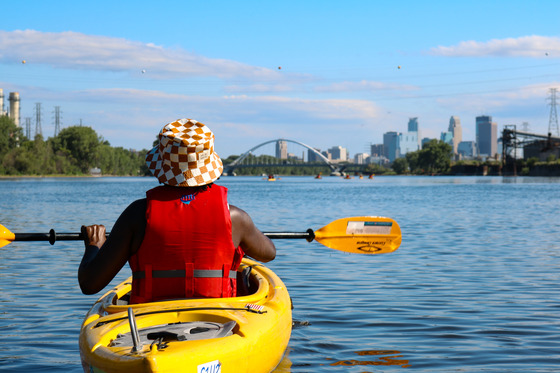 Connecting communities to the river through positive, hands-on experiences.
Key Stat
In the summer of 2025, the MWMO hosted 15 Meet the Mississippi events, creating opportunities for community members to experience the river up close.
Spotlight Story
For many people, the Mississippi River is something you cross on your way somewhere else — a landmark, a backdrop, or sometimes just an obstacle to drive around. Meet the Mississippi is about changing that relationship.
In 2025, MWMO worked with community partners to offer fishing, birding, and kayaking experiences to groups who might not otherwise have access to the river in these ways. Through hands-on outings led in collaboration with Baztec, Inc., Dudley Edmondson, and Paddle Bridge, participants spent time on the river building familiarity, confidence, and curiosity.
The Meet the Mississippi campaign began in 2021 after hearing a consistent message from community members: the river didn’t feel like something they were connected to or responsible for. We knew that caring for the river starts with knowing it. So, we focused on creating positive, welcoming experiences that help people see the Mississippi not as a barrier, but as a neighbor and a place they belong.
By helping people meet the river where they are — literally and figuratively — these experiences lay the groundwork for long-term stewardship, stronger community connections, and a healthier watershed for everyone.
What We Learned
People protect what they feel connected to, and connection often starts with a paddle, a fishing line, or a moment of quiet observation along the water.
 2025 was the year our studies led the way.
Key Stat
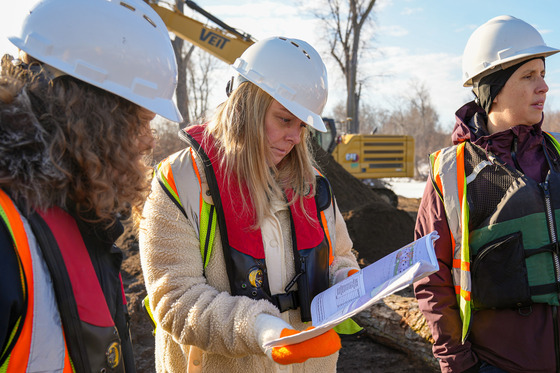
In 2025, more than half of MWMO’s active project work focused on planning and feasibility studies, laying the groundwork for future projects aligned with our strategic priorities.
Spotlight Story
In 2025, MWMO placed an intentional emphasis on planning and feasibility studies to make sure future projects are impactful, equitable, and built to last. These studies help answer a deceptively simple question: What’s the best way to improve water quality, habitat, and provide community benefit at this site — and is it worth doing?
Before a project becomes rain gardens, tree trenches, or underground treatment systems, it starts with data, collaboration, and careful evaluation. Feasibility studies allow us to assess site conditions, explore multiple design options, weigh costs and benefits, and ensure projects align with our long-term strategic goals: riverfront restoration, equity-focused investments in Green Zones, and high-performance stormwater solutions.
And this approach works. In 2025, two projects that began as studies moved into construction:
-
Sylvan Hills Park in Fridley evolved from a feasibility study into a regional stormwater treatment project that will capture and treat runoff from 77 acres, reduce flooding, restore habitat, and transform a neighborhood park into resilient green infrastructure.
-
Bottineau Field Park in Northeast Minneapolis advanced from planning into implementation, adding native habitat, tree trenches, and infiltration basins that improve water quality, supporting pollinators and birds within the Mississippi River Flyway, and serving as a highly visible park within the Minneapolis Northern Green Zone.
By investing time upfront, asking hard questions, testing ideas, and planning collaboratively, MWMO is ensuring that when projects are built, they deliver real, measurable benefits for both communities and the Mississippi River.
What We Learned
Studying strategically doesn’t slow progress; it’s how we make sure progress sticks.
 Understanding our watershed as a living system; not just the flow of water.
Key Stat
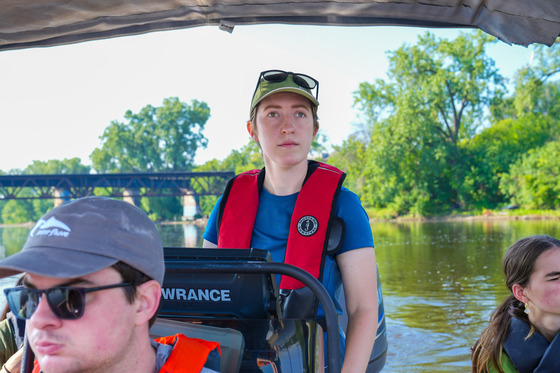
In 2025, MWMO’s monitoring program continued its core work of understanding how water moves and changes throughout the watershed by taking 199 water quality samples in the Mississippi River, 123 samples from stormwater tunnels, and 23 samples of water entering and exiting MWMO-funded projects.
Spotlight Story
When we think about a watershed, it’s easy to picture water moving through pipes, streams, and rivers. But water doesn’t move alone. It interacts with soil, plants, and built systems, shaping what flows into the Mississippi River and influencing the health of habitat downstream.
In 2025, MWMO took a more holistic approach to monitoring by expanding what we measure and where we measure it.
One major addition this year was vegetation monitoring at newly planted as well as established project sites. Staff conducted surveys to document native plant establishment, identify encroaching invasive species, and flag areas where sparse vegetation could lead to erosion. These surveys help us understand how habitat is developing and where adjustments can improve ecological function and user experience.
MWMO also formalized soil health and infiltration testing within the watershed. By measuring soil nutrients, moisture, compaction, and how quickly water moves into the ground, we can spot early warning signs of potential issues, such as poor infiltration or overly compacted soils, before they become flooding or groundwater concerns. New tools, including a soil compaction tester, helped staff identify problem areas that may need attention to keep projects functioning as designed.
At the same time, MWMO maintained its ongoing water monitoring at larger sites across the watershed. At Sullivan Lake, lake-scale monitoring continues to ground restoration planning in real-world conditions, while at Sylvan Hills Park, monitoring during and after construction helps confirm that new stormwater systems perform as intended.
Together, this work reflects how we measure success; not just by what we build, but by how the watershed reacts over time. By looking beyond water alone and paying closer attention to soil, plants, and system behavior, MWMO is getting better at caring for the watershed as the complex, living system it is.
What We Learned
Water tells a better story when you listen to what the soil and plants are saying, too. Watersheds work as connected systems, and water never works alone.
 All of this work comes together most clearly at places where scale, planning, and performance intersect.
Key Stat
433,000 gallons of stormwater storage installed in 2025, enough to fill 33 school buses.
Spotlight Story
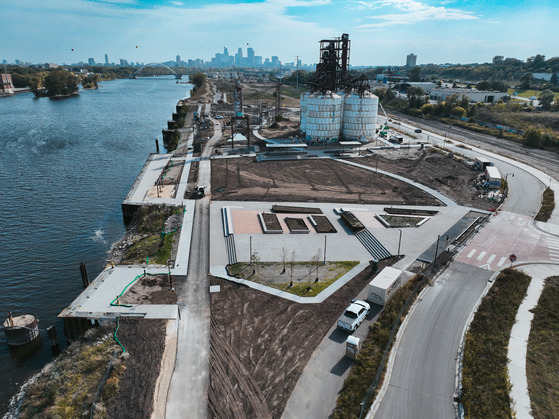
In 2025, MWMO reached a major milestone at Upper Harbor Terminal with the installation of two underground stormwater reuse tanks designed to support future ephemeral streams and restored habitat across the site. Rather than sending treated stormwater back to the river immediately, this system allows water to be stored and reused to sustain flow during dry periods, a critical function as climate patterns shift toward more intense rainfall followed by longer dry spells.
In addition to this behind-the-scenes infrastructure, more than 200 trees and shrubs were planted along the shoreline, advancing habitat restoration and preparing the site for future phases of park and riverfront development in partnership with the Minneapolis Park and Recreation Board.
Upper Harbor shows what’s possible when long-term planning, innovative infrastructure, and collaboration come together at scale.
What We Learned
Big projects take time, and when the pieces come together, they create systems that work quietly but powerfully for decades.
Here’s a glimpse at what’s coming in 2026.
 Sacred Water Shared Future
In 2026, Sacred Water Shared Future will launch a year-long, region-wide campaign inviting people to connect with the Mississippi River and imagine its future. Marking 100 years of collective action to restore the river, the campaign asks a simple, powerful question: What do we want the next 100 years to look like?
Through art, storytelling, education, and community-led events, Sacred Water Shared Future offers many ways to connect with the river and be part of a shared commitment to its care. Because the future of the Mississippi isn’t just history; it’s something we’re shaping together.
MWMO River of Ideas Podcast Returns
In early 2026, MWMO’s River of Ideas podcast is coming back with new episodes, new conversations, and plenty of questions worth asking. From greener cities and cleaner water to the science, planning, and people behind them, the podcast explores how ideas turn into action across our watershed.
Have a topic you’re curious about or a guest we should talk to? Send your ideas to contacts@mwmo.org, because the best conversations usually start with a good question.
|
Mill Race Environmental Investigation
In 2026, MWMO will continue partnering with Owámniyomni Okhódayapi on an environmental investigation of the mill race near Owamniyomni. This work focuses on understanding how stormwater moves through the site and how future stormwater management can support the diverse habitat, cultural meaning, and community uses envisioned in the broader restoration plan.
It’s careful, behind-the-scenes work, but it plays an essential role in reimagining this iconic stretch of the river as a place where history, ecology, and people can come together again.
Upcoming Events
Winter Salt Week
📅 January 26–30, 2026
Winter Salt Week is a cross-border collaboration of organizations across the U.S. and Canada working to raise awareness about salt pollution and practical ways to reduce it. MWMO will be sharing resources and ideas for smarter winter maintenance throughout the week.
To wrap things up, join us on January 31 from 10 a.m.–1 p.m. for Salts & Sweets at MWMO to learn about smart salting and salt’s impact on water quality through an educational exhibit and conversations with staff. Limited Salt Smart mugs and traction grit will be available while supplies last.
Doors Open Minneapolis
📅 May 9–10, 2026
MWMO is excited to participate in Doors Open Minneapolis once again, welcoming visitors to the Stormwater Park and Learning Center for a behind-the-scenes look at how green infrastructure, public art, and innovative design work together to protect the Mississippi River. Stop by to explore our living laboratory, meet staff, and see how stormwater management shows up in the real world.
Share the River
📅 June 2026
After a brief hiatus, Share the River is coming back to MWMO. This free, guided paddling event offers one of the easiest and most welcoming ways to experience the Mississippi River — no experience, equipment, or cost required. It’s about getting on the water, building confidence, and sharing a joyful moment on the river.
New Workshop Series
📅 Spring–Winter 2026
Building on past Art & Science on the River workshops, MWMO will launch a new six-part workshop series that invites participants to engage with the Mississippi River through art and storytelling grounded in science. Each session will blend learning, creativity, and conversation, offering new ways to connect with the river and each other.
Photo of the Month
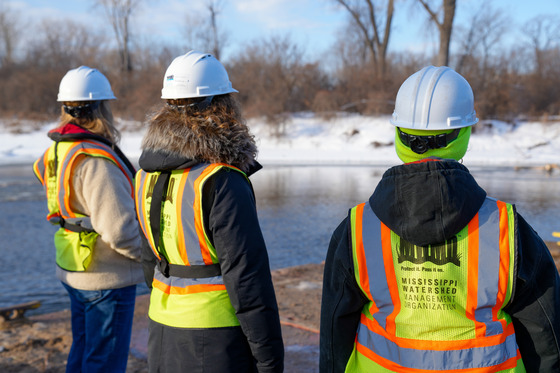 Sometimes watershed work means getting invited to see something really cool. This month, MWMO staff toured the Minneapolis Park and Recreation Board's Olson’s Island stabilization project led by Inter-Fluve. This innovative effort is restoring habitat where a historic heron rookery once stood. It was exciting to see this work up close and imagine how it extends and complements the habitat restoration at Ole Olson Park.
|