|
NEWSLETTER / AUGUST 2025
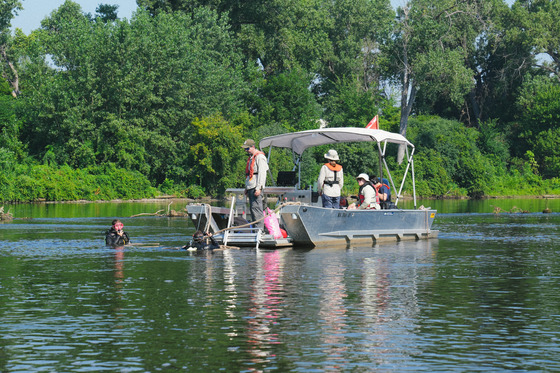 On August 13, MWMO joined staff from the Minneapolis Park and Recreation Board to watch a team of divers from the Minnesota DNR slip into the shallows around Olson Island with an unusual mission: move the mussels. Olson is about to undergo major restoration, and the freshwater mussels that call it home needed a safe place to wait it out. These mussels act as the river’s natural water filters, and rather than being whisked away to tanks where they’d lose the constant water flow they rely on, they’ll stay in the Mississippi itself, relocated just upstream until the island is ready to welcome them back in a year or two.
From our boat, and with the help of some very satisfying drone footage, we watched divers use the “turtle method,” gliding slowly along the riverbed while their air tanks bobbed like tiny buoys above them. They filled mesh bags with mussels, carefully sorting and safeguarding the living specimens while returning fragments of old shells to the water. By the end of the day, the team had counted 14 different species. That’s a lot of biodiversity in one small patch of river. It matters because mussels aren’t just passive passengers; each one can filter several gallons of water a day, removing algae, bacteria, and other debris. Their shells also lock into the sediment, keeping the riverbed steady when floods try to wash it away.
It may look like a slow-motion game of underwater Easter egg hunting, but mussel relocation is all about resilience. Moving them upstream keeps an entire system of natural water filters and riverbed engineers intact — work that benefits fish, plants, and people alike. When the island is ready, the mussels will come back home and slip right back into their role, doing the same quiet, essential job they’ve been mastering for millions of years.
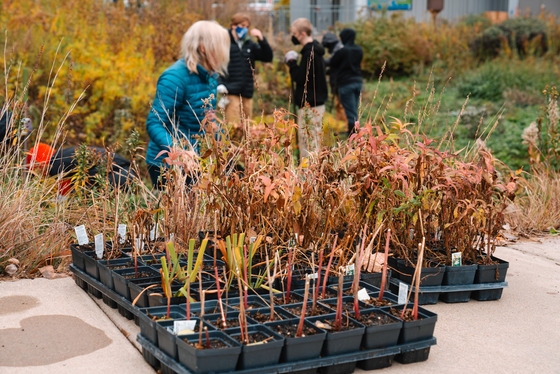 Late summer and early fall might not feel like “gardening season.” The flowers are fading, the leaves are starting to think about turning, and everyone’s brain is already halfway to pumpkin spice. But plants see things differently. In cooler weather and shorter days, they don’t have to spend so much energy on leaves and flowers, so they focus on what really matters: roots. And strong roots now mean healthier, hardier plants come spring. That’s why trees, shrubs, and even clumps of native grasses actually thrive when planted in the fall.
It’s also prime time for grass seed. Between mid-August and mid-September, the temperatures are just right — warm enough for germination but cool enough that weeds start to give up for the season. That gives grass seed a chance to get established without as much competition. If you want the step-by-step science of why this timing works (and how to do it well), the University of Minnesota Extension has a fantastic guide on fall lawn care.
And let’s not forget the pollinators. Bees and butterflies aren’t picky about the season you plant their food sources, but fall gives them a head start. Native grasses, wildflowers, or even an overseeded bee lawn can make your yard both more beautiful and more useful to the tiny creatures that keep our ecosystems running. Check out our short video guide to show how simple it can be to turn your lawn into a pollinator buffet.
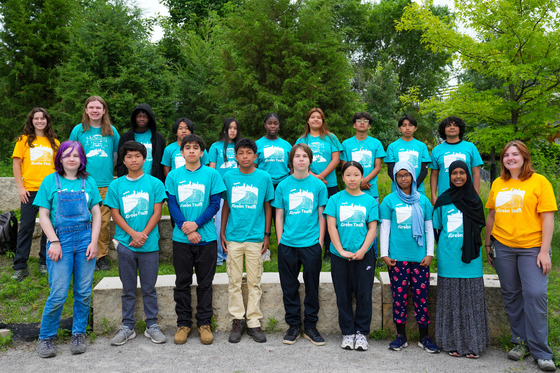 This summer, 16 youth from Minneapolis joined forces as the Mississippi River Green Team — a program co-created by the Minneapolis Park and Recreation Board (MPRB) and the Mississippi Watershed Management Organization (MWMO) that has been connecting young people to environmental careers for 18 years. Their mission? Learn by doing. That meant pulling invasive plants out of parks, caring for green infrastructure, and exploring the science that keeps ecosystems running.
And explore they did. At Cedar Creek, they studied soil research and got up close with macroinvertebrates, tiny critters that tell us a lot about water quality. At the Mississippi River Institute, they learned about how barges navigate the river and even got an up-close look at eagles. A visit to Dodge Nature Center gave them the chance to handle live animals while learning about local wildlife. And through the Empowering Pathways Into Conservation (EPIC) program, team members got an introduction to mussels, the freshwater filter-feeders that quietly keep our waterways healthy.
Of course, none of this would be possible without the people who guided them: supervisors Franny Crego and Alana Christen, Youth and Family Liaison Ruth Murphy, and a whole network of partners including Minnesota DNR, Cedar Creek Research, Urban Roots, National Park Service, MN Valley Team, MNL, and staff from both MPRB and MWMO. Together, they helped create another summer where a group of young people walked away not only with muddy boots, but also with a clearer sense of how they can shape the future of their river and community.
Community Gathering
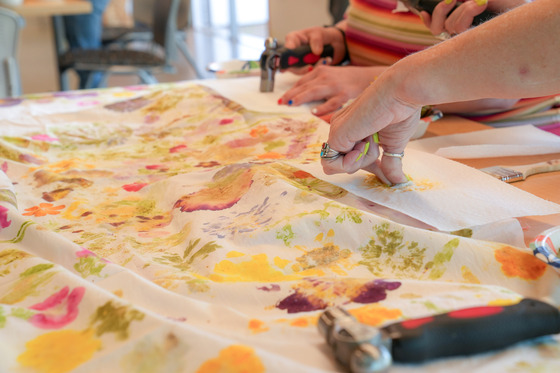 📅 Saturday, September 27, 2025 | 10:00 AM – 1:00 PM
📍 MWMO Stormwater Park and Learning Center
Celebrate the close of the Botanical Impressions exhibit with artist Winna Bernard and fellow community members. Guests are invited to gather around the finished table runner — a communal artwork made from flower-pounded prints created during the workshops.
Enjoy light refreshments, share stories, and reflect on the creative connections sparked by native plants, shared landscapes, and collective making. Whether you pounded a petal or are stopping by for the first time, everyone is welcome. This event is Open House-style so drop in anytime.
While you’re here, explore MWMO’s building and grounds with a self-guided tour. MWMO staff will also be available to answer your questions about pollinators and gardening with native plants.
This event is free, but registration is required.
Blue Thumb Fall Native Plant Sale
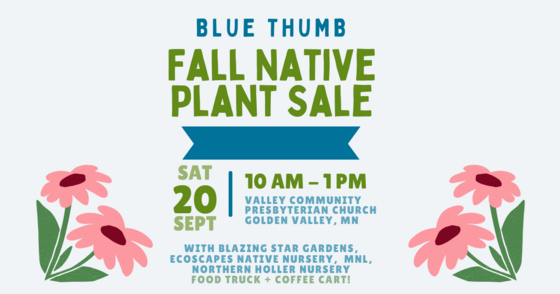 📅 Saturday, September 20, 2025 | 10:00 AM – 1:00 PM
📍 Valley Community Presbyterian Church, Golden Valley, MN
This one-day native plant sale features four local growers and all the resources you need to start or expand your native garden. Whether you’re new to native gardening or a seasoned pro, this event is a great way to stock up on plants and get expert advice. Plus, Blue Thumb will have free garden design templates and planting resources to help you plan your space.
The Mississippi Watershed Management Organization invites eligible applicants to apply for Action, Planning and Community Grants by Friday, December 12, 2025 for projects in the MWMO.
Action Grants are a type of Stewardship Fund Grant designed for projects that are significant in scope and cost. Proposed projects should demonstrate that thorough planning for the proposed project has already taken place. Grants of up to $50,000 are available for implementation of proposed plans.
Planning Grants are a type of Stewardship Fund Grant designed to assist organizations to plan and prepare documentation for a project that will be implemented in the near future. Planning Grants help fund the planning process for detailed projects that help improve water quality through construction, education, outreach, or other creative ways. Grants of up to $20,000 are available for creating plans.
Community Grants are designed to help initiate new projects through direct community engagement and encouraging water and habitat stewardship. Grants of up to $5,000 are available for short-term or small-scale water quality projects.
The MWMO is particularly interested in supporting engagement or physical projects that will reach underserved populations (communities not previously involved in MWMO projects or communities representing marginalized and diverse cultural backgrounds) and projects located in environmentally sensitive areas as defined by the MWMO Watershed Management Plan or the MWMO Board of Commissioners. Projects with existing plans created through a previous MWMO Planning Grant are strongly encouraged to apply.
Matching funds may be required. Visit our website for full details and eligibility requirements.
Stewardship Fund Grants — Friday, December 12, 2025, by 4:30 p.m.
Photo of the Month
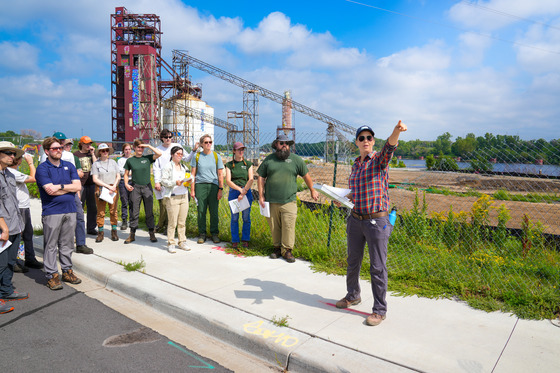 Emily Resseger, MWMO’s Monitoring, Assessment, and Research Program Manager shares insights during a tour of the Upper Harbor Terminal project site.
|