 Help Protect Our Waters by Using Less Salt
A single teaspoon of salt is enough to pollute five gallons of water forever. And Minnesotans are about to spread a whole lot of it on our streets, sidewalks and parking lots this winter.
Unfortunately, much of the salt we use on our roads ends up in waterbodies. In fact, road salt is causing some Twin Cities lakes and streams to become so salty that they might not be able to support native fish and plants within 30 years, according to a recent study.
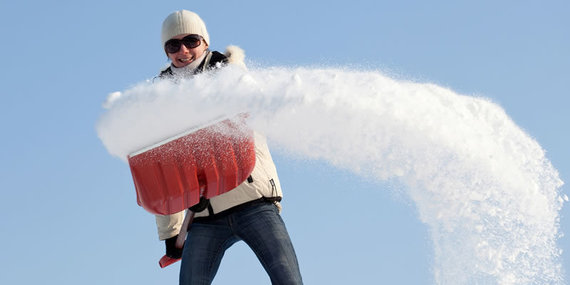
You can help! By removing snow and ice manually and using smart salting techniques, you can do your part to reduce the amount of toxic chemicals polluting our waterways.
|
|
|
Why Salt is Bad
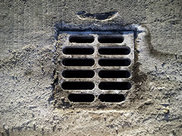 Road salt and deicing chemicals contain chloride, which is toxic to fish and plants. Melting snow and ice carry these chemicals into stormsewers, which lead directly to rivers, lakes and wetlands. Once there, the chloride is nearly impossible to remove from these waterbodies.
There is no such thing as an environmentally friendly salt or deicer. No matter what the label on a snow-melt product says, all salt and deicing chemicals are harmful to aquatic plants and wildlife. Avoid using them whenever possible. (Photo: MPCA)
|
Use Less Salt by Shoveling More
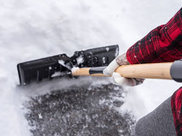 Shovel early and often during a snowstorm so that the snow doesn’t have time to become compacted and/or turn to ice. The more snow you remove by shoveling or snow-blowing, the less ice you’ll have to deal with later.
Don’t limit yourself to just one snow-removal tool. Your local hardware store is likely to carry a variety of push shovels, scoop shovels, ice chisels and ice scrapers. There are many types of snow, slush and ice, so having a couple of different tools on hand never hurts.
|
Salt or Sand? How to Choose
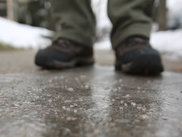 Salt and deicers only work in certain temperature ranges. Traditional road salt (sodium chloride) doesn’t work below 15 degrees F. Other products have different melting temperatures (see our comparison chart). Always check the temperature and read the label on your deicer product carefully to make sure it will work under the relevant weather conditions.
Use sand when it’s too cold for salt to work. Sprinkle just enough to provide traction on walkways. Sweep up any excess after the ice melts so that it doesn’t get carried into stormdrains. (Photo: Clean Water MN)
|
When to Use Salt
 If you must apply salt or deicer, do it after the storm is finished. Clear off any loose and/or compacted snow first. Apply the product on ice only; do not apply it on dry pavement.
Temperatures often drop after a snowstorm, so double-check the label on your salt or deicer product to make sure it will work before you apply it. (Photo: Clean Water MN)
|
How Much Salt to Use
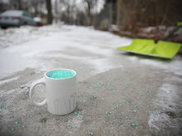 To reduce waste and maximize effectiveness, scatter your salt or deicer so that there is about three inches of space between the salt granules. For $10–$20, a hand spreader can make the job easier and more accurate.
More salt does not equal faster melting — just more pollution and wasted money. Scatter your salt or deicer sparingly, and only in critical areas. (Photo: Scott Andre)
|
Sweep Up Leftover Salt and Sand
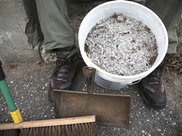 When you see salt or sand on dry pavement, sweep it up. It's not doing anybody any good once the ice is gone. You can put it in the garbage, or save it and reuse it later.
Salt and sand left on hard surfaces will eventually end up getting washed into stormsewers and out into rivers, lakes and wetlands. (Photo: Clean Water MN)
|
Printable Resources
“Fight Snow and Ice, Pollution Free” Brochure (PDF)
“Pledge to be Salt Smart” Poster (PDF)
“Salt Smart Pledge” Quarter-Sheet Handout (PDF)
|
|
|