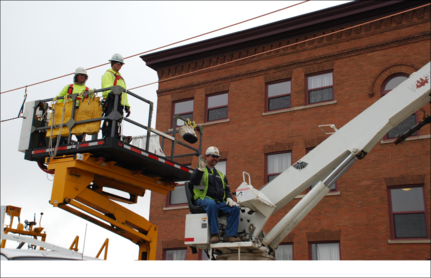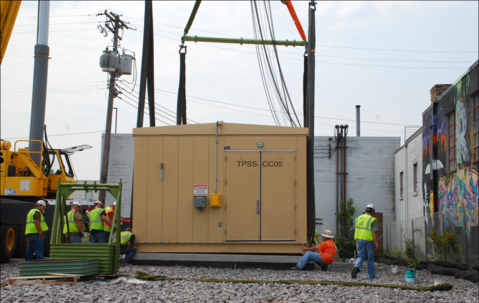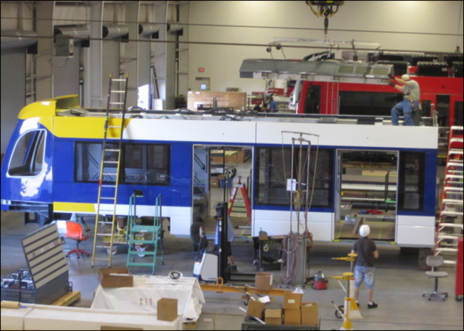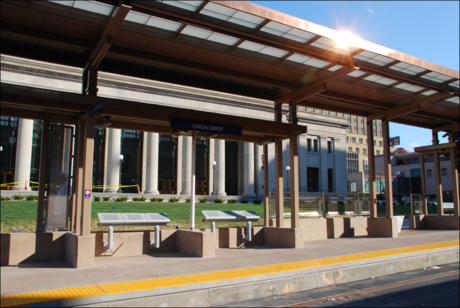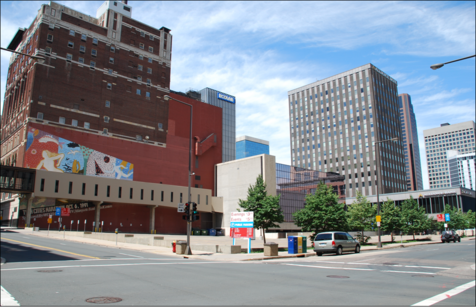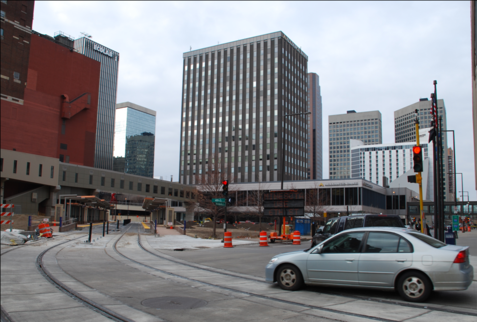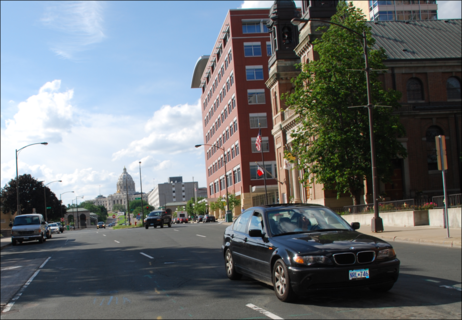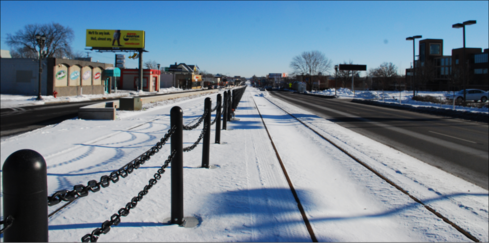
...but this work remains before mid-2014 start. Here’s a look
1. Installation of wires to power trains and ...
2. ...substations to convert Xcel power for train use
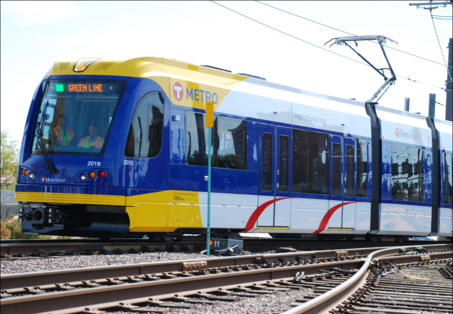
3. Assembly, delivery of LRVs and ....
4. ....testing, safety certification of LRVs
Busiest year of Central Corridor heavy construction ends
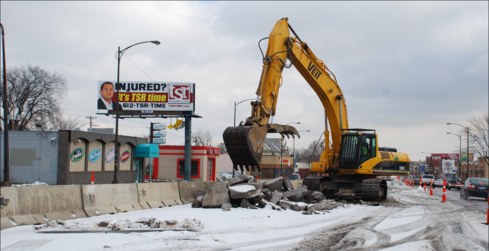
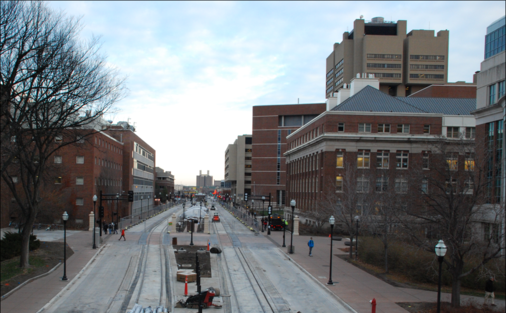
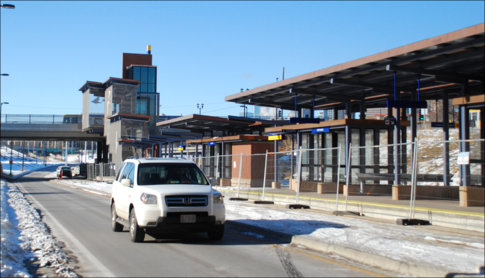
All roads and sidewalks over 10 miles are completed, 10 miles of double track are installed and all 18 station structures are built. With over 84 percent of the construction complete overall at the end of 2012, the project is on schedule to open for service in mid-2014.
Still, the systems work is only 49 percent complete and the operations and maintenance facility is 76 percent complete. The $957 million project continues to remain within budget.
“It looks like a light rail line now, and people are asking when trains will begin service,” said Mark Fuhrmann, program director of New Starts rail projects. “While the hard part is over, much work, including electrification of the system, completion of the operations and maintenance facility and testing of the light rail vehicles, remains to be done in 2013 before trains can begin carrying passengers some time in 2014. We need to await patiently the outcome of those LRV and system tests, which will begin in late 2013 and if all goes well, service can begin in mid-2014.
The following work will continue over the winter:
Construction inside the operations and maintenance facility
Electrical work at the 18 stations
Installation of catenary poles for the overhead wires along the alignment
Expect intermittent lane closures in 2013 as crews finish:
Installing miles and miles of overhead electrical wires
Installing the traction power substations that will convert the alternating current from Xcel Energy’s lines to the direct current that can be used by light rail vehicles
Installing signal bungalows holding the signaling and communications systems
Completing the expanded Rail Control Center
Building the operations and maintenance facility
Installing station art
Assembling, delivering and testing the remaining 45 light rail vehicles. Two have been delivered.
Punch list items
Show-and-tell
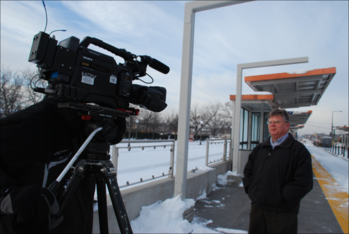
City of St. Paul video producer Nick Nelson (left), aka Mr. Saint Paul Video, interviews Dan Soler, assistant project director for design and construction, about the end of heavy construction and what needs to happen in 2013 before the line opens in 2014. Here is a link to the video:
OntheGreenLine.com directory lists businesses by zone, type
Bakers, bankers and barbers. If you need one along the Central Corridor LRT line, there is a guide now for finding them and other businesses.
An online business directory is the latest product of the $1.2 million “On the Green Line” marketing campaign started this summer by the Metropolitan Council.
The campaign, which has featured billboard and bus side ads, will continue throughout 2013 featuring the unique and diverse mix of businesses and restaurants.
More than $1.2 billion in development occurring along Central Corridor
The Green Line moniker is proving apt, with more than $1.2 billion in development occurring along the Central Corridor LRT line even before trains begin carrying passengers sometime in 2014.
“The LRT project that provided 4,455 construction jobs will create construction jobs in development for years to come,” Metropolitan Council chair Sue Haigh said.
Eighteen residential and commercial/retail developments worth more than $275 million began construction or entered the planning stage in 2012 along the line, according to planning and economic development figures from St. Paul and Minneapolis and those projects’ reported value. Those 18 projects will have nearly 2,300 housing units and more than 109,000 square feet of commercial/retail space. This is in addition to the nearly 40 developments worth more than $944 million with 5,100 housing units and 712,000 square feet that opened, were under construction or in the planning stage in 2011 along the Central Corridor.
Eight projects began construction or entered the planning stage this year in St. Paul, while 10 projects began construction or entered the planning stage this year in Minneapolis.
For details on those 18 developments, see Dec. 21 news release:
Recognizing the importance of spurring growth along transitways, the Met Council recently awarded Transit-Oriented Development grants to promote job growth, housing and economic development along corridors and help connect jobs, housing and transit. Many were for developments along the Central Corridor LRT line.
Hearings set for Jan. 10 to take public testimony on business impacts
Two public hearings will be held Jan. 10, 2013, to take testimony on the Supplemental Draft Environmental Impact Statement (EIS) reviewing construction-related potential impacts on business revenues along the Central Corridor LRT.
The meetings are scheduled for 8 a.m. at Model Cities, 849 University Ave. W., in St. Paul and at 6 p.m. at Goodwill/Easter Seals, 553 Fairview Ave. N., in St. Paul. Met Council members, Central Corridor LRT Project office staff and Federal Transit Administration staff will attend. Individuals’ comments will be recorded so their testimony can become part of the record.
The Supplemental Draft EIS is posted on the Central Corridor LRT Project website. The direct link to the Supplemental Draft EIS page is:
More than 1,700 meetings held with public during engineering phase
Hmong dental clinic waiting room, Asian grocery, churches among sites
Most of the 1,765 Central Corridor LRT Project meetings with the public from 2006 through 2009 during the engineering phase when public feedback could influence the design occurred in the community, not at Metropolitan Council headquarters or the Central Corridor Project Office.
Many more meetings in community settings and door-to-door contact occurred once construction began.
Most of the meetings during the engineering phased were held in the early morning before businesses opened to accommodate business owners and evenings and weekends to give the public a chance to attend after work. They ranged from big public meetings to one-to-one meetings with business owners and individuals.
Monthly Community Advisory Committee meetings were held weekday evenings mid-corridor in the Goodwill/Easter Seals building at Fairview and University avenues and the Business Advisory Council meetings were held early weekday mornings in the Court International Building near Highway 280 and University Avenue. Both are on Metro Transit bus lines, have off-street parking and are accessible for people with disabilities.
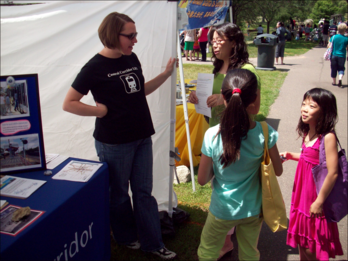
Outreach staffers, such as Dana Happel (left), attended many fairs and festivals, including Dragon Fest, on weekends and evenings to meet people who normally couldn’t take the time to attend weekday meetings and to ensure outreach reached a diverse audience. During the week, staff held presentations at local businesses and community centers and met owners at their businesses to learn their access needs before construction began.
Before/after construction - downtown St. Paul
Union Depot Station
Before
After
Central Station
Before
After
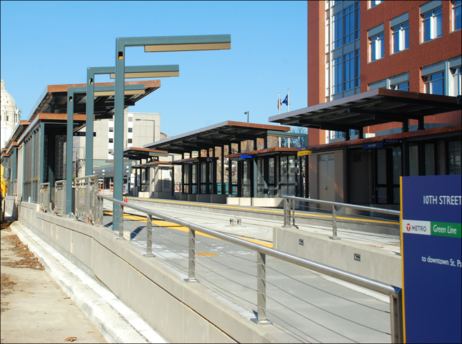
Tenth Street Station
Before
After
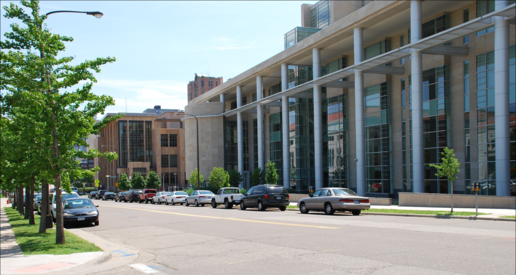
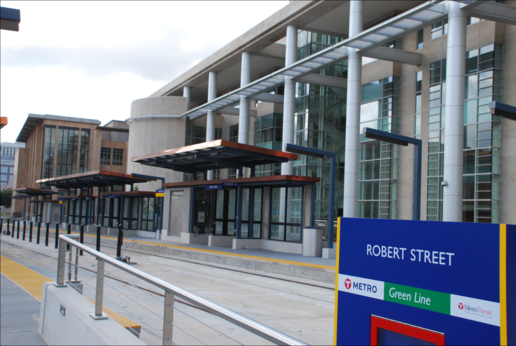
Before/after construction - Robert Street Station
Before
After
University Ave. - First day of 2012 construction
Photo was taken on March 1, 2012,on the first day of 2012 construction on University Avenue.
Photo shows the same location on University between Griggs and Dunlap streets after heavy construction ended in late 2012.
Before/after construction - University Avenue
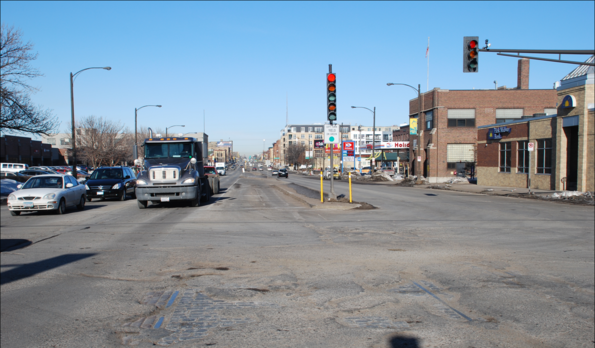
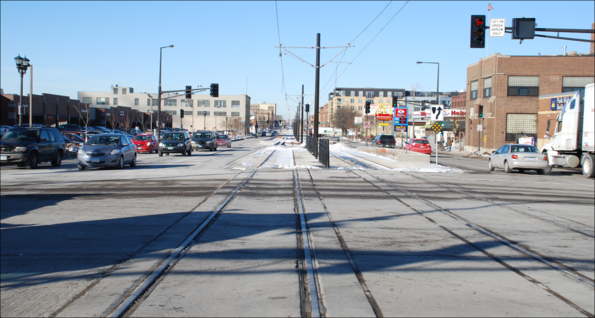
Everything old is new again
University Avenue at Vandalia Street was so worn before construction began that the old streetcar rails and pavers were visible in the foreground of the top photo taken in early 2011. In the bottom photo taken in late 2012, the double tracks for light rail transit and new roadway are completed at the same intersection.
Before/after construction - Prospect Park/Stadium Village
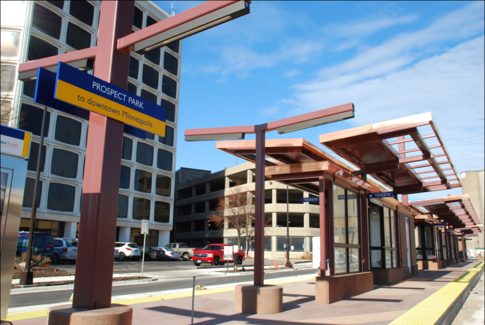
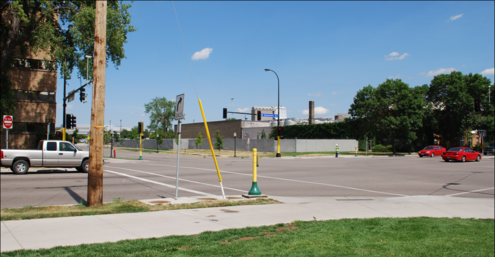
Prospect Park Station
Before
After
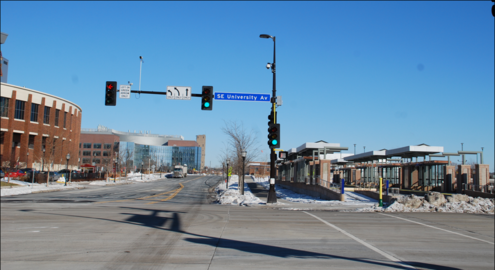
Stadium Village Station
Before
After
Huron Boulevard - University Avenue intersection
Before
After
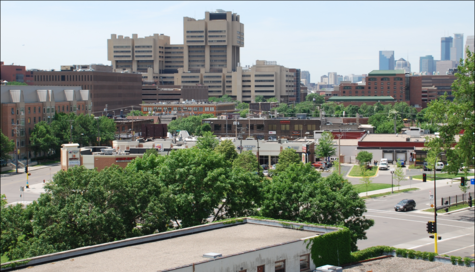
Before/after construction - East Bank
East Bank Station
Before
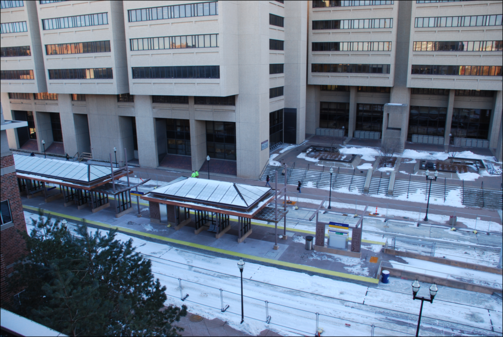
East Bank Station location before construction began (above) and East Bank Station(below) in December 2012 after all 18 stations were structurally complete.
After
Washington Avenue
Before
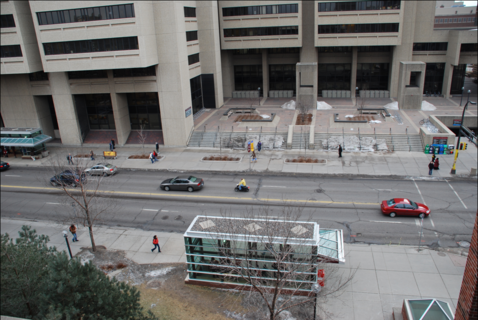
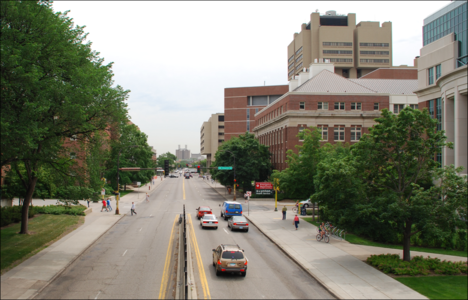
Washington Avenue as seen from the easternmost pedestrian bridge looking east before construction (above) and after heavy construction (below).
After
Before/after construction - West Bank Station
West Bank Station
Before
After
Construction updates — Weekly construction updates have ceased with the end of heavy construction. Updates will be issued monthly or as often as warranted in 2013. To receive updates, enter your email address in the gray Stay Connected box at the top left of thewww.centralcorridor.org homepage. The public also can sign up to receive Making Tracks, the project newsletter.
For general questions or comments- Call 651-602-1645 or email
centralcorridor@metc.state.mn.us
About the project:
The Central Corridor Light Rail Transit Project will link downtown St. Paul and downtown Minneapolis along Washington and University avenues via the state Capitol and the University of Minnesota. Construction began in late summer 2010 on the planned 11-mile Central Corridor line, and service will begin in 2014. The line will connect with the Hiawatha LRT line at the Metrodome station in Minneapolis and the Northstar commuter rail line at the Target Field Station. The Metropolitan Council will be the grantee of federal funds. The regional government agency is charged with building the line in partnership with the Minnesota Department of Transportation. The Central Corridor Management Committee, which includes commissioners from Ramsey and Hennepin counties, the mayors of St. Paul and Minneapolis and the University of Minnesota, provides advice and oversight. Funding is provided by the Federal Transit Administration, Counties Transit Improvement Board, state of Minnesota, Ramsey and Hennepin counties' regional railroad authorities, city of St. Paul, Metropolitan Council and the Central Corridor Funders' Collaborative.. The Central Corridor LRT Project Website is www.centralcorridor.org.