Metro Update: Livable Communities grants, sewer clog task force, and more

Having trouble viewing this email? View it as a Web page.

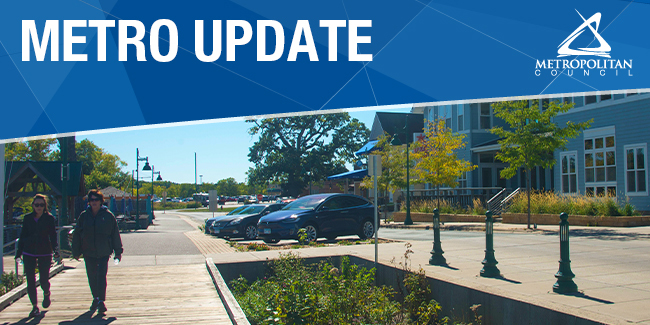
Metro Update banner photo: Women walking on trail near Boatwork Commons mixed-use development in White Bear Lake.

Quick Links 

Meeting Video Archive
Data & Maps
METRO Green Line Extension Update
Job Opportunities
Contact Us 


Livable Communities Act supports local solutions

Charlie Zelle

In the 27 years since it was signed into law, the Met Council has given more than 1,200 Livable Communities Act grants, investing more than $450 million in our region. That seed money has helped leverage billions in private and other public investments. Over the years, we’ve seen that the Livable Communities Act is helping communities be laboratories for our region’s success.


Gold Line ceremony set for Oct. 19

Metro Transit will host a ceremonial groundbreaking for the METRO Gold Line, our first bus rapid transit project to operate primarily in bus-only lanes. The service, expected to open in 2025, will operate between Saint Paul and Woodbury. The public is welcome at the event, set for 10 a.m. on Wednesday, Oct. 19 in the parking lot outside the Gold Line's construction office at 6063 Hudson Road. 


More news & events


metrocouncil.org

Sept. 28 | 2022


Grants support equity and innovation

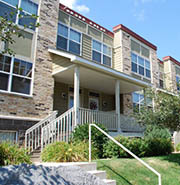
Apartments in Minneapolis

The Metropolitan Council recently approved six Livable Communities grants that will fund feasibility studies, site planning, and community engagement work as well as policy development in five cities. These grants are small relative to other Livable Communities funding, but help to ensure that adequate study, evaluation, and community involvement go into making developments as successful as possible. Read about the projects we funded.


Metro Transit introduces microtransit service in North Minneapolis

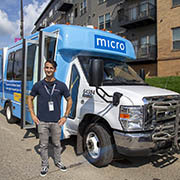
Micro bus and driver

Residents in North Minneapolis can now catch a ride when and where they need it using Metro Transit micro, the first public on-demand ridesharing service in the City of Minneapolis. The service will give more people opportunities to travel without relying on a personal vehicle, and improves access to the existing transit network. Learn more about Metro Transit micro.


Task force to explore education campaign about what shouldn't go down the drain

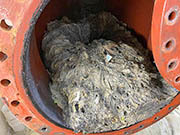
Dried clog of papers and grease in sewer pipe

Fats, oils, grease, and rags (paper towels, disposable wipes, tissues, napkins, and other textiles) that are washed or flushed down the drain disrupt the flow of wastewater through the sanitary sewer system. This disruption leads to costly maintenance and equipment repairs for cities and the Met Council’s Environmental Services division. We will be forming a task force to find solutions and educate the public about this problem.


METRO D Line moves toward service launch in December

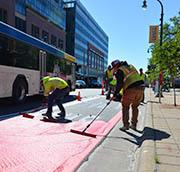
Workers paint new bus lane on Chicago Avenue

Following the success of bus-only lanes in downtown and uptown, the METRO D Line will also receive the red-carpet treatment from 28th Street to Lake Street along Chicago Avenue. This 24/7 bus lane will help provide reliable service on one of the most highly traveled corridors in the metro, which carried about 15,000 passengers each weekday pre-pandemic. The 18-mile BRT line will substantially replace Route 5 and connect Brooklyn Center, Minneapolis, Richfield, and Bloomington. The D Line opens on December 3, 2022.


Tree canopy tool wins planning award

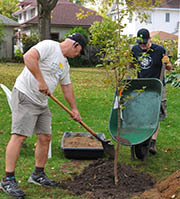
Two men plant a tree in a Saint Paul Frogtown neighborhood lawn.

The Met Council's Growing Shade tree canopy enhancement and preservation tool netted an Innovation in Planning Award from the Minnesota Chapter of the American Planning Association this month. The tool helps planners, foresters, advocacy and neighborhood groups, and regular people make decisions about where and how to preserve and enhance tree canopy. We developed the tool in partnership with the Nature Conservancy and Tree Trust. Growing Shade was also featured in a recent Star Tribune story about how planting frees fights racial inequity and climate change in Twin Cities' poorest neighborhoods.