A thought for the day…
The journey matters as much as the goal.
– Kalpana Chawla (1962–2003) Indian-born American Astronaut

IN THIS ISSUE
Guest Notes from Cyrenthia Jordan
Director, Office of Equal Opportunity
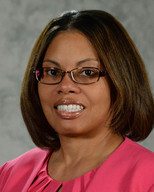
With everything that 2020 dealt us, one thing that it brought front and center is the issue of equity, especially racial equity. From the pandemic response to police brutality to voting to education to livable wages, racial equity has moved from urgent to critical for many of us, and we are striving for ways to have a meaningful impact on outcomes. Changing our individual behaviors or changing entire systems, none of it is easy and it takes active commitment.
At the Met Council, we’re creating opportunities for our employees to build their awareness and learn the skills necessary so we can do our part as an organization and as community members.
This last year, we kicked off a three-year training program focused on equity that is being rolled out in phases and cohorts across the organization. With help from a number of staff across the organization, this program is years in the making. We’ve known we have work to do at the Met Council to reduce racial disparities and eliminate barriers – we know racial equity is a huge problem for our state, too – and we’re thinking about what it means to serve our whole region, from our customers to our neighbors, how we can transform our systems, and how we’re going to make it all sustainable.
Our goal is for equity to become intuitive at the Met Council in every endeavor – every policy, service, program, and interaction with our region – so it is not seen as an add-on and isn’t only thought about after we’ve developed the program. The individuals at the table must have the experience and tools to embed equity from the beginning at the initial planning discussions. We must be intentional about recognizing who is benefitting, who is detrimentally impacted, and what voices need to be brought in to speak to their future.
Our policymakers and leaders at the Met Council were the first groups to start their equity trainings, and they have helped us establish a strategic plan and statements of commitment around equity throughout the organization. Our leaders are aligning our work to engage in collective effort that is impactful. Now, we are focusing on how to implement these initiatives and how we influence them through direct staff connection. That’s why we’re starting with intercultural competence and then baseline racial equity training, focusing our training on the individual level, beginning with our own understanding and our own awareness, and tying it to the larger concepts of equity.
This is not a one-size-fits-all approach. We have outlined objectives for our organization, but what it looks like will be specific to our departments and divisions so we can incorporate equity into our own work and understand how it takes shape in our day-to-day operations as well as our long-term planning.
All training moved to a virtual format last year, and we are delivering the training in phases to maximize learning and opportunities to put the information presented into use. One part of our equity training program is the 2021 Leadership Forum training for managers and supervisors, which is currently underway. Managers and supervisors are participating in two preparatory learning sessions on intercultural competence and intercultural conflict styles, and the main conference will occur this spring and will include trainings on racial equity, anti-racism, and inclusion.
But the Leadership Forum is just one of our opportunities for learning; unconscious bias training launched yesterday, Feb. 22, for all employees. Read more about this training from Human Resources Director Marcy Syman in last week’s HR Connect newsletter.
We want you, our employees, to engage in this work personally and feel ownership of your work and your own knowledge and awareness of equity and the impact of racial disparities. Similarly, the programming for employees is being implemented in phases and conducted in different formats, including discussions, self-paced learning, and workshops. We know there has been continued confusion around the definition and effects of equity, and we know all of us are coming from a place of good intent, but there is often some hesitation around not wanting to get it wrong. We expect that by providing these trainings through different methods and with time between, you will have the opportunity to try out what you’re learning, to strengthen that muscle and build your confidence so we can create positive, lasting change.
Even this three-year program is a work in progress. This kind of work is ongoing, and we won’t check the box and move on. We will only be successful when equity becomes embedded in the fabric of our organization, impacting how we connect with each other and how we plan, develop, and operate our services for the region.
|
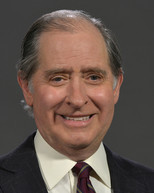
I have served as chair of the Metropolitan Council for one year now – a year of change, a year of civil unrest, a year of pandemic response, a year of renewed commitment to supporting and investing in our communities, a year of partnership, a year of flexibility, and a year of growth.
As I came on board, we announced a renewed focus on transit safety that elevated two important outcomes. The first is freeing up our Metro Transit police to address more serious safety issues on our system rather than focusing on fare enforcement. The second involves additional improvements to the experience for our riders, who all deserve a safe ride wherever they’re traveling.
This proposal would require the legislature to authorize the Council to create an alternative enforcement process for fare evasion. Currently, fare evasion is classified as a misdemeanor, and carries a $180 fine. Citations must be issued by a sworn law enforcement officer and handled by the courts. With authorization from the legislature, we would have the ability to create a fare enforcement program using staff who are not police officers to inspect fares and process citations internally.
We are bringing forward this proposal again this year, and we’re hopeful the legislature will agree this is an important way to make the penalties fairer and support broader safety and customer service on our system.
Read the full column from Zelle on MetroCouncil.org.
|
The Met Council continues its work to learn more about COVID-19 infection rates and trends from clues found in – of all places – wastewater.
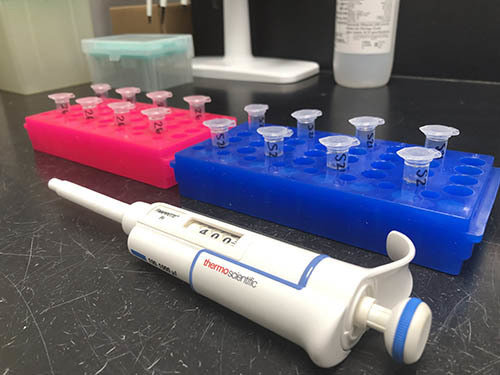
The Met Council’s Environmental Services division collects and treats wastewater for the metro area. Scientists there say the research they’re doing with colleagues at the University of Minnesota Genomics Center (UMGC) could help predict COVID-19 outbreaks in the metro area even before testing can identify positive cases.
This could become one more tool to help public health officials make informed policy decisions to reduce and prevent future spread.
“The water entering a wastewater treatment plant contains information we can piece together to help assess the health of the population the plant serves,” said Steve Balogh, a Met Council principal research scientist.
“By studying the contents of wastewater, we get an indication of the prevalence of the disease and how it is trending over time.”
|
Remnants of SARS-CoV-2 genetic material are extracted from wastewater
In response to the pandemic, Environmental Services research and development staff repurposed a lab at the large Metropolitan Wastewater Treatment Plant in Saint Paul. There, they quickly learned to extract the genetic material of the virus that causes COVID-19 from untreated wastewater samples. This extracted material is not the active virus itself; rather it is a remnant of the SARS-CoV-2 viral particles that COVID-19 patients release into wastewater through their bodily wastes.
“The material we collect is the single-stranded RNA (ribonucleic acid) that the virus uses to reproduce inside infected cells. If you’re infected with COVID-19, the viral particles attach to your cells, get inside them, and use the RNA to reproduce and spread the virus,” Balogh said.
“We extract the RNA from wastewater, transferring it to clean water, and immediately freeze the samples in small vials at minus 112 degrees Fahrenheit. Then we deliver the vials to the UMGC for analysis to quantify traces of the SARS-CoV-2 virus using advanced analytical instruments. The amount of viral RNA we observe is a measure of the prevalence of COVID-19 in our service area,” said Balogh.
Read the full story on MetroCouncil.org.
In memoriam
His leadership pointed the Met Council down path toward making an impact
The Met Council’s first executive director, Robert Jorvig, who died recently at age 99, was a renaissance man of urban affairs.
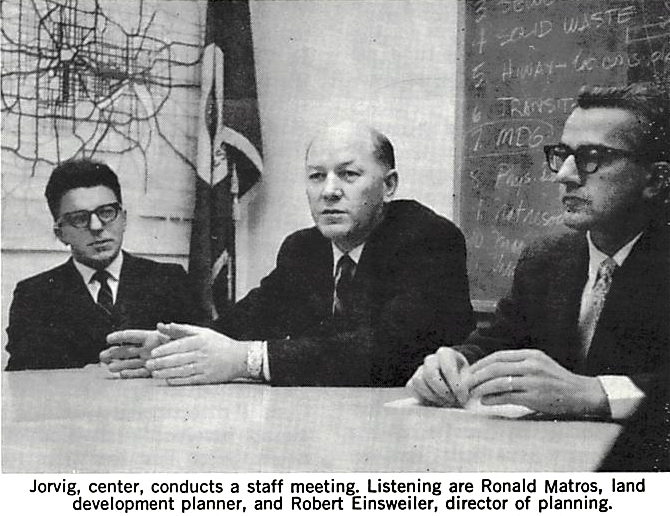
He was a city planner with degrees from the University of Minnesota and Harvard, and directly involved in leading central-city urban renewal. He was a director of both the Saint Paul and Minneapolis housing and redevelopment authorities, a perceptive manager of intergovernmental relations, and the administrator of a nascent but growing seven-county regional agency – the Met Council itself.
After the Legislature created the Met Council in 1967, Jorvig was tasked with the work of growing the agency, initially from a couple dozen employees, to one that could tackle pressing regional issues. He emphasized that the Met Council needed to show “visible results.”
The challenges included working with local governments on coordinating regional growth, financing of the area’s sewer system, and managing a stream of local government requests for federal grants.
Met Council Chair Charlie Zelle told the StarTribune that Jorvig "left his indelible mark on the agency in its formative early years."
Zelle said, "To this day, the Council remains focused on priorities he set of efficiency, public engagement and results. Bob recognized the role of sound planning in the development of a growing competitive regional, a goal he pursued and led with enthusiasm, devotion, and a steady hand."
Principal Communications Specialist Leigh Homstad said Jorvig was as approachable as an old friend. “Bob Jorvig was tremendously capable, a steady leader with a low-key sense of humor. He was nice but not demonstrative – his parents were second-generation Norwegian, after all," Homstad said. "I considered him one of those Twin Cities leaders with incredible experience, knowledge, and judgment who, when you meet them, come across as a neighbor next door.”
Former Met Council staff had similar memories.
Steve Dornfeld, a former newspaper reporter at the time Jorvig served and a former Met Council communications director (2003–2011), recalled that Jorvig joined the organization as “an experienced public administrator and provided steady, low-key professional leadership for the fledgling agency.”
Former Met Council Planning Analyst Bob Mazanec recalled that Jorvig “had quite a presence at the Council because of his many previous accomplishments, especially in urban renewal and housing.”
Bill Lester, a former community outreach manager at the Met Council, said Jorvig “was a terrific leader of the Council from its inception. His focus on including public participation through advisory committees became a touchstone for all those who followed him.”
Lester continued: “At that time, the Council laid the groundwork for the 1974 Metropolitan Land Planning Act, which required coordination among metropolitan cities and counties with regional systems. Personally, I admired the guy because he was still on the Afton Alps Ski Patrol in his 80's. You simply can't keep a tough Norwegian down.”
Read a tribute to Jorvig in the Star Tribune.
– By Leigh Homstad, Communications
|
Legislators continue to hold committee meetings via Zoom, hearing informational presentations and individual bills as the first committee deadlines approach in March.

House considers report from Blue Ribbon Committee on Met Council governance
The House Local Government Division heard a presentation on the Governor’s Blue Ribbon Committee on the Metropolitan Council’s Structure and Services. Dakota County Commissioner and Blue Ribbon Committee Chair Mary Liz Holberg gave an overview of the Committee’s work and reviewed the basic recommendations that were included in the report.
Among other recommendations noted in the presentation, Holberg reported that the Blue Ribbon Committee recommended that the Met Council continue to be appointed and not directly elected, Council members should not be sitting local elected officials, and the terms of Council members should be staggered.
Subsequently, the Local Government Division heard a bill that would alter the governance structure of the Met Council. The bill, HF344 (Masin), would establish staggered terms for Council members. The nominating committee would also be restructured so that the Governor, Metro Cities, and the Association of Minnesota Counties would all appoint five members to the committee. If the Governor decided to appoint an individual who was not a finalist recommended by the nominating committee, he or she must provide a written explanation for rejecting the finalists.
The bill also clarifies that Council members must have relevant experience in local government, transportation, housing, environment, and regional development, and must be able to make the necessary time commitments required to serve on the Met Council. The bill was passed by the Division and re-referred to the State Government Finance Committee.
House Capital Investment Committee hearing on water infrastructure
The House Capital Investment Committee held a hearing on water infrastructure. Committee members heard a presentation from the Public Facilities Authority (PFA) on their funding framework and water infrastructure needs across the state.
Environmental Services Engineering Programs Manager Kyle Colvin gave legislators an informational overview of inflow and infiltration and the Met Council’s I/I program. The Committee heard a bill (HF402, Hansen) that would appropriate bond funds to the Met Council for I/I mitigation grants for public infrastructure. Metro Cities testified in support of bonding to support cities’ I/I mitigation efforts. The bill was held over for possible inclusion in a capital investment bill.
In addition to moving stand-alone bills through the committee process, legislative committees are expected to begin hearing the Governor’s budget proposal for the next two-year biennium in the coming weeks.
|
The Met Council is working to better understand how team members and stakeholders view our organization to help inform a Councilwide communications plan. To begin that process, we have been working with an agency to assess our brand positioning.
The agency started with interviews with 12 internal and external stakeholders and now are putting out a broader survey to a random selection of staff and external stakeholders, and our Council and advisory committee members.
Each division brings immense value to the Met Council and together we have an important story to tell. We have the opportunity to create meaning around the essential services and infrastructure we provide and support. Our goal with this positioning project is to open a conversation with both internal and external audiences to understand the Met Council from their point of view.
If you receive an invitation to participate in a short survey, please take the time to complete it. The survey should only take about 15 minutes of your time, and responses are completely anonymous. Use the link in the email you received to access the survey, and we would ask for your response no later than March 2. We appreciate your honest and candid feedback and thank you in advance for your participation.
The following news briefs provide a summary of important information you need to know related to the Met Council’s response to the COVID-19 pandemic. The newest and most complete information is available in the COVID-19 update emailed to all staff on Thursdays. (Read the most recent bulletin, Feb. 18.)
Sign up for Vaccine Connector
The Minnesota Department of Health has released a new tool that notifies you when you’re eligible to receive a COVID-19 vaccine and helps you find the best options for getting vaccinated. The COVID-19 Vaccine Connector asks a series of questions to help determine eligibility. The tool is available to all Minnesotans age 18 and older. If you are in a phase 1A category and are currently eligible to receive the vaccine, such as seniors, you can use this tool to sign up for the lottery to receive the vaccine, as well. Stay updated on your eligibility for the vaccine by taking a few minutes to sign up for the tool online.
CDC recommends double masking
As new, more transmissible variants of the coronavirus spread, the Centers for Disease Control and Prevention (CDC) recommends wearing a cloth mask over a surgical mask to provide increased protection. The new information does not alter the CDC's guidance on who should wear a mask and when. Don't use two disposable masks as they won't fit tightly together, and don’t layer another mask on top of a KN95.
The executive order mandating that Minnesotans wear a face covering indoors remains in effect, and all Met Council employees, Council members, contractors, vendors, and volunteers are required to wear face coverings per our procedure when in the workplace or public service environment. Note that N95 masks are provided for Met Council employees in specific jobs that require that type of mask.
The governor's executive order and the Met Council's face coverings procedure do not mandate double masking. We follow guidance from the Minnesota Department of Health, and at this time the state's recommendation has not changed to advise double masking.
It is very important we are all following this critical public health practice, and we urge all staff – whether you’re a front-line employee or a manager – to encourage each other to wear a mask and follow the other guidelines like physical distancing, handwashing, and disinfecting work areas. Please report poor or non-compliance to your supervisor.
Avoid vaccine scams
Unfortunately, the Minnesota Department of Health has heard reports of people being contacted about COVID-19 vaccine opportunities that are actually scams. There is a lot of demand for vaccine right now and while claims that you can get the vaccine faster sound great, it’s important to be careful because these could be attempts to gain access to personal information. There will be opportunities for everyone who wants to be vaccinated to get it, but it will take time.
So, how can you tell if it’s a scam? Check out the article in the Feb. 4 COVID-19 all-staff email to review a few tips the health department has shared.
Reminders:
- The state continues to administer the vaccine to those in phase 1A. Met Council leaders have not yet received confirmation of employees who will be in phase 1B. If you are in one of these phase 1A prioritized groups and want to learn more about how to receive the vaccine, visit the state’s Find My Vaccine site.
- Download the COVID-19 notification mobile app, COVIDaware MN, to get alerted if another user with whom you've had close contact tests positive for COVID-19. The app is voluntary and anonymous.
- Mask up, get tested, stay home when you're sick, practice safe hygiene, and stay six feet from those outside your household. Remember that even after the vaccine is available, you should continue following these practices to stay safe.
COVID-19 testing:
|
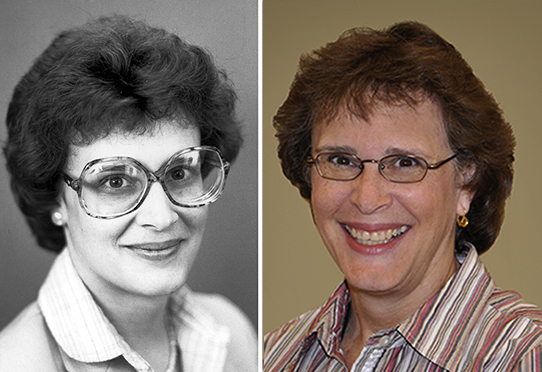
Nearly 45 years of Met Council history will soon be in the rearview mirror for Research Business Systems Analyst Deb Conley, who is retiring on March 8. And that’s a lot of history.
When Conley began work at the Met Council in September 1976 the U.S. was celebrating its bicentennial, Gerald Ford was president, the Oscar for Best Picture went to “One Flew Over the Cuckoo’s Nest,” and the song of the year was “Tonight’s the Night” by Rod Stewart. A top-selling car was the Ford Pinto for $2,985 and gas was $0.59 per gallon. It was the year Apple computers were launched in Steve Wozniak’s California garage.
“It doesn’t seem real yet that I will wake up on March 9 and not have the Council be a part of my life anymore,” Conley said. “That is going to take some serious getting used to!”
'She's our sage and our jack of all trades'
The ageless and popular Conley grew up in St. Paul and after high school began her working life as a legal secretary in a two-man law office. “They disbanded when one of the partners became a state legislator and the other became a Ramsey County judge; I take full credit for their success,” she laughed.
At the Met Council, Conley started as one of three secretaries for the Health Planning Board, which reviewed and approved or denied requests by hospitals for new equipment and locations in the region. “Our decisions weren’t always popular, which meant it was never dull,” she said. “It turns out that people take their medical equipment very seriously!”
Conley has worked in the Research Office in Community Development for more than 30 years and become critical to the office’s success, said her supervisor, Research Manager Joel Huting. Among many tasks, Conley serves as Research’s primary liaison to Information Services and leads numerous technology projects ranging from monitoring development in the region, to spearheading efforts to bring Met Council survey and data collection efforts online, to improving parks data analysis processes.
“Deb is the last set of eyes on most of our publications or datasets before they’re released to the world,” Huting said. “That says a lot about the role Deb plays on our team. She is our sage and our jack of all trades, who brings her wisdom to make sure things are done right.”
Roseville residents, Conley and her husband Mike (who retired last week) are looking forward to more time with their two grown sons and four grandbabies. “I love to explore new places while I’m out walking. I’ll read just about anything (but good murder mysteries are my favorite), and enjoy a laugh with family and friends,” she said.
Online tribute from colleagues is Wednesday
Conley’s colleagues are planning an online tribute on Wednesday afternoon to help send her off in style with some fond memories of the past, photos and tributes – maybe even some virtual balloons and confetti, and food. One colleague said the event “will be epic!” Another said, “it will be a hoot, guaranteed!”
Conley shared a few thoughts with The Wire about the past and the future.
What has changed most? No doubt about it, technology. There were no personal computers when I started. We didn’t even have correcting Selectric typewriters (all the young folk can look that up on Google), which came to the Council a year or two later. Then came personal computers that barely fit on the desk, floppy disks, CDs, flash drives ... Now we can hold a computer in the palm of our hand (aka a cell phone). It’s pretty amazing!
What did you like most and least about your job? My favorite thing has been the variety of work over the years. It’s kept things interesting and kept me learning. My least favorite was taking and transcribing minutes. Just not my thing.
What will you miss the most? The energy and creativity of the people I worked with. And in-person meetings. (Although being able to roll my eyes as often as I want has been an unexpected benefit of online Teams and Webex meetings.)
Future plans? Sleep in. Isolate. Then see the kids and grandkids, get vaccinated so we can do that more often. Visit more regional parks. Travel a bit when we’ve vanquished the virus. Fondly recall my co-workers and gloat because they’re working and I’m not. Feel (a little) bad about gloating. And hope that we’ll all find peace, prosperity, and acceptance.
|
Employees across the organization are doing their part to keep Met Council services and programs running at full steam, despite the coronavirus and state lockdown. But we’re all in this together. To help share a little virtual camaraderie, we’re asking staff how their work has changed and what it’s like to serve during a pandemic. To suggest someone who is doing outstanding work, please email thewire@metc.state.mn.us.

Cole Hiniker
Manager, Multimodal Transportation Planning
Metropolitan Transportation Services
How has the pandemic affected your day-to-day work?
It has been helpful to accelerate our move to adopt technology into our work. As a department, I think we were skeptical of Microsoft Teams and other platforms for helping with productivity, but everything online has become the de facto place for creating and sharing content, which I think is a positive development. On the other side of things, having organic conversations among our team of 20 or so planners has become very difficult. This is usually how we identify work needs, through brainstorming, and that process has been replaced with topic-specific meetings that don’t really foster dynamic thinking as well. I can’t really “pop over” to so-and-so’s desk and kick an idea around without putting it on the calendar with a specific agenda.
What’s it like working through a pandemic?
It’s very lonely and repetitive. I’m a social creature and the virtual does not adequately substitute for the in person. I’m not sure how much this happened before, but I feel like I’m having the same conversations at work over and over again, but maybe it’s just the platforms we are using. Our work has become dynamic trying to figure out what the future of transportation will be. I think the uncertainty is holding everyone back, perhaps rightfully so, because it’s hard to make predictions about the future right now given the disruption in all our lives. Personally, I do enjoy the flexibility to do things while working from home, like laundry and cooking better lunches. I actually feel healthier overall!
How has your life changed outside of work?
Without getting into too many details, I’ve had a number of major events happen during the pandemic, but the most exciting is adopting a dog, Koda. My two-and-a-half-year-old German Shepherd mix has been my savior during the pandemic, although she might get annoyed with how much I sing songs to her about mundane activities. She helps me get outside a lot more (weather permitting) and has actually fostered a number of new relationships that wouldn’t have otherwise happened. Winter is a struggle, but some of my relationships with friends have strengthened since we are all in the same situation. Even finding new hobbies is difficult right now, because it’s tough to learn things without the in-person interaction.
|
Vaccine availability for Met Council employees – still coming
State officials are not yet ready to officially begin vaccinating groups identified in phase 1B. Met Council leadership have advocated for our frontline employees, particularly those in transit, wastewater treatment, and housing operations, to be in the 1B group. As soon as we receive confirmation about who will be in phase 1B, we will communicate next steps out to staff, including specific access to the vaccine for Met Council employees.
Sand Creek webinar: Navigating Loneliness and Isolation
The COVID-19 pandemic has created a plethora of obstacles to manage and has exacerbated an already-existing “loneliness epidemic." Among them is our ability to connect and maintain healthy relationships in the world in which we are forced to be apart.
Navigating Loneliness and Isolation
Thursday, Feb. 25, 11-11:30 a.m.
In this presentation, attendees will gain insight into the concept of loneliness, learn about the impact of loneliness on individual health and workplace productivity, and discover ways to increase connectedness in the short- and long-term to help us come out of the pandemic stronger. Register online.
Black History Month: Last show is Feb. 26 featuring comedian Shed G

Because an in-person celebration cannot be held this year, the Black History Month Committee is inviting staff to watch featured speakers from past year's events.
The last event will be shown on Friday, Feb. 26, at 11:30 a.m. via Microsoft Teams. It features national comedian and actor Shed G, a Denver native now based in the Twin Cities (and a stunt double for Tyler Perry).
For more information and an invitation, email Traci Williamson at traci.williams@metrotransit.org.
|
Reminder: Internship applications close Feb. 26
Internship positions have been posted (43 positions), and applications are being accepted through Feb. 26. If you know someone who might be interested, please direct them to the Met Council's internship webpage and let them know they can watch a recording of the info session that was held on Feb. 22. For questions or to learn more, contact the Internship team at Internships@metc.state.mn.us.
Reminder: W-2 forms available
Employees can now access their W-2 tax form through Employee Self Service (ESS) – but only if you have previously consented to receive the information electronically. If you have not previously given consent, you can complete the consent form in ESS and then access your W-2. For employees who have not consented, paper W-2 forms were scheduled to be mailed earlier this month. Questions about W-2 forms can be directed to the Payroll department at 651.602.1620 or Payroll@metc.state.mn.us.
Tax form 1095-C, which provides proof of health insurance, will be sent to employees by March 2, but you can file your tax returns before you receive the form. Questions about tax form 1095-C can be directed to Benefits Manager Terri Bopp at Terri.Bopp@metc.state.mn.us.
Healthcare workers no longer eligible for free Metro Mobility rides
Healthcare workers who had been able to ride Metro Mobility for free during the COVID-19 pandemic will now be asked to pay the regular fare. The shift reflects a desire to balance demand as regular Metro Mobility ridership increases. Earlier in the pandemic, ridership on the paratransit service was low enough that free rides could be offered to healthcare workers as an alternative to regular route transit. Eventually, healthcare workers may no longer be allowed to request Metro Mobility rides. Read more about this change on MetroCouncil.org.
Save the date: Transit Driver Appreciation Day is March 18
Bus and train operators are serving on the frontlines of the COVID-19 pandemic, providing an essential service to those who must use transit. To recognize their service, Metro Transit will celebrate Transit Driver Appreciation Day on Thursday, March 18. To participate, consider writing a commendation, sending a card or letter to any garage, or showing your support on social media.

Cold? What cold?
Who says the bitter cold is a problem for enjoying the great outdoors in winter? Don't tell these rink rats, who are clearly enjoying some quality ice time on Lake Nokomis in sub-zero weather earlier this month. It will be much warmer, like 35 degrees, on Saturday, Feb. 27, for a "Candlelit Skiing" and dog sledding event at Baylor Regional Park, 3-8 p.m., deep in Carver County. Read more about the event. Photos by Jeff Syme.
The Wire is published every two weeks for employees of the Metropolitan Council. Everyone is invited to submit comments and story ideas. Contact the editor at thewire@metc.state.mn.us.
|