A thought for the day…
Not everything that can be counted counts, and not everything that counts can be counted.
– William Bruce Cameron (b. 1945) American educator and author
 IN THIS ISSUE
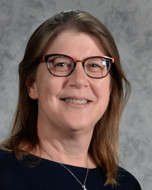
Notes from Mary Bogie
Acting Regional Administrator
Since this pandemic began, we’ve come together and made progress in slowing the spread of the COVID-19 virus. But as cases surge in many states, we must stay vigilant to protect our neighbors and loved ones.
We all want to get back to socializing, participating in summer activities, connecting with our community, and attending school and work all in person. But we can’t ignore the crisis and let our guard down.
This pandemic isn't over, and the actions we take impact everyone around us.
By combatting the spread of the virus, masking is key to reopening our society. Physicians and researchers continue to tell us that masks are a simple and effective step to slow the spread of COVID-19. Statewide masking will put us in a better position to keep our businesses open, get our children back in school, and help us return to the activities we love.
The recent executive order from the Governor requires Minnesotans to wear a face covering in indoor businesses and indoor public settings, and to comply with the order, we created a face coverings procedure (PDF) for the Met Council, which went into effect July 25. You can read more on MetNet about our procedure and best practices for wearing face coverings.
Everyone who can wear a mask should. Remember, a face covering is not a substitute for physical distancing, and wearing a mask does not mean people who are sick should be in public. Stay home if you are sick, unless you need to seek medical care. And even if you've had COVID-19, you should still wear a mask because we do not know if people can get sick with COVID-19 again.
All Met Council employees, Council members, contractors, vendors, and volunteers are required to wear face coverings per our procedure when in the workplace or public service environment. It is very important we are all following this critical public health practice, and I urge all staff – whether you’re a front line employee or a manager – to encourage each other to wear a mask and follow the other guidelines like physical distancing, handwashing, and disinfecting work areas.
Here in Minnesota, we take care of one another. And right now, there’s no better way to demonstrate our Minnesotan values than by wearing a mask. Masks protect you, and they protect your neighbors. It’s simple. It’s effective. It’s the right thing to do.
Mask up! Thank you for doing your part to help slow the spread of COVID-19.
|
Help yourself and earn a $40 gift card
The 2020 HealthPartners Health Assessment is now open! In just 10 minutes, you’ll find out where you’re doing well and get suggestions on how to improve your health.
Complete your health assessment online anytime until August 31 to earn a $40 gift card (subject to tax) for participating.
Don’t stop there. Shake it up and improve your health by completing a new activity to help you reach your health and well-being goals. You can do it!
If you have questions or need help logging on, call HealthPartners at 800.311.1052. If you need to register for an account, use “Metropolitan Council” for the company name and be sure to have your HealthPartners member ID handy.
Take your health assessment at healthpartners.com/wellbeing.
Met Council management continues to monitor the state of the COVID-19 pandemic and its effect on our operations and workforce. There are no plans to return teleworking employees back to work sites at this time. We continue to evaluate the situation, and the survey results and feedback from staff will help with making an informed decision. Employees at the Met Council who are teleworking will continue to do so at minimum through Thanksgiving, but possibly through the end of the year.
We will continue to take our lead from the Governor and federal and state public health officials to determine the best timing to ease teleworking requirements and slowly bring those staff members back to the office. Returning teleworking staff to work sites will not happen all at once; rather it will be a phased approach to slowly increase the number of people in the workplace as conditions allow.
Updated plan. As we look ahead to an eventual return to work sites, and to ensure we provide a safe and healthy workplace for all our workers, the Incident Command team developed and put into effect the COVID-19 Workplace Reset Plan. We updated the plan last week to address the statewide mask mandate now in effect.
Hearing from employees. Our primary goal is to mitigate the potential for transmission of COVID-19 in our workplaces and broader communities, and that requires full cooperation among employees and management. The Incident Command team is working with work sites and divisions to hear from employees and better understand all of our needs and concerns when it comes to opening up workplaces and returning teleworking staff to on-site.
Employees might receive survey requests or instructions to meet with managers to relay their concerns and needs, and we encourage everyone to respond promptly and fully so we can prepare plans that best support our workforce. Providing this feedback is voluntary, but we need to hear from you to be able to meet the breadth of needs and concerns employees will have.
Central office employees (those who primarily work out of Robert and Jackson street offices) were emailed a survey for feedback last week. Please take the time to complete the survey and provide your thoughts on returning to the office, telework, productivity, and home office ergonomics and connectivity. This anonymous survey is open through Thursday, August 6.
Employees across the organization are doing their part to keep Met Council services and programs running at full steam despite COVID-19 and the state lockdown. But we’re all in this together. To help share a little virtual camaraderie, we’re asking staff how their work has changed and what it’s like to serve during a pandemic.
To share your story or suggest someone who is doing outstanding work, please email thewire@metc.state.mn.us.

Josh Hamre
Safety Specialist
Environmental Services
How has the pandemic affected your day-to-day work?
COVID-19 certainly has accelerated the adoption technology for communication: I dabbled on Microsoft Teams pre-COVID, now I’m kind of living in there. The uptick in tech I've noticed most is virtual meetings and cloud-based document collaboration, but the technology does not substitute for real life interaction. I've recently started going to Metro Plant once a week, and it's been great to see the operators, trades, and everyone else.
What’s it like working through a pandemic? Staff in the Environmental Health and Safety department have had to allocate a portion of our attention and energy to specific pandemic issues. Meanwhile, our usual areas of focus must continue, so we've had to adapt to and integrate a pandemic tilt to our core work of occupational safety. Of course, we're in no way unique in having to adapt during the pandemic; everyone has had to be flexible in one way or another.
How has your life changed outside of work? I've always appreciated nature, and that appreciation seems to grow as I grow. Social distancing and nature get along fairly well, so that’s been something for me to be grateful for during this time. The same communication adaptations we've made at work have been occurring outside of work. I've been logging more time than ever teaching my parents how to video chat and how to listen to their church broadcast on their phones. I think we’ve finally dialed in a system that works for password retrieval for all their different logins.
|
After a delayed start due to the pandemic, a smaller cohort of college students were brought on staff in June for the Met Council's summer intern program and are now deeply engaged in work across the agency. In the next few weeks we'll introduce a number of students in our regular intern program and in the Urban Scholars leadership program who'll share their experiences so far.
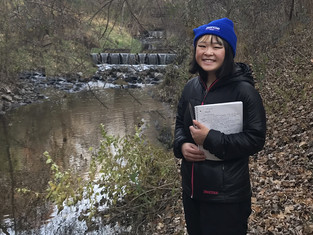
Sarah Gong
Parks Ambassador Intern (Urban Scholars)
Community Development – Research
College and major: University of Minnesota – Human Resources and Industrial Relations
What is your job at the Met Council? I am working on three different projects. The first is the Youth in Parks study; we’ve been working on it throughout the year to make the Regional Parks Systems more equitable and accessible to underserved youth. We are now in the report-writing phase of our research project. Another is an environmental justice project; I’ve been collecting data about environmental hazards around the metropolitan area and am writing a story about how climate change impacts our areas and whom it disproportionately impacts. I’ve been using maps detailing our region’s Environmental Health Index, building energy uses, and transportation. Finally, I am working on a project about understanding the housing preferences of Housing Choice Voucher recipients. I’ve completed a literature review and will present my findings to the research team.
What have you learned in the past year? I’ve learned many valuable things from the Council and the Urban Scholars program. Personally, the most noticeable thing I’ve learned is how to work with self-confidence. I’ve met a lot of great people and mentors around the Council who have helped bring out the best in me and have encouraged me to challenge myself. Being in research has helped me think strategically, and I’ve learned how to find patterns through data, delegate meetings, and be a leader for my teams.
What are the favorite and least favorite aspects of your job? My favorite aspects are the people and the work that I do. Everyone I work with at the Council has been nothing but supportive, helpful, and wonderful colleagues, friends, and mentors. I love the work that I do; I have gotten to work with so many amazing people both in and out of the Council. I find it very rewarding to listen to and help communities who have been historically underserved, and the work that we do is truly contributing to the betterment of all our communities. My least favorite aspect of my job is that I cannot come into the office in person anymore. I am an extrovert, and I enjoy active routines. Sometimes it is hard for me to be motivated when I’m working alone.
What two or three experiences or new skills will you take forward? My 2019 Urban Scholars experience is something that I will always take forward with me. We had a very close, tight-knit cohort, and we were very supportive of each other. We learned how to integrate intersectional activism into our leadership; this is valuable knowledge I will take forward with me to continue making a difference for our communities. Another skill I will take forward is project management. There are many moving pieces in projects that can be hard to plan for or discuss during a research project. I’ve also learned great leadership, planning, and delegation skills from the Youth in Parks research project I will take forward.
What has been your experience from last year to this year with COVID-19 and how have you adapted to the changes? COVID-19 has impacted me in that I now work from home and we have had to put on hiatus some presentations we were planning to give to constituents of our Youth in Parks presentation. I was actually able to help one of the youth-serving organizations we worked with, Asian Media Access, write grant requests for laptops so the youth could continue their education virtually; I was able to help get Asian Media Access $45,000 in grant funds. It was initially difficult to motivate myself when we first started working from home. I really missed getting to work with my colleagues in person, as I am very extroverted. I adapted to this by maintaining consistent communication with my team members and setting up check-ins with others.
|

Ben Tomhave
Bus Rapid Transit (BRT) Planning Intern
Metro Transit
College and Major: University of Minnesota – Urban and Regional Planning
What is your job at the Met Council? As a member of the BRT Projects group at Metro Transit, I work on a wide range of projects focused on the selection and development of future BRT lines. Currently, I am designing interactive platform concepts to help determine the locations of future E Line stations and how these stations will interface with the existing conditions along the corridor. In addition to this work, I have also synthesized several different data sources to recommend key locations along the B Line corridor where bus priority investments would be of greatest benefit to B Line passengers.
What are you learning? While contributing to the everyday work required to take a project from start to finish, I have come to learn just how connected and detailed these projects truly are. For example, when planning and designing where future stations will be placed, I’ve learned just how much staff must coordinate across multiple departments and agencies. Such collaborations allow the group to produce a cohesive project that is integrated with all other uses and transportation modes that occur within the right-of-way. In addition, this internship has also provided me with the opportunity to learn and utilize a variety of new software programs.
What are the favorite and least favorite aspects of your job? Despite not yet having worked with the majority of the BRT projects group in person, as we all continue to work from home, one of the best aspects of my internship is interacting with the BRT staff. Everyone is truly passionate and excited by their work and public transportation in general, which makes our weekly check-ins a fun combination of project updates and staff members sharing their interesting transit stories. Beyond the workplace dynamic, my favorite part of the job is having the opportunity to explore and work with the data and documents that ultimately contribute to the bus service that I use on a daily basis. It’s exciting and motivating to think that the work I am performing this summer could directly impact my future commute!
What two or three experiences or new skills will you take forward? As a result of this internship, I have become much more comfortable using a variety of software platforms including GIS and Remix. As I come to further understand the benefits that each tool provides, I have learned to creatively blend the outputs from these many different software programs into a single clear and compelling story that helps to guide the decisions the department makes. Building on the invaluable professional network that I continue to establish within the Met Council, I am excited to continually learn from my peers and expand my skillset.
|
Project partners announce new direction for METRO Blue Line Extension
After years of unsuccessful discussions with BNSF Railway regarding colocation of light rail transit and freight rail in the Bottineau Corridor, the Met Council and project partners have decided to move on to new alternatives and new opportunities to advance this critical project without using BNSF Railway right of way.
The Met Council's commitment to the METRO Blue Line Extension light rail project has not changed, agency leaders stressed, and is looking forward to find new ways to complete the project as soon as possible.
"This project is a critical element in meeting our transportation needs for a growing region,” said Met Council Chair Charlie Zelle. “Our commitment to the Blue Line Extension has not changed and I look forward to working with project partners and community stakeholders as we chart our new pathway forward."
Read more at MetroCouncil.org.
Support communications efforts by serving as on-camera and voice talent
Met Council Communications and Metro Transit Marketing are collaborating to find in-house talent for upcoming campaigns and communications. This includes specific transit campaigns, Met Council customer communications, and employee-related communications. We’re looking for people to participate in photo or video shoots, or to help us with narrations and voice recordings.
Participation is totally voluntary. Communications and marketing staff will describe the nature of the project and how your talents will be used prior to your participation.
Interested employees are invited to fill out this online survey. Staff will follow up with a request for a profile photo and send a release form. All employees are invited to respond to the survey. For more information contact Kathryn Lehinger in Metro Transit Marketing.
Managers/supervisors: Check-ins due August 15 in Perform
With the new Perform system now launched in each division and with goals entered online, now is the time for managers and employees to meet and discuss progress on goals and competencies. As part of the 2020 timeline for Perform, all managers are required to document a check-in with each of their employees in the online system by August 15. This is the only check-in we are mandating as part of the 2020 performance evaluation process.
Since early July, Human Resources has been sharing information and best practices in HR Connect about the refreshed competency model and functionality in the new Perform system like journal entries and tagging goals and competencies. Review these articles for more on these topics.
To learn more about check-ins and competencies:
-
Search for and watch these eLearning modules in Learn:
- LOD Perform Journal Entries and Check-ins for Managers (12 min.)
- LOD Perform Journal Entries and Check-ins for Employees (10 min.)
- LOD Competencies at the Metropolitan Council (17 min.)
- Review your full set of competencies with guidelines for their behavior by locating your job level’s competency handout on the Performance Management page on MetNet.
- Email Perform@metc.state.mn.us if you have questions about using the online system.
Hearty congratulations to the following employees who in August celebrate major milestones in their service to the Met Council. This recognition includes only Robert Street employees and Regional Administration employees working off-site. For recognition of Metro Transit and other Environmental Services employees, see Insights and ES Update, respectively. The information is released when it is made available from Human Resources.
Years of Service
20 Years
Rene Heflin, Manager, Plant Engineering, Environmental Services
15 Years
Anna Bessel, Asst. Manager, Engineering Program, Environmental Services
New Staff
Ellen Esch, Aug. 3, Data Scientist, Research, Community Development
Henry McCarthy, Aug. 3, Environmental Scientist, Water Supply, Environmental Services
Kim Ruedy, Aug. 17 (rehire), Principal Contract Administrator, Procurement
Departures
Andrew Degerstrom, July 13, Associate Planner, Metropolitan Transportation Systems
Jake Oswell, July 18, Systems Engineer, Information Services
Peter Baillon, Aug. 3 (ret.), Worker's Comp Claims Rep, Risk Management
Jan Price, Aug. 22 (ret.), Library and Info Resources Coordinator, Communications
 Celestial Images
Late-night stargazers and space fans have had a lot to celebrate in the night skies lately. On top: The comet Neowise traversed Earth’s view last month for the first time in 6,800 years, delighting stargazers for several nights just after sunset. (In case you wonder, 6,800 years ago was around the time that early society first began the cultivation of barley and wheat.) It’ll be back in 6,800 more years. Lower left: The Supermoon in May; it’s a full moon at its closest orbit to Earth, and usually occurs three to four times per year. Lower right: The International Space Station streaks across the sky in July.
The Wire is published every two weeks for employees of the Metropolitan Council. Everyone is invited to submit comments and story ideas. Contact the editor at thewire@metc.state.mn.us.
|