CVSO Office Updates
Happy October Friends! This month we are highlighting Vet Center Services.
Did you know we have a staff member from the Vet Center providing free mental health services on site at our office each week? Every Thursday we have a team member here providing services and answering questions for veterans in need. If you are interested in learning more, you can contact our team or reach out to the Twin Cities Vet Center directly by calling 612-243-7920.
Vet Center Services: Counseling and Support for Veterans and Families
Vet Centers provide free, confidential counseling and support to eligible Veterans, Service members, and their families. They are separate from VA medical centers and are located in rural communities, making it easier to access care close to home. You do not have to be enrolled in VA health care or have a service-connected disability to receive Vet Center services.
Vet Centers offer individual, group, couples, and family counseling. Services may include help with military readjustment, combat experiences, grief and loss, military sexual trauma (MST), substance use, employment concerns, and other challenges related to military service. Counseling and referrals are also available for family members.
You may be eligible for Vet Center services if you served in a combat area, experienced military sexual trauma, served in certain military roles, or experienced other service-related events listed by the VA. Bereavement counseling may also be available to eligible family members following the death of a loved one who served.
Vet Center services are confidential and provided at no cost to eligible individuals. You do not need to worry about your counseling records being shared with the VA, Department of Defense, or other organizations without your permission, except where required by law. Vet Centers may also offer community activities and support groups, such as gardening, yoga, creative writing, music groups, outdoor activities, and community service projects.
Interested in Vet Center Services?
If you or a family member would like to learn more about Vet Center counseling or find out if you qualify, contact Olmsted County Veteran Services. Our team can help connect you with the appropriate resources.
Olmsted County Veteran Services
📞 507-328-6355
📧 ocvs@olmstedcounty.gov
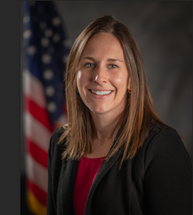 Tiffany Canfield
County Veteran Services Officer (CVSO) & Manager
tiffany.canfield@olmstedcounty.gov
507-328-6358
Veteran Service Office Snapshot
August 2026
Total claims submitted to VA:
- Compensation: 49
- VA Healthcare: 10
- DIC / Survivor's Pension: 4
- Burial: 5
- CHAMPVA: 1
- Records Request: 0
- Special Monthly Pension: 0
Veterans in office: 65
Outreach visits: 4
Total phone calls: 188
Average number of calls per day: 6
Average call length: 2 minutes and 47 seconds
DAV Veteran Appreciation Event
Marine Corps Birthday Ball
Bob Briggs Memorial Goose Hunt
A WEEKEND AFIELD, IN HIS HONOR
Bob Briggs Memorial Goose Hunt November 20–22, 2026 Rochester, Minnesota
In memory of Robert William Briggs, Purple Heart Recipient
Bob passed away on June 28, 2011, from injuries received on April 16, 2005, while serving his country in Iraq. He was awarded the Purple Heart for the wounds he carried home. Each year, this hunt gathers twelve veterans in the fields around Rochester for a guided goose and pheasant hunt — a weekend built to honor his service by giving others the same.
The Hunt
A two-day guided goose and pheasant hunt for up to twelve veterans, opening with a welcome reception the evening before the first hunt. There will be 12 veterans hunting, guided, over two days.
Every Veteran Receives
- Welcome reception, Friday evening, Nov. 20 @ the VFW Mess Hall Grill.
- Ammunition for the hunt.
- Meals for the weekend.
- Two nights' lodging in the area.
- Hunting license.
- Special gift package.
- Transportation around Rochester
Remembering Bob, one flight of geese at a time.
To register for this event, send an email to davsem28@gmail.com, Subject: Bob Briggs Memorial Goose Hunt and please include your full name, cell phone and email address. You will be entered into a drawing, and the names will be drawn at the DAV Chapter #28 Monthly Meeting on October 12, 2026.
Medicare Corner
Changes are Coming for 2027
Fall is almost here, which means one of the busiest times of the year in the Medicare world is right around the corner!
Medicare's Annual Enrollment Period (AEP) begins October 15 and runs through December 7, and this year I'm encouraging Medicare beneficiaries to pay especially close attention to the information they receive about their 2027 coverage.
Every year, Medicare Advantage and prescription drug plans can make changes to premiums, benefits, prescription coverage, provider networks, pharmacies, and other plan details.
This year, we're seeing some particularly significant changes in our local Medicare market. Some plans will be leaving the Southeast Minnesota market altogether, while others will be changing significantly for 2027.
For some beneficiaries, the plan they have today may look very different next year—or may no longer be available at all.
That's why my message this fall is simple:
Review rather than assume.
During AEP, I'll be working closely with my clients to review their 2027 options based on their individual needs, including their doctors, prescriptions, preferred pharmacies, and healthcare priorities.
💡Did You Know?
Medicare beneficiaries who are enrolled in a Medicare Advantage or prescription drug plan receive an Annual Notice of Change (ANOC) explaining how their current plan will change for the coming year.
It's an important piece of mail!
If you work with Medicare beneficiaries, encourage them to open their Medicare and insurance mail this fall rather than setting it aside. Those notices can contain important information about changes taking effect January 1.
📞 A Good Time to Reach Out
As you work with clients, residents, employees, patients, friends, or family members this fall, please keep an eye out for people who may need some extra Medicare guidance.
A good time for someone to connect with me is when they:
- Receive notice that their Medicare plan is changing or ending.
- Aren't sure whether their doctors or prescriptions will still be covered in 2027.
- Are overwhelmed by all of the Medicare advertising and aren't sure what applies to them.
- Are turning 65 or preparing to retire and aren't sure where to begin.
Medicare can be confusing in a normal year. With the changes we're seeing locally for 2027, I expect many people will have questions.
Sometimes they don't need a sales pitch, they simply need someone who can explain what's happening and help them understand their choices.
That's what I'm here for.
If you have questions regarding Medicare, please reach out to Jill
Call or text: 507-218-8377
Email: jill@medcitymedicare.net
or visit her website: www.medcitymedicare.net
Understanding the Types of Military Discharge
A military discharge is when a service member is released from their military service obligations. More than 200,000 U.S. service members leave the military each year.
What Is Military Discharge?
A military discharge occurs when a service member is formally released from their obligation to serve in the armed forces. Each year, over 200,000 U.S. service members transition out of military life, entering the civilian workforce, education systems or retirement.
Discharges can happen at the end of a service obligation, due to medical or personal reasons, or under disciplinary circumstances. The type of discharge — such as honorable, general, other than honorable, bad conduct or dishonorable — has lasting implications, affecting eligibility for veterans' benefits, future employment, and social standing.
"Separation" from the military is a broad term that includes "discharge, release from active duty, release from custody and control of the military services, transfer to the Individual Ready Reserve, and similar changes in active or reserve status," according to the U.S. Department of Labor's Veterans' Employment and Training Service.
Separation can be voluntary or involuntary, and it can include disciplinary or punitive reasons.
Types of Military Discharge
When someone gets out of the military, they receive a separation document that certifies their military service and also indicates whether their service to the nation was completed satisfactorily. This document, the DD-214, usually lists the dates of service, any commendations or medals received, the reason for separation and the military's characterization of their service.
This characterization of one's military service is also known as the type of military discharge. It can be very important later in life to anyone wishing to receive federal or state veterans benefits or special considerations because of their military service. Most medical or disability discharges are characterized as honorable.
For most people, anything other than an honorable or general discharge is considered a "bad paper discharge," because that one piece of paper (the DD-214) can spell bad news for their future.
Several main types of military discharges or separation characterizations include:
Honorable Discharge
If you complete your military service or you're discharged early through no fault of your own, your characterization probably will be honorable. This is the type of discharge a person receives if they complete their contracted obligation with proper military behavior and proficient performance of duty. This includes not running afoul of the Uniform Code of Military Justice (UCMJ). This type of characterization usually doesn't affect future civilian employment negatively and entitles you to veteran benefits, if you otherwise qualify.
Read More: Honorable Discharge: Everything You Need to Know
General Discharge
A general discharge means most of your service was OK, but some problems occurred. This is issued when a person shows a pattern of minor misconduct or fails to complete the original service contract. Oftentimes, the misconduct isn't serious enough to be a criminal offense in the civilian world, but it disrupts military discipline and order. This may also be given if the service member leaves the military for things such as physical readiness failure or parenthood. Usually, you're still entitled to many veteran benefits, but some employers may question you about why you "got fired" from the military.
Other Than Honorable Discharge
Also known as a "bad paper discharge," an OTH discharge means you got "fired" from the military for doing something very bad and were probably lucky to escape a court-martial. An OTH is given when there is misconduct that could be considered a misdemeanor in the civilian world. These could include incidents such as drug use, fighting, abuse of position or disobeying an order. Veteran benefits usually are not authorized, and you may find it hard to get a good civilian job.
Read More: Other Than Honorable Discharge: Everything You Need to Know
Dishonorable Discharge
This is a punitive discharge that can be imposed as a punishment by a military court-martial for serious offenses, following a finding of guilty for a military offense. It may also be given if someone exhibits a pattern of convictions for misconduct that indicates they are unfit to serve in the military. Individuals with a bad conduct discharge are not eligible for most veteran benefits, and many employers aren't likely to consider these applicants.
Given as a punishment for a serious offense. Usually when someone commits a felony-level offense, either in the military or civilian jurisdiction.
Read More: Dishonorable Discharge: Everything You Need to Know
Bad Conduct Discharge
Bad conduct discharges (BCD) and dishonorable discharges are considered punitive discharges, which means they are a legal punishment. As such, they may only be handed down by a court-martial. The law that governs veterans benefits specifically says anyone with an other-than-honorable discharge or worse is not legally considered a veteran by the federal government. Since they aren't considered veterans, they aren't eligible for any veterans benefits. This applies to all federal and many state benefits.
Related: What is a Military Court-Martial?
A commissioned officer cannot receive a bad conduct discharge or a dishonorable discharge. For them, the equivalent of a dishonorable discharge is an officer's discharge.
Medical Discharge
A medical discharge is not considered punitive and, in terms of veterans benefits, is typically seen in the same category as an honorable discharge.
Entry-Level Separation
If a service member leaves within the first 180 days of service for reasons including medical issues, they are given an entry-level separation. Though not considered a stain on their record, an ELS discharge typically prevents them from being considered veterans and therefore prevents them from receiving veterans benefits.
Can You Upgrade Your Discharge Type?
Each branch has a discharge review board with the authority to change, correct or modify discharges. The board has no authority to address medical discharges or those issued by a general court-martial.
Are you a veteran who needs to change, correct or modify your discharge? If you qualify and take the proper steps, you can apply for a review of discharge and possibly have it changed.
When the VA determines eligibility for benefits, it looks at a veteran's entire military service. If the veteran reenlisted at least one time in their military career, they may be eligible for benefits, no matter what type of discharge they received when they finally left the service.
The VA will review the service record and see whether the veteran ever reenlisted. If so, that means the veteran was honorably discharged from the service in order to reenlist, and they will most likely be eligible for all normal veterans benefits.
Read More: How To Upgrade Your Military Discharge
PTSD: (Part 4) Myths Persist in the Military Community
New Survey Finds Myths Persist in the Military Community
A poll of 2,000 Americans has found that members of the military community -- active-duty personnel, veterans and their family members -- are twice as likely than civilians to believe that persons with post-traumatic stress disorder are violent or dangerous.
And 35% of these "military-connected" individuals believe that PTSD is not treatable, another finding that professionals who treat trauma-related mental health issues find disheartening, said Anthony Hassan, president of the not-for-profit Cohen Veterans Network.
"I was shocked at these percentages and then my mood went to disappointment," Hassan said. "I spent so much time in the military working on reducing stigma and educating our members to make sure they understood these diagnoses and that getting help wouldn't hurt their careers. Clearly we are not making much improvement."
Hassan and other organizations that help service members and veterans want them to know that PTSD can be treated, an apt message to share for PTSD Awareness Month in June.
"PTSD's impact on mental health still hasn't hit mainstream understanding," said Teralyn Sell, a Wisconsin-based psychotherapist. "There are evidence-based trauma treatments that are available."
According to the survey of 2,000 people conducted by The Harris Poll, 67% of Americans believe that most veterans have PTSD. Some 74% think most combat vets have PTSD. One in four believe patients with PTSD are violent or dangerous, and nearly 60% believe that if a person experiences a traumatic event, they will develop PTSD.
In reality, however, studies show that between 13.5% and 20% of Iraq and Afghanistan veterans meet the criteria for a PTSD diagnosis, as do 12% of Gulf War veterans and 15% of Vietnam veterans.
But the majority of those people do not engage in violence, according the the Department of Veterans Affairs.
Two surveys in 2014 of U.S. military personnel and veterans diagnosed with PTSD found that 9% engaged in severe violence and 25% were involved in physical aggression in the prior year.
But alcohol misuse, younger age, financial instability, combat exposure and a history of violence before military service appeared to contribute to severe violence and aggression.
Veterans with PTSD who did not abuse alcohol were not at significantly higher risk of violence, data showed.
"PTSD is associated with an increased risk of violence," VA researchers have said. "[But] the majority of veterans and non-veterans with PTSD have never engaged in violence. When other factors like alcohol and drug misuse, additional psychiatric disorders, or younger age are considered, the association between PTSD and violence is decreased."
Hassan said he thinks perhaps military people think those with PTSD are violent because they hear about colleagues being booted from service for an incident, and if the colleague also has a PTSD diagnosis, they associate the condition with the violence.
He added that service members may believe the condition is not treatable because they know fellow veterans who have a diagnosis and receive disability compensation for their condition and then don't get treatment or actively engage in it out of concern that they will lose their benefits.
"I don't know how [service members] get stuck on it, how they seem to relate PTSD with violence and reckless behavior, and how they make this assumption that treatment doesn't work when they're told in the military all the time that these aren't true," Hassan said.
According to the Department of Veterans Affairs, effective PTSD treatments include: prolonged exposure therapy, which has a patient confronting the trauma openly and working to tackle situations that have been avoided as a result; cognitive processing therapy, in which a therapist works with the patient to overcome negative thoughts through self-awareness and activities; and eye movement desensitization and reprocessing -- a therapy during which a patient tracks a provider's quick movements or other stimulus while thinking about a traumatic event or experiences.
Science also is evolving for PTSD. A stellate ganglion block -- an injection of an anesthetic into nerves at the base of the neck --reduced PTSD symptoms in 70% of combat veterans who received it in one study. Providers are using ketamine infusions to treat chronic forms of the disorder. And most recently, a study using MDMA, or Ecstasy, when coupled with therapy, showed promise for treating the disorder.
Misconceptions of PTSD, the people who have it and its treatments can deter people from seeking care, which can cause lifelong suffering, Hassan said.
Treatment can lead to a "more productive life," he added.
"Untreated, your life can be unmanageable. People who go for treatment can improve their quality of their life, they can regain pre-crisis or pre-diagnosis functioning and they improve their relationships, at work, at home and with family and friends," he said.
With the pandemic winding down in the U.S. Hassan said he has concerns for service members and veterans with the diagnosis who have suffered in the past year.
According to the survey, 65% of Americans with PTSD said that the past year, including isolation resulting from the pandemic, the politically charged climate in the U.S. and civil unrest has negatively affected their recovery.
"I want to remind people that if you come and get help, we really can help you improve your quality of life, there's no doubt about it," Hassan said.
Options for seeking treatment in the military include contacting Military One Source at 1-800-342-9647 for guidance on where to seek further treatment, contacting a primary care provider or reaching to behavioral health providers at military clinics and hospitals or, depending on the unit, consulting with an embedded behavioral health team.
Veterans have access to mental health treatment at the VA for at least one year after they leave active duty. They also can seek assistance at a local VA medical center or Vet Center, their primary care provider or community specialists.
The Cohen Veterans Network announced earlier this year that it also has started offering treatment to active-duty personnel at most of their 19 locations with a referral from Tricare.
"Getting help today is certainly for a better tomorrow," Hassan said.
NEXT MONTH: PTSD – Supporting a Family Member with PTSD
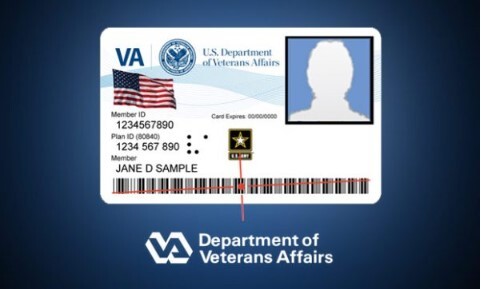
ID Cards at the Rochester VA Clinic
VA ID Cards may be obtained at the Rochester VA Clinic by appointment only.
All appointment slots remaining in 2026 are filled.
You can call the number below to find out when the next available appointment is. Typically, the ID's are done every other month on the 3rd Thursday.
Please call the VA at 1-866-414-5058 to make an appointment in Rochester.
*The Minneapolis VA Medical Center issues ID cards daily.
Click HERE for more information on veteran ID cards.
JOBS
Olmsted County Veterans Organizations
Get involved! Support a local chapter! Check out these veteran organizations for becoming a member and member resources:
Local organizations
American Legion Post 551 (Eyota)
American Legion WM. T. McCoy Post 92 (Rochester)
American Legion Ivan-Stringer Post 164 (Stewartville)
Disabled American Veterans (DAV) - Mayo SE Minnesota Chapter 28
Honor Bound Veterans
Marine Corps League - THOR #606
- Address: PO Box 8490, Rochester, MN 55903
- Telephone: 507-251-6919
- Email: SemperVince@hotmail.com
- Point of contact:
- Mark Shuster
- Vince Reynolds
Minnesota POW / MIA Riders Association (Rochester)
Order of the Purple Heart - Chapter 7110, Rochester MN
Facebook: https://www.facebook.com/p/Purple-Heart-Chapter-7110-Rochester-MN-100079537844682/
Veterans of Foreign Wars (VFW) Post 9647 (Oronoco)
Veterans of Foreign Wars (VFW) Post 1215 (Rochester)
Local Service Organization Meetings
For a full list of local organizations and meetings, please click on the blue button.
"To promote the interests and welfare of veterans, their dependents and survivors and to enhance their quality of life through counseling, claims assistance, education, advocacy and special projects."
2100 Campus Dr. SE, Suite 200
Rochester, MN 55904
507-328-6355
|