CVSO Office Updates
Happy September to all of my favorites here in Olmsted County!
Mental Health Matters: You Don't Have to Face It Alone
Mental health is an important part of overall health and well-being, especially for those who have served in the military. Military service can bring unique experiences and challenges that may continue long after leaving uniform, including difficulty sleeping, anxiety, anger, depression, grief, post-traumatic stress, substance use, or difficulty adjusting to civilian life. Seeking help is a sign of strength—not weakness. Whether you are experiencing a crisis or simply recognize that something does not feel right, resources are available to help Veterans, Service Members and their families.
Getting Started with VA Mental Health Services
VA offers a wide range of mental health services, including counseling, medication management, peer support, and treatment for conditions such as PTSD, depression, anxiety, grief, and the effects of military sexual trauma (MST). More than 1.7 million Veterans received mental health care through VA in the past year. Veterans who are struggling but are not in crisis can contact their local VA Medical Center or access mental health resources online. Eligibility and costs can vary depending on factors such as service history, disability rating, medical need, and income. Veterans who recently separated with an honorable discharge may be eligible for VA health care, and recently separated combat Veterans may have additional eligibility for care related to their combat service. Current and former National Guard and Reserve members may also be eligible for VA mental health care or Vet Center services.
Veterans do not necessarily have to be enrolled in VA health care to receive mental health support. Community-based Vet Centers provide confidential counseling and other services to eligible Veterans, Service Members, and their families at no cost. Services may include readjustment counseling, individual and group counseling, bereavement and grief counseling, employment counseling, substance-use assessment and referral, benefits assistance, and counseling related to MST. Veterans with an Other-than-Honorable (OTH) or “bad paper” discharge can receive emergency VA mental health care and may qualify for additional services depending on their circumstances. VA also offers telehealth through VA Video Connect, allowing eligible Veterans to meet with a mental health provider from home or through a VA Community-Based Outpatient Clinic.
There are also resources for Veterans and their families outside of traditional VA appointments. VA may be able to authorize care with a community mental health provider when certain eligibility requirements are met. Military OneSource provides resources for active-duty Service Members, recently separated Veterans, and immediate family members. Make the Connection allows Veterans to hear from others who have faced mental health challenges. Veterans who are homeless or at risk of losing their housing can contact the National Call Center for Homeless Veterans at 877-424-3838, available 24/7. Family members and caregivers can also access assistance through VA's Caregiver Support Program at 855-260-3274.
Understanding Vet Center Services
Vet Centers are community-based VA resources designed specifically to support Veterans, Service Members, and their families. There are more than 300 Vet Centers, along with Mobile Vet Centers and community access points, providing services in locations that are often convenient and separate from traditional VA medical facilities. Vet Centers offer confidential counseling, outreach, referrals, and support for Veterans dealing with the challenges that can come with military service and the transition to civilian life. Services can include individual, group, couples and family counseling; combat-related counseling; MST counseling; bereavement support; employment assistance; substance-use assessment and referral; and assistance connecting Veterans with VA benefits and other community resources.
Who Can Use a Vet Center?
Vet Center services are available to many Veterans and Service Members based on their military service and experiences. Eligibility can include Veterans who served in a combat theater or area of hostility, experienced military sexual trauma, received certain campaign or service medals, served in hazardous or hostile-fire areas, or meet other qualifying service requirements. Vet Centers also provide services to certain family members and survivors, including counseling related to MST and bereavement. You do not need to have a service-connected disability or be enrolled in VA health care to use many Vet Center services. If you are unsure whether you qualify, contact a Vet Center or our office and we can help you determine your options.
Confidentiality and Other Vet Center Services
Vet Center counseling is confidential, and Veterans can receive assistance with much more than mental health concerns. Vet Center staff can help with readjustment, relationships, grief, employment, substance-use concerns, benefits questions, and referrals to other VA or community resources. Vet Centers also recognize the unique experiences of women Veterans and can provide specialized support. Veterans should not be afraid to ask for help because they are concerned about their employment or career. Mental health records are protected by privacy laws, and seeking mental health treatment or receiving a mental health diagnosis does not automatically jeopardize employment credentials or security clearances.
Twin Cities Vet Center – Rochester Outreach
The Twin Cities Vet Center provides confidential counseling and support services to Veterans, Service Members, and their families. To make these services more accessible to Veterans in our community, a Vet Center provider is available on site in Rochester at the 2100 Building every Thursday. This is a convenient local option for Veterans who may benefit from counseling, readjustment support, grief services, PTSD support, or assistance navigating other challenges related to military service. If you would like to learn more or schedule an appointment, contact our office and we can help connect you with the Vet Center.
Need Help? Start Here.
If you or someone you know is experiencing a mental health crisis, call 988 and press 1 for the Veterans Crisis Line, text 838255, or use the Veterans Crisis Line online chat. The Veterans Crisis Line is confidential and available 24 hours a day, 7 days a week, 365 days a year. For a mental health emergency, Veterans can also go directly to a local VA Medical Center regardless of discharge status or enrollment in VA health care.
Our office is here to help you navigate these resources. If you have questions about VA mental health care, Vet Center eligibility, benefits, health care enrollment, or other Veteran resources, please contact the Olmsted County Veteran Services Office at 507-328-6355, or contact Tiffany Canfield, CVSO & Veteran Services Manager, at 507-328-6358 or OCVS@olmstedcounty.gov. We are happy to help connect you with the right resource—because you don't have to figure it out alone.
 Tiffany Canfield
County Veteran Services Officer (CVSO) & Manager
tiffany.canfield@olmstedcounty.gov
507-328-6358
Veteran Service Office Snapshot
July 2026
Total claims submitted to VA:
- Compensation: 45
- VA Healthcare: 17
- DIC / Survivor's Pension: 5
- Burial: 6
- CHAMPVA: 1
- Records Request: 2
- Special Monthly Pension: 0
**Our office is in the process of switching to another software program. Numbers listed above may be on the low side.
Veterans in office: 94
Outreach visits: 2
Total phone calls: 225
Average number of calls per day: 7
Average call length: 2 minutes and 57 seconds
Honor Bound Veterans Range Day
Brothers and Sisters,
At long last, an HBVets event where “send it” is allowed.
Under supervision. With eye pro. And at a designated firing line, because apparently society has rules.
HBVets Range Day is happening Saturday, September 12.
📅 Saturday, September 12
⏰ 11:00 a.m. to 1:00 p.m.
📍 Location sent after RSVP
💵 Free event
🔗 RSVP by email to: honorboundveteransmn@gmail.com
We are not publishing the range address in this email. Not because this is some classified operation. It is because we need an actual headcount, we need to manage the range blocks, and we are not running this like a barracks party where 14 extra people show up because someone told “a buddy.”
No RSVP, no address.
Simple. Clean. Almost like the Army could have done it but never did.
We will have two one-hour range blocks:
Block 1: 11:00 a.m. to 12:00 p.m.
Block 2: 12:00 p.m. to 1:00 p.m.
RSVP for the block you plan to attend.
This is primarily a bring your own guns, bring your own ammo event. That said, the ammo fairy may grant us a few extra guns and some ammo for people to shoot.
But only if a private first finds the box of grid squares, gets a left-handed smoke shifter from supply, mops the rain off the firing line, inventories every brass casing by serial number, and signs for the keys to the impact area.
So, translation:
If you do not have a firearm, there may still be an opportunity to shoot, but do not build your entire tactical plan around fairy dust and government logistics.
Bring:
- Your own firearm & ammunition, if you plan to shoot
- Eye & Hearing protection
- Any personal range gear you need
- Enough common sense to keep the Range Safety Officer from needing a second cup of coffee and a blood pressure cuff
We’ll have Jimmy John’s sandwiches afterward. They are not fine dining, but they still beat the vegetable omelet MRE so badly the Geneva Convention may need to review the footage.
And yes, there is always a chance of rain. That is not a cancellation. That is just the field saying, “I missed you.” Every veteran knows the field has two weather settings: raining or waiting until you unpack your dry socks.
Range rules apply. Safety matters. Do not be the reason next year’s email includes the phrase “because of last year.”
Pick your block. Bring your gear. Bring your ammo.
RSVP by email: honorboundveteransmn@gmail.com or scan this QR code:
 We'll see you at the range.
Bryan Ehni
President, Honor Bound Veterans
Veteran Non-Profit Organization
(507) 269-5401
https://honorboundveterans.com/
Annual Tom Eckdahl Memorial Deer Hunts
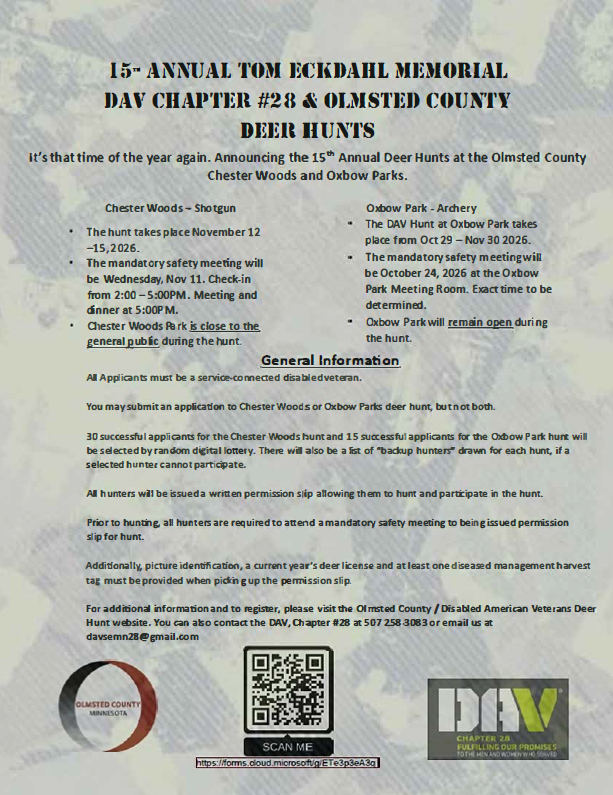 For registration and additional information, please visit the Olmsted County / Disabled American Veterans Deer Hunt website https://forms.cloud.microsoft/g/ETe3p3eA3q
You may also contact DAV Chapter #28 at 507-258-3083 or davsemn28@gmail.com.
Veterans Museum Grand Opening
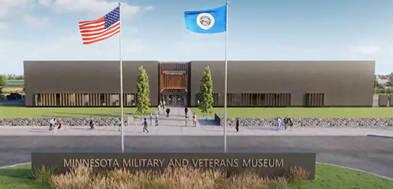
Minnesota Military and Veterans Museum Grand Opening Weekend, Sept. 11 - 13
The Minnesota Military and Veterans Museum celebrates the opening of its new 40,000-square-foot facility on a 32-acre campus near Camp Ripley, with three days of programming that also mark the 25th anniversary of 9/11 and contribute to Minnesota's America 250 commemoration.
- Outdoor activities (ceremonies, concerts, vehicle displays, reenactors, food vendors, resource fairs) are free, rain or shine — no reservation needed.
- Museum gallery access requires a timed-entry reservation: members get presale access Aug 1–7; public tickets open Aug 8. Adults $5, youth (6–17) $2, kids 5 and under and active-duty military free.
- Free shuttle service runs from downtown Little Falls both Saturday and Sunday.
Friday, Sept. 11: A day of 9/11 remembrance, featuring firsthand-account theater programming, an evening screening of the documentary RESOLUTE: Minnesota Stories from the Post-9/11 Homefront, and the museum joining the national Tribute in Light by illuminating in blue.
Saturday, Sept. 12: The official Grand Opening Community Celebration: a ribbon cutting and Parade of Flags, military vehicle displays, veteran-led talks at aircraft, tanks, and a submarine exhibit, a Veterans Recognition ceremony, live music from Mason Dixon Line, a keynote from retired Gen. Paul M. Nakasone (former head of U.S. Cyber Command/NSA), and narrated historic warbird flyovers.
Sunday, Sept. 13: Programming honoring Minnesota's Global War on Terrorism veterans, including two presentations by Rod Rodriguez of the National GWOT Memorial Foundation, plus a hot air balloon flight, family activities, and continued vehicle and aircraft displays.
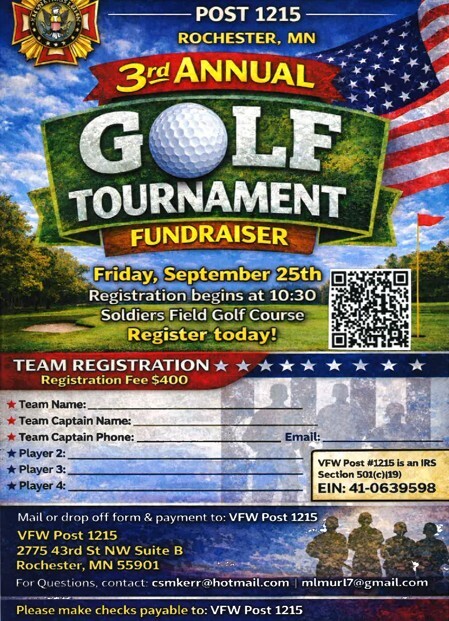
Post 1215 Annual Golf Tournament
Overcoming Barriers to PTSD Care
PTSD (Part 3)
It is not uncommon for people with mental health conditions to avoid talking, but getting help is the best thing you can do.
The decision to get care for PTSD symptoms can be difficult. You are not alone if you feel nervous. It is not uncommon for people with mental health conditions like PTSD to want to avoid talking about it. But getting help for your symptoms is the best thing you can do. PTSD treatments can work.
Why is it important to seek care for PTSD?
There is no need to suffer with PTSD. There are good treatments that can help. You don't need to let PTSD get in the way of your enjoyment of life, hurt your relationships, or cause problems at work or school.
"Getting better" means different things for different people, but people who get treatment improve their quality of life. In many cases, PTSD treatment can get rid of your symptoms. For some, symptoms may continue after treatment, but you will have learned skills to cope with them better.
Treatment can also help you:
- Make sense of the trauma
- Learn skills to better handle negative thoughts and feelings
- Reconnect with people you care about
- Set goals for activities, like work or school, that you can handle
What are barriers to PTSD care?
There are many different barriers, or things that might stop you from seeking help for PTSD. Part of PTSD is avoiding thinking about the trauma. So, it makes sense that people with PTSD may want to avoid getting treatment. But there are other reasons people might not seek care right away. Research points out some examples:
- Believing you will get better on your own
- Problems getting care, like finding a therapist, transportation, or cost
- Not knowing that PTSD treatments work
- Thinking that services are for other people, not you
- Stigma
What Is PTSD Stigma?
Stigma is when you feel judged by other people because of some personal quality or trait. You may feel stigma because of negative things people say about you, or because they treat you differently. An example of stigma related to PTSD is a belief that people with PTSD are dangerous or unstable, which is not true.
Some examples of stigma include:
- Negative labels or stereotypes that assume all people with PTSD are the same
- Discrimination at work, at school, or finding housing because of your symptoms
- Being denied chances to succeed because of a PTSD diagnosis
Because of concerns about stigma, you may try to hide the problem or not admit you need care. You may start to feel that you deserve to be treated badly because of your symptoms. But PTSD is not something to be ashamed of. The best thing you can do for yourself is to take control and get help.
Barriers specific to military context
When you are in the military, there are other things that may get in the way of seeking help. Military members may worry that talking about PTSD with doctors, other soldiers, or commanding officers will hurt their career. You may think if people in your unit learn you have PTSD they will see you as weak, or not trust you to be able to protect them. Or, you may feel that your medical records will be opened for other people to see.
Being afraid that seeking treatment will damage your career leads you to avoid getting help at a time when you need it most. Many don't get help until their return from deployment, or when their family tells them there is a problem. But you don't have to wait.
You may think that avoiding your PTSD is critical to keeping your job. But if your PTSD symptoms are getting in the way of doing your duties, it is better to deal with them before they hurt your military career. Getting help for PTSD is problem solving.
How can I overcome barriers to PTSD care?
There are always reasons for people to put off seeking help, especially with PTSD. It is hard to find a therapist, hard to get time off from work, and hard to find the money to pay for treatment. Facing your problems can be scary. It is even harder if you don't know what to expect.
But if you learn about PTSD treatments, find social support, and get started in treatment, you can feel more in control. You can't change what others think about PTSD, but you can stop it from getting in your way.
Here are some steps you can take and resources to get help for PTSD:
- Learn about PTSD and treatments. Knowing that treatment helps and your options is important.
- Take the first step and find out where to get help. See the VA's Where to Get Help for PTSD page.
- Talk to someone you trust. Whether you talk to a family member, doctor, chaplain or clergy, or another service member or Veteran, getting support is key to getting better.
Next Month: PTSD (Part 4) Myths Persist in the Military Community, New Survey Finds.
Karen's Korner
Isn't it sad that there are so many scams out there targeting unsuspecting people? Some of them seem so real...like you have to act immediately or something bad is going to happen. Someone is trying to take all your money or steal your identity. Sadly, this is the world we live in, and it is only going to get worse because of AI (artificial intelligence). You have to be very careful and take the time to research whether or not something is legit before taking action.
I've been adding scam alerts in the last few newsletters to inform you of new scams that we've discovered. If the alerts prevent one person from being scammed, it will have been worth it.
New Scam Alert
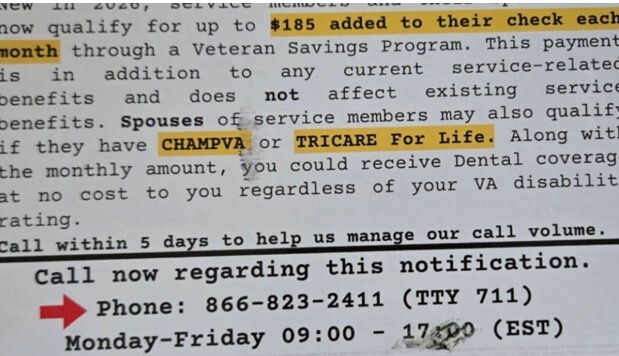
If you receive a postcard in the mail claiming you could qualify for up to $185 a month, free dental coverage or some special veteran savings program, it's a scam.
Officials have released warnings for veterans and their spouses about postcards like this one that appear official in nature but are not connected to VA, TriCare, ChampVA, or any federal agency.
The postcards create a false sense of urgency by telling recipients they must call within 5 days to claim benefits. Here's the reality. Legitimate changes to your VA, TriCare, or ChampVA benefits are not announced through random postcards.
Scammers use these tactics to convince people to call and share personal or financial information. Once they have that information, they could steal your identity or gain access to your financial accounts.
If you receive one of these postcards, the recommendation is simple: throw it away. If something sounds too good to be true, especially when it involves free money or new benefits, it probably is.
If you receive one of these letters or postcards or any form of correspondence promising you something like this, verify before you act. To quickly validate correspondence you receive, any veteran, any dependent, and any surviving spouse can contact VA 24 hours a day, 7 days a week by calling 1-800-MYVA411.
Calling this number allows VA to not only ensure you are protected, but it also lets VA know when and where these scams are occurring, so they can alert your fellow brothers and sisters.
So, there you have it, folks. A new scam to watch out for. Hopefully that helped. And as always, thanks for watching and be sure to subscribe so you don't miss out on future episodes of the Sitrep. You've got questions and we've got answers. Whether you served, are currently serving, are a caregiver, or a veteran advocate, the Sitrep is your trusted source for information. Subscribe today at www.youtube.com/VAmadesimple.
Don't Bank on This Email
Imagine you open your inbox and receive an urgent message from your bank, warning you that your account will be restricted unless you confirm your information right away. The email has your bank's logo and color scheme, and includes a link to update your information. Because the message looks real and you don’t want to lose access to your money, it’s tempting to select the link.
But this email is actually a phishing scam! If you select the link, you'll be prompted to download a tool that claims to protect your account. But that download actually installs malware that lets cybercriminals remotely access your device. This malware can allow them to view your mailing address, bank account details, and other information that they can use right away to steal your identity!
Follow these tips to avoid falling victim to this phishing scam:
- Verify bank alerts by logging in directly to your bank's official app or website, never through a link in an email.
- If you're ever unsure whether a bank alert is real, contact your bank using the phone number on the back of your debit or credit card.
- Always stop and think before you act! Cybercriminals rely on alarming messages to get your attention and force you to make fast decisions.
Falling Behind on Your VA Loan?
Falling behind on payments doesn't mean losing your home. See how VA loan technicians can help halt foreclosure.
If you have a VA-backed home loan and you've missed a mortgage payment, you have more time and more options than you probably think. The VA guarantees a portion of your loan, which means it has a direct stake in keeping you in your home. The VA requires your loan servicer to explore every reasonable alternative before foreclosure.
Here’s how you can avoid foreclosure after missing mortgage payments.
What to Do in the 24 Hours after Missing a Payment
If you just missed a mortgage payment or know you're about to, it’s important to act quickly. Here's your immediate action checklist:
-
Call your loan servicer today. Tell them you have a VA-guaranteed loan and you want to discuss home retention options.
-
Call a VA loan technician at (877) 827-3702 (select option 6). Technicians can explain your options and advocate on your behalf with your servicer.
-
Gather your financial documents. Pull together recent pay stubs, bank statements, and a written explanation of what caused the missed payment.
-
Write a hardship letter. Servicers use this to match you with the right assistance program.
-
Don't ignore mail or calls from your servicer. Missing these can cause you to miss deadlines for assistance programs.
-
Watch for scams. If a company contacts you promising to "stop your foreclosure" for a fee, hang up. Only work with your servicer or the VA directly.
-
Keep paying what you can. Even a partial payment shows good faith and may reduce what you owe.
What Happens After Missing the First Loan Payment?
Missing a single mortgage payment doesn't put your home at immediate risk. Here's the general timeline for what can happen after missing the first VA loan payment.
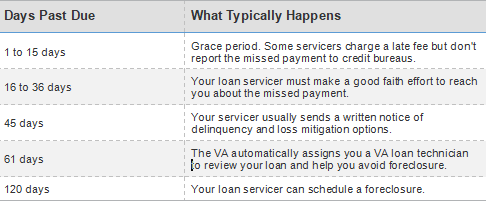 |
A single missed payment rarely leads to foreclosure. It's an ongoing pattern of missed payments without an assistance plan in place that puts your home at risk. The good news is that you typically have several months to get back on track before foreclosure.
That said, don't wait until the last minute to act. The sooner you contact your servicer and the VA, the more loss mitigation options remain on the table, including some that become harder to qualify for the further behind you get.
Contact Your Loan Servicer Right Away
Your loan servicer, the company you send your mortgage payment to, is your first stop for VA foreclosure help. Even if you're behind by only one payment, call the loss mitigation or homeowner assistance department and explain your situation.
Here’s what you should say to your loan servicer:
- You have a VA-guaranteed home loan.
- You're experiencing financial hardship (name it specifically).
- You want to know what home retention options are available before your loan falls further behind.
- You want the servicer to evaluate you for the VA's full loss mitigation sequence, not just one option.
Servicers are required to evaluate VA borrowers for a sequence of loss mitigation options before referring a loan to foreclosure. Depending on your situation, this might include a repayment plan, forbearance, loan modification, or the VA Partial Claim Program.
Get Free Help from a VA Loan Technician
One advantage VA borrowers have over conventional and FHA borrowers is direct access to a VA loan technician, at no cost to you. A VA loan technician can:
- Review your loan file and hardship.
- Work directly with your servicer on your behalf.
- Explain every foreclosure avoidance option you qualify for.
- Step in if you feel your servicer isn't cooperating. Help you understand how a given option affects your VA loan entitlement.
If your VA loan is 61 days or more past due, the VA automatically assigns you a loan technician. But you don't have to wait until day 61. You can contact a VA loan technician the moment you're worried about a payment, even before you've missed one.
To contact a VA loan technician, call (877) 827-3702 (select option 6), Monday through Friday, from 8 a.m. to 6 p.m. ET.
Look Into the VA Partial Claim Program
The VA Partial Claim Program, which was relaunched in 2026, is one of the most useful tools for VA mortgage hardship relief. It replaced the earlier Veterans Affairs Servicing Purchase (VASP) program, which ended in May 2025.
Here’s how a partial claim works: Instead of adding your missed payments to your loan balance at a new (likely higher) interest rate, the VA advances funds to cover the past-due amount. That amount becomes a separate subordinate lien on your home, not a change to your existing mortgage. There's no interest and no monthly payment on the lien. You only repay it when you sell the home, refinance with an IRRRL, or pay off your original mortgage.
Key details of the VA Partial Claim Program:
- The VA can cover up to 25% of your unpaid principal balance, or 30% if you previously used a COVID-era partial claim.
- It applies only to VA-guaranteed loans on your primary residence.
- You must be in default or at imminent risk of default.
- You'll need to complete a three-month trial payment plan, and have three consecutive on-time payments, before the claim is finalized.
- It's generally a one-time benefit per loan.
A partial claim tends to work best when your hardship was temporary and your original monthly payment is still something you can afford. If your income has permanently dropped and the original payment no longer fits your budget, a loan modification may be the better fit.
When to Consider Loan Modification
If a temporary fix won't solve your situation because your regular payment is no longer affordable, a loan modification is likely a better option. It restructures the loan itself so you can lock in more favorable terms.
Lenders typically offer several VA loan modification options, which include:
-
Traditional loan modification: Missed payments and related legal costs get added to your total loan balance, and you get a new payment schedule. Because of higher current interest rates, this can sometimes raise your monthly payment.
-
30-year modification: Your servicer resets your mortgage to a 30-year term if doing so lowers your principal and interest payment.
-
40-year modification: Your servicer extends your existing loan term out to 40 years, which can meaningfully lower your monthly payment.
-
Repayment plan: If you've only missed a payment or two, you resume your regular payment plus a little extra each month until you're caught up.
-
Special forbearance: You get extra time to repay missed payments without those payments being added to the back of your loan. You'll need a plan with your servicer for how you'll pay them back once forbearance ends.
Here's how to think about which route fits your situation:
|
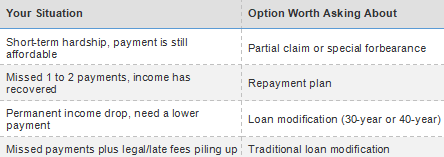 |
Your servicer and VA loan technician will walk through your income, hardship, and remaining loan term to recommend the right combination. Sometimes, it's more than one tool working together, like a partial claim paired with a modification if your missed payments exceed the 25% cap.
Should You Sell Your Home Before Foreclosure?
In some cases, keeping the home isn't realistic. If you’re thinking about selling, you still have options that are far less damaging than a foreclosure:
-
Extra time to arrange a private sale: If you want to sell but need more time, your servicer may delay foreclosure proceedings to give you time to list and close a private sale on your own terms.
-
Short sale (compromise sale): If you owe more than the home is worth, your servicer may agree to accept the sale proceeds as full payment of your debt, even though it's less than what you owe. This avoids foreclosure but will affect your credit and may reduce your future VA loan benefit.
-
Deed in lieu of foreclosure: You voluntarily sign the home's deed over to your servicer instead of going through the foreclosure process. It's faster and less damaging to your credit than a foreclosure, but it can still affect your future VA entitlement.
Both a short sale and a deed in lieu are reported differently than a foreclosure and are generally viewed as less severe by future lenders, but neither is free of consequences. Talk to your VA loan technician before choosing either path so you understand exactly how it affects your entitlement and your ability to use a VA loan again.
What to Do If Foreclosure is Scheduled
If you've received a foreclosure notice or already have a sale date, time matters more than ever, but you're not out of options yet. Here’s what to do:
-
Call your servicer and a VA loan technician the same day you receive any foreclosure notice.
-
Apply for a loss mitigation option immediately. If you submit a complete application at least 90 days before the scheduled sale date, your servicer must give you at least 14 days to accept or reject any offer before proceeding.
-
Ask specifically about a partial claim or modification, even this late, since some servicers can process these quickly if your file is otherwise in order.
-
Get everything in writing. If you're approved for any option, get the terms in writing before the sale date.
-
Consider a short sale or deed in lieu if keeping the home is no longer possible, since both stop foreclosure and reduce the damage to your credit and future VA loan benefit.
-
Reach out for help if you're at risk of homelessness. The National Call Center for Homeless Veterans is available 24/7 and can connect you with local resources.
-
Report suspected scams to the Consumer Financial Protection Bureau (CFPB) and avoid any company charging upfront fees to "save" your home.
Frequently Asked Questions:
Q: How Many Missed Payments are Allowed Before Foreclosure?
There's no single missed-payment threshold that automatically triggers foreclosure. In general, your servicer must attempt contact within about 36 days of a missed payment, and federal rules generally prevent servicers from starting foreclosure before 120 days of delinquency.
Q: Can the VA Stop Foreclosure?
The VA can't unilaterally stop a foreclosure since your servicer, not the VA, holds the legal authority over the loan. What the VA can do is assign you a free loan technician who works directly with your servicer to find an alternative, offer programs like the Partial Claim Program to bring your loan current, and require servicers to evaluate you for loss mitigation options before foreclosure.
Q: What Is the VA Partial Claim Program?
The VA Partial Claim Program lets the VA advance funds, up to 25% of your unpaid principal balance (30% if you previously used a COVID-era partial claim), to bring your missed VA loan payments current. The amount becomes a separate, interest-free subordinate lien on your home rather than being added to your existing mortgage. You repay it only when you sell, refinance, or pay off the home.
Q: Does Foreclosure Eliminate My VA Loan Eligibility?
No, a foreclosure doesn't eliminate your VA home loan eligibility altogether, but it can reduce the entitlement you have available for a future VA loan. If the VA has to pay your servicer a claim after foreclosure, that amount is subtracted from your entitlement until you repay it through a process called restoration of entitlement.
ID Cards at the Rochester VA Clinic
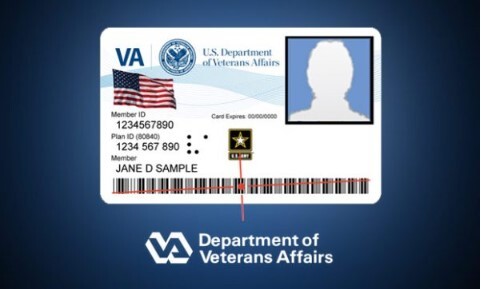
VA ID Cards may be obtained at the Rochester VA Clinic by appointment only on the following dates:
September 17, 2026
November 19, 2026
(These dates are most likely filled). You can call the number below to find out when the next available appointment is. Typically, the ID's are done every other month on the 3rd Thursday.
Please call the VA at 1-866-414-5058 to make an appointment in Rochester.
*The Minneapolis VA Medical Center issues ID cards daily.
Click HERE for more information on veteran ID cards.
JOBS
Olmsted County Veterans Organizations
Get involved! Support a local chapter! Check out these veteran organizations for becoming a member and member resources:
Local organizations
American Legion Post 551 (Eyota)
American Legion WM. T. McCoy Post 92 (Rochester)
American Legion Ivan-Stringer Post 164 (Stewartville)
Disabled American Veterans (DAV) - Mayo SE Minnesota Chapter 28
Honor Bound Veterans
Marine Corps League - THOR #606
- Address: PO Box 8490, Rochester, MN 55903
- Telephone: 507-251-6919
- Email: SemperVince@hotmail.com
- Point of contact:
- Mark Shuster
- Vince Reynolds
Minnesota POW / MIA Riders Association (Rochester)
Order of the Purple Heart - Chapter 7110, Rochester MN
Facebook: https://www.facebook.com/p/Purple-Heart-Chapter-7110-Rochester-MN-100079537844682/
Veterans of Foreign Wars (VFW) Post 9647 (Oronoco)
Veterans of Foreign Wars (VFW) Post 1215 (Rochester)
Local Service Organization Meetings
For a full list of local organizations and meetings, please click on the blue button.
"To promote the interests and welfare of veterans, their dependents and survivors and to enhance their quality of life through counseling, claims assistance, education, advocacy and special projects."
2100 Campus Dr. SE, Suite 200
Rochester, MN 55904
507-328-6355
|