|
Article 1: CVSO Office Updates
Article 2: Women Veterans Spotlight
Article 3: Veteran Service Office Snapshot
Article 4: VFW 1215 Reveille
Article 5: Honor Bound Veterans Direction Workshop
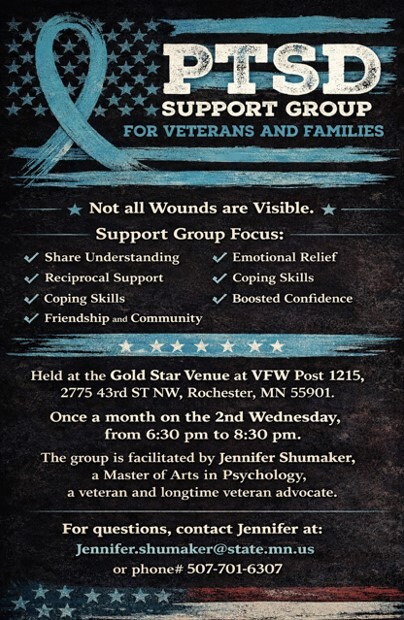
Article 6: PTSD Support Group
Article 7: Cold Weather Clothing Drive
Article 8: Free Pancake Breakfast
Article 9: Tax Day Spaghetti Feed
Article 10: VA Auto Grants
Article 11: Disability and Military Retirement Pay
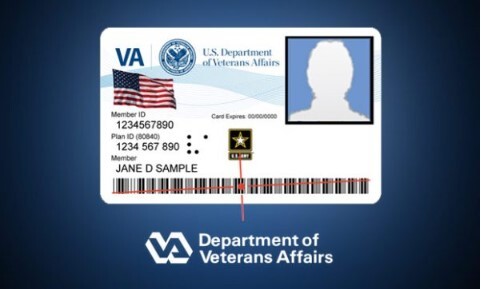
Article 12: ID Cards at the Rochester VA Clinic
Article 13: Camp Bliss Events
Article 14: Warriors and Walleyes Outdoors
Article 15: JOBS
Article 16: Local Service Organization Meetings
CVSO Office Updates
Happy March to my favorite community of Veterans! May the luck of the Irish be with you this month!
This month’s article is referring to The Caregiver Support Program. Read along to get a better understanding of the program and what to expect when you apply!
Caregiver Support Program — Getting Started
The U.S. Department of Veterans Affairs (VA) Caregiver Support Program helps caregivers of Veterans access services such as training, mental health counseling, peer support, health care benefits, a possible monthly stipend, and respite care.
You may be a caregiver if you help a Veteran with daily needs. Caregivers can include spouses, partners, children, relatives, or friends.
You may be a caregiver if you help a Veteran with tasks such as:
-
Scheduling or driving to medical appointments
-
Helping with bathing, dressing, or taking medications
-
Assisting with mobility, transfers, or medical equipment
-
Communicating with doctors, nurses, or social workers
If you answered “yes” to any of these, you may qualify for VA caregiver support services.
Available Support for Caregivers
-
Caregiver education and training
-
Peer mentoring and support groups
-
Respite care (temporary relief for caregivers)
-
Help in the home with daily tasks
-
Home care supplies and equipment
-
Veteran clothing allowance
-
Home modification benefits
Availability depends on the Veteran’s eligibility and local resources.
Caregiver Support Programs:
Program of General Caregiver Support Services (PGCSS)
-
For caregivers of Veterans enrolled in VA health care
-
Provides training, education, and support
-
No formal application required
Program of Comprehensive Assistance for Family Caregivers (PCAFC)
-
May include a monthly stipend and additional benefits
-
Eligibility based on specific criteria
Caregiver Support teams include social workers, nurses, and psychologists who can help you find available services.
A Veteran may qualify if:
-
They have a service-connected disability rating of 70% or higher, and
-
They need in-person personal care services for at least six continuous months, and
They meet ONE of the following conditions:
-
Need help with activities of daily living (such as bathing, dressing, or eating), or
-
Require supervision or protection due to neurological or other impairment, or
-
Cannot safely live independently without caregiver support, or
-
The Veteran sustained or aggravated a serious injury or illness in the line of duty on or after September 11, 2001 (or meets other qualifying service criteria).
Your local Caregiver Support Program team can help determine eligibility.
The Veteran and caregiver apply together.
-
✉️ By mail: Submit VA Form 10-10CG
-
📍 In person: Submit the form to your local VA Medical Center Caregiver Support Coordinator
-
📞 Phone assistance: Caregiver Support Line — 855-260-3274
PCAFC Application Process (10 Steps)
1. Submit VA Form 10-10CG (Veteran and caregiver)
2. Application intake by local Caregiver Support Team
3. Veteran clinical assessment
4. Functional assessment of the Veteran
5. Caregiver assessment
6. Initial eligibility review
7. Caregiver training
8. Home-care assessment
9. Final eligibility review
10. Notification of decision (usually within 90 days)
Please reach out to our team or our local Community Based Outreach Clinic (CBOC) here in Rochester for more information.
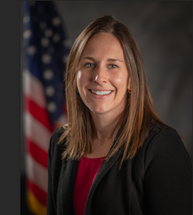 Tiffany Canfield
County Veteran Services Officer (CVSO) & Manager
tiffany.canfield@olmstedcounty.gov
507-328-6358
Women Veterans Spotlight
HAPPY MARCH SISTERS!! I’m so glad you’re here and reading along!
Did you know...
Women are the fastest-growing group in the Veteran community, serving in every branch of the military and in every role — from combat operations to leadership, medicine, intelligence, aviation, logistics, and beyond. Today, more than 2 million women Veterans live in the United States, and their contributions continue to shape our armed forces and our communities.
The U.S. Department of Veterans Affairs offers specialized services for women Veterans, including primary care, mental health services, maternity care, reproductive health care, and support for military sexual trauma survivors. Many VA facilities also have Women Veteran Program Managers to help coordinate care and connect Veterans to resources.
Women Veterans are encouraged to enroll in VA health care and stay connected to local Veteran organizations, where they can find camaraderie, support, and opportunities to continue serving their communities.
If you are a woman who served, or know of one, we thank you for your service and sacrifice. Your story matters, and your service continues to inspire the next generation.
-Tiffany
“You can’t raise the bar without raising a little hell”- so let’s raise some hell, shall we ladies??
Veteran Service Office Snapshot
January 2026
Total claims submitted to VA:
- Compensation: 184
- VA Healthcare: 25
- DIC: 0
- Burial: 14
- Survivor’s Pension: 1
- CHAMPVA: 2
- Records Request: 1
- Special Monthly Pension: 0
Points of contact with veterans (office visits, incoming mail, phone calls
returned, emails returned, etc.): 350
Veterans in office: 81
Outreach visits: 3
Total phone calls: 259
Average number of calls per day: 8
Average call length: 2 minutes and 45 seconds
VFW 1215 Reveille
Veterans of Foreign Wars Post 1215
2775 - 43rd Street NW
Rochester, MN 55901
507-289-6818
Honor Bound Veterans Direction Workshop
Purpose After Service
Honor Bound Veterans is hosting a Direction Workshop on Saturday, March 28 at VFW Post 1215 in Rochester.
This session is built for veterans who are capable, busy, and responsible, but not completely clear on where their effort should be focused next.
Military service gave us a mission. Civilian life gives us options.
This workshop is about direction.
What you can expect:
- A structured, veteran-centered process
- Practical exercises to clarify priorities
- Conversation with other veterans
- Clear next steps you can act on
What this is not:
- Therapy
- Group counseling
- A motivational seminar
- Forced vulnerability
Honor Bound Veterans has partnered with a certified facilitator who has worked with veterans and first responders.
Attendance is capped at 50 participants, so the session stays conversational and productive.
Lunch will be provided and we’ll have raffle prizes during the event.
RSVP is required so we can plan seating and meals. Registration will close once 50 seats are filled.
When: Saturday, March 28
Time: 11:00 AM – 1:00 PM
Location: VFW Post 1215
2775 - 43rd St NW
Rochester, MN 55901
Reserve your seat for the Find Your Purpose Veterans Workshop here.
If you’ve been putting effort into life but haven’t paused to decide where it should go next, this may be worth two hours.
Bryan Ehni
President, Honor Bound Veterans
Veteran Non-Profit Organization
(507)269-5401
https://honorboundveterans.com/
PTSD Support Group
Cold Weather Clothing Drive
Our community has many homeless veterans in need of winter clothing. VFW Post 1215 is partnering with MACV (Minnesota Assistance Council for Veterans) to host a clothing drive specifically for winter attire. Please drop off your donations in the designated boxes at VFW Post 1215, 2775 43rd St NW, in Rochester, MN.
Free Pancake Breakfast
Tax Day Spaghetti Feed
VA Auto Grants
Veterans Can Now Get VA Auto Grants Every 10 Years. Here's What Changed
A disabled veteran who received a Department of Veterans Affairs automobile grant decades ago can now apply for another one. The change, signed into law in January 2023, removes the lifetime restriction that previously limited eligible veterans to a single vehicle purchase grant.
The Advancing Uniform Transportation Opportunities for Veterans Act, known as the AUTO Act, allows veterans with qualifying service-connected disabilities to receive an automobile grant from the Department of Veterans Affairs every 10 years instead of just once in their lifetime.
What the Law Changed
Before the AUTO Act, VA provided eligible veterans with a one-time grant to purchase a specially equipped vehicle. That grant, currently $27,074.99 as of October 2025, was only available once across a veteran's entire lifetime. Veterans could receive multiple grants for adaptive equipment such as power steering or wheelchair lifts, but a grant for the purchase of the vehicle itself was limited to one use.
For veterans who need modified vehicles to maintain mobility and independence, this creates a significant financial burden. Modified vehicles cost between $20,000 and $80,000 for new vehicles and $21,000 to $35,000 for used ones. The average lifespan of a modified vehicle is roughly 11.5 years. Veterans who received grants ended up either driving vehicles well past their usable lives or paying tens of thousands out of pocket for replacements.
Under the new law, veterans who haven't received a vehicle grant in 30 years are immediately eligible to apply for another one; and they can then apply for a new grant every 10 years.
Who Qualifies
Eligibility requirements haven't changed. Veterans and active-duty service members qualify for the automobile grant if they have a service-connected disability that includes at least one of these conditions:
- Loss, or permanent loss of use, of one or both feet
- Loss, or permanent loss of use, of one or both hands
- Permanent decreased vision in both eyes, meaning 20/200 vision or less in the better eye with glasses; or greater than 20/200 vision but with a visual field defect that reduces peripheral vision to 20 degrees or less in the better eye
- Severe burn injuries
- Amyotrophic lateral sclerosis
- Ankylosis in one or both knees or hips (this qualifies for adaptive equipment grants only, not the automobile purchase grant)
The disability must be service-connected or treated as service-connected under 38 U.S.C. 1151, which covers disabilities resulting from VA medical care.
How the Timing Works
The law includes a phase-in period:
Veterans who have never used a VA vehicle grant can apply immediately and will be eligible every 10 years thereafter.
Veterans who last received a grant 30 or more years ago can apply immediately. After receiving that grant, they'll be eligible again every 10 years.
Veterans who received a grant less than 30 years ago must wait until 30 years have passed since their last grant. After that, the 10-year cycle applies.
Veterans may also qualify for a second grant if a natural disaster destroyed a vehicle purchased with VA assistance, as long as the destruction wasn't the veteran's fault and property insurance didn't compensate for the loss.
Additional Changes in the Law
The AUTO Act also updated how VA classifies certain vehicle modifications. The law allows VA to pay for specific modifications as medical services rather than only through the adaptive equipment program. These modifications include van lifts, raised doors, raised roofs, air conditioning and wheelchair tie-downs for passenger use.
This change matters because it provides another pathway for veterans to obtain necessary vehicle modifications through VA health care rather than solely through the benefits system.
How to Apply
Veterans must file their claim and receive VA approval before purchasing a vehicle or adaptive equipment. The application process requires VA Form 21-4502, Application for Automobile or Other Conveyance and Adaptive Equipment.
Once VA approves the application, the agency completes the authorization section of the form and returns it to the veteran. The veteran then purchases the vehicle, presents the original signed form to the seller, and the seller submits the form and an itemized invoice to VA. VA pays the seller directly by law. The money cannot be paid to the veteran.
Veterans applying for an additional automobile grant who previously received one should contact their local VA prosthetic and sensory aids service before purchasing any new or used adaptive equipment.
Why This Matters
The Congressional Budget Office estimated the total cost of the AUTO Act at $43 million from 2022 to 2032. That relatively modest appropriation addresses a significant quality-of-life issue for severely disabled veterans.
For rural veterans, the change is particularly important. Veterans living far from VA medical centers accumulate substantial mileage traveling to appointments and treatment. When a modified vehicle reaches the end of its usable life, replacing it out of pocket can be financially devastating.
The law was inspired by Neal Williams, a paralyzed Vietnam veteran from Maine who drove his first VA-funded vehicle more than 250,000 miles until it fell apart. Williams paid $50,000 out of pocket for his most recent van because the old law limited him to that single grant decades earlier.
The legislation was sponsored in the House by Representatives Dan Meuser, a Pennsylvania Republican, and David Trone, a Maryland Democrat. In the Senate, Senators Susan Collins, a Maine Republican, and Joe Manchin, then a West Virginia Democrat, co-authored the provisions. President Joe Biden signed the Veterans Auto and Education Improvement Act of 2022, which included the AUTO Act provisions, into law Jan. 5, 2023, as Public Law 117-333.
For veterans who used their one-time grant years ago and have been shouldering replacement vehicle costs alone, the change means they can now apply for assistance again. That represents a meaningful shift from treating vehicle mobility as a one-time benefit to recognizing it as an ongoing need across a veteran's lifetime.
Disability and Military Retirement Pay
Why Some Disabled Veterans Can't Get Both VA Disability and Military Retirement Pay
Military service members planning medical retirement face a critical decision point at the 20-year mark. A service member who medically retires with 19 years of service receives either military retirement pay or Department of Veterans Affairs compensation, but not both. A service member who reaches 20 years gets both without offset through concurrent retirement and disability pay (CRDP).
Before CRDP existed, military retirees receiving VA disability compensation had their retirement pay reduced dollar-for-dollar by their VA payments. The 2004 National Defense Authorization Act changed this. CRDP allows eligible veterans to receive full military retirement pay and full VA disability compensation simultaneously. Today, more than 310,000 retirees receive CRDP payments totaling over $427 million monthly.
The basic requirements are straightforward. Veterans must be entitled to military retired pay and VA disability compensation, and they must have a VA disability rating of 50% or higher. Regular retirees with 20 or more years qualify automatically. Reserve retirees with 20 qualifying years qualify when they reach retirement age.
Chapter 61 Medical Retirement
Service members medically retired under Chapter 61 of Title 10 face different rules. Chapter 61 covers veterans who are found physically unfit for continued service and placed on the Temporary Disability Retired List or permanently retired for disability.
Medical retirees with 20 or more years of service qualify for CRDP, but with a caveat. They can receive CRDP only up to the amount of retirement pay they would have received based on years of service, not based on their disability rating.
For example, a service member with 20 years of service normally receives retirement pay calculated at 50% of their base pay. If that same service member is medically retired with a 60% disability rating, their disability retirement pay is calculated at 60% of base pay. Under CRDP, they can receive a 50% longevity-based amount without VA offset, but the additional 10% remains subject to offset.
Medical retirees with fewer than 20 years of service don't qualify for CRDP at all, regardless of their VA disability rating. This creates significant financial consequences for service members facing medical retirement before reaching 20 years.
The Financial Impact
A service member with 18 years of service and a 70% VA disability rating who is medically retired doesn't receive both payments. If their military disability retirement pay is $2,000 per month and their VA disability compensation is $1,800 per month, they receive the higher amount, typically keeping the non-taxable VA compensation and waiving military retirement pay.
A service member with 20 years in the same situation receives both payments in full through CRDP, totaling $3,800 monthly. The two-year difference creates an $1,800 monthly gap that continues for life.
Reserve and National Guard members need 20 qualifying years of service, which requires earning at least 50 retirement points annually. A service member with 14 years of active duty and six years of reserve duty might have 20 years total but not 20 qualifying years under the point system. Reserve retirement pay doesn't begin until the service member reaches retirement age, typically 60. Those who medically retire before 20 qualifying years face the same offset as active-duty members.
TERA Program Exception
Temporary Early Retirement Authority legislation previously gave the military services the authority to retire members with more than 15 but fewer than 20 years of creditable service. This applied to both active-duty and reserve members. The original regulations clearly stated that service members under disability evaluation were not eligible for TERA unless found fit for duty. These regulations were in effect from approximately 1996 to 2001.
TERA Reinstatement and the Disability Waiver
When the fiscal 2012 National Defense Authorization Act reinstated TERA, the amended law allowed service members to waive their right to a disability evaluation and instead request early retirement under TERA.
This practice began with the Marine Corps and has since been observed across other service branches. While individual case examples cannot be provided due to Title 5 personal data protection requirements, the authority to waive Physical Evaluation Board (PEB) findings for TERA retirement is documented in official military guidance posted on army.mil and marines.mil websites.
Program Expiration and Retroactive Applicability
The TERA program authority expired on Dec. 31, 2025. However, service members who fell under Chapter 61 disability retirement proceedings between Dec. 31, 2011, and Dec. 31, 2025, may be eligible for reevaluation under these provisions.
The Stay or Go Decision
Service members approaching medical retirement between 15 and 20 years face difficult calculations. Continuing service while managing service-connected conditions can worsen those conditions. Some remain on limited duty to accumulate time for CRDP eligibility. Others accept medical retirement earlier, forgoing CRDP but potentially receiving higher disability ratings.
The decision depends on individual circumstances. A service member at 18 years with stable disabilities might benefit from reaching 20 years. A service member at 15 years with rapidly deteriorating conditions might not. Medical retirement timelines also matter. The Integrated Disability Evaluation System process can take months, and service members who begin the process near 20 years might cross the threshold before final retirement orders.
Combat-Related Special Compensation Alternative
Service members who don't qualify for CRDP might qualify for Combat-Related Special Compensation. CRSC provides tax-free payments to veterans whose disabilities are combat-related, including Chapter 61 retirees with fewer than 20 years.
The 2008 NDAA expanded CRSC eligibility to include Chapter 61 and TERA retirees regardless of service length. Veterans must prove disabilities resulted from armed conflict, hazardous duty, simulation of war or instrumentality of war. CRSC compensates combat-related disabilities specifically and is tax-free. CRDP restores retirement pay regardless of combat relation, but it is taxable. Veterans eligible for both choose one annually during open season.
CRDP requires no application. The Defense Finance and Accounting Service automatically determines eligibility. Veterans who believe they qualify but aren't receiving payments should contact DFAS at 800-321-1080. CRSC requires application through each service branch with documentation proving disabilities are combat-related.
The Policy Debate
Congress has debated expanding CRDP eligibility multiple times. Proposals have sought to eliminate the 20-year requirement for Chapter 61 retirees or reduce the minimum VA rating from 50%.
Opponents argue this would constitute double payment for the same disability since both military disability retirement and VA compensation address the same conditions. Advocates respond that the distinction punishes service members whose disabilities prevent them from reaching 20 years.
Cost estimates for expansion range from hundreds of millions to billions over 10 years. Budget constraints have prevented expansion despite repeated legislative attempts.
Planning for Medical Retirement
Service members facing potential medical retirement should consult installation legal assistance offices and disability evaluation system counselors. Financial counselors can model different retirement scenarios. Veterans service organizations provide guidance on VA claims and ratings.
The decision involves more than finances. Quality of life, family considerations, and health trajectory all matter. But understanding CRDP eligibility and the 20-year threshold is essential for informed decisions about military medical retirement.
ID Cards at the Rochester VA Clinic
VA ID Cards may be obtained at the Rochester VA Clinic by appointment only on the following dates:
March 19, 2026
May 21, 2026
July 16, 2026
September 17, 2026
November 19, 2026
Please call the VA at 1-866-414-5058 to make an appointment in Rochester.
*The Minneapolis VA Medical Center issues ID cards daily.
Click HERE for more information on veteran ID cards.
Camp Bliss Events
2026 Camp Bliss Retreats for Veterans, Law Enforcement and People with Disabilities!
Located in the heart of northern Minnesota, Camp Bliss is a year-round, wheelchair-accessible retreat and private rental destination set on 48 acres of pine and hardwood forest. Surrounded by the peaceful waters of Long Lake, Lake 3, and Lake 4, our property offers a unique setting for vacations, weekend getaways, weddings, conferences, and special events.
With lodging options designed for all abilities, Camp Bliss is committed to creating inclusive experiences for everyone. Each private rental helps support our mission of providing low or no-cost retreats for Veterans and individuals with disabilities.
From canoeing, kayaking, and paddleboarding in the summer to snowshoeing and fireside relaxation in the winter, Camp Bliss invites you to slow down, explore the outdoors, and make lasting memories…and find your bliss!
- We will not be charging a registration fee for Veteran getaways for the next two years, we have secured funding from the MDVA. For non-qualifying Veterans there will be a fee of $100 per person to attend a getaway or retreat. If you have questions about the guidelines, please call Lori at (320) 281-2016.
- We will now be allowed to get reimbursement for spouses, children, and active-duty service members!
You may come up to two retreats per year!!!! MDVA Calendar Year September 1, 2025 – August 30, 2026. We have added many exciting retreats due to this!! A complete list of 2026 Retreats and Getaways are listed below! **Because there will not be a registration fee, you will still be required to submit the appropriate documentation, DD214 (Member 4) and Driver’s license or state ID. If a spouse is attending and has a different last name, you will be required to show proof of marriage before you are considered “registered.” Once you are, please commit fully to attending your retreat as there are limited spots for each one and if you do not show up, that is a Veteran’s spot that you have eliminated
If a Retreat/Getaway says FILLED, please email or call Kirsten to be put on a waiting list: Register@campbliss.org or call 320-281-2016
2026 Upcoming Camp Bliss Retreats.
Veterans Turkey Hunt Getaway: April 24 - 26, 2026
Register by March 30, 2026
Veterans & Family Getaway: May 8 - 10, 2026
Register by April 3, 2026
Veteran & Child Turkey Hunt Getaway: May 15 - 17, 2026
Register by April 10, 2026
Warriors & Walleyes Outdoors
Warriors & Walleyes Outdoors is a wonderful organization that offers veterans and their guests guided hunting and fishing trips. With tremendous support from experienced guides, veterans who attend these events create fantastic memories.
LOW Veterans Fishing Event
-
Location: Arnesen's Rocky Point Resort
Lake of the Woods, MN
-
Dates: July 30 - August 2, 2026
- Forms must be submitted no later than January 1, 2026
For more information regarding any of the events listed above, please click below:
JOBS
Local Service Organization Meetings
For a full list of local organizations and meetings, please click on the blue button.
"To promote the interests and welfare of veterans, their dependents and survivors and to enhance their quality of life through counseling, claims assistance, education, advocacy and special projects."
2100 Campus Dr. SE, Suite 200
Rochester, MN 55904
507-328-6355
|