|
|
Welcome to the second edition of Seed Link! As we build up our mailing list, we are sending this newsletter to our social equity applicant email list. If you would like to receive future editions, please sign up for our Seed Link mailing list.
In this issue:
-
Staying grounded
-
Connecting communities
-
Opportunity outlets
-
Monthly sparks
-
Plug in
-
Charging ahead
|
|
 |
|
Staying grounded
|
|
|
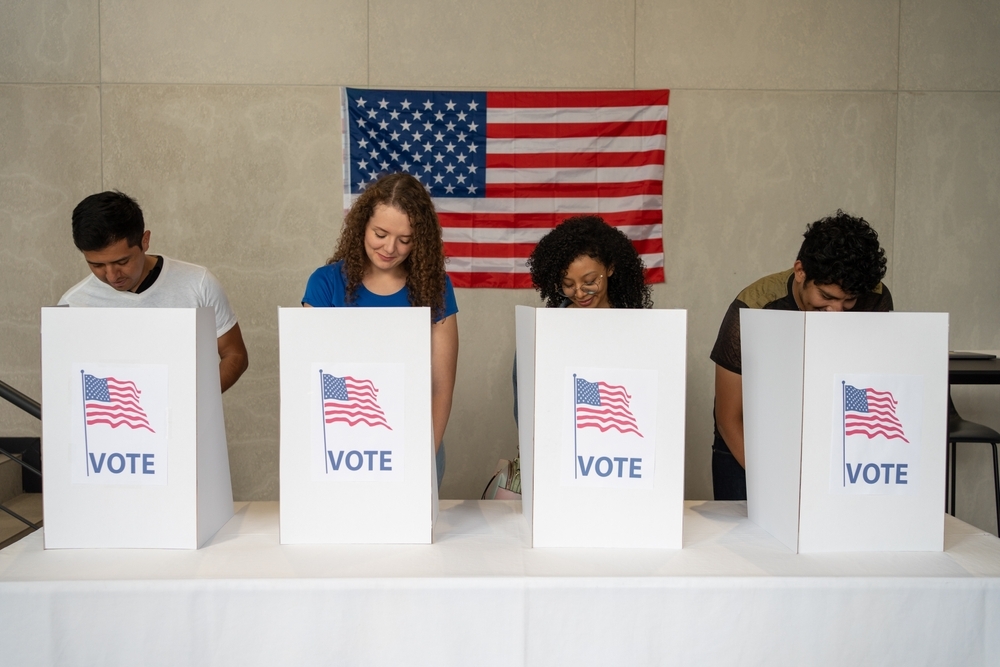
Your voice matters: Get out and vote
October is an important month for civic participation. Minnesota's general election is Tuesday, Nov. 3, and early voting began on Sept. 18. This year's ballot includes federal, statewide, legislative, judicial and local races, along with a proposed constitutional amendment.
For communities disproportionately impacted by cannabis prohibition, participating in the decisions that shape our communities is one way to stay connected and informed.
And here's something every U.S. citizen should know: Having a criminal record does not automatically take away your right to vote.
In Minnesota, your criminal record does not affect your right to vote unless you are currently incarcerated serving a felony sentence. That means you can vote if you have completed incarceration for a felony conviction, including while on probation, parole or supervised release. You can also vote if you were convicted of a misdemeanor or gross misdemeanor.
-
Sept. 18 – Nov. 2: Early voting
-
Oct. 13: Advance voter registration deadline
-
Nov. 3: Election Day
|
|
 |
|
Connecting communities |
|
|
From opportunity to employment: Join us Oct. 22
Building an equitable cannabis industry isn't only about who owns a business. It's also about who gets the opportunity to work, learn, build skills and develop a career in Minnesota's emerging cannabis economy.
That's why the Division of Community and Economic Development is hosting the Office of Cannabis Management’s first Resource and Hiring Fair on Thursday, Oct. 22, from 2–6 p.m. at the Urban Research and Outreach-Engagement Center (UROC) in Minneapolis.
The event will bring together licensed cannabis businesses, ancillary service providers, workforce partners and job seekers from social equity eligible communities.
Job seekers will have an opportunity to receive:
-
Tips for interviewing
-
Resume tips
-
Free headshots
-
Meetings with cannabis business looking to hire
-
Community resources
-
Cannabis Expungement Board
-
The Cannabis Expungement Board, established in 2023, is responsible for reviewing eligible cannabis-related criminal records. The Board conducts a case-by-case review to determine whether cases are eligible and then determines if dismissal, expungement, resentencing, or no action is appropriate. The CEB is composed of five voting members designated by statute who are supported by an executive director and staff who are working to ensure individuals affected by past cannabis laws have a clear pathway forward.
- Minnesota Department of Employment and Economic Development (DEED)
- DEED offers workforce development programs, career planning tools and employer partnerships that help job seekers build skills, access training and connect with meaningful employment across Minnesota’s growing industries, including cannabis.
-
Saint Anthony Village Municipal Retail Operations (The Village Muni)
-
Saint Anthony Village owns and operates two municipal retail liquor stores, Marketplace and Silver Lake Village, offering wine, spirits, beer and now, THC products. With 100% of profits reinvested into the community, the Village Muni has contributed nearly $3.5 million over the past decade. They were also recently licensed as a municipal cannabis retailer. Their mission is to responsibly prevent sales of regulated consumables to minors and intoxicated individuals while generating revenue for Saint Anthony Village.
- Pot Mamas Boutique Dispensaries
-
Pot Mamas Boutique Dispensaries is a licensed retailer with three locations in Edina, Mendota Heights, and Woodbury. Pot Mama’s focuses on creating a dispensary that feels warm, welcoming, and easy to explore. A place where questions are encouraged, curiosity is welcomed, and the experience feels calm rather than overwhelming. Pot Mamas initially received their license in December 2025.
- Dank Session Delivery
-
Dank Session Delivery is a veteran-owned licensed delivery service headquartered in Bloomington. Their mission is to stop the stigmatization of cannabis, offer convenient access and genuinely friendly service. They prioritize reliability and top-notch customer service. They continue to expand their business and partner with new dispensaries.
Whether you're looking for your first cannabis job, bringing skills from another industry or simply trying to understand where you might fit, come explore the possibilities.
|
|
 |
|
Opportunity outlets |
|
|
CanRenew: Celebrating investment and looking ahead
Cannabis legalization isn't only about creating a new industry—it is also an opportunity to reinvest in communities disproportionately impacted by cannabis prohibition.
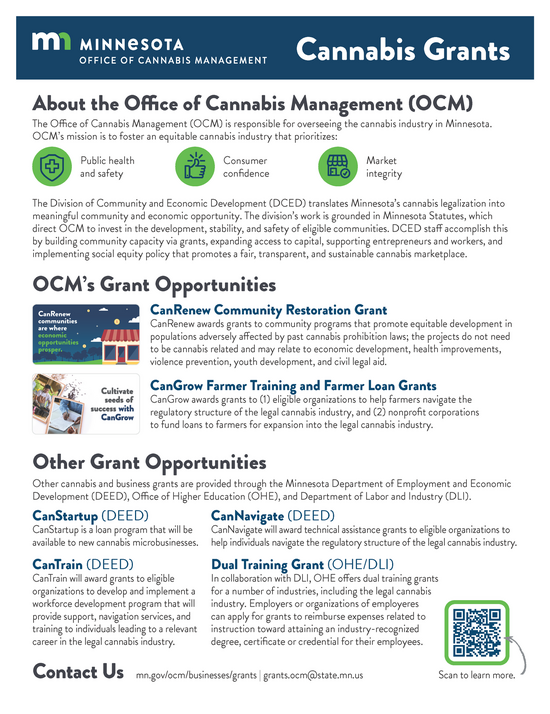
Coming soon, OCM will announce our fiscal year (FY) 2026 CanRenew Community Restoration Grant recipients, representing approximately $10.9 million in community investment supporting economic development, public health and wellness, youth development, violence prevention, civil legal aid, and other community-led work across Minnesota.
And we’re already looking ahead. The FY 2027 CanRenew Request for Proposals is also launching soon, creating the next opportunity for eligible organizations to seek funding for community restoration projects. Sign up for OCM updates to be notified when the request for proposal (RFP) opens and to receive application deadlines, informational sessions, and other important grant announcements.
CanRenew is just one of several resources available. OCM and our state partners offer grants, loans, technical assistance, workforce development, and training opportunities for communities, organizations, farmers, entrepreneurs, employers, and job seekers. Check out the cannabis grants webpage to explore additional opportunities available across Minnesota.
 Select the image to open accessible PDF.
|
|
 |
|
Monthly sparks |
|
|
Understanding the role of the Cannabis Expungement Board (CEB)

The Cannabis Expungement Board was created in 2023 as part of the Adult-Use Cannabis Act to review people's Minnesota felony- and gross-misdemeanor-level cannabis offenses to determine whether they should benefit from changes in the law. While many lower-level misdemeanor and petty misdemeanor cannabis offenses were automatically expunged by the Bureau of Criminal Apprehension under recent statutory changes, the CEB is responsible for evaluating more complex cases to determine whether dismissal, expungement, or resentencing is appropriate. For operators connected to Minnesota’s social equity ecosystem, understanding the board’s role, timelines, and qualifications is an important part of supporting community access to this process.
The Cannabis Expungement Board reviews cases that require individualized assessment. The CEB will operate until all eligible cases have been reviewed, and the board concludes its work is complete. Updated information, forms, and instructions are available on the CEB webpage, and individuals who believe they may qualify are encouraged to reach out with their case information to potentially qualify for earlier relief.
The Minnesota Bureau of Criminal Apprehension automatically expunged approximately 57,000 cannabis-related records following legalization. Thousands of additional records require individualized review by the CEB.
|
|
|
 |
|
Plug in |
|
|
What shifting federal hemp laws mean for Minnesota's social equity operators
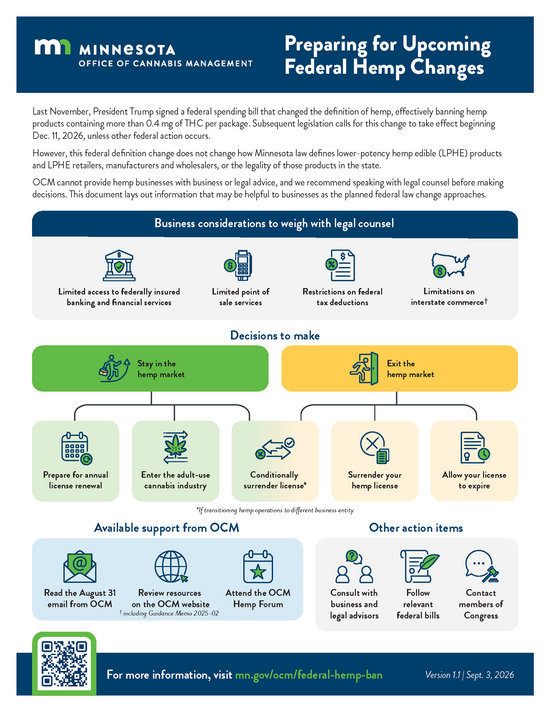
Federal changes to the definition of hemp are set to take effect on Dec. 11, 2026. While Minnesota’s lower‑potency hemp edible framework will remain in place, many products that meet state requirements may no longer align with federal standards. These shifts create new considerations for operators connected to Minnesota’s social equity ecosystem, especially as they navigate business planning, financial services, and market participation.
As the federal landscape continues to evolve, Minnesota’s social equity operators can use this moment to assess their business needs, explore available options, and stay connected to reliable information sources. These upcoming changes highlight the importance of planning ahead, seeking qualified advice, and engaging with community‑based networks that support long‑term stability in a shifting regulatory environment.
- The updated federal definition places strict limits on THC content in hemp products.
-
Many currently compliant Minnesota products may face restrictions under federal law.
- Operators should evaluate how potential banking, tax, and interstate commerce impacts could affect their business.
-
Minnesota license structures and definitions for lower‑potency hemp edibles remain unchanged.
-
Additional resources, guidance documents, and federal updates are available on OCM’s Federal Hemp Changes webpage.
 Select the image to open accessible PDF.
|
|
 |
|
Charging ahead |
|
|
A new opportunity for social equity event organizers

Beginning Jan. 1, 2027, the event organizer license will transition from a temporary approval to an annual, renewable license.
This update supports consistent, community‑focused programming and creates new options for groups interested in offering educational, cultural, or business‑oriented cannabis events.
The cannabis event organizer license is one of the few cannabis business licenses currently open to individuals seeking ownership opportunities in Minnesota’s emerging industry. The event organizer license provides an accessible pathway to build experience, develop community partnerships and participate meaningfully in the regulated marketplace for those interested in establishing a cannabis‑related business without waiting for future licensing windows.
Together, these changes establish a more stable and predictable structure for event planning across Minnesota. By creating an annual license option, the framework encourages organizations to invest in long‑term community engagement and expand access to reliable, compliant public events as the industry continues to evolve.
- Annual licensure will allow organizers to plan recurring events without starting a brand new license application each time (ie. background check, etc) and instead apply for specific approval for each event on a case by case basis.
-
Community‑based organizations can build sustained partnerships, volunteer teams, and outreach strategies.
-
Equity‑focused businesses can benefit from more frequent opportunities to participate in markets, demonstrations, and consumer education events.
-
Additional details on the application process will be shared as January 2027 approaches.
Did you know? Social equity verification applications are being accepted on an ongoing, rolling basis.
Social equity verification is the process OCM uses to confirm whether an applicant meets Minnesota’s social equity eligibility requirements. This service is currently free. If you have already been verified, your status remains active, no additional documentation is required unless your ownership structure changes.
Applicants must meet the qualifying criteria listed on the Social Equity Qualifications webpage. Social equity licenses must be owned at least 65% by social equity‑verified individuals, and each person counted toward that 65% must complete verification before applying for a business license. More information is available in Minnesota Statutes, sections 342.185 and 342.12(b).
|
|
|
 Learn more about community and economic development at
|
|
|
|
|