|
Cannabis and LPHE businesses
Building and fire code requirements
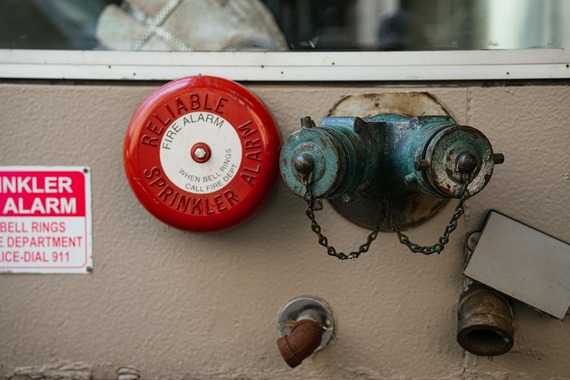
All lower-potency hemp edible (LPHE) and cannabis businesses must demonstrate compliance with all state fire and building code to receive a license from OCM. Applicants are prompted to address this during both the final plan of record submission stage and the pre-license on-site inspection. Under Minnesota Rules, part 9810.1100, subp. 6(B), any physical location or site where employees routinely conduct activities authorized by the office must comply with:
This requirement is also specified in statute by license type:
There are several ways compliance can be demonstrated for a cannabis and hemp business depending on each business’ specific location and situation. Both building and fire code must be addressed. Options for meeting each requirement may be found below.
-
The applicant has documentation from their local certified building official certifying building code compliance (in the form of a certificate of occupancy or other official documentation).
-
The applicant has official documentation from a private certified building official certifying building code compliance.
-
The applicant has a certificate of occupancy or other official documentation from their local fire code official certifying fire code compliance.
-
The applicant has official documentation from a state fire marshal inspector certifying fire code compliance.
[Back to top]
|
|
Edible cannabinoid product handler endorsements and packaging edible products

The edible cannabinoid product handler endorsement is available to businesses conducting authorized manufacturing activities and packaging edible products. This endorsement allows the manufacture, processing, handling or storing of an edible cannabis product or LPHE that has not yet been placed in its final packaging.
Minnesota Statutes, chapter 342 authorizes the import of LPHE products into Minnesota by a cannabis or LPHE wholesaler with an importation endorsement. For a product to be considered an LPHE, it must meet the definition and packaging requirements in Minnesota Statutes, section 342.01, subdivision 50. LPHEs must be in packaging containing servings of no more than 5 milligrams of total THC and not have more than 50 milligrams of THC per package. A licensed wholesaler is not eligible to receive the edible cannabinoid product handler endorsement to repackage imported products, however, they could add labels or stickers to existing packaging to bring imported products into compliance for sale in Minnesota.
The edible cannabinoid product handler endorsement is available to the following license types: cannabis microbusinesses, cannabis mezzobusinesses, cannabis manufacturers, medical cannabis combination businesses and LPHE manufacturers [Minnesota Statutes section 342.07, subd. 3(e)].
|
[Back to top]
|
|
Inspector identification and on-site inspections

Per Minnesota Statutes, section 342.19, the office has authority to inspect any cannabis or hemp business. When OCM inspection staff conduct an on-site inspection, they will present their state-issued Office of Cannabis Management employee ID.
Minnesota Office of Cannabis Management (OCM) does not hire staff under the age of 21. OCM staff will not present personal identification to enter a cannabis or hemp business. To verify the identity of an inspector, businesses can call the OCM Customer Service line at 651-539-5000. Phone assistance is available Monday through Friday from 10 a.m.-3 p.m. CT.
Refusal to permit a member of OCM staff entry, or obstruction of an inspection will be seen as a refusal of inspection which could subject the business to enforcement actions including fines up to $10,000 per violation.
|
[Back to top]
|
|
Cannabis businesses
and accepting deliveries
OCM has received several inquiries about what a business should do if they receive a Metrc package from a transporter that has an incorrect count. Ultimately, how a business deals with this situation is a business decision. OCM is only able to provide recommendations for best practices.
The best practice is for the transporter to remain on-site while the receiving business counts/weighs the product to ensure correct amounts have been received. If a business rejects a package in Metrc after the transporter has left the premises, they will have physical possession of the product but not legal/Metrc possession. However, neither statute nor rule require the transporter to stay on-site while the product is counted.
Sellers of product have a responsibility under Minnesota Rules, part 9810.1302, subpart 6 to ensure accurate inventory of all regulated products. If buyers are consistently finding that manufacturers or wholesalers are providing inaccurate amounts, consider reporting it to the office so we can investigate further.
[Back to top]
|
|
Labeling requirements for cannabis combination products
 Infused prerolls and infused dried raw cannabis flower fall under the cannabis combination products category. Combination products contain both dried cannabis flower and cannabis concentrate, so they are subject to the labeling requirements for both (Minnesota Rules, part 9810.1401, subp. 2D).
This means that in addition to the net weight of the flower itself, the amount of cannabis concentrate used to infuse the product must also be listed in grams per serving and per package. Review the packaging and labeling guide for the full list of requirements for all products, including flower and flower infused with concentrate (pages 7 and 8).
[Back to top]
|
|
Reporting theft to OCM

Cannabis businesses must report the theft of a product to OCM within eight hours of discovery [Minnesota Rules, part 9810.1302 subp. 5 (E)]. Theft of products tracked within Metrc must be reported through Metrc for each affected batch, and the theft must also be reported immediately to local law enforcement. The business should reach out to their area inspector to provide the police case number for each instance. Reporting through Metrc and providing your inspector with the police case number satisfies the reporting requirement in rule for products tracked in Metrc. Providing your inspector with the police case number satisfies the reporting requirement for products not tracked in Metrc, such as LPHEs.
|
[Back to top]
|
|
Cannabis operations using fertilizer or pesticide

Do you apply fertilizers and/or pesticides through an irrigation system that is connected to a water supply (groundwater, surface water, or public water supply)? If your answer is yes, you are required to obtain a chemigation permit from the Minnesota Department of Agriculture (MDA).
The permit requires that anti-pollution backflow devices are installed in the irrigation system to prevent contamination of water supplies by fertilizers or pesticides when these products are applied through irrigation systems.
Currently, there are more than 3,200 chemigation permit holders in Minnesota which include field irrigation systems (ex. center-pivot, lateral, traveling gun, drip, subsurface, etc.), greenhouses, nurseries and golf courses/athletic fields. The application of fertilizers through field irrigation systems is the largest percentage of chemigation permits. MDA conducts random inspections at permitted sites to verify compliance and has also inspected sites with no active chemigation permit. Violations found during inspections can result in enforcement actions which can include a financial penalty.
A chemigation permit is required for each business that operates a chemigation system. If the business is rented or sold, the renter or new owner who operates the chemigation system must apply for a new chemigation permit. Chemigation permits are a one-time application/fee (fertilizer only = $50.00 / fertilizer and pesticide = $250.00).
There are two options to apply for a chemigation permit:
- Complete a paper application form found on MDA Chemigation Permit Program webpage and mail the completed form to the MDA with the appropriate payment.
- Apply online using the MDA License Application, Renewal, and Reporting online application.
Chemigation program information can be found on the MDA website.
Check out this handout for more information on greenhouse anti-pollution guidelines and chemigation permit program.
If you need additional assistance, contact MDA Program Staff Kari Mastin at 651-272-7501.
|
[Back to top]
|
|
Event organizer license application window closure notice

OCM is announcing important changes to the event organizer licensing process due to recent legislative updates. Implementation work is underway to move from a temporary per-event license to an annual, renewable cannabis event organizer license. The new annual cannabis license type will authorize the business to then host temporary cannabis events throughout the year.
In preparation for the change, OCM will close the current event organizer licensing application on Nov. 16 at 4 p.m. CT.
If you intend to hold a cannabis event during the remaining months of 2026, you must submit your application no later than Nov. 16. The office continues to recommend organizers submit their application at least 45 days in advance of the planned event date to ensure adequate time for application review and approval. Applications may not be submitted after the window closes on this date.
The new event organizer license and event site registration applications will open in January 2027. Allowing for the 45 days we recommend for a successful submission, we anticipate event organizers could host events beginning in late February. Updated guidance reflecting the new event organizer license structure will be posted before January to help with 2027 event planning. For questions or assistance with the event organizer licensing process, please email cannabis.info@state.mn.us.
|
[Back to top]
|
|
Streamlining and high-medical-need products
The Minnesota Legislature passed a law in 2026 that streamlines the medical and adult-use cannabis supply chains, to ensure continued access to medical cannabis for patients. Leading up to the law’s effective date of Jan. 1, 2027, OCM will continue to communicate frequently with license holders and others about the transition. Two recent updates include the following:
High-medical-need products
As part of the new law, OCM must publish a list of all high-medical-need (HMN) products. Beginning Jan. 1, businesses with a medical cannabis retail endorsement must carry all products identified by the office as HMN, and businesses with a medical cannabis manufacturing endorsement must manufacture HMN products. This will help to ensure these products are available to the patients who need them.
The HMN product list was developed based on engagement with medical cannabis patients and their caregivers, legal guardians, and health care practitioners as well as cannabis business license holders that currently or may in the future hold medical cannabis endorsements.
The office will continually evaluate patient access and product availability to ensure that products identified as HMN are readily available consistent with law and that license holders with medical cannabis endorsements are meeting their statutory obligations.
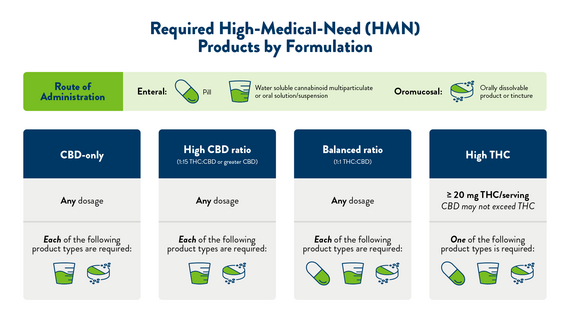
The office worked with Metrc on a Metrc Support Bulletin (MN_IB_0075) to notify the industry of key dates for the streamlining of the adult-use and medical cannabis supply chains in Minnesota, highlight various technology systems that may need to be updated and describe how supply chains will be consolidated.
[Back to top]
|
|
LPHE businesses
Expiring LPHEs manufactured under Minnesota Statutes, section 151.72
 The product transition period authorized by Guidance Memo 2025-03 expired on March 31, 2026, with OCM issuing licenses to eligible hemp businesses that were previously registered and operating under Minnesota Statutes, section 151.72. Following the end of the product transition period, businesses with inventory predating licensure were authorized to continue selling those products through their expiration.
Under section 151.72, products were not required to carry an expiration date; however, under chapter 342, all products manufactured in or imported into Minnesota must carry an expiration date. In Minnesota, without a stability test to establish an alternative expiration date, all products expire six months after the testing date.
On April 1, 2026, the office issued licenses to all eligible applicants for lower-potency hemp edible (LPHE) manufacturing licenses. Following expiration of the product transition period on March 31, 2026, any product manufactured or imported into Minnesota must be fully compliant with chapter 342. This means that all products manufactured under section 151.72 that have not yet expired will reach their expiration no later than Oct. 1, 2026.
Recognizing the uncertainty created by impending federal law changes regarding the future of the intoxicating hemp cannabinoid market, the office provided operators with a 75-day notice period of the withdrawal of this guidance memo, effective Dec. 14, 2026.
For more information, review Guidance Memo 2025-03 (Updated Sept. 30, 2026) and Guidance Memo 2025-02 (updated Sept. 30, 2026).
[Back to top]
|
|
Large format LPHE beverages

Effective Aug. 1, under 2026 legislative session changes, there is now an allowance for large format LPHE beverages containing multiple servings. This new product can only be sold for retail off-sale, not for on-site consumption.
Reminder that all cannabis or hemp products must be packaged in an opaque container, including these new large format beverages (Minnesota Statutes, section 342.62, subd. 2). OCM recommends that retailers work with their manufacturers to ensure all products they receive are in compliant packaging.
Serving and package size requirements for large-format LPHE beverages
Maximum serving size: 5 mg delta-9 THC
Maximum package size: 85 mg delta-9 THC (17 servings per container, minimum of 750 mL), up to 400 mg of CBD, CBG, CBN, or CBC.
Refer to the Packaging and Labeling Guide for Cannabis and Hemp Products or the LPHE Packaging and Labeling Quick Guide for more guidance.
|
[Back to top]
|
|
Statewide Inventory Tracking and Management (Metrc)
OCM has partnered with Metrc to administer Minnesota's statewide seed-to-sale inventory tracking system, which includes planting, harvesting, processing, testing, transportation and retail sales. All licensed cannabis businesses must register and use this system (including software, tagging, and labeling tools). Metrc is a complex system and as more businesses come online and begin using the system, the office will work to provide helpful information for navigating the tool.
|
|
Pre-treatment recording workflow

Cannabis businesses can now use the package pre-treatment feature in Metrc to record when a package has been pre-treated before testing. This enhanced workflow improves transparency, accuracy, and visibility into how cannabis products are handled prior to laboratory testing. Pre-treatment information is captured at the package level and is reflected across Metrc, including integrations with third-party providers. Tracking package pre-treatment in Metrc ensures that required information is available for downstream compliance.
|
[Back to top]
|
|
Important updates and reminders:
Reminder: Retail posting requirements
Minnesota law requires that all cannabis microbusinesses, cannabis mezzobusinesses, cannabis retailers, and medical cannabis combination businesses must provide customers and patients with factual information about the effects and health risks of cannabis and hemp products.
OCM has developed an educational resource—the Guide to Safer Cannabis Use in Minnesota—that businesses can utilize and share with customers and patients to meet these statutory requirements. This resource provides detailed guidance and resources for consumers regarding cannabis use and was created in partnership with the Minnesota Department of Health. The guide is also available in Spanish, Hmong, and Somali.
While businesses are not required to use this specific resource, they can meet the statutory requirements laid out in Minnesota Statutes, section 342.63, subdivision 6, by either posting this information on the business premises and/or providing a printed version for customers to take with them as outlined in the statute.
For more information, refer to the Packaging, Labeling and Retail Posting Requirements webpage.
[Back to top]
|
|
Join us Oct. 22 for the OCM Resource and Hiring Fair
Building an equitable cannabis industry isn't only about who owns a business. It's also about who gets the opportunity to work, learn, build skills and develop a career in Minnesota's emerging cannabis economy.
That's why the Division of Community and Economic Development is hosting the Office of Cannabis Management’s first Resource and Hiring Fair on Thursday, Oct. 22, from 2–6 p.m. at the Urban Research and Outreach-Engagement Center (UROC) in Minneapolis.
The event will bring together licensed cannabis businesses, ancillary service providers, workforce partners and job seekers from social equity eligible communities.
Job seekers will have an opportunity to receive:
-
Tips for interviewing
- Resume tips
-
Free headshots
-
Meetings with cannabis business looking to hire
-
Community resources
-
Cannabis Expungement Board
-
The Cannabis Expungement Board, established in 2023, is responsible for reviewing eligible cannabis-related criminal records. The Board conducts a case-by-case review to determine whether cases are eligible and then determines if dismissal, expungement, resentencing, or no action is appropriate. The CEB is composed of five voting members designated by statute who are supported by an executive director and staff who are working to ensure individuals affected by past cannabis laws have a clear pathway forward.
- Minnesota Department of Employment and Economic Development (DEED)
- DEED offers workforce development programs, career planning tools and employer partnerships that help job seekers build skills, access training and connect with meaningful employment across Minnesota’s growing industries, including cannabis.
-
Saint Anthony Village Municipal Retail Operations (The Village Muni)
-
Saint Anthony Village owns and operates two municipal retail liquor stores, Marketplace and Silver Lake Village, offering wine, spirits, beer and now, THC products. With 100% of profits reinvested into the community, the Village Muni has contributed nearly $3.5 million over the past decade. They were also recently licensed as a municipal cannabis retailer. Their mission is to responsibly prevent sales of regulated consumables to minors and intoxicated individuals while generating revenue for Saint Anthony Village.
- Pot Mamas Boutique Dispensaries
-
Pot Mamas Boutique Dispensaries is a licensed retailer with three locations in Edina, Mendota Heights, and Woodbury. Pot Mama’s focuses on creating a dispensary that feels warm, welcoming, and easy to explore. A place where questions are encouraged, curiosity is welcomed, and the experience feels calm rather than overwhelming. Pot Mamas initially received their license in December 2025.
- Dank Session Delivery
-
Dank Session Delivery is a veteran-owned licensed delivery service headquartered in Bloomington. Their mission is to stop the stigmatization of cannabis, offer convenient access and genuinely friendly service. They prioritize reliability and top-notch customer service. They continue to expand their business and partner with new dispensaries.
Whether you're looking for your first cannabis job, bringing skills from another industry or simply trying to understand where you might fit, come explore the possibilities.
[Back to top]
|
|
|
|
|