|
Having trouble viewing this email? View it as a webpage.
June 3, 2026
Check out the latest edition of Cannabis Insider
In this issue:
Government Relations Updates
News and Updates
Resources and Reminders
Government Relations Report
Governor Walz signs omnibus cannabis bill that supports small businesses and medical cannabis patients
With just six hours left in the 2026 legislative session, the Minnesota Senate took the final vote to pass SF 4401, the cannabis omnibus bill. The final bill contains the majority of OCM’s 2026 legislative policy proposals, as well as SF 4542, a bill to restructure event licensing, and proposals put forward by legislators. OCM’s proposals directly reflect engagement with interested parties and legislators, and many provisions address pain points and areas of improvement identified by members of the state’s cannabis and hemp industry.
The changes to cannabis policy that passed this session will help create a better cannabis industry for medical cannabis patients and small businesses by streamlining the medical and adult-use cannabis supply chains. Minnesota’s updated cannabis law removes the requirement for separate supply chains while maintaining protections for patients as a core piece of the medical program structure. The changes offer incentives for businesses to participate in the medical cannabis program by allowing participating businesses to increase their square footage of plant canopy or product manufacturing limits, and the changes strengthen the requirements for businesses to manufacture and carry high medical need products to ensure patients have access to the products they need. By incentivizing more businesses to participate in the medical program, medical cannabis will be more accessible to patients around Minnesota. These changes will go into effect on Jan. 1, 2027.
Other legislative changes include:
-
Restructuring of the event organizer license type by shifting the license to an annual license eligible for renewal (effective Jan. 1, 2027).
-
Removal of the prohibition on a business holding both a hemp and cannabis license, creating flexibility across market segments.
- Requirement for OCM to publish a legislative report exploring the feasibility of a future psilocybin therapeutic use program in the state, including information on learnings from other states, program viability and structure, and any availability of federal funds for a future program.
Learn more about the 2026 legislative changes to Minnesota’s cannabis law, chapter 342, by reading OCM’s summary.
As we head into the summer, OCM wants to continue to hear from interested parties about the ideas you would like to see addressed in the next legislative session. We are always happy to provide technical feedback on your proposals. Anyone interested in engaging with our government relations team can reach out to cannabis.info@state.mn.us.
 [Back to top]
News and Updates
Join us in Bemidji and Duluth for the Connecting with Community Listening Tour
You are invited to the next stops in the OCM Connecting with Community Listening Tour in Bemidji on Thursday, June 4, and Duluth on Friday, June 5. The listening tour is designed to provide the general public with an overview of the OCM’s work and explain how the office regulates the cannabis industry in Minnesota. Most importantly, the event will allow our office to answer questions and gain valuable insights from local communities across the state.
Bemidji listening session
-
An overview of the role of OCM
-
A regulatory and cannabis market update
-
Listening portion followed by Q&A with OCM staff and executive director
Who should attend: Everyone! The listening tour is a great opportunity to learn more about the current state of the cannabis market or to ask any cannabis-related questions you have been curious about. We’re in the process of planning additional stops on the listening tour. If these locations aren’t convenient for you, stay tuned for future dates and locations around the state where you can join us in conversation.
|
Apply for CanGrow grant by July 13
Don’t miss your chance to apply! OCM extended the CanGrow application deadline to July 13, 2026, at 4:30 p.m. CDT. The extension provides additional time to attract more eligible applications and helps ensure available funding can be fully awarded to support farmers, organizations, and technical assistance providers entering Minnesota's cannabis industry.
CanGrow farmer training grants are designed for qualified organizations or individuals that want to provide support for Minnesota farmers entering or expanding into the state’s cannabis market. Priority is given to applications that demonstrate a history of successful education, training or navigation services. Proposed activities may include training programs, curriculum development, one-on-one guidance, networking opportunities, and support for farmers to attend conferences and other industry learning opportunities.
CanGrow farmer loan grants support qualified nonprofit organizations—typically community development financial institutions (CDFIs) with experience in agricultural lending—in administering low-interest loan programs. These programs expand access to capital for farmers seeking to enter or grow their participation in the legal cannabis industry.
Organizations applying for a CanGrow grant should review the request for proposals carefully and submit a written application that explains their proposed project, the community's needs, and the expected positive outcomes. Applications will be evaluated based on their potential community impact, the organization’s track record of developing and delivering training, and community support and partnership in project implementation and delivery. OCM also gives weight to applications where the proposed grant projects will serve areas where residents are eligible to be social equity applicants.
Learn more about CanGrow and how to apply on the CanGrow webpage.
 [Back to top]
Resources and Reminders
Cannabis and hemp market update – including a new licensed testing facility
OCM continues to license more cannabis and hemp businesses. As of May 26, the number of cannabis licenses OCM has issued is up to 221 (58 of which are licensed for cultivation activities). In addition, OCM has licensed more than 1,835 businesses for lower-potency hemp edible (LPHE) retail, manufacturing, or wholesaling.
On May 26, OCM licensed PhytoLab Minnesota for cannabis and hemp testing. PhytoLab joins five other licensed labs. Learn more about which fields each of them can test (microbial, pesticides, heavy metals, etc.) and find their contact information on the Licensed Testing Facilities webpage.

The OCM team had the opportunity to connect with industry members and took part in multiple panels for both the Flourish Investment Forum and NECANN. Panel topics included:
-
Access to capital
-
Working with your local government
-
The role of Tribal Nations and cannabis
If you’re interested in inviting OCM to take part in your event, please complete the Office of Cannabis Management Engagement Request Form with the details of your request! Please be aware that scheduling conflicts may not allow us to accommodate every request; however, we will respond to each request as soon as possible.
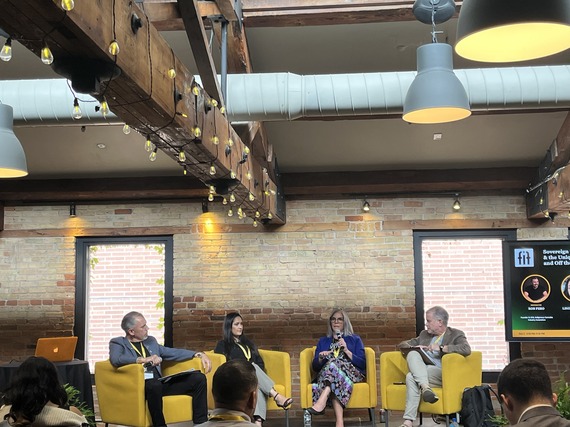 OCM Tribal Liaison, Melanie Franks, presents in panel at NECANN.
Annual petitions process
Starting in July 2026, OCM will open its annual online petition process for the following topics:
- Approval of a new medical cannabinoid product
- Approval of a new medical delivery method for a cannabinoid product
- Approval of a new product category
- Approval of the use of a cannabinoid in lower-potency hemp edibles
- Approval of the manufacture and use of an artificially derived cannabinoid
- Declaration of a cannabinoid as nonintoxicating
Per Minnesota Rules, part 9810.1003, subp. 2, petitions will be accepted during the month of July, specifically between the first and last business day of that month each year. This process is governed by Minnesota Rules, chapter 9810, and Minnesota Statutes, chapter 342.
To prepare for the submission window, interested parties should review the Petition Process: Submission Guidance and Review Criteria. Check out the Petitions Process webpage for more information.
 [Back to top]
|