|
Lower-potency hemp edible (LPHE) applicants and businesses
LPHE testing panel requirements
All license holders must adhere to the requirements of statute and rule, including the required product testing. The Cannabis Technical Authority: Standards for Sampling and Testing Cannabis and Hemp Products (CTA) defines the required sampling and testing for all cannabis products, LPHEs and hemp-derived consumer products (HDCPs). Please note that the sampling and testing requirements are the same for all cannabis and hemp products, including LPHEs and HDCPs.
The required safety and potency testing includes testing for potency in all products and contaminants as specified by statute, including microbial, mycotoxins, heavy metals, pesticides, foreign matter, and residual solvents. Potency testing requires analysis of the 10 cannabinoids listed in the CTA on Page 13, as well as homogeneity of the product across units (Page 14), and stability of the product (Page 14). If an LPHE manufacturer uses an out-of-state testing facility, the test results must cover all of the testing requirements of the Minnesota CTA.
A Minnesota-license holder manufacturing hemp edibles must follow the product testing flow chart on Page 6 of the CTA, ensuring that the concentrate used to manufacture the LPHE has been tested for all contaminants and potency before being used as an ingredient. Any concentrate imported to Minnesota for LPHE manufacturing must undergo full panel testing before being used in product formulation. Full panel testing is defined on Page 2 of the CTA. Any LPHEs entering the market from out-of-state must come from an approved out-of-state manufacturer (refer to Guidance Memo 2025-02) and have full panel testing performed.
 [Back to top]
|
|
Post-transition period for LPHE businesses and chapter 342 regulations

The product transition period that offered additional time for manufacturers and wholesalers of hemp-derived products to prepare for the change from operating under the previous product regulations contained in Minnesota Statutes, chapter 151.72, to the new licensing framework established in chapter 342, ended on March 31, 2026. Once licensed by OCM, businesses must adhere to the authorizations and requirements of Minnesota Statutes, chapter 342, and Minnesota Rules, chapter 9810, which include product testing, labeling, and local registration requirements for retailers.
Any business that previously sold hemp-derived products under Minnesota Statutes, section 151.72, that did not receive a license by the end of the product transition period must cease sale of any products containing cannabinoids immediately (except for hemp topicals).
To receive a license and resume (or begin) sales, businesses must apply for an LPHE business license. New LPHE applications are currently being accepted and reviewed on an ongoing, rolling basis. Apply on Accela. Application resources are available on the Application Process webpage.
As the office shared previously, last November the federal government passed legislation that goes into effect Nov. 13, 2026, including a federal ban on hemp-derived products containing more than 0.4 milligrams of THC. Several bills with bipartisan support are being considered at the federal level, but none have yet been passed. As the pending prohibition nears, there may be significant impact on your business decisions as a license holder or as a potential applicant, and the office suggests seeking legal advice.
Important: The packaging and labeling requirements for hemp products under Minnesota Statutes, section 151.72, are similar to those required by Minnesota Statutes, chapter 342; however, there are differences. The most notable change in chapter 342 involves new requirements that hemp products contain the universal symbol and warning symbol established by OCM. In addition to the office’s previously published Packaging and Labeling Guide, businesses should also check out the newly developed LPHE Product Quick Guide to familiarize yourself with packaging and labeling requirements for LPHEs.
Please review Guidance Memo 2025-03 for information about products manufactured prior to April 1, 2026, and how to make them compliant.
[Back to top]
|
|
|
Cannabis and LPHE businesses
Testing facility capacity and subcontracting
OCM has now licensed five testing facilities to perform compliance testing on cannabis and hemp products in Minnesota. Cannabis testing is generally processed through the Metrc seed-to-sale tracking system. Recently, new functionality was added that allows a testing facility to subcontract product analyses that it cannot do or doesn’t have capacity to perform. This process allows labs that do not yet have full-panel testing capacity to utilize their capacity to help reduce the testing time for products.
If you are a license holder with material ready for testing, you can contact testing facilities without full-panel testing to ask if they can accept your product for testing and subcontract any testing that is not in their scope of licensure.
 [Back to top]
|
|
Homogeneity testing

It is the responsibility of the license holder to ensure all compliance testing is completed for each product per the CTA. Homogeneity testing is part of the required compliance testing for all cannabis beverages, cannabis edibles, cannabis-derived tinctures, hemp-derived tinctures, transdermal/topicals, and all LPHE products.
Homogeneity must be evaluated using the product's final packaged form and is required for the first batch of a new product or for new or altered manufacturing processes, as stated in the CTA (Page 14). If a license holder is aware that homogeneity testing has not been completed yet on current products, it should be included on the next manufacturing batch.
|
|
|
Cannabis and hemp beverage lab sample size bulletin

The office recently issued 2026-04 that changes the required lab sample size requirements for beverages. Under the updated guidance, the required compliance sample quantity is decreased. These updates are intended to ensure that a sufficiently representative sample of the batch is collected while acknowledging that beverages pose a unique problem for transporting 0.5% of the batch due to the large volume of each batch. The lab sample size requirements apply to both hemp and cannabis beverage products. This means that LPHE manufacturers must meet this requirement. When the representative lab sample is sent to the testing facility for analysis, the sample will be combined and homogenized prior to testing.
|
|
|
Cannabis businesses
Updated vape testing requirements
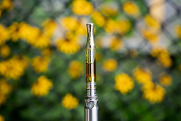
CM recently issued ulletin 2026-03, which changes the required compliance testing for cannabis and hemp vape products. The update is intended to simplify the testing flow for vape cartridges while maintaining safety testing for contaminants. With this change, the concentrate does not require testing prior to being packaged into the vape cartridge, but requires all contaminants, potency, and stability be evaluated on the filled cartridge form. This change is effective May 1, 2026.
|
|
|
Statewide Inventory Tracking and Management (Metrc)
OCM has partnered with Metrc to administer Minnesota's statewide seed-to-sale inventory tracking system, which includes planting, harvesting, processing, testing, transportation and retail sales. All licensed cannabis businesses must register and use this system (including software, tagging, and labeling tools). Metrc is a complex system and as more businesses come online and begin using the system the office will work to provide helpful information for navigating the tool.
|
|

capability vs. Minnesota compliance
A common pitfall in the cannabis industry is assuming that because a software feature exists, it is legal to use. As Minnesota’s market matures, remember that Metrc is a multi-state tool, but your license is specific to Minnesota.
Technical capability does not equal regulatory permission. Staying compliant means knowing the difference between what Metrc will allow and what your business is authorized to do.
While Metrc provides the technical infrastructure to track inventory, it is designed to accommodate various sets of state regulations. Just because the system allows you to perform a specific action—such as certain bulk transfers or specific waste adjustments—it does not mean that action aligns with OCM rules or state statute. Minnesota-specific statutes (chapter 342) and administrative rules take precedence over software functionality. Always verify your operational workflows are compliant.
|
Creating items in Metrc is a fundamental administrative step for every product within a facility’s inventory. Before physical packages can be created or moved through the supply chain, the corresponding item must be created by a Metrc admin in the Admin menu.
To successfully create an item, several specific pieces of information are required depending on the item category. If you have questions about item categories, please refer to Metrc Bulletin 37.
Metrc is accurate. Information for final-form packaged items, including potency, must strictly match the physical product label. Finished goods must test within +/-15% of their stated targets to be marked as passing. Bulk in-process products (e.g., concentrates, distillates, extracted oil) must include a good-faith potency estimate, which will not impact the outcome of compliance testing.
[Back to top]
|
|
Important updates and reminders
|
|
|
|
|