|
Product transition period update and legislative proposals on hemp testing
As a reminder, OCM expects to issue all currently pending lower-potency hemp edible (LPHE) manufacturer and wholesaler licenses by April 1, 2026. After this date, all licensed LPHE businesses must operate subject to the authorizations and requirements of Minnesota Statutes, chapter 342 and Minnesota Rules, chapter 9810.
Note: Edible/beverage inventory compliant with Minnesota Statutes, section 151.72 may be sold with the addition of the universal symbol and warning symbol if the product is not expired. As of January 1, 2026, hemp flower and vapes are now classified as hemp-derived consumer products and regulated under chapter 342, and as such are no longer permitted to be bought or sold by LPHE businesses.
-
LPHE retailers may only buy from other license holders.
- LPHE manufacturers may only sell to other license holders, with the exception of import/export activities.
- LPHE wholesalers may only buy from and sell to other license holders, with the exception of import/export activities.
- Testing must be completed by testing facilities licensed by OCM (unless legislative action precedes the transition).
Hemp testing bill heard at Legislature
In February, Senator Lindsey Port and Representative Jess Hanson introduced Senate File 3670/House File 3615 (with co-authors Senator Scott Dibble, Representative Nolan West, and Representative Keith Allen), which—if passed—would allow lower-potency hemp edible (LPHE) products to be tested out-of-state until May 31, 2027, as we continue to license additional testing facilities. OCM supports this bill, which has passed through committee hearings and is moving to the floors of the respective bodies.
We understand that authors hope to move this bill quickly, as the allowance for out-of-state testing expired on January 1, 2026 (per Minnesota Statutes, section 342.61), and would otherwise end on March 31, 2026, once all LPHE businesses are licensed, per Guidance Memo 25-03.
Any parties interested in movement of these bills should consider contacting their local legislators for more information.
Note that LPHE testing occurring out of state must adhere to the same testing requirements as in-state testing per the Cannabis Technical Authority.
Update on testing capacity
In the event that the testing bill is not passed by the Minnesota Legislature, newly licensed LPHE businesses should be prepared to move all hemp testing in-state which may require increased lead time for testing hemp and cannabis products while lab capacity is still building. The office will continue its efforts to support hemp businesses as they prepare for this transition. that includes information about the three licensed labs and what panels they can test. As additional testing facilities are licensed the office will add them to this page.
Testing is a crucial part of establishing the market supply chain and is central to our mission to establish an industry that prioritizes public health and safety, consumer confidence and market integrity. To support increased capacity, this past summer the office reopened the testing facility application window following changes made in the previous legislative session to reduce the barrier to entry to licensure for testing businesses. This legislative change and the continuously open license window for testing facilities increased the number of preliminarily approved testing facilities, which will bring down wait times as new facilities are licensed. The office is working closely with preliminarily approved cannabis testing facility license applicants to ensure that they can move through the licensure process and add to support the capacity needs we’re experiencing.
 [Back to top]
|
|
LPHE application review updates: Unpaid LPHE license invoices must be paid by March 31

Important communications reminder: Since the LPHE application window closed on October 31, 2025, OCM has been emailing and calling LPHE applicants to continue the review process on submitted applications. If you have submitted an application for an LPHE business license, please check the email address you set up as your contact in your Accela account for communication about your application. You may have messages you need to respond to in order to have your application continue.
Invoice reminders: Since December 2025, OCM has been emailing LPHE retailer applicants who passed the application review to inform them that they have an invoice due for their licensure fee. LPHE applicants must pay a $250 application fee per site required when the application is submitted, and a $250 licensing fee per site, due when the license is ready to be issued. Information on fees for all license types is available on our website: License Types. The office cannot issue a license until this fee has been paid. It is important to pay any account balance promptly.
The emails notifying applicants of the pending license fee invoice were sent from "NoReply@accela.com" to all contacts listed on the application record and contain instructions for paying the invoice. To pay your balance, sign in to your Accela account. Select Search Applications, then select Pay Fees Due under the Action column next to the Site Registration record. If you are applying for LPHE licensure and have more than one site, please refer to the LPHE Accela Application Creation User Guide Appendix A: Invoice Payment for additional instructions.
|
|
|
Reminder: Lower-potency hemp edible retailer license holders must obtain local retail registration prior to initiating any sales

Each local unit of government has its own process for local retail registration. You must contact your city or county jurisdiction directly to determine how to fulfill this requirement.
|
|
|
Temporary cannabis transportation authority expires March 17, 2026

The office extended the previously issued temporary transportation authority an additional 30 days, until March 17, 2026. Guidance Memo GM-2025-06 was issued to temporarily authorize licensed cannabis microbusinesses, cannabis mezzobusinesses, cannabis cultivators, and cannabis manufacturers to transport samples of their own cultivated or manufactured products to a Minnesota-licensed cannabis testing facility (subject to the outlined requirements in the memo). OCM continues to monitor the availability of transportation options as licensed cannabis transporters become operational.
|
|
|
Planning a cannabis event – prepare now for 4/20 and the summer event season
The biggest day of the year for cannabis enthusiasts is right around the corner! If you are planning to host an event on 4/20, please ensure you submit a complete cannabis event license application at least 30 days prior to the event. That means to host an event on 4/20, the last day you can apply for an event license is March 21. The earlier you apply, the faster we can process your application!
This license authorizes the holder to plan and host a temporary cannabis-related event in Minnesota. Pursuant to Minnesota law, cannabis events must be limited to persons aged 21 or older and may not include the sale or consumption of alcohol or tobacco. Cannabis events may feature the on-site sale and use of adult-use cannabis products, lower-potency hemp edibles, and hemp-derived consumer products. Event organizers may host multiday events, provided that the event does not exceed four consecutive days in duration.
This license type is temporary, and a new license must be obtained for each event. All cannabis event activities require local approval, including but not limited to any permits or licenses required by the applicable local unit of government and specific approval of on-site consumption areas. Event organizers must obtain this approval before submitting an application to the OCM and provide proof of local approval as part of the application.
Important information about Metrc and cannabis events
-
Any product inventory being transferred to an event will need to be recorded in Metrc. Please note that the event organizer license holder does not need to record sales in Metrc, and the event organizer does not need a Metrc account. Vendors will be responsible for and must follow Metrc protocol for stocking, sales, and transportation activities.
- Vendors must use either a Minnesota-licensed transporter or a Tribal transporter (operating under a compact or cooperative agreement) to move product to and from the event.
-
Reach out to ocm.metrc@state.mn.us with any concerns or questions about how to use Metrc successfully.
Be aware that there may be an increase in demand for Tribal products and Tribal transfers in advance of an event. OCM may not be available to approve transfers over the weekend, so be sure to time your requests for Tribal transfers appropriately, and don’t wait until the last minute!
|
|
|
Background checks

Prospective employees of licensed cannabis businesses are required to complete background checks before employment. The cannabis business license holder must submit to the Bureau of Criminal Apprehension the prospective employee's full set of fingerprints and written consent for the bureau to conduct a state and national criminal history check. Background checks must be requested through the Minnesota Bureau of Criminal Apprehension.
More information can be found on the Background Checks for Employees webpage.
Note: Previously, the Minnesota Department of Public Safety (DPS) was working with the FBI to obtain approval to provide fingerprint criminal history checks. In order to prevent delays to cannabis businesses setting up operations while DPS and the Bureau of Criminal Apprehension’s (BCA) process was awaiting approval from the FBI, OCM worked with the Legislature to obtain authorization for cannabis businesses to use third-party consumer reporting agencies or background screening companies as authorized by Minnesota Session Law chapter 121, article 2, section 149. With approval secured, the process is required to transition to the BCA. Effective March 1, 2026, cannabis businesses and their prospective employees that have not yet completed a background check, must do so by using the BCA process. Background checks completed by a third-party before March 1 remain compliant. Cannabis businesses are encouraged to transition to the BCA process before March 1, 2026.
[Back to top]
|
|
|
Indoor and outdoor cultivation: What you need to know
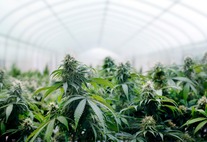
During the application process, applicants must indicate in the cultivator's cultivation plan whether the cultivator plans to cultivate cannabis indoors or outdoors. Refer to Minnesota Statutes section 342.25, subdivision 7, and Minnesota Rules part 9810.2000, subpart (3)(A). Outdoor growers may start seeds or clones indoors, but once plants reach 8 inches, they must be tagged in Metrc and moved to the approved outdoor location. License holders may switch between indoor and outdoor cultivation (or vice versa) by submitting a new site registration and final plans of record. A license holder may not switch until that new site registration has been approved by OCM.
|
|
|
Statewide Inventory Tracking and Management (Metrc)
OCM has partnered with Metrc to administer Minnesota's statewide seed-to-sale inventory tracking system, which includes planting, harvesting, processing, testing, transportation and retail sales. All licensed cannabis businesses must register and use this system (including software, tagging, and labeling tools). Metrc is a complex system and as more businesses come online and begin using the system the office will work to provide helpful information for navigating the tool.
|
|

Visit the Inventory Management page on the OCM website for more information on getting started with Metrc and to find additional support resources.
All crop input or plant additive applications must be recorded in Metrc. If inputs are applied multiple times throughout the day—such as through an irrigation system—record one total amount per day. For example, if a total of 4 grams of fertilizer is applied to a plant across several watering events on the same day, record a single 4-gram entry for that date. All additives applied to plants must be entered into Metrc by the end of the same business day.
Crop inputs are defined in Minnesota Rules, part 9810.0200 subp.19 as “any substance other than water that is applied to or used in the cultivation of a cannabis plant for the purposes of pest control, plant health, or plant growth management. Crop input includes pesticides, fungicides, plant regulators, fertilizers, soil amendments, plant amendments, and other agricultural products regulated by the Department of Agriculture."
Cannabis and hemp products must be sampled and tested for contaminants and must be labeled with a best by date for flower, and an expiration date for concentrates and infused products. The Cannabis Technical Authority defines the testing requirements, but there are additional resources available in the form of Metrc Bulletins with specific directions for how these samples and testing are tracked in Metrc. Refer to Metrc Bulletin 54 to learn how to enter lab samples in Metrc, and Metrc Bulletin 53 for how to submit samples for stability analysis. While you are there, check out all the other helpful Metrc bulletins!
[Back to top]
|
|
|
Important updates and reminders

-
View data around cannabis cultivation, sales activities, and cannabis licensing in the state of Minnesota on OCM's new dashboard, Cannabis Market Monitor!
-
Bookmark the OCM Guidance Memos webpage to keep up with important decisions from the office.
|
[Back to top]
|
|
|
|
|