|
Note from the Interim Director
Fall 2026
|
|
|
Happy fall, everyone. September brought Recovery Month, and with it a reminder of why this work matters: the people in recovery, the families supporting them, and the providers and communities meeting them where they are on their journeys. It's also brought some transitions here at the Office of Addiction and Recovery (OAR) that I want to update you on.
This summer, we said goodbye to Jeremy Drucker, OAR’s founding state addiction and recovery director. He built the foundation this office stands on and led OAR through a period of significant growth. Jeremy had a way of making complex, cross-agency work feel like something people wanted to be part of rather than something they were required to do. We are grateful for what OAR has built under his leadership and for the foundation he leaves us to carry forward.
I am stepping into the role of interim state director. I joined OAR as deputy director shortly after Jeremy started, and in this interim role I will lead the office as we continue our work with the subcabinet and the Governor's Advisory Council until the incoming administration appoints a permanent director.
Our priorities are not changing. We will continue our work on the Interagency State Substance Use and Addiction Plan and our broader efforts to strengthen Minnesota's response to substance use and substance use disorder. That response depends on an ecosystem of essential partners: state agencies and their dedicated staff, counties, cities, Tribal nations and urban Indian communities, health care systems, community providers, recovery community organizations, law enforcement, schools, employers, and people with lived experience and their families. Each plays a role in preventing substance use, catching misuse early, reducing harm, and supporting treatment and recovery. I am committed to keeping that work moving forward.
This quarter, OAR stayed engaged across the state. We joined the League of Minnesota Cities' annual Opioid Settlement webinar, presented at the Minnesota Alliance of Rural Addiction Treatment Programs conference in Willmar, took part in the National Native Harm Reduction Summit at White Earth Nation, and joined thousands of Minnesotans at the annual Walk for Recovery on the Capitol grounds during Recovery Month.
This fall, we are preparing for the transition to a new administration and ensuring the relationships and progress built across agencies are carried forward. Thank you for your partnership and for the work you do every day.
Jennifer Blanchard
Interim Director, Office of Addiction and Recovery
|
|
News and Updates
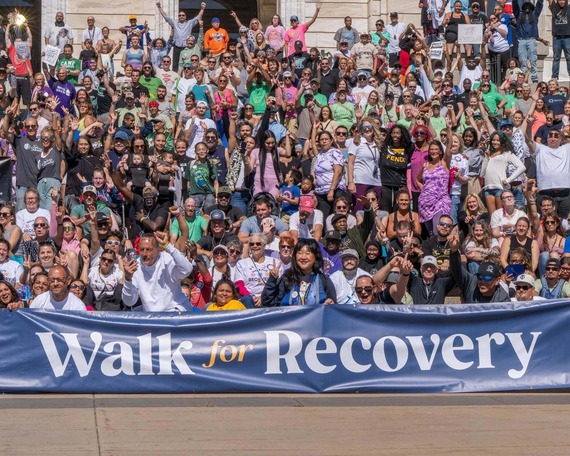 Another amazing turnout at the annual Walk for Recovery
|
|
Recovery Month
In September Minnesota celebrated Recovery Month with:
- A proclamation from Gov. Tim Walz identifying September as Recovery Month in the state of Minnesota.
- The annual Walk for Recovery at the Minnesota State Capitol grounds on Sept. 12.
- An informational webinar from the Office of Addiction and Recovery, featuring Alison Zellmer from MN Recovery Corps on Sept. 23.
- The Minnesota Recovery Month “Recovery Road Trip”, hosted by MARCO, featuring 12 stops hosted by Recovery Community Organizations (RCOs) across the state.
- Locations lit up purple on Sept. 12, including the I-35W Bridge, IDS Center and Capella Tower.
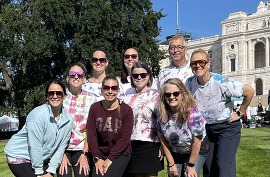 The Office of Addiction and Recovery was joined by Department of Corrections leadership and staff from the Reentry Services team.
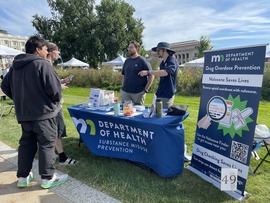 The Minnesota Department of Health also had a table at the event where they shared information on reducing the risk of substance use.
In-Person System of Care Listening Session Invite
In Minneapolis on Aug. 7, the Minnesota Department of Human Services' Behavioral Health Administration hosted a half-day engagement session in partnership with OAR and the Governor's Children's Cabinet, bringing together leaders across the state's child and family-serving systems to strengthen the Statewide Children's Mental Health Plan through a System of Care framework.
The session gave the substance use disorder (SUD) community an opportunity to help shape the children’s mental health plan. Participants included DHS’s Aging and Disability Services and Health Care Administrations, the Department of Children, Youth and Families, the Department of Education, the Department of Health, community partners and people with lived experience.
Participants identified system strengths, gaps and opportunities to advance a coordinated, family driven system of care. Their feedback on governance, workforce, financing and service delivery helped shape statewide priorities, including a presentation on high fidelity wraparound models used in other states
Mental Health Legislative Network (MHLN) Annual Planning Retreat
On Aug. 25, OAR was invited by MHLN to join its Annual Planning Retreat as part of MHLN's broader effort to strengthen engagement with state agencies working in the mental health and SUD spaces.
The retreat offered informal conversation on MHLN's priorities for the upcoming legislative session, and OAR shared information on the work of the subcabinet in developing the Interagency State Substance Use and Addiction Plan. There was also discussion on state and national policy trends that could shape potential legislative proposals from external partners.
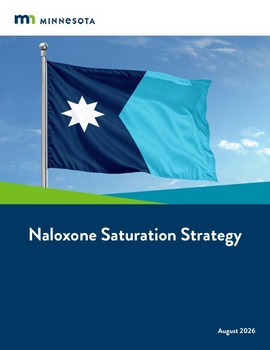 More than 80 people participated in-person and online in the April 8 Naloxone Saturation Reconvening at the Wilder Foundation. Their feedback shaped the updated Naloxone Saturation Strategy, which is now available on the Office of Addiction and Recovery website.
The strategy is a living document and will continue to evolve as partners share what they are learning in their communities.
|
American Indian Advisory Council (AIAC)
On July 28 in Carlton, MN, OAR was invited to present to the AIAC to share an overview of the interagency planning that the 12 state agencies that make up the Subcabinet on Opioids, Substance Use, and Addiction are engaged in. This planning is to develop an Interagency State Substance Use and Addiction Plan.
The presentation included information from DHS’ Substance Use Disorder (SUD) Community of Practice and the Governor's Advisory Council Opioids, Substance Use, and Addiction on priority areas. OAR shared where those priorities aligned with recommendations that came from the 2023 and 2025 American Indian Substance Use summits.
OAR emphasized the importance of continuing to center Tribal partners and American Indian community voices as this interagency work moves forward and state agencies prepare for transitions of elected officials.
The League of Minnesota Cities Annual Opioid Settlement Update
On July 28, OAR was invited to participate in the League of Minnesota Cities’ annual Opioid Settlement webinar, presenting statewide trends across Minnesota’s substance use landscape. OAR and the Opioid Epidemic Response Advisory Council (OERAC) presented updates on reporting and compliance on use of opioid settlement dollars.
Burnsville Fire Department shared how it used settlement funds, offering a firsthand look at the impact on the ground.
The webinar underscored the value of continued coordination and knowledge-sharing as the cities, counties and the state work to address impacts of the opioid epidemic.
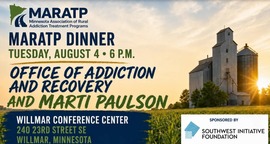 Minnesota Alliance of Rural Addiction Treatment Programs
On Aug. 4, OAR was invited to Willmar, MN to present at a networking dinner during the ninth annual Minnesota Alliance of Rural Addiction Treatment Programs (MARATP) conference. OAR presented on how the office is supporting the subcabinet in the development of an Interagency State Substance Use and Addiction Plan coordinated across 12 state agencies and where rural treatment programs fit into the priorities and goals of that plan.
Project Turnabout CEO and MARATP President Marti Paulson followed with a look at how H.R. 1 and upcoming Medicaid changes could affect rural providers' reimbursement, continuity of care and access to treatment.
Together, the presentations linked Minnesota's long-term coordination strategy to the immediate policy pressures facing rural providers.
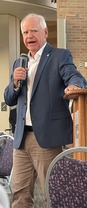
2026 Urban Indian-State Legislative Summit
On Aug. 26, OAR was invited to attend the Urban Indian-State Legislative Summit in Saint Paul.
The event focused on the theme of Urban Native American Health and Family Wellness and brought together urban Native leaders, state agencies, legislators and the governor for a day of breakout sessions, expert panels and networking. There was also a resource fair aimed at strengthening partnerships and centering urban Native voices on issues affecting their communities.
|
 National Native Harm Reduction Summit
On Sept. 1–3, White Earth Nation hosted the 14th Annual Native Harm Reduction Summit.
The summit brought together Native and allied harm reduction practitioners, Tribal leaders, researchers, and advocates from across Turtle Island to share knowledge, build relationships, and lift up culturally rooted approaches to healing.
|
|
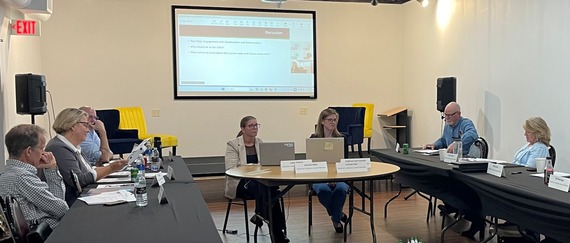 Council members listen to Catherine Diamond and Kari Gloppen speak on substance misuse prevention at MDH.
On Sept. 22, the Governor's Advisory Council met to continue its work shaping Minnesota's interagency response to substance use. Council members reviewed the strategic priorities and goals developed through the subcabinet state agencies and offered feedback on how well they reflect the work and needs in community.
The council also welcomed Katie Blue, executive director of the Recovery Community Network, who led a presentation and discussion on the role recovery community organizations and peer support can play in treatment courts. Katie highlighted how peer recovery specialists, who bring lived experience, can help participants build connection, navigate services, and sustain recovery during and after their involvement with the court. Council members discussed opportunities to strengthen partnerships between treatment courts and recovery community organizations across the state.
Later in the meeting, Catherine Diamond and Kari Gloppen of the Minnesota Department of Health (MDH) provided an update on funding that supports substance misuse prevention and recovery across the state. They highlighted the Substance Use Prevention, Education, and Recovery (SUPER) Focus Grants, which support prevention, education, recovery, and treatment initiatives. They also shared an overview of the grant programs made possible by the Comprehensive Drug Overdose and Morbidity Prevention Act (COMPA), which provided MDH historic investment to fund statewide overdose prevention and efforts to reduce harm. Their presentation gave council members a clearer picture of how these resources are reaching communities and where alignment across agencies can maximize their impact.
The council will meet again on Tuesday, Dec. 1 from 11 a.m. – 3 p.m.
For more information you can visit the Governor’s Advisory Council on Opioids, Substance Use, and Addiction website.
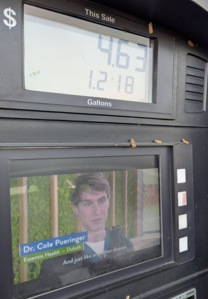
MOUD video campaign
Thanks to a partnership with the Carlton-Cook-Lake-St. Louis Community Health Board and St. Louis County, MDH's recent video about Medications for Opioid Use Disorder (MOUD) has inspired a creative ad campaign across northeast Minnesota.
Starting over the 4th of July weekend, 30-second versions of the 13-minute video — custom-edited to promote local voices and treatment resources — played for six weeks on gas pump ad screens and social media feeds throughout the Arrowhead Region to raise public awareness about the availability of these lifesaving medications.
At the same time, MDH grantees and partners have shared these videos alongside printable materials to ensure medical providers and community support organizations have everything they need to train their staff and link potential patients to care.
Today, MDH has established even more contacts with colleagues across the state interested in collaborating on regional campaigns of their own.
If your agency or organization wants to brainstorm media campaigns about MOUD – or any other evidence-based overdose prevention strategy – please reach out to the MDH Overdose Prevention Unit at: health.drugodprev@state.mn.us
|
|
|
Strategies
The Office of Addiction and Recovery works across state and local governments to coordinate and align efforts, and better target the state's role in addressing addiction, treatment, and recovery. The office conducts robust public engagement to build relationships with communities to ensure people with direct experience identify key priorities to meet the needs of their communities.
Healthy Beginnings. Child Care and Early Education. Mental Health and Well-being. Housing Stability.
|
|
|
|
|