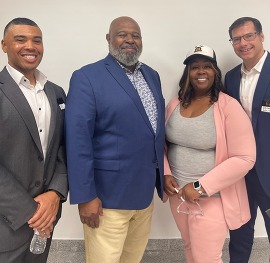
 From left to right: Jose Phipps, Phil Rutherford, LaTricia Tate, and Jeremy Drucker attend the June 27 Unity dinner
Unity Dinner
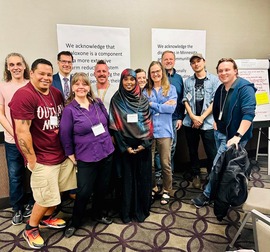
On June 27, OAR partnered with Twin Cities Recovery Project and Black Faces Black Voices of Recovery on a Unity Dinner in North Minneapolis. The dinner brought people together from across disciplines to share a meal and have important conversations about what communities are facing when it comes to illicit and unhealthy drug and alcohol use, what are the strategies that are working, and how can we partner together more to uplift the communities we serve.
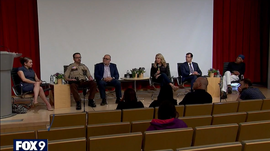 Fentanyl Awareness and Prevention Summit
OAR Director Jeremy Drucker participated in two fentanyl awareness events. One with the US Attorney’s Office in April and one with Prince’s family in June. Both events raised awareness about the dangers of fentanyl poses and effective treatment and recovery options. In each panel law enforcement and other panelists all agreed the impacts are significant, we’re not going to arrest our way of the problem, but by working together across disciplines we can get people the help they need to recover and live healthy and happy lives.
Certified Community Behavioral Health Clinic Tours
Certified Community Behavioral Health Clinics (CCBHCs) are designed to ensure access to coordinated comprehensive behavioral health care. CCBHCs are required to serve anyone who requests care for mental health or substance use, regardless of their ability to pay, place of residence, or age. This includes developmentally appropriate care for children and youth.
There are 9 CCBHCs in Minnesota and, this summer, OAR is touring several across the state. In June, OAR made their first visit to Amherst Wilder’s CCBHC in St. Paul, where walk-in evaluations are available Monday thru Friday with no appointment needed.
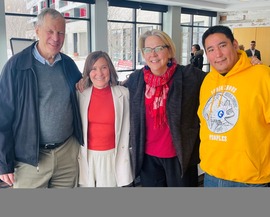 Advisory Council members Bill Messinger, Beth Elstad, Wendy Jones, and Colin Cash
Governor’s Advisory Council
The Governor’s Advisory Council on Opioid, Substance Use, and Addiction had its second meeting of the year in April at the Mille Lacs Band of Ojibway. Before the meeting the Council toured the new Mille Lacs Band human services building and learned more about the services and supports provided by Tribal Nations. After the tour Council members focused their work on looking at epidemiological data around communities that are disproportionately impacted by SUD.
In June the Council had its third meeting, where it affirmed its desire to continue working on background studies reform. This interest follows up on the Council's successful legislative priority the previous year expanding services and supports for incarcerated Minnesotans with SUD. Reforming the background studies process is critical both for ensuring the safety of Minnesotans and allowing Minnesotans in recovery to put their lived experience to work serving others going through similar struggles.
The fourth meeting will be held virtually on August 6.
For more information you can visit the Governor’s Advisory Council on Opioids, Substance Use, and Addiction website.
|