|
|
A Note from the Director
November 21, 2023
Last January when I began my appointment as Addiction and Recovery Director and Chair of the Subcabinet on Opioids, Substance Use, and Addiction, I started out with a computer and a vision from Governor Walz. Nearly a year later we have done much to get the work of improving outcomes for Minnesotans experiencing substance use disorder off the ground. Some of the highlights include:
-
Helping to secure over $200 million in new investments to address the opioid epidemic and substance use disorder and moving Minnesota further toward a public health response to this crisis
-
Creation of a permanent Office of Addiction and Recovery (OAR) at Minnesota Management and Budget, which is where much of the administration’s cross-agency work is done
-
Launching a Governor’s Advisory Council on Opioids, Substance Use, and Addiction
- Dozens of meetings in the community and with various stakeholders across human services, law enforcement, corrections, education, and local government to hear directly from them about priority focus areas
There is a saying in the recovery community that the opposite of addiction is connection, and that is the approach OAR brings to this work: building connections between people, communities, disciplines, state agencies, and governments. When people and organizations are connected, they start to work better together, and that is a big step in helping close the gaps in what is oftentimes a very fragmented substance use and recovery system.
While we have made great initial strides and built a strong foundation, the real work is just beginning. As a person in long term recovery, I know that people can and do recover from substance use disorder, particularly when they have access to needed resources and support. We look forward to partnering with you in creating a truly recovery-oriented system of care that works for every Minnesotan.
|
|
Legislative wins
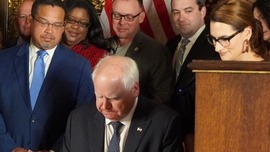
The 2023 One Minnesota Budget included significant investment in addressing the opioid epidemic and substance use disorder (SUD). More than $200 million was invested in human services, health, public safety, and other areas. These investments crossed the SUD continuum of care, from prevention and harm reduction to treatment and recovery. Many of these investments focused on reducing disparities in overdose deaths, specifically for Black and Native Minnesotans. These investments included new dollars for public awareness, harm reduction, treatment quality improvements, peer recovery support services, and much more.
 Governor’s Advisory Council on Opioids, Substance Use, and Addiction
This new Advisory Council has met five times so far this year and is on track to deliver important recommendations to the Governor and legislature by the end of the year. In its inaugural year, the council has appointed a chair and vice-chair, drafted and approved a charter, worked through multiple layers of prioritization, taken a deep dive into priority areas, and begun preparing to release a year-end report of activities and recommendations. The council is currently accepting applications for new members for 2024. For more information on the Advisory Council, please visit its website or visit the Office of the Minnesota Secretary of State for information on applying to be a council member.
|
Subcabinet on Opioids, Substance Use, and Addiction
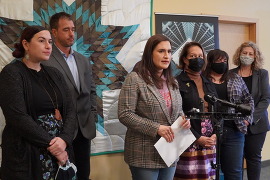
Governor Walz signed a bill creating the subcabinet on Opioids, Substance Use, and Addiction in 2022 to improve outcomes for Minnesotans experiencing substance use disorder, their families, and their communities by working across state government. The subcabinet consists of eight state agencies, including the departments of human services, health, corrections, public safety, and others. Over the last year, and based on feedback from the Governor’s Advisory Council, community, and internal and external partners, we are organizing the subcabinet's initial work into three priority areas:
Public Engagement
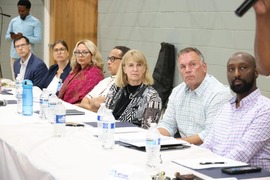
A core function and commitment of the Office of Addiction and Recovery is robust public engagement with individuals and communities impacted by the opioid and substance use crisis, particularly those with lived experience with SUD. This summer OAR held a day long strategic planning session with state, county, and community partners to co-create a year one strategic direction for the work of the Office of Addiction and Recovery. In line with that planning session, OAR is developing a public engagement framework that will outline the commitment and approach it takes to do this work. In addition to dozens of meetings and events this year with community, OAR was glad to have supported and participated in the American Indian Chemical Dependency Advisory Committee's American Indian SUD Summit and Niyyah Recovery's East African Community Listening Session.
|
|
Office of Addiction and Recovery Welcomes New Staff
The Office of Addiction and Recovery welcomes Jose Phipps and Cat Rohde as new team members. Jose Phipps, will assume the role of program and public engagement manager, with a focus on adolescent substance misuse. Jose served most recently with the City of Minneapolis and has a Master of Science degree in Co-Occurring Disorders. Cat Rohde is joining the team as a program and project management coordinator. Cat comes from the Department of Human Services, where she supported complex publicly funded health care programs for over nine years. Jennifer Blanchard continues to serve as acting OAR deputy. Jennifer is a senior state government leader and former deputy assistant commissioner in the Health Care Administration at the Department of Human Services.
|
|
Strategies
The Office of Addiction and Recovery works across state and local governments to coordinate and align efforts, and better target the state's role in addressing addiction, treatment, and recovery. The office conducts robust public engagement to build relationships with communities to ensure people with direct experience identify key priorities to meet the needs of their communities.
Healthy Beginnings. Child Care and Early Education. Mental Health and Well-being. Housing Stability.
|
|
Contact Us.
Website: www.mn.gov/mmb/oar
Email: addictionandrecovery.mmb@state.mn.us
|
|
|
|
|