Letter from the Co-Chairs
Dear ERG members,
The past few years we've persevered through an extraordinary time and navigated changes individually and together, and we couldn't have done our work without you and your commitment — and for that we thank you.
In the midst of fatigue and a global pandemic, we've made great strides towards impactful change, and we wanted to highlight some of our noteworthy accomplishments in 2021, which include:
- ERG participation increased 200% since 2020.
- Added over 281 newsletter subscribers.
- Raised awareness on wage equity and disparities to leadership and ERG members in May.
- Initiated a self-assessment session to improve accountability in performance appraisals in September.
- Implemented monthly lunch and learn events in 2021, such as building a resilient strategy through the pandemic.
- Increased BIPOC therapists and counselors in the Employee Assistance Program.
- Released quarterly newsletters featuring spotlights of our colleagues, further Q&A, upcoming events, and resources to grow.
- Built partnerships with external stakeholders including the Girl Scouts of America with a focus on Cybersecurity hackathons and CodeSaavy building a foundation for BIPOC to enter the IT workforce.
In collaboration with statewide and agency ERG's, we are planning the first annual ERG Summit, partnering with City of Saint Paul, Ramsey County, Hennepin County, and external organizations in 2022. We look forward to continuing the hard conversations, addressing equity policies, and instituting change.
Sincerely,
 |
|
Ellena Schoop — Enterprise Data Architect, Minnesota IT Services
|
Spotlight: Colette Johnson
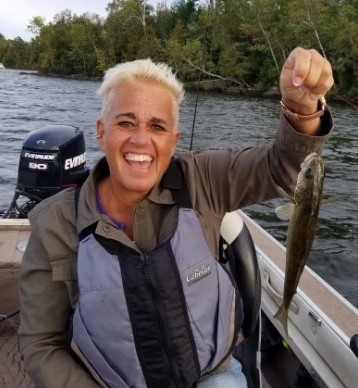
Colette Johnson has over 24 years of expertise at the State of Minnesota, starting as a receptionist and filling the role as a web developer for Minnesota Planning. Currently she serves as a web developer, web content management (WCM) team project manager and the MNIT enterprise application Alfabet portfolio manager.
As the chair for the leadership and mentorship committee of the Women IT ChangeMakers, Colette answered a few questions to share her experience and background with us.
Want to connect with Colette? Reach out to her at colette.johnson@state.mn.us.
|
Tell us about yourself.
In 1997 I was working as a receptionist when the internet was first starting. Nobody wanted to take on the internet world, because it didn't seem like something that would live on. That was the single best decision I made, to get involved in a likely disposable technology. It was in this role where I implemented the first Minnesota Planning website. Ever since I have continued my career in web development.
In my role I strengthen relationships to solidify stakeholders in projects. I have a unique talent to turn around difficult situations, reaching out to collaborate, and provide opportunity to build MNITs reputation as a project progresses. Additionally, in 2020 and 2021 I spent a large portion of my personal time studying for the Project Management Institute’s Project Management Professional (PMP) certification exam, successfully passing it on the first attempt. I use the project management skills I’ve learned through the certification to strengthen my service to Minnesota state government.
In addition to my responsibilities, I serve as the leadership and mentorship subcommittee chair for the Women IT ChangeMakers, as a chair for a MNIT diversity and inclusion initiative, and as a member of and mentor for Toastmasters. Through my commitment in continued learning I have been invited to be a guest speaker on occasion, most recently on reverse mentorship at an in person National IT Conference in Minneapolis.
What does Women IT ChangeMakers mean to you?
Women IT ChangeMakers can be a place where we have those leadership skills and be able to give opportunities to be heard. At its core are a group of individuals who have clearly defined goals; helping set balance and reasonable expectations in the workplace. We have built a strong team that continues to identify development opportunities for women in technology.
The ChangeMakers can provide a forum to a group of individuals in state government and allows women that aren't in leadership roles to have a voice in discussions. Having a voice is important to self-development among our organization where we can have a meeting to talk about mentoring, provide resources and channels to direct people towards to build up those around us.
How have you been involved?
I first started attending the quarterly Women IT ChangeMakers events when they began in 2019. Since its inception I became involved with some leaders of the ChangeMakers, through other MNIT projects and tactics. As the leaders were looking to add new perspectives on initiatives, I was able to bring my expertise and others voices to the conversations.
In 2020 I joined the Women IT ChangeMakers book club and co-chaired the Women IT ChangeMakers leadership and mentoring lunch and learn events, transitioning to chair in 2021. I am encouraged by the leadership of the Women IT ChangeMakers to identify projects to champion, facilitating leadership and mentorship at the State of Minnesota.
I strongly recommend colleagues to get involved, attend our meetings, and reach out to our group through a committee of interest. Let us know your passions and strengths; we'd love to have you on our team!
What does leadership mean to you?
As a leader, it is most important to be vulnerable, have empathy and compassion for other people’s journeys. In the past 3 years I have been challenged by three breast cancers, a daughters’ thyroid cancer, and my life partner’s unsuccessful fight against aggressive prostate cancer. These breath “taking-away” moments have been key in finding the uniqueness and strength of me as an individual, then identifying roles that I can informally step into to support the mission of MNIT.
In the Women IT ChangeMakers we are coaching, mentoring, and identifying our emerging leadership, helping build the full potential of women in service. I am not in a positional leadership position, but I encourage everyone to lean into ERGs. There are so many opportunities in state government to lead outside a formal leadership role and the Women IT ChangeMakers is one example.
While working on personal self-development, it's important to empathize with our colleagues' circumstances. Especially when there are other people at home that intersect with our lives. It’s important to understand where we are and where we've been in the past few years. In the at-office situations we don't get to understand what life journeys people are having. Working from home has given us a better baseline of who our coworkers are, and the work-life challenges they may face.
Dear ChangeMakers
Women IT ChangeMakers leaders answer outstanding questions from recent ERG events.

1. How do you lead through change?
|
My philosophy for leading through change, whether you are deciding or implementing the change, is pretty simple: tell people what you are going to do and follow through. The parts of change that people don’t like are uncertainty and not knowing how they fit into a new direction. If you are clear in the expectation and then give people the support they need to get through the change, it doesn’t need to be painful. I also think the more you can do to shorten the ‘change’ window and get folks into a new routine quicker, the easier it is for everyone to adjust.
Jenna Covey — CBTO, MNIT partnering with Dept. of Natural Resources (DNR)
There are many easy-to-follow change management checklists available so I would answer this question from the perspective of why does organizational change fail. What does a change maker really need to know? Kotter’s Leading Change book appeared in 1996, exciting lots of interest and initiatives. Unfortunately, comprehensive research shows many change initiatives fail. For brevity, I offer three interesting and insightful articles discussing the “why” behind the failures:
Stefanie Horvath — CBTO, MNIT partnering with Minnesota Boards, Councils, and Commissions (MBCC)

2. How would you gain cohesion among a team who disagree?
|
I actually just stumbled across a great piece on this from NPR that resonated with my approach. I’m a really collaborative decision maker so I like to work with my team to come up with ways to work better together. Often times it’s figuring out a compromise – and getting everyone to have compassion for where the other person is coming from. Check out the life kit article, Want to make all your arguments win-win? Stop fighting and start brainstorming – as they suggest it could even come in handy during the holiday season!
Jenna Covey — CBTO, MNIT partnering with DNR
Combining my own experience and content from the above listed articles, I would suggest you gain cohesion through creativity, analysis and pure energy. The analysis helps understand the Inner Resistance (Digital Adoption article) to the change, create a compelling story (Irrational Side of Change Management article), and build energy for the desired state. Easy right? The Dewar and Keller article on the Irrational Side of Change Management really digs into how to create real energy and I’ve learned (by mistake mostly) just how important this is. As Dewar and Keller describe, it takes a story with both positive and negative to create real energy. However, a story focused on what’s wrong invokes blame and creates fatigue and resistance, doing little to engage people’s passion and experience. Build the narrative that is positive and creates space for everyone to be a part of the positive change.
Stefanie Horvath — CBTO, MNIT partnering with MBCC

Upcoming Events
Stay tuned for an announcement for the next Women IT ChangeMakers meeting, and additional upcoming events in 2022.
|
|