|
Each month, the Minnesota Department of Health (MDH) highlights C&TC Coordinators across the state and the incredible work they do. This month, we are spotlighting Annie Vigen, C&TC clinic liaison from Becker County public health. Below are some of Annie’s interview responses:
- Tell us a little about yourself and your role as a C&TC coordinator. What do you enjoy most about this work?
I have been working in the C&TC world for 20 years, and it has been a very rewarding part of my career. In my role as a clinic liaison, I feel like the work is a perfect fit with the other hats I wear in public health, including working closely with schools, lead surveillance, and early hearing detection and intervention. It ties together well.
What I enjoy most is the relationship-building aspect of the work. I really value getting to know families, building trust with them, and making connections between families, healthcare providers, clinical staff, schools, and other community partners. I enjoy being able to bring people and resources together and help make sure children and families receive the services and support they need.
- How do you approach provider and clinic visits to share C&TC updates, resources, and program changes?
I approach provider and clinic visits from the perspective of a clinic lead—first asking, “What does your clinic need help with?” I want my visits to be meaningful and useful to the clinic, rather than simply providing information.
I really value the reliable resources available through MDH and DHS, including fact sheets, periodicity schedules, and other tools that clinics can use in their day-to-day work. I try to take those resources and make them simple, practical, and easy for clinic staff to use.
I also find that clinic surveys are very helpful both before and after a visit. They give me a better understanding of what the clinic needs, help guide our conversation, and allow me to follow up afterward to see what was helpful or what additional support may be needed.
Ultimately, I try to keep it simple, build relationships, listen to the clinic, and provide resources that they can actually use.
Congratulations, Teresa!
Teresa Laing, CPNP, APRN, retired from MDH in October. The MDH and Department of Human Services (DHS) teams will miss her and wish her well!
C&TC age-related screening standards effective as of Oct. 1
The updated C&TC Schedule of Age-Related Screening Standards includes:
- New recommendation: Sudden cardiac arrest/sudden cardiac death risk assessment at least once for youth ages 11-21.
- Revised requirement: Extend the HIV screening to age 21.
- Clarified requirement: Physical exam language adds a footnote to reflect that Medicaid screening services include a comprehensive unclothed physical exam.
Refer to the Child and Teen Checkups Fact Sheets for more information. Updated periodicity schedules (DHS-3379-ENG 08-26 Laminated) are available to order.
C&TC 2025 participation rate
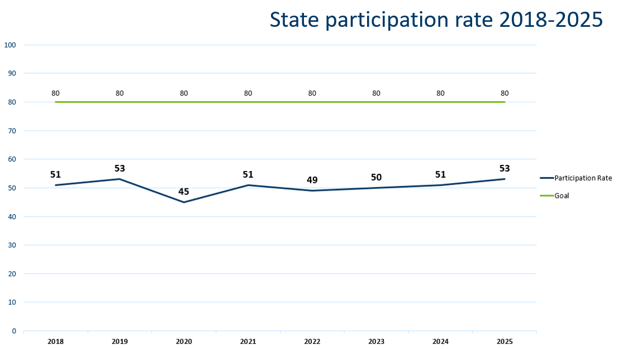
The Minnesota overall 2025 C&TC participation rate has increased to 53%, up from 51% in 2024.
Congratulations to all C&TC partners and providers! Connecting with families, scheduling kids, completing full C&TC visits, and following billing and coding guidelines all contribute to this increase. Thank you for all the hard work you do every day supporting the health of youth and families.
Respiratory season vaccine updates
The Vaccine Integrity Project released its 2026-27 respiratory season evidence review confirming that COVID-19, RSV, and influenza vaccines continue to provide strong protection against severe illness, hospitalization, and death.
Based on this evidence, the American Academy of Pediatrics (AAP), American Academy of Family Practice (AAFP), Infectious Disease Society of America, American College of Obstetricians and Gynecologists, and the American Medical Association have released this year’s respiratory virus season immunization recommendations. Key takeaways include:
-
COVID-19 and Influenza: No changes to pediatric recommendations.
-
RSV (infants less than 8 months): Continue to immunize all infants born during or entering their first RSV season (unless protected by maternal vaccination).
-
RSV expanded eligibility (infants ages 8–19 months): Recommendation now expands eligibility for children entering their second RSV season who have any of the following high-risk conditions:
- Preterm birth (less than 32 weeks, 0 days’ gestation) regardless of clinical support needs.
- Hemodynamically significant congenital heart disease.
- Anatomic pulmonary abnormalities or neuromuscular disorders.
- Down syndrome or other high-risk chromosomal differences.
-
RSV extended vaccination in pregnancy: One-time RSV vaccine (Abrysvo) in first eligible pregnancy if 32-36 weeks pregnant, beginning Sep. 1 extended through Mar. 1.
For information and the full set of recommendations, visit the AAP immunizations webpage, the AAP Recommended Child and Adolescent Immunization Schedule (PDF), and the AAFP Respiratory virus vaccines: Clinical guidance and resources.
MDH respiratory vaccination guides and updated vaccination protocol templates will be available on the Immunization Best Practices webpage. Subscribe to Got Your Shots? news to stay up to date with vaccine information.
Encourage parents to complete early childhood screening
Use Help Me Connect to refer families to their local district’s early childhood screening program. The Minnesota Department of Children, Youth, and Family (DCYF) Early Childhood Screening: Information for Districts and Programs offers details for families and districts, including an optional screening summary form.
Statutes 142D.091, Subdivision 3 allows virtual screening for children who are immunocompromised or have other health concerns. Parents can also request a copy of a virtual C&TC visit (which includes developmental and social emotional screening) to meet their district requirement.
Making a provider referral through Help Me Grow
As a medical professional or clinic staff, you help connect families to early supports and services for their child. If you have a concern about a child’s development, make a referral through Help Me Grow Minnesota for:
- Early intervention (ages 0-3)
- Preschool special education (ages 3-5).
These services are provided through the child’s local school district or cooperative. When in doubt, refer!
For more information, refer to Help Me Grow MN Training for Medical Professionals and Clinic Staff.
New resource to help identify and report infant physical abuse
Under Minnesota Statute 144.124, family practice physicians, pediatricians, and other primary care providers must provide parents and primary caregivers of infants up to 6 months of age with resources on how to recognize signs of physical abuse and how to report suspected physical abuse.
MDH has resources to providers can use in this educational outreach to parents and primary caregivers. These materials are available in English, Hmong, Somali, and Spanish on MDH’s identifying signs of physical abuse in babies webpage.
|
Resources about upcoming Medicaid changes
Medical Assistance eligibility is changing due to a federal law that passed last year. Learn more about who will be affected and when on the what the new federal budget law means for Medicaid webpage. Utilize the tools for partners webpage for resources about this complex transition.
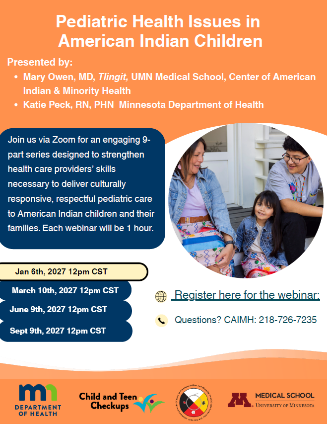
Pediatric Health Issues in American Indian Children Webinar
Jan. 6, 2027, from noon – 1 p.m.
Join session six of a nine-part webinar series to strengthen culturally responsive pediatric care for American Indian and Alaska Native youth. This series is offered both online and in person at the University of Minnesota-Duluth campus. Providers will gain valuable insights and skills to deliver respectful and informed care.
Register for the Pediatric Health Issues in American Indian Children January session.
|
2026 Adolescent Health Data Book
The Minnesota Partnership for Adolescent Health has released the 2026 Edition of the Adolescent Health Data Book. It includes accessible information about young people’s health and the conditions that affect it.
What’s new in the 2026 edition:
The edition features young people’s insights on two key topics: mental wellbeing and technology use. Additionally, there is an updated safe and balanced technology use section.
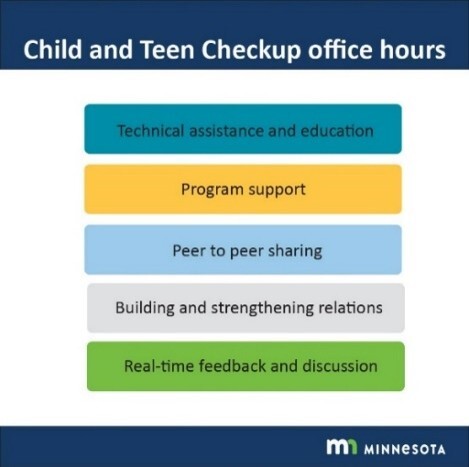
Second Wednesday of each month from 9-9:30 a.m.
Join the DHS and MDH C&TC program for optional virtual office hours to ask questions, get program support, engage in peer sharing, and strengthen relationships.
Register and submit your questions for our October session, November session, and December session.
|
MDH C&TC is collecting stories that highlight the impact of your work and the value of preventive care. Submit your story through the C&TC Story Collection form.
|