|
View this as a webpage
August 2026
Spotlight: A Community Approach to Childcare in Rural MN
|
For years, families, employers, and community leaders in Northwestern Minnesota have voiced concern over the shortage of childcare. The City of Wadena, Astera Health, and MAHUBE-OTWA Community Action Partnership, (serving Mahnomen, Hubbard, Becker, Otter Tail and Wadena counties) could see the problem in their own communities, and came together—each bringing their own unique strengths—showing what is possible when everyone steps forward to solve a problem.
|
|
 |
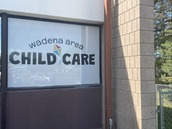
A recent Community Needs Assessment had confirmed the scale of the issue, estimating a need for more than 500 additional slots across the area. For many parents, the lack of reliable childcare made it nearly impossible to accept new jobs, stay in the workforce, or return to work after having a baby. Employers, including the local hospital, were feeling the strain as they tried to recruit and retain staff.
At the same time, MAHUBE-OTWA’s Community Action Partnership had identified infant and toddler care as a critical need in the community. Increasing access to young-child care was already a priority in its strategic plan. When the City of Wadena Economic Development Authority reached out with a proposal to repurpose unused hospital space into a childcare center, the pieces began to fall into place.
From there, the partnership grew quickly. Leadership from the City, the hospital, and MAHUBE-OTWA came together to explore the feasibility and sustainability of the idea. The hospital agreed to donate the space and cover much of the ongoing utilities, insurance, maintenance, and operational costs. This commitment kept provider costs lower and allowed childcare fees to remain more affordable for families.
|
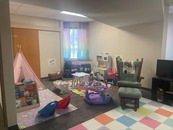
City staff then worked closely with MAHUBE-OTWA, First Children’s Finance, the Initiative Foundation, architects at Widseth, and state regulators to determine the upgrades that would be required. The donated space needed remodeling to meet licensing standards, including renovations to create open play areas, space for food preparation, age-appropriate bathrooms, and an outdoor playground. Each provider room would operate independently, with its own secure space for young children.
The funding plan came together piece by piece. Nearly $200,000 was raised locally through donations from businesses, community members, and foundations. Those funds strengthened the application for a highly competitive state childcare grant. American Rescue Plan Act dollars and First Children’s Finance grants also supported the project. As Dean Uselman, City of Wadena, explained, “We were successful because we had matching funds ready and a shovel-ready project. That made us competitive.”
When the remodeling was complete, the new center could serve up to 48 children, from infants as young as six weeks to school-age children. Individual providers can serve 10 to 14 children each, depending on their license. All providers who operate in the center must agree to accept Early Learning Scholarships and Child Care Assistance Program payments, which helps keep care accessible for families, regardless of income.
|
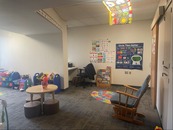
For MAHUBE-OTWA, the project aligned perfectly with their mission. It expanded childcare options, strengthened families, and supported early childhood development. But it also created something more: four new small businesses. Each childcare provider is an independent operator with the opportunity to grow a stable, long-term livelihood.
Community leaders expect the center to have a meaningful effect on the local workforce. With more reliable childcare options, parents can stay employed, take on new roles, or return to work sooner. The hospital, in particular, anticipates improved hiring and employee retention due to spaces saved for hospital staff in each of the provider rooms within the building. While the center is still in its early stages, leaders believe the benefits will extend throughout the community.
Across all three organizations, one message comes through clearly: this project worked because people worked together. Leaders describe the team as steady, respectful, and rooted in a shared goal. “There are a lot of very knowledgeable staff within these organizations,” Uselman noted. “Working together, we were able to do something that would have been very difficult to accomplish individually.”
|
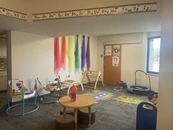
The lessons learned along the way were powerful: frequent, honest communication matters; commitment from each partner is essential; bringing in experts ensures the work is done right; and, patience is required.
Asked what advice they would give other rural communities, partners all shared similar guidance: build a strong team, be clear about roles, and take the project step by step. As Michelle Wilkowski, MAHUBE-OTWA, put it “It takes a village. You can do hard things when everyone is moving toward the same goal.”
Today, the lights are on, the childcares are full, and families are benefiting from the new family childcares. What began as an identified need and a vacant space in an old hospital building has become a shining example of what rural communities can achieve when they work together with determination, trust, and a shared commitment to supporting local families.
|
|
|