|
Refugee and International Health Quarterly: July 2026 |
|
|
July 2026
View this as a webpage
Summer is here, and this season of warmth is a great time to take a deep breath and soak in some sunshine. While the work does continue, we encourage you all to get outside and take advantage of that vitamin D.
Please take some time to read the articles featured below. These include important federal updates on refugee admissions, health care coverage, and clinical support. We also highlight Minnesota data, community programs, and recent campaigns and resources.
The MDH Refugee and International Health Team wants to wish Kee Vang well as he transitions from his position with MDH’s International Health and Infectious Disease Equity and Engagement teams to his new role as Cultural Communications Coordinator with the MDH Communications Office. Best of luck to you, Kee! Individuals can direct any future additions or questions about the Minnesota International and Refugee Health Announcements (MIRHA) listserv to Tierney Hall at Tierney.Hall@state.mn.us.
Thank you for all you do! Take care and stay well.
Every year, the federal administration sets the Presidential Determination (PD), which establishes how many refugees may be received to the United States that year. On May 21, 2026, the initial 2026 PD of 7,500 arrivals was officially increased by 10,000. As a result, the new PD for fiscal year 2026 is now 17,500 (Emergency Presidential Determination on Refugee Admissions for Fiscal Year 2026). Minnesota expects to receive its share of these arrivals in the coming months, with populations likely to continue to be almost exclusively from South Africa.
Eligibility for Medicaid coverage (also known as Medical Assistance, or MA, in Minnesota) will change for many populations – including refugees – on Oct. 1, 2026. This is in accordance with H.R. 1 (the One Big Beautiful Bill Act), which removes Medicaid eligibility for certain non-citizen adults. This includes refugees, asylees, Afghan and Ukrainian humanitarian parolees, trafficking victims, and noncitizens protected under the Violence Against Women Act who are 21 years of age or older.
Some refugees may still be eligible for MA. This includes:
- Refugees who have adjusted their immigration status to Lawful Permanent Resident and received their green card.
- Refugee children under the age of 21 (covered by the Children’s Health Insurance Program Reauthorization Act, or CHIPRA).
- Refugees who are pregnant (covered by CHIPRA).
Adult refugees who no longer qualify for MA as of Oct. 1 may be eligible to receive healthcare coverage through Refugee Medical Assistance (RMA), a federal healthcare coverage program for refugees and other Office of Refuge Resettlement (ORR)-eligible populations. RMA covers the Refugee Health Assessment as well as other costs typically covered by Medicaid. As of July 14, ORR-eligible individuals who arrived in the U.S. on or after Jan. 1, 2026, will be eligible for up to eight months of RMA and Refugee Cash Assistance from the time of their arrival. This is an extension from the previous policy of four months of coverage. We will provide more information on the RMA application process as it becomes available.
To learn more about these eligibility changes and to find additional resources, visit the Minnesota Department of Human Services (DHS) Federal Medicaid Changes webpage or contact the Refugee and Immigrant Helpline.
 |
|
The Minnesota DHS Refugee and Immigrant Helpline continues to be available for free at 1-800-814-4806, and individuals can call to be connected with resources for health care and insurance, legal assistance, jobs, food, housing, language classes, and more. |
TIPS FOR IMPACTED NEWCOMERS
You can share the following tips with newcomers that may be impacted by the Medicaid eligibility changes happening on Oct. 1.
Make an appointment to see your doctor before the changes go into effect on Oct. 1. Talk to them about:
- Any resources they have to help make sure you do not have a gap in health insurance.
- Getting medication refills. You can request a 90-day refill of some medication.
- A plan to make sure you are healthy and can receive health care after the changes on Oct. 1.
Refugees to Minnesota receiving medical care coordination upon arrival, 2012-2025
While all U.S.-bound refugees are eligible for and encouraged to receive a domestic medical exam (DME) within 90 days of arrival, some arrive with health conditions requiring more urgent care (“significant medical cases”). Since 2012, a Health Systems Coordinator (HSC) at the MDH Refugee Health Program has worked with resettlement agencies, clinics, and public health departments to address health concerns and ultimately help these newcomers access care independently.
Care plan objectives are monitored and evaluated to enhance health systems capacities, provide resource development, and to inform program implementation and surveillance. Information on medical cases – including diagnoses, severity levels, urgency, and care plan objectives – have been integrated into eSHARE, Minnesota’s refugee health database.
From 2012 to 2025, 27,728 primary refugee arrivals came to Minnesota. Of these, 2,400 (9%) had one or more medical conditions upon U.S. arrival and had a care plan created. As illustrated in Figure 1, the proportion of arrivals who were medical cases by U.S. arrival year has risen over time. Hypertension and pregnancy were the most common health conditions among all medical cases, though the top conditions varied by age. The most common conditions observed by age are described in Table 1.
These findings highlight the importance of enhanced care coordination alongside the DME. Additionally, integrating medical case tracking into the existing refugee health surveillance database can provide a comprehensive picture of refugee health from U.S. arrival through the completion of DME.
Figure 1. Proportion of Medical Cases* among All Primary Refugee Arrivals to Minnesota** by Year of U.S. Arrival
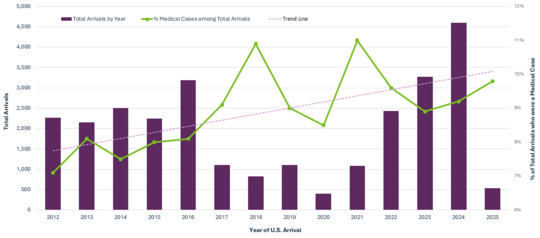 Table 1. Top 5 Health Conditions* among Medical Case Arrivals** to Minnesota by Age, 2012-2025
|
<18 years
N=397
|
18-44 years
N=1,119
|
45-64 years N=609
|
≥65 years
N=275
|
All Medical Cases N=2,400
|
|
Developmental Delays
(N=67, 17%)
|
Pregnancy
(N=288, 26%)
|
Hypertension
(N=350, 57%)
|
Hypertension
(N=183, 67%)
|
Hypertension
(N=740, 31%)
|
|
Asthma
(N=49, 12%)
|
Hypertension
(N=203, 18%)
|
Diabetes
(N=132, 22%)
|
Diabetes
(N=55, 20%)
|
Pregnancy
(N=296, 12%)
|
|
Epilepsy
(N=41, 10%)
|
Diabetes
(N=68, 6%)
|
Asthma
(N=30, 5%)
|
Vision Impairment
(N=48, 17%)
|
Diabetes
(N=261, 11%)
|
|
Cerebral Palsy
(N=21, 5%)
|
Asthma
(N=64, 6%)
|
Thyroid Disease
(N=30, 5%)
|
Cataracts
(N=28, 10%)
|
Asthma
(N=151, 6%)
|
|
Congenital Heart Disease
(N=25, 6%)
|
PTSD
(N=47, 4%)
|
Orthopedic Condition
(N=24, 4%)
|
Hearing Impairment
(N=25, 9%)
|
Developmental Delays
(N=120, 5%)
|
*Conditions are not mutually exclusive; one person can have multiple conditions. Percentages are percent of medical cases in that age group who had that condition. 837/2400 (35%) had more than one health condition.
**Medical case = new arrival with one or more medical conditions for whom a care plan was created by the MDH HSC.
Caring for Newcomers with Medical Needs: Case management and community health worker support
ORR funds local and state organizations to assist refugees and other ORR-benefit eligible populations with health needs successfully resettle in the U.S. for up to five years after arrival. In Minnesota, this funding supports:
- Preferred Communities (PC) / Intensive Case Management program (ICM):
PC-ICM provides one to two years of case management for refugees with special needs, including serious medical conditions, vulnerable women, or elders. Assistance can include health and mental health system navigation and interventions, support applying to and accessing supplemental services such as Social Security Disability Insurance, and general education with the goal of navigating these conditions independently. Currently, Arrive Ministries, International Institute of Minnesota (IIMN), and Lutheran Social Services are offering PC-ICM, serving the Twin Cities Metro Area and St. Cloud (100-mile radius from their respective offices).
- Refugee Health Promotion through the Minnesota Department of Human Services Resettlement Network Services:
Community Health Workers (CHW) Solutions provides community health services to new refugees. These services include applying for health insurance, health care navigation, and health education. CHW Solutions can provide support to clients throughout the state of Minnesota.
|
|
Brooke Anttila-Escoto, International Medical Graduate Program
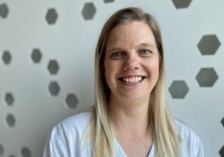
For many students, the start of summer marks the beginning of a break in studies. For medical graduates, however, it often means the beginning of clinical rotations. As we move into July, several participants in IIMN's International Medical Graduate (IMG) Program will be doing just that. We spoke with Brooke Anttila-Escoto to learn more about her work and the IMG Program.
Brooke has worked at IIMN since 2001. With almost 25 years at the organization, she has spent the last four years overseeing the IMG Program as well as the Internationally Trained Professionals and Medical Career Advancement Programs. Her current title is Healthcare Recredentialing Lead.
The IMG Program helps Minnesota newcomers who previously practiced medicine in other countries to navigate and complete the relicensing process so they can once again serve patients in their new community. This extensive relicensing process includes the U.S. Medical Licensing Exam, an English proficiency exam, and the recompletion of residency. Through career and academic advising, study supports, interview preparation, support groups, financial support, employment and career navigation services, mentorships, and more, the IMG Program has helped over 90 physicians, with seven participants matching into residency programs in 2026 alone.
When asked what gives her hope for the future of this work, Brooke points to the people of Minnesota and the creative action that takes place at IIMN. Her favorite part of her job is working directly with clients, where she can act as a connector and supporter. In this role, Brooke says she is able to “help people see themselves as leaders.” Brooke shares that the participants she works with are ready to serve; the IMG Program helps ensure they are given the opportunity to do so.
The IMG Program is not currently accepting new applicants; however, IIMN’s free Medical Career Advancement Program supports individuals pursuing careers in nursing and other medical professions. To learn more about the IMG Program, the Medical Career Advancement program, or IIMN’s other services, you can visit their website: International Institute of Minnesota.
|
 The 2026 International Refugee and Migration Health Conference (IRMHC) recently took place in San Diego, California. The conference brought together refugee and migrant health partners from across the U.S., Canada, and the rest of the world. Among the hundreds of participants were several Minnesota clinical and resettlement partners, as well as the MDH Refugee and International Health Program.
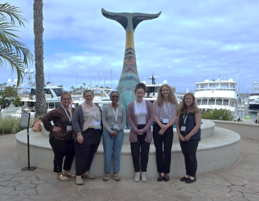
While at the conference, the MDH Refugee and International Health Program had the opportunity to share some of the important work happening in Minnesota through oral presentations, posters, and panels. If you are interested in learning more about the presentations and posters listed below, please reach out to the MDH Refugee and International Health Program at refugeehealth@state.mn.us.
MDH Refugee and International Health Program staff at IRMHC 2026
|
Presentations
- Co-Creating Culturally Responsive Health Messaging: Newcomer Education for Wellness Video Series
- Navigating Resources from the Minnesota Center of Excellence for Newcomer Health
- Pilot and Evaluation of a Multilingual Video Messaging Model to Improve Newcomer Health Information
Posters
- Characteristics of Newcomers Diagnosed with Varicella or Pertussis, 2020 – 2025
- Comparison of Medical Diagnoses of Adult Refugees at Overseas and Domestic Medical Examinations
- Discordant IGRA Results among Refugee Arrivals, 2017 – 2024
- Perinatal Risk Factors and Birth Outcomes of Newly Arrived Refugees in Minnesota, 2012 – 2024
- Refugees to Minnesota receiving medical care coordination upon arrival, 2012 – 2025
If there is one takeaway to share with you all from IRMHC 2026, it may be found in the large attendance list, the active engagement, and the note of hope and action that rang clearly throughout. While the importance of this work remains high, so too does the commitment of those dedicated to it.
Every year, the MDH Refugee and International Health Program highlights the experiences of refugees and newcomers in our community and what health means to them. Included here are excerpts from Lymoua’s and Sehida’s stories.
Lymoua Mouacheupao, LSW
Care Coordinator
M Health Fairview Bethesda Clinic
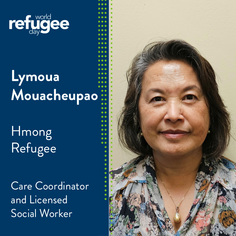
Lymoua Mouacheupao is a licensed social worker in St. Paul, Minnesota. She is a first-generation Hmong refugee from Laos in the aftermath of the Vietnam War. She was only nine years old when she arrived in the U.S. in 1976. Her family originally resettled in Boston, Massachusetts, before relocating to Minnesota.
Lymoua has been a strong advocate for the social welfare of people. She has dedicated her life to serving roles that affect the care, dignity, and independence of individuals. As a care coordinator at M Health Fairview Bethesda Clinic, she works with a team of primary care physicians to ensure that patients get the medical care and social services they need.
Lymoua shared her hopes for the future with us: “Refugees come to America in the pursuit of freedom and peace. I hope that we will always remember our humble roots. As we heal from the traumas of war, may we remember that life is precious. May we be ever ready to be a peacemaker in our community.”
|
Sehida Cerimovic
Patient Care Staff Manager
Community University Health Care Center
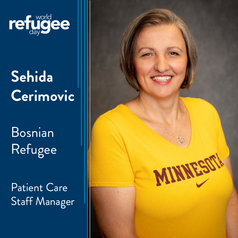
Sehida, her parents, and brothers came from Bosnia to America in 1997 after spending two years in a refugee camp in Croatia. They began a new chapter of life in Waterloo, Iowa. After marrying in 2000, Sehida moved to Minnesota with her husband when he found a job here, hoping to create a better future for their family. Over the years, Minnesota became Sehida's second home, especially as she and her husband raised their two children here.
In 2007, Sehida began working at Community University Health Care Center as a certified medical assistant, where she has since advanced into the role of patient care staff manager. Her son is a junior in high school, and her daughter is a college graduate, training to become a surgical first assistant.
In Sehida’s words, “A healthy community means caring for one another and making sure everyone has access to care and support without being judged based on their background or culture differences.”
|
Join us in thanking Lymoua and Sehida for sharing their stories and for being a part of our Minnesota community. To read more stories from refugees in our state and learn what health means to them, visit Stories from Minnesota Refugees.
|
|
Heat Health Safety Resources
High temperatures are expected in Minnesota in the coming weeks, and there are several resources on heat health and safety available for newcomers and those who work with them.
-
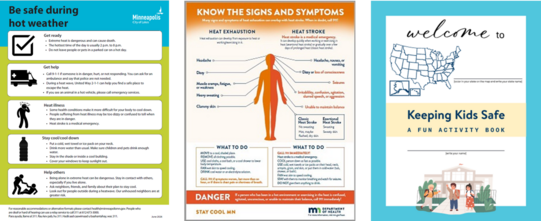
Minneapolis Department of Health: Be Safe During Hot Weather
This flyer has information on the dangers of extreme heat, what health condition signs to look for, how to get help and help others, and how to stay cool. It is available in English, Hmong, Somali, and Spanish. To access this resource, please reach out to the Minneapolis Office of Immigrant and Refugee Affairs at oira@minneapolismn.gov.
-
MDH: Know the Signs and Symptoms of Heat-Related Illness (PDF)
This flyer provides information on the signs of heat exhaustion and heat stroke, as well as what to do if someone is experiencing symptoms. This resource is also available in Hmong, Somali, and Spanish.
-
Minnesota Center of Excellence in Newcomer Health: Keeping Kids Safe (PDF)
This activity book is for children of all ages and places who are new to the U.S. It includes interactive lessons and activities and covers topics like health and safety in hot weather. This resource is available in English and can be found on the Minnesota Center of Excellence in Newcomer Health’s Health Education webpage.
 Minnesota Center of Excellence in Newcomer Health (MN COE)
MN COE Survey: Pediatric Developmental Screening Clinical Practices
To optimize clinical practices, the MN COE would like to understand barriers and opportunities for developmental screening among children between 8 months and 5 years old and their caregivers who have a preferred language other than English.
To assess current practices, we are seeking input from professionals who provide outpatient well-child and standard physical exams for children. Medical doctors, nurse practitioners, physician assistants, advanced practice providers, registered nurses – in addition to clinic managers, developmental screening coordinators, quality improvement leads, or others with a direct role in supporting developmental screening – are invited to participate in this brief survey: Pediatric Developmental Screening Clinical Practices.
The MDH Institutional Review Board reviewed this project and determined it to be exempt from full comprehensive review due to minimal risk to study participants. All your responses will remain confidential, with the option to be anonymous.
Questions can be directed to the MN COE at MNCOENewcomerHealth@state.mn.us.
MN COE Newcomer Education for Wellness (NEW) Video Series
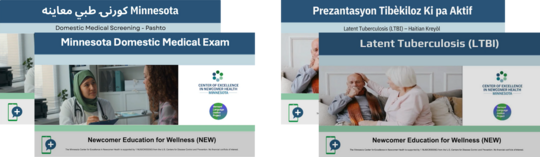
The MN COE has added three new videos to its Newcomer Education for Wellness (NEW) video series. NEW videos are free, short (two to three minutes), and culturally accessible health education videos available in Arabic, Burmese, Dari, English, French, Haitian Creole, Karen, Pashto, Somali, Spanish, and Swahili.
The newest videos include:
-
Domestic Medical Exam – General: An introduction to the Domestic Medical Exam (DME), who is eligible and for how long, why DMEs are helpful, and what to expect at a DME appointment.
-
Domestic Medical Exam – Minnesota: An introduction to the DME, who is eligible, why DMEs are helpful, and what to expect at a DME appointment, as well as information on how to get connected with insurance and the DME (or “Refugee Health Assessment”) in Minnesota, specifically.
-
Latent Tuberculosis: An introduction to latent tuberculosis (LTBI), the difference between active and latent TB, treatment options for LTBI (and the importance of completion), and how to get tested.
To see the full library of NEW videos, access informational flyers, or learn more, visit the Newcomer Education for Wellness (NEW) Video Series webpage or reach out to refugeehealth@state.mn.us.
 Minnesota Immigrant and Refugee Health Network (MIRHN)
MIRHN meetings are held on the second Tuesday of the month from 9:30 to 11 a.m. CT. More information on MIRHN, including meeting information, can be found at Minnesota Immigrant and Refugee Health Network.
- September (date to be announced)
- Oct. 13
- Nov. 10
*No meetings in July, August, and December.
Invites will be sent out via the Minnesota Immigrant and Refugee Health Announcements (MIRHA) listserv. MIRHA submissions can now be sent to Tierney Hall at Tierney.Hall@state.mn.us.
Note: We are always looking for great guest presenters for future meetings. If you have any recommendations or any other MIRHN-related comments or questions, reach out to our team at refugeehealth@state.mn.us.
Thank you for your partnership. We look forward to our ongoing collaboration!
For more information or questions, please contact the MDH Refugee and International Health Program at refugeehealth@state.mn.us or 651-201-5414.
|
|
|
|
|