|
Dr. Nick Lehnertz from the Minnesota Department of Health (MDH) discusses the important role of syphilis screening, access to care, and open conversations in supporting adolescent and young adult health:
“As a physician who has worked in both direct primary care and in public health, I have seen the impact that syphilis (and all sexually-transmitted infections, or STIs) has had, and continues to have on our adolescent and young adult populations. Too often, screening and/or testing for syphilis is not considered, and subsequently not performed, for a myriad of reasons. Because of this, undiagnosed and/or untreated syphilis can result in both onward transmission and life-long sequelae. In addition, these impacts continue to disproportionately affect historically disadvantaged populations, along with those individuals that do not have adequate access to our current health care system, whether that be through lack of insurance, lack of physical access, bias, shame, or the stigma associated with STIs. This truly is the definition of a ‘wicked problem.’
That being said, only though a multi-pronged approach will reductions in syphilis cases occur. This is one of the reasons that syphilis screening has become part of the C&TC screening schedule. In addition, sex can be a very difficult and uncomfortable topic to discuss with adolescents and young adults, and STIs even more so. As such, the ability to talk in an open, honest and non-stigmatizing way with this population is of vital importance. * Through these approaches will we start to see the reductions of syphilis and other STIs in this population.”
*Providers can support these conversations by using the TALK Toolkit for Adolescent Care which offers practical, youth-centered strategies for discussing sexual health and other sensitive topics.
Beginning Oct. 1, Minnesota Health Care Programs (MHCP provider news and updates) will implement updates to the C&TC Schedule of Age-Related Screening Standards. Updates include three changes:
- New recommendation: Sudden cardiac arrest/sudden cardiac death risk assessment at least once for youth ages 11-21.
- Revised requirement: Extend the HIV screening to age 21.
- Clarified requirement: Physical exam language adds a footnote to reflect that Medicaid screening services include a comprehensive unclothed physical exam.
Updated guidance and supporting fact sheets are available to help clinics prepare for implementation.
Use sports physicals as an opportunity to provide complete C&TC visits. This approach strengthens continuity of care, prevents possible gaps in screening, and reduces duplicate visits for families and clinics. Review the table for additional components to provide during the sports physical. This allows you to bill for a complete C&TC visit and provides the youth with a well-rounded preventive care visit.
|
C&TC Components
|
Age Requirements
|
|
Anticipatory guidance
|
Annually 11-20 years old
|
|
Health history: nutrition, sleep, social determinants of health
|
Annually 11-20 years old
|
|
Developmental/mental health surveillance
|
Annually 11-20 years old
|
|
Physical exam
|
Annually 11-20 years old
|
|
Hemoglobin for youth that are menstruating
|
Once 11-20 years old
|
|
HIV screening
|
Once 15-20 years old
|
|
HIV and STI risk assessment
|
Annually 11-20 years old
|
|
Dyslipidemia risk assessment
|
Once 9-11 years old
Once 12-16 years old
Once 17-20 years old
|
|
TB risk assessment
|
Annually 11-20 years old
|
|
Tobacco, alcohol, and drug use risk assessment
|
Annually 11-20 years old
|
|
Hearing and vision screening
|
Once 11-14 years old
Once 15-17 years old
Once 18-20 years old
|
|
Verbal referral to dentist
|
Annually 11-20 years old
|
|
HIPPA compliant referral codes
|
Annually 11-20 years old
|
 |
|
School is out, making summer a great time to help families get ready for the next school year. Use summer visits to review immunization records, close vaccination gaps, and prepare students to meet school requirements before the fall rush. |
Use reminder-recall to reach families
Encourage parents to schedule well-child visits and immunization appointments early. Reaching out now gives families time to plan and helps avoid last-minute back-to-school appointments.
MDH can support your reminder-recall work:
Be ready for vaccine questions
Be prepared for questions from parents about both immunization requirements and vaccine recommendations.
Immunization requirements
Visit the Vaccines for Infants, Children, and Adolescents webpage for useful charts showing which vaccines are needed by age and to enroll in childcare, early childhood programs, and school in Minnesota.
Vaccine recommendations
When discussing school vaccines, recommend all age-appropriate immunizations, including the HPV vaccine, which helps prevent several types of cancer.
Back-to-school visits are also a good time to explain the differences between MenACWY and MenB vaccines with adolescents and their families. Discuss shared clinical decision making criteria for receipt of MenB vaccine: Meningococcal B Vaccine Recommendations by Age and Risk Factor (PDF).
Resources
Every conversation matters
Not every vaccine discussion results in vaccination that day—and that's okay. Use these conversations to answer questions, address concerns, and build trust with families. Refer to the Reliable Sources of Immunization Information webpage for evidence-based family-friendly resources.
Minnesota Health Care Programs cover vaccine counseling even when a vaccine is not administered during the same visit. For HCPCS and CPT billing information, visit Immunizations and Vaccinations.
MDH C&TC is collecting stories that highlight the impact of your work and the value of preventive care for children and youth. Submit your story through the C&TC Story Collection portal.
Example stories include:
- A screening that identified a need or helped connect a child to care.
- Something that feels like a win, such as identifying a need early, overcoming a barrier, or helping a child or family find a supportive resource.
- A meaningful connection with a patient or family that resulted in improved access, trust, or follow-up.
- A referral or partnership that helped address a family’s need, such as connecting a family to transportation, housing support, behavioral health services, etc.
We may feature submitted stories in the C&TC newsletter, trainings, Community of Practice, and other communications. Feel free to submit multiple stories!
 Wednesday, Sept. 9 from noon – 1 p.m.
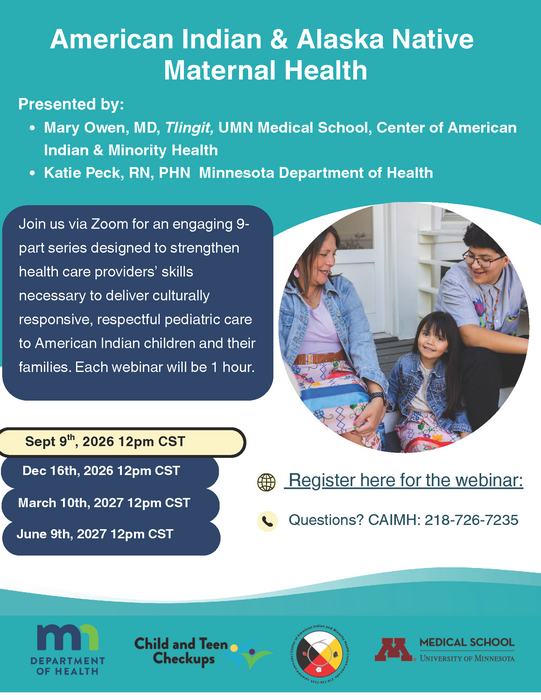
Join session five, focused on maternal morbidity and mortality, in a nine-part webinar series to strengthen culturally responsive pediatric care for American Indian and Alaska Native youth. This series is offered both online and in person at the University of Minnesota-Duluth campus. Providers will gain valuable insights and skills to deliver respectful and informed care. Register for the American Indian/Alaska Native Maternal Health September session.
Second Wednesday of each month from 9-9:30 a.m.
Do you have questions about C&TC? Need support for problems or issues getting in your way of being successful with C&TC? Want to talk with others doing similar work in C&TC?
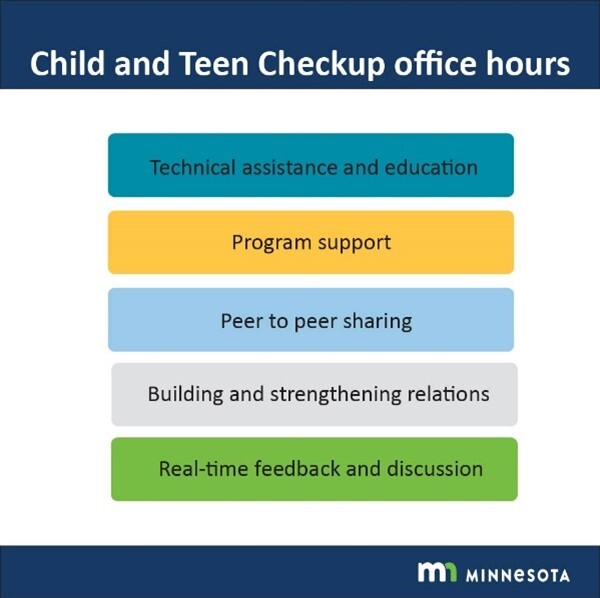
Join the Department of Human Services (DHS) and MDH C&TC program for optional virtual office hours to ask questions, get program support, engage in peer sharing, and strengthen relationships.
Register and submit your questions for our August office hours session and September office hours session.
|